
They say the internet is forever, but with so much shared online, the National Film and Sound Archives' job only gets harder. The government body is tasked with collecting and preserving all kinds of recorded sound and moving images. A new project is working to showcase the diversity of Australian creators on a modern online platform, and protect it for future generations.
Listen to Australian and world news and follow trending topics with SBS News Podcasts.
TRANSCRIPT
"Hi! so you know what I love doing? Breakdancing."
When Natalie Tran started making YouTube videos, the platform hadn't even celebrated it's second birthday.
Within a few years, she would become the first Australian on the platform to gain more than a million subscribers.
And now, more than a decade later, her work on community channel is being added to the National Film and Sound Archive.
"I think the Natalie who started making YouTube videos would be shocked that this is happening now because back then no one knew what YouTube was. I remember having to tell people what YouTube was, I remember reading about YouTube in the newspaper."
She's one of ten accounts chosen for the inaugural Creator Capsule - to archive the diversity of voices, production styles and audiences of Australians online.
"They come from all kinds of different cultural and language groups. They're making work for car fans, making work for children, making works about the environment, they're making maths lessons. So really, as far as possible with just ten creators, we've really tried to reach into and map what Australian culture really looks like in the 21st century."
Patrick McIntryre, the CEO of the National Film and Sound Archive, says they have been collecting YouTube videos over the last decade, but this is the first dedicated effort to capture what happens around the videos too.
"The likes, shares and comments are a really critical part of YouTube collecting because they provide the context. It's not just about a great video that's really interesting. It's about the cultural impact that that video had. And I think now with online platforms you can really see that impact happen in real time. It's just such an important part of understanding how audio visual culture really inform the way we live today, the way we live together today, the way we communicate."
Those interactions show how far many of these creators reach.
For the Outback Boys, their adventures mixing bushcraft with new technology have gained popularity around the world.
"We have people in the community who are watching the content from the Philippines, from Indonesia, India, saying 'Hey I hunt like that, I eat that food, I do that thing'."
That fandom also includes many closer to home, especially in their community of Ramingining in the Northern Territory.
"We go into the shop and all you can hear in the little community shop is Joseph, Chico, Deano, Jerome or Opie. Even though they see us every day."
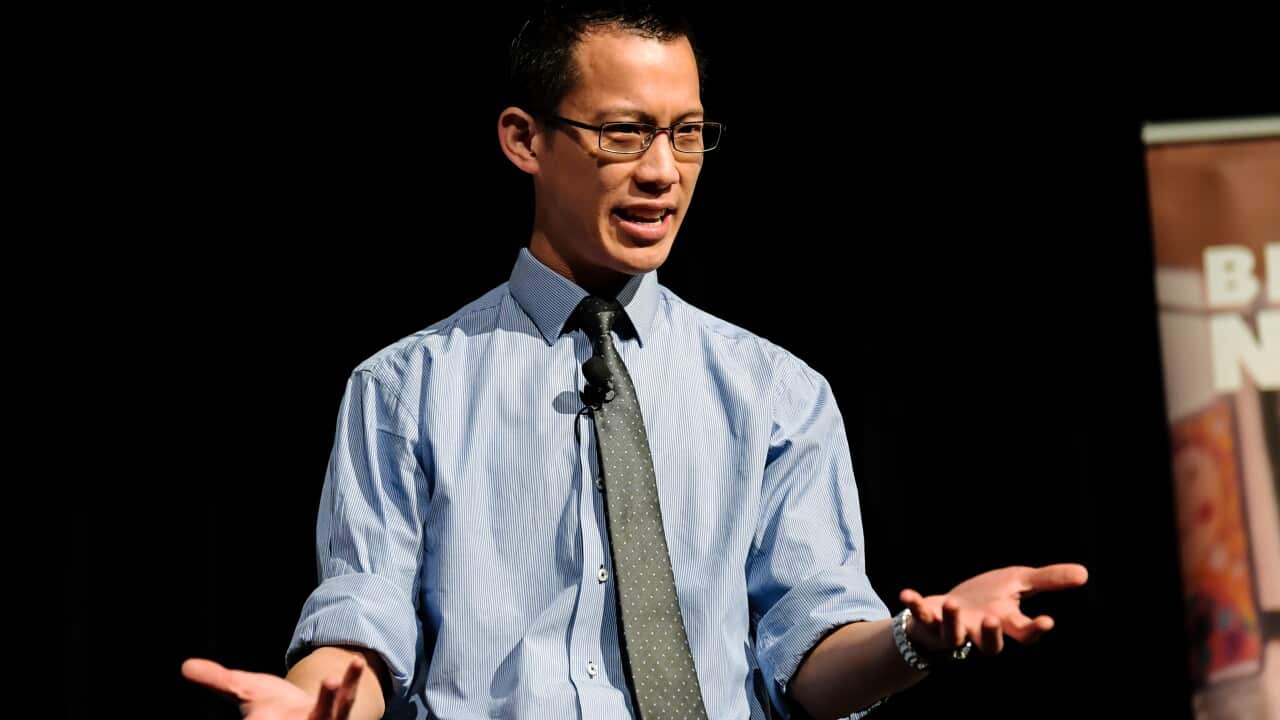
Another creator included is public school teacher Eddie Woo, whose maths lessons have captivated students around the world.
He says it still shocks him to think about the impact of his videos.
"For me this is a huge honour and actually as someone who is the child of migrants and who grew up not necessarily really knowing or understanding how I fit into Australian society and culture, I think on that level this is even more special to me. And I think that because so many people now call Australia home, who were either not born in this country or maybe they've got a different cultural heritage. I hope that this is part of everyone understanding and appreciating that its an incredibly diverse country that we live in and that is one of our strengths. And I'm glad to be a very small part of that."
For Glitch co-founders Kevin and Luke, the origins of their production company back to his parent's grocery store
While their parents sold fruit and vegetables out the front, the brothers would be out the back playing video games.
What started as a desire to tell stories through video games, is now an independent animation studio.
"We're influenced by a lot of the stories from Japan and Asia, and we're also combining that with our western upbringing and sensibilities, and in bringing that together, we've created Glitch."
Across the ten creators, the capsule will include three hundred videos, alongside oral histories and contextual material about their creators and their processes.
Nearly two decades after posting her first video, Natalie hopes others still get to experience the magic she did.
"I hope that people get the pleasure of making something that they like and finding people out there who that resonates with, because I think all we ever want in this life is to feel some kind of connection."
As for her advice on how to get there?
"Only make things if you want. And only make things about something you enjoy because what's the point otherwise. I think you have to take the risk of sharing something that you love."