
Lebanon says Hezbollah has accepted a US-backed proposal for a reciprocal halt to attacks with Israel, as the UN and world powers voice alarm over Israeli strikes in densely populated Beirut suburbs. The United Nations Security Council has held an emergency meeting over the escalation of Israel's military campaign in Lebanon, a day before Lebanon and Israel are to begin a fourth round of US-hosted direct negotiations.
Listen to Australian and world news, and follow trending topics with SBS News Podcasts.
TRANSCRIPT
Efforts to halt fighting between Israel and Hezbollah are gathering pace. But the conflict continues.
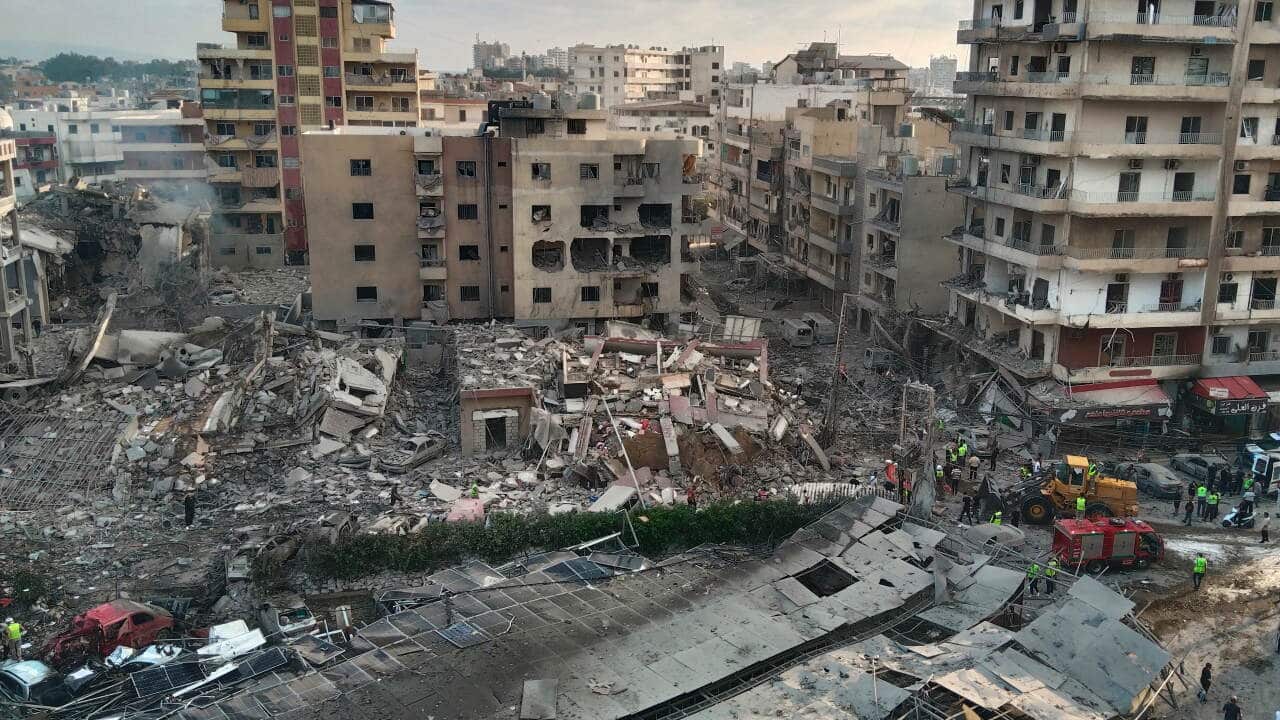
Strikes by Israel near a hospital in Tyre and warnings of possible attacks on Beirut's southern suburbs, have heightened concern for civilians.
The Lebanese Health ministry reported the strike injured 13 hospital staff members and has reported the civilian death toll from Israeli attacks has reached 3,371, with 10,129 others injured, since March 2.
United Nations spokesperson Stephane Dujarric has called for all sides to avoid further escalation.
"I can tell you that we are deeply alarmed by the escalation in military activities across southern Lebanon and beyond. Israeli warnings of imminent strikes on Beirut's southern suburbs are deeply concerning and have heightened fear and uncertainty among the population in Lebanon. We reiterate that civilians and civilian infrastructure must not be targeted. We urge all actors to respect the cessation of hostilities and avoid further escalation. We condemn all the loss of civilian lives."
In Washington, Lebanese officials say a possible off-ramp has emerged, with Hezbollah accepting a US proposal for a reciprocal halt to attacks.
US President Donald Trump earlier posted on social media that he had a very good call with the Iran-backed group; and managed to persuade Hezbollah and Israel to de-escalate.
No US president has ever spoken with Hezbollah.
The group is designated as a terrorist organisation by the United States.
The arrangement would see Israel stop strikes on Beirut’s southern suburbs, while Hezbollah would stop attacks on Israel.
But almost as soon as the proposal was made public, it looked fragile, with Netanyahu warning Israel would still strike Beirut if Hezbollah kept firing, and Hezbollah later claiming fresh attacks in southern Lebanon.
Israeli forces have also continued their advance in southern Lebanon, after capturing Beaufort Castle.
Mohanad Hage Ali from the Carnegie Middle East Center says its return to Israeli hands is deeply symbolic.
"It’s the highest point in the region and so it symbolises Israeli superiority, and the control that was exerted on that population during the occupation years. The fact that they're back now in Beaufort castle, I think, is reminiscent of that era and that level of control over people’s lives.”
The latest escalation has drawn international concern.
France's ambassador to the UN, Jérôme Bonnafont has addressed an emergency session of the UN Security Council, which was requested by France.
Speaking through a translator, he says nothing can justify the continuation and scale of Israel's military operations in Lebanon.
"Lebanon's sovereignty and territorial integrity are not negotiable. We do not accept the occupation on Lebanese soil; or the establishment of a buffer zone. We do not accept evacuation orders, restrictions preventing displaced persons from returning to their homes; or acts of destruction. This includes archaeological sites, notably the city of Tyre, which is listed as a UNESCO World Heritage site. No security consideration can justify a permanent infringement upon a sovereignty of a state."
Denmark's ambassador to the United Nations, Christina Markus Lassen, says Hezbollah's attacks against Israel must stop.
"We also reiterate our strong condemnation of Hezbollah's continued attacks against Israel and underline that these attacks must stop immediately all parties must respect the ceasefire, and continue to support the direct talks between Israel and Lebanon and hope that they can pave the way for lasting peace."
The United Nations says any lasting solution must strengthen Lebanon's own institutions.
Mr Dujarric says responsibility for security should rest with the Lebanese state.
"The most important thing is for the state of Lebanon, the Lebanese Armed Forces and state security services to have the monopoly of arms like in any other country in order to protect their own borders."
The conflict is also reverberating in Iran.
Supporters of Hezbollah and Lebanon have rallied in Tehran.
Protester Zahra Kharazmi says Iran should continue to support Lebanon.
“The Lebanese stood by the Iranians in Iran’s darkest moments and supported us. You could say they brought themselves into this war, and they should be supported. In my view, every one of us has a responsibility toward them.”
The developments in Lebanon are increasingly becoming tied to wider negotiations between Iran and the United States.
President Donald Trump says he believes a broader deal with Iran could be reached within days.
Former US Assistant Secretary of State General Mark Kimmitt is sceptical.
"I certainly hope so but I wouldn't bet next month's pay cheque on it - every time he says there's going to be a deal next week the Iranians kind of pocket that and say lets now give him a deal next week, they're doing everything they can to make him look bad."
Whether the latest diplomatic push can survive remains to be seen.