

Iran and Pakistan have returned 5.2 million Afghan asylum seekers over the past year. Now, as Afghanistan marks five years under Taliban rule, Australia says Pakistan's deportation push is impeding its ability to process refugee applications. Deportation is also being considered by UN refugee signatory countries like Germany. Meanwhile, critics have labelled conditions in Afghanistan as one of the world's gravest human rights crises. Rights groups say the regime's increasingly draconian policies targets women, journalists, and activists.
Listen to Australian and world news and follow trending topics with SBS News Podcasts.
TRANSCRIPT
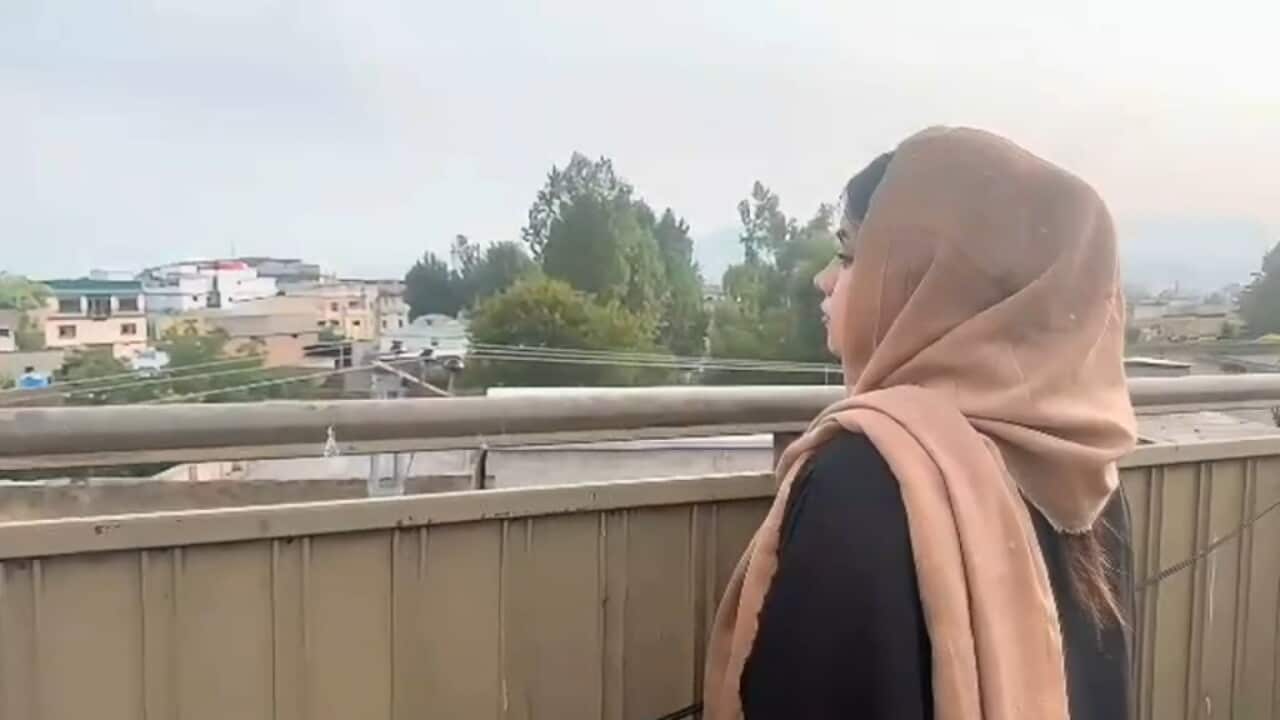
25-year-old Afghan Women's Rights activist, Lina Amani spends her days trapped in Pakistan.
"When the Taliban took away women's rights to education and work, I could not remain silent. I joined peaceful protests to defend women's rights and the right to education. That decision changed my life forever. Because of my activities, I became a target of the Taliban."
Now Ms Amani can no longer return to her own country - in fear that the Taliban will persecute her for her advocacy work.
Her ongoing protests in exile - including to end gender apartheid - for the past three years against the regime has only raised that threat.
She tells SBS Pashto she's not only hiding from Pakistani authorities but also is waiting on a response to hear back about the prospect of an Australian humanitarian visa.
But a Department of Home Affairs [[DFAT]] spokesperson has told SBS individuals residing in Pakistan without a valid Pakistani visa may face an increased risk of deportation under the Government of Pakistan's Illegal Foreigners Repatriation Plan.
In a statement, DFAT says these circumstances, together with restrictions on the movement of applicants within Pakistan, continue to impact the Department's ability to progress visa applications and facilitate access to required biometric and medical appointments.
Pakistan is increasingly deporting Afghans by raiding homes and markets in search of undocumented individuals to enforce their new deportation laws.
Lina Amani says their fear is to be forcefully returned to the place they tried to escape for a better life.
"Every time we hear about the arrest or deportation of Afghan refugees, we are not only worried about losing the place where we are staying. We are worried about losing our safety, our future, and even our lives. No one should have to live everyday wondering whether tomorrow they will be sent back to a place where they're not safe."
Amnesty International Australia’s Strategic Campaigner and Afghan advocate Zaki Haidari says women, ethnic minorities and those who worked with Australian soldiers are most at threat if returned to the Taliban.
"They will suffer on arrival. They will suffer harshly by the Taliban regime, that includes immediate on arrivals arrests, detention, ill treatment from the Taliban. We have cases of people that have been deported to Afghanistan and been killed by Taliban.We have cases of individuals who were deported to Afghanistan and been detained and disappeared."
He says in the past six months they have seen Pakistan deporting at least 10,000 refugees back to Afghanistan.
Mr Haidari says they remain concerned for thousands of people who were deported, and those who are yet to be deported from Pakistan and Iran.
"When Taliban came to power, they knew what they were doing were against the Taliban regime and the law. Therefore, millions of people fled Afghanistan. They were desperate to find a place that they could hide from the Taliban regime, because they knew if Taliban captured them, they will brutally persecute them, and that's a death sentence."
A concern echoed by former interpreter Ahmad Hamid*.
That's not his real name. We've changed his name in this story to protect his identity.
Mr Hamid is living in fear of not just Pakistani deportation, but also the Taliban retribution if that happens.
"We are forced to stay inside our homes day and night and cannot go outside. If we do go out, there is a possibility that the Pakistani police may arrest us and deport us back to our country."
He too has applied for an Australian visa, and has been awaiting an outcome since 2020, before the Taliban takeover.
He then moved to Pakistan in December 2025, where he completed his biometric enrolment in Karachi and has been waiting for visas.
He has been living in Pakistan with his wife and seven children.
Earlier in 2011 and 2012, Mr Hamid worked alongside Australian Defence Force soldiers in Uruzgan.
He says his previous role has now put his life at risk.
The plight of interpreters in similar situations to him was raised in federal parliament last week.
Independent Senator, David Pocock questioned the government's commitment in bringing Afghans to Australia.
"I've heard from veterans who talk about the guilt that they have felt coming back to Australia while their Afghan colleagues and friends were left behind. One man unnamed for his safety served beside our soldiers in Uruzgan, and his case set untouched for six years till the Taliban bombed and left him fighting for his life. He almost died waiting for that decision. Will the government commit to bringing every certified Locally Engaged Employee home?"
The Afghan LEE - or Afghan Locally Engaged Employee Program - was established by the Australian government in 2012 as a pathway for priority processing for humanitarian visas for Afghan nationals who were employed with the Australian government in Afghanistan.
It closed in May 2024, but outstanding visa applications are still being processed.
Foreign Minister, Penny Wong says a report she commissioned suggests they have certified more than 660 applications from the Afghan LEE program, which is more than the total approved under all previous foreign ministers combined since the program began in 2012.
As of the 27th July this year, Minister Wong says 2,059 Afghan LEE have been certified, and more than 5,700 Afghans have arrived in Australia.
"More than 40 per cent of total offshore humanitarian program visa grants, over the last four years, have been to Afghan nationals. We've in fact granted more visas under that program to Afghan nationals than any other nationality. Five years on from the fall of Kabul can I say clearly our thoughts are with the people of Afghanistan as well as the Afghan community here in Australia."
The Department of Home Affairs has told SBS that Afghans without a Pakistani visa face an increased risk of deportation and that this was impacting its ability to progress visa applications.
But without any Australian ability to process claims in Afghanistan, many say have no choice but to take a risk and continue hiding in Pakistan.
For Lina Amani and *Ahmad Hamid, their concern is that they will eventually be handed over to who they call their oppressor.









