

A new priority process that could see some Australian citizens wait longer for their partners to receive a visa has drawn criticism. The backlog for visa applications has been growing as the Labor government faces pressure to curb its net overseas migration. Many migrants are waiting for more detail on the Governments migration reforms, with fears it could make the process more difficult.
Listen to Australian and world news and follow trending topics with SBS News Podcasts.
TRANSCRIPT
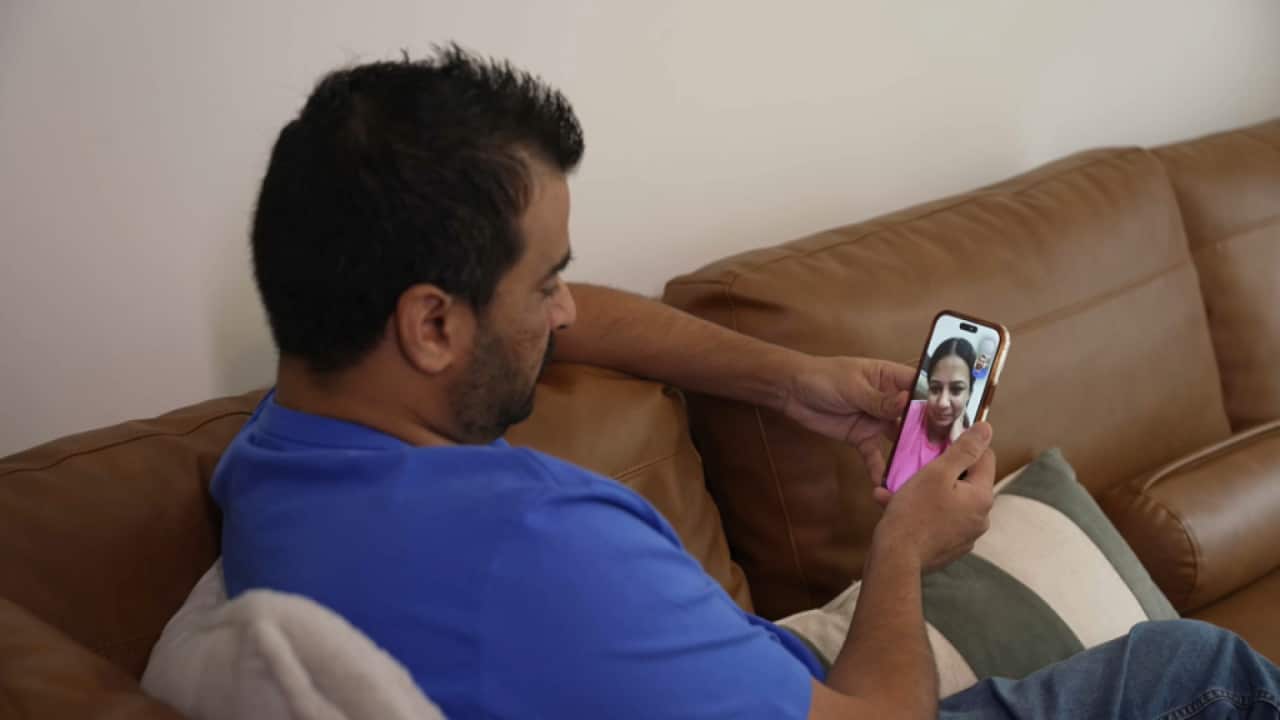
It's been seven months since Amir Bukhari has seen his wife in person.
"I miss you so much; I miss you too, my sweetheart"
The couple were married last November in Pakistan.
A short time later, the Australian citizen helped his partner apply for a visa.
"Once we submitted the application, we had to do a biometric. We got a request for a medical as well, so we did it the next day, and we have provided everything the very first day. And since then, silent. We have heard nothing ."
Amir's wife is one of thousands caught in Australia's family visa backlog.
Data from the Department of Home Affairs shows around half of Partner visas are processed within 17 months, and ninety percent within 30 months.
In 2024, more than 68-thousand Partner visas were lodged, the highest since 2012.
Of those, 40-thousand [[40,500]] were processed.
The price to lodge, $11,710 dollars, is up 25-percent from last year, which the government says is needed to fund migration reforms.
Abul Rizvi is the former Department of Immigration Deputy Secretary.
"The backlog is about 125 thousand, they get about 65-thousand applicants every year and the number of places is 40-thousand. The arithamtic means the backlog must keep growing."
By law, the number of partner visas cannot be limited.
But Professor Mary Crock says levers such as price and wait times are used in an attempt to control numbers.
"We don't stop people from applying, the way that we control it is through the processing of the applications so its first-in-first-served. And according to how many people apply each year, the wait time will blow out."
Abul Rizvi says the backlog will need to be cleared to avoid legal action.
"At some stage either the Ombudsman or the courts will tell them, you must abide by the law and clear the backlog. They don't want to get there. At the moment, whenever an individual in the partner visa backlog goes to a lawyer, and lawyers become involved, the department amazingly processes that applicant very quickly, to remove legal standing from that applicant."
Last month, the Department of Home Affairs updated its website detailing low priority for family visa applications - which includes partner visas - where the primary applicant is outside Australia at the time of application.
While the new processing priority is legal under a Ministerial Direction reform, some migration experts describe it as discriminatory.
Rumina Iqbal is a migration agent based in Melbourne.
"They cannot actually discriminate this. Whether a person is on or offshore, as long as they are having a genuine relationship and they are maintaining the continuation of the relationship then obviously they can't really discriminate whether the other partner is onshore or offshore really."
The Home Affairs Minister Tony Burke was expected to reveal a migration overhaul at a National Press Club Address earlier this month, but postponed it, with reports of internal disagreement.
Amir Bukhari says he doesn't know how long his application will take to process.
"I'm closely monitoring the visa process these days, and time has increased. From 27 months to 30. So it looks like we have to wait longer than we expected. But, we can't do much."
Amir says for now, while he waits for news, life is on hold.
"I love her. And I got married. I wanted to start my life with her, and I wanted to plan my family - but at the moment we are stuck."