
The annual Garma Festival kicks off today on Yolŋu Country in northeast Arnhem Land. It's Australia's largest Indigenous cultural gathering, and a key forum for conversations about social, political and environmental issues affecting First Nations people. The theme this year is Bukmak, which means 'everyone'.
Listen to Australian and world news and follow trending topics with SBS News Podcasts.
TRANSCRIPT
Thousands of people have gathered in Gulkula in northeast Arnhem Land, for Australia's largest Indigenous cultural gathering: Garma.
In Yolŋu Matha, Garma refers to a two-way learning process, that recognises everyone has knowledge to share.
The annual festival is famous for facilitating conversations about Indigenous affairs, and spectacular displays of song, dance, culture and art.
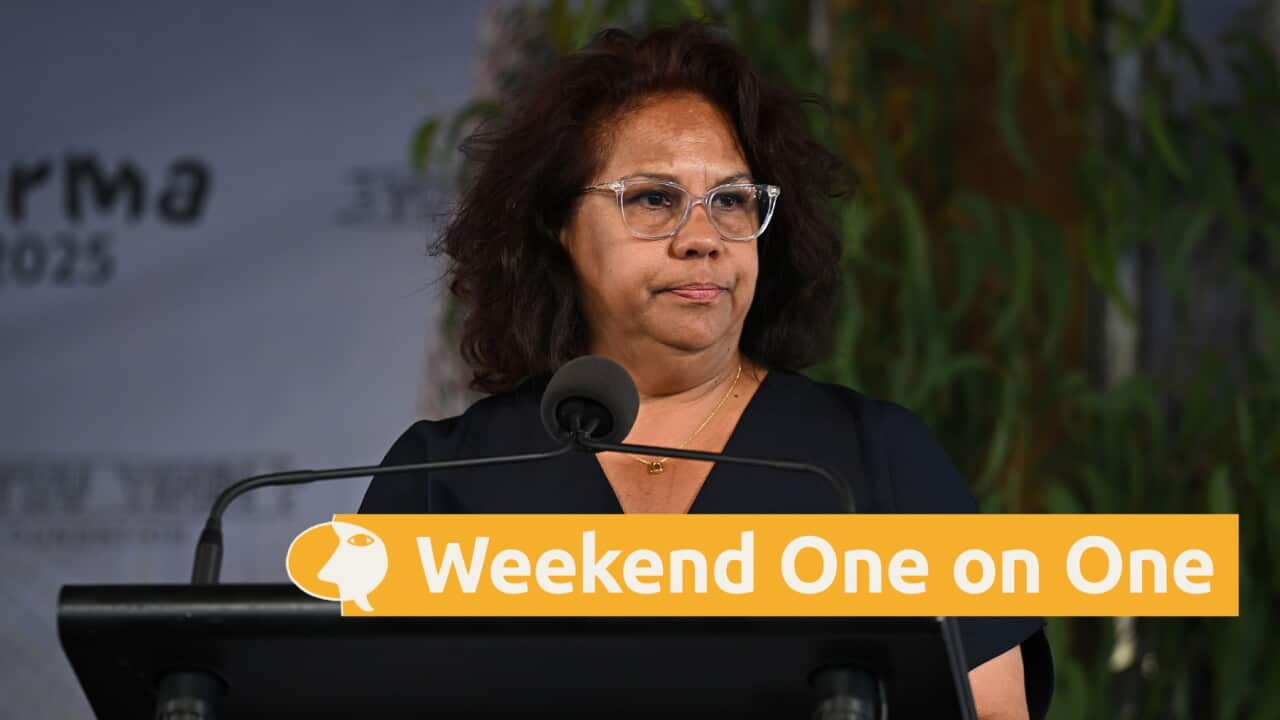
It's organised by the Yothu Yindi Foundation, whose CEO Denise Bowden spoke with NITV Radio ahead of the event.
“People keep using the word life-altering for their Garma experience, and you know that's not massaged at all. It comes to me time and time again, and nine out of 10 people say that very thing to me, which is just amazing because it's true.”
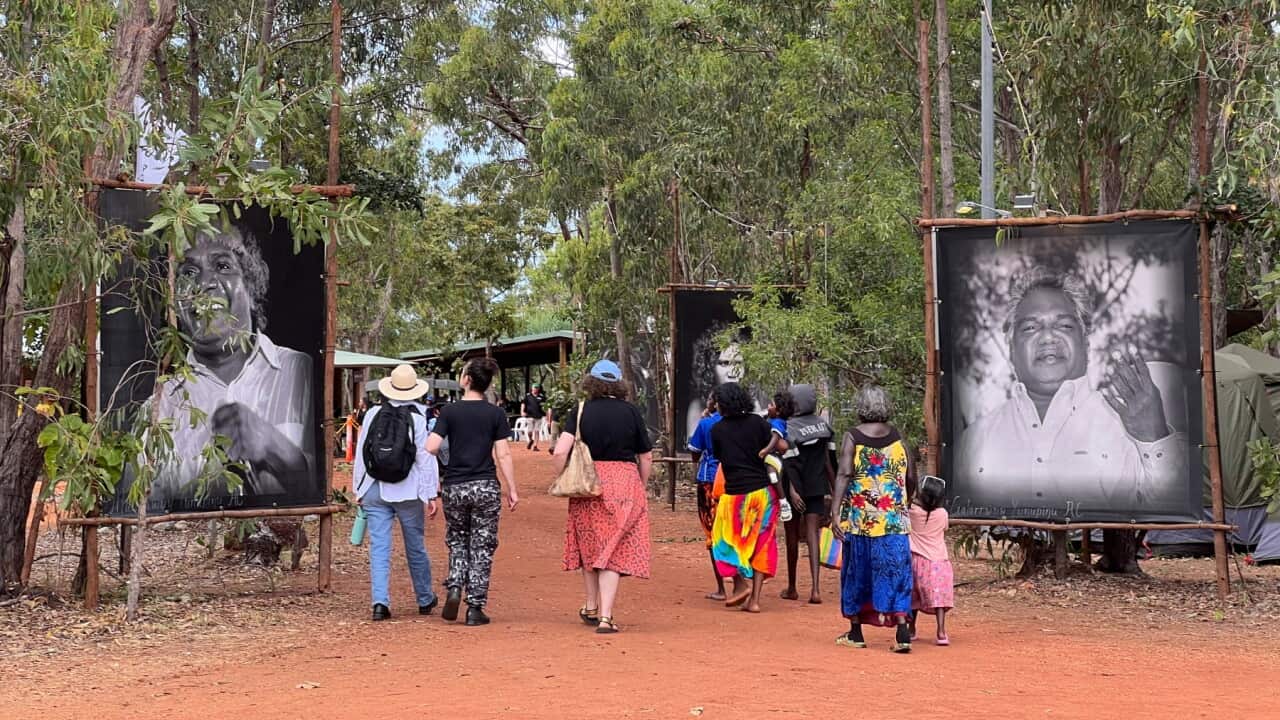
The festival was founded in 1999 by the late brothers Dr Yunupingu AC and Dr M Yunupingu, who was the frontman of the band, Yothu Yindi.
They wanted to preserve, protect, and promote Yolŋu culture at a time when many Elders were concerned important knowledge was being lost.
This year, the four-day program responds to the theme 'Bukmak', which means 'Everyone', emphasising unity, inclusion, diversity and connection.
With over 5,000 people expected to attend over the four days, Denise Bowden says the scale of the event underlines the central idea that everyone, together, has a place on the red dust at Gulkula.
“It really is a unifying gathering which blend culture, respect for religions. It brings in an international delegation with a different blend, different languages. It's really quite a healthy multicultural theme this year. And we've got a lot of foreign delegations coming across this year for Garma.”
Three years on from the 2023 Voice referendum, many are calling for action on what they describe as the ‘unfinished business’ of the Uluru Statement from the Heart.
With the absence of Prime Minister Anthony Albanese from this year's festival, Senators Penny Wong and Malarndirri McCarthy are set to outline the government's First Nations agenda.
The Shadow Minister for Indigenous Australians, Julian Leeser, was a supporter of the Voice referendum and will attend.
He says Australia must find a way to move forward after the referendum.
“ Since October 2023, the Australian government's policy on Indigenous affairs has been adrift. It has lacked a clear direction and sense of purpose... A country must be ambitious about its own people. After all, if leaders don't see a big vision for our children, how can we build it for them? If leaders don't give them a target, what will they aim for? We all know where the prime minister stood on the voice, and I stood there too. But since the defeat of the voice, he hasn't got off the mat. Well, it's time to get off the mat.”
This year's festival comes as Aboriginal and Torres Strait Islander leaders continue to call for greater investment in the community-controlled sector, arguing they are best placed to deliver better outcomes and improve progress on Closing the Gap.
Despite significant push back from Aboriginal organisations, legal experts and human rights groups, the Northern Territory's CLP government passed new child protection legislation in late July.
The new law abolishes the Aboriginal and Torres Strait Islander children placement principle, which accords that First Nations people who are removed from their homes are kept within their own culture.
Speaking to NITV, Wurundjeri and Ngurai Illum Wurrung woman Sue-Anne Hunter is the National Commissioner for Aboriginal and Torres Strait Islander Children and Young People.
“Oh, look, that's extremely concerning. There was 120, submissions to the scrutiny committee, particularly on what if they put those amendments through, which they have, but what would happen. That wasn't listened to at all. We know it's gonna cause more adverse effects for Aboriginal and Torres Strait Islander children and young kid, which means more of our children in out-of-home care. We could possibly be looking at another stolen generation.”
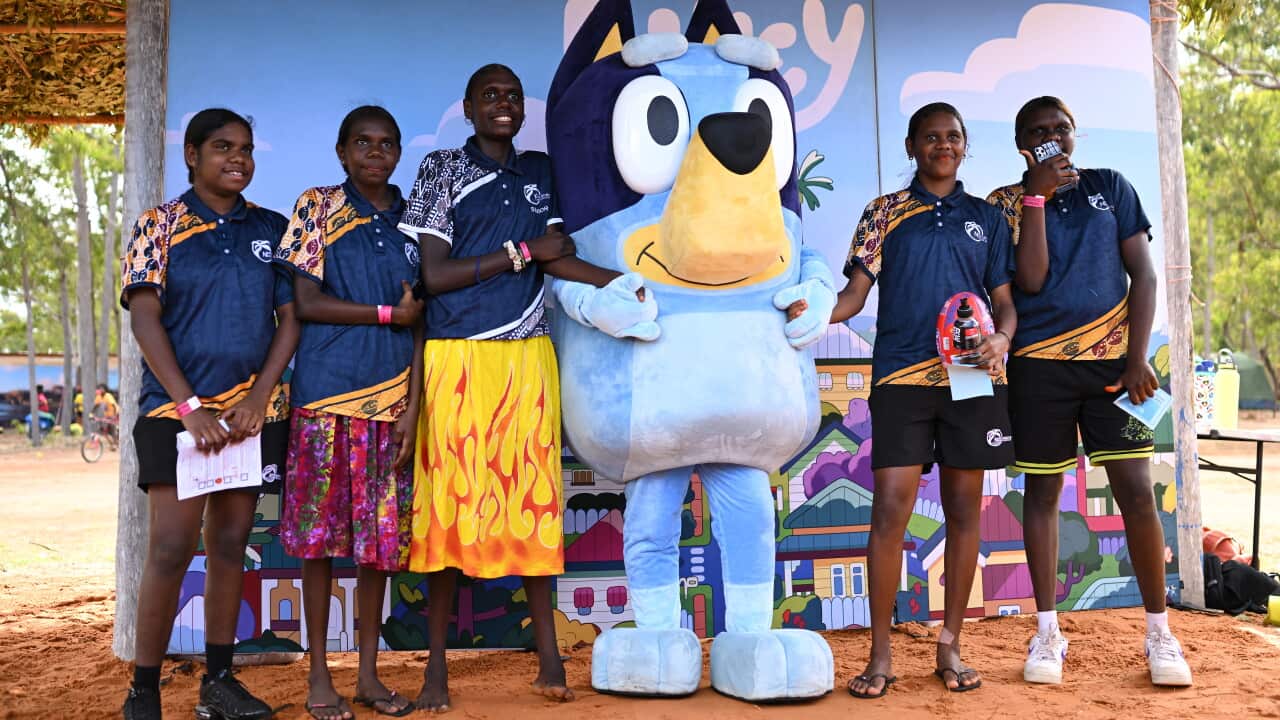
Alongside the influential Key Forum, a Youth Forum will bring together schools from across Australia with local and regional schools with the aim of building cross-cultural bonds and sharing knowledge.
Sue-Anne Hunter says it will be an important opportunity to hear directly from the children.
“I've been in contact with them, and I've been invited in, so I'm very excited, you know. And they said, "Is there any questions you wanna ask?" And I'm like, "No, I want you to tell me. I don't think it's my agenda. I wanna hear what you've got going on." And I know last year there was a great outcome. I just wanna get in there with the youth, listen to them, 'cause that'll help me shape... We're only a year old in this commission. That'll help me shape the future of where we go with the commission.”
This year's Garma will also mark 50 years since the Aboriginal Land Rights Act, which allowed Aboriginal people to claim land rights on Country and led to the creation of the four Land Councils in the NT.
Despite the progress made, Northern Territory Land Council leaders say First Nations people in the NT still face systemic disadvantage.
Denise Bowden says hearing from the community about these challenges is crucial.
“We've got such a massive blend of people who are trying to explain what it's like living in these very remote communities because it is almost worlds apart. Someone in Sydney might not know a lot about this or someone in Melbourne might not know about this. And so, trying to explain to people how you have to improvise in these regions is really important. The politics is really important also to hear that from Indigenous people's voices and with respect, not from a politician's voice, is really, really important.”
Beyond the politics of Garma, the festival is grounded in ceremony and country.
Each evening features the call of the yidaki and the bilma, with guests encouraged to sink their feet into the dust.
Throughout the Gulkula ceremonial site, cultural workshops are held for language, kinship, weaving, spearmaking and on-Country learning.
First Nations films from across Australia and abroad will play each night, with visitors able to wander between poetry readings, astronomy tours and women's healing sessions.
Denise Bowden says at Garma, you never know what's going to happen.
“Don't have a fixed, I guess, attitude to it. Just come in and lean into the event and let it take you from this experience to the next. And your experience will be very different from another person's experience. You will meet people. You will meet the Garma family at the event, and you'll walk away from the event with incredible friendships and memories, and something will happen. You will have something out of the blue that will happen, and that is the Garma experience. And it may be a job offer, or a connection to a company,.. I mean, there's so many ways of experiencing the event, and I've heard people tell me about their experience. And somebody had said, "Wow, did we go to the same event?" Yes, you did.”