
New Indigenous land council announced at the Garma Festival; South Australia reports a potential mass mortality event as bird flue spreads; fallout from FIFA's scrapped private investment plan.
Listen to Australian and world news and follow trending topics with SBS News Podcasts.
TRANSCRIPT
- The creation of a new Indigenous land council announced at the Garma Festival
- South Australia reports a potential mass mortality event as bird flue spreads
- Fallout from FIFA's scrapped private investment plan
South Australia has reported what could be the first mass mortality event from the H5N1 strain of bird flu, as the virus spreads into local wildlife populations.
The state has 39 confirmed cases, compared to 14 in all other jurisdictions combined.
A case in a seagull in South Australia has sparked fresh concern about local transmission, and now, the state Environment Minister Emily Bourke says 49 dead greater crested terns have been found, with another 35 birds identified as sick.
"They have not been confirmed as suspect cases through testing as of yet. But just to confirm, there is a large number of birds that have been found that we are concerned about and are undertaking testing at this point in time off of Cape Jaffa, and would provide a significant change in our response and understandings of the impact on wildlife here in South Australia."
-
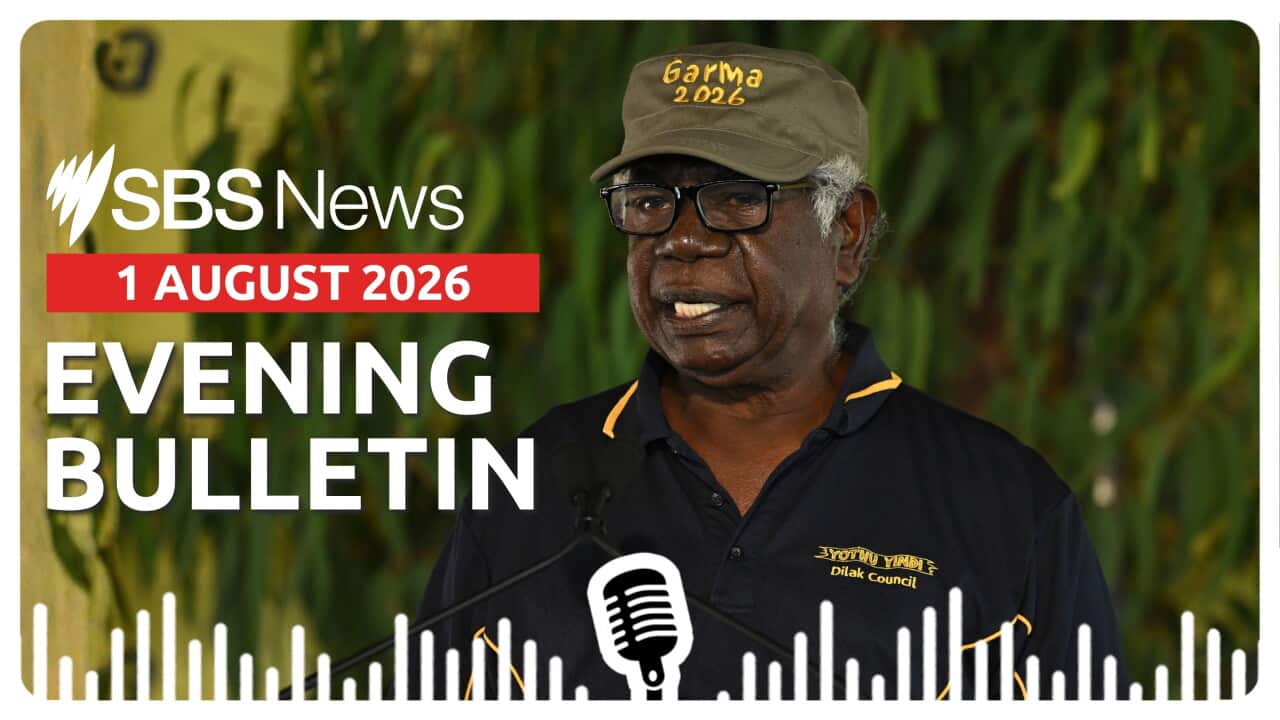
The senior leader of the Gumatj Clan, Djawa Yunupingu, has announced the creation of a new land council in the Northern Territory, at the Garma Festival.
Called the Dilak Council, it is formed with members of the Northern Land Council who have decided to breakaway and form the new group.
Mr Yunupingu, who is also chair of the Yothu Yindi Foundation, which is hosting the Garma Festival, made the announcement on day two of the four-day event.
"The Dilak Council will give new life to the land and the people. It will work with the government and with mining companies and any company who want to do business with us. It will work in partnership with the Northern Land Council for the people. We will be a part of the economic life of this nation."
-
The Rirratjingu people have welcomed a land tenure deal with the NT government that would see the remote mining town of Nhulunbuy come under Aboriginal ownership.
After more than 60 years of large-scale bauxite mining, Rio Tinto is planning to wind back its operation by 2029 - including retiring the deep water port facility on the Gove Peninsula.
After more than a week of defending controversial changes to child protection laws, NT chief minister Lia Finocchiaro used her speech at the Garma Festival to shift focus to the new land tenure deal.
She says her government would support clan leaders in calling for federal government funding to help repurpose the port and fuel-storage facilities.
"Traditional owners have set out a very clear vision for this region, which we are passionate about supporting into reality. This includes a diversified economy, strong cultural leadership, local jobs, regional services, improved infrastructure and greater economic participation. Through the Gove Peninsula's Future Reference Group that vision is supporting planning and investment decisions right now. I want to say our government is with you every step of the way."
-
The legacy of prominent Aboriginal rights advocate Lowitja O'Donoghue is being celebrated today, on the second occasion of the annual day named in her honour.
Today would have been her 94th birthday.
The Yankunytjatjara woman was the first Aboriginal nurse trained at the Royal Adelaide Hospital in 1954.
She later became the inaugural chairperson of the Aboriginal and Torres Strait Islander Commission; and the first Aboriginal person to address the United Nations General Assembly.
The CEO of the The Lowitja Institute, Paul Stewart, says Lowitja O'Donoghue's leadership and courage to challenge injustice continues to inspire others – and it's a reminder that our actions can help create a stronger future for those who follow.
-
And to sport,
Non-profit fan network Football Supporters Europe has called for reform of football governing body FIFA, after widespread criticism of a plan to sell stakes in the World Cup to private investors.
FIFA says it will no longer proceed with the plan, following opposition from member associations, including UEFA, which threatened a boycott and accused FIFA of putting the sport's "soul" up for sale.
In a statement, FIFA President Gianni Infantino says his intention with the plan was to strengthen member associations and the sport worldwide, but the feedback has shown the project is creating divisions of a nature that are no longer in the interest of the initial aim.
Stuart Dykes, from Football Supporters Europe, says FIFA's proposal has been poorly received by fans, and there should be consequences for Mr Infantino.
"It's becoming increasingly clear that the plans for the FFE (FIFA Forward Enterprise) that have been announced, that none of this has been discussed even with members of the FIFA Council or the FIFA Vice Presidents, let alone with the football stakeholders such as the players, the clubs, the leagues, the associations, and of course the supporters. So, you know, this is another massive governance failure. FIFA's governance is not fit for purpose, and it needs to be placed under greater scrutiny."