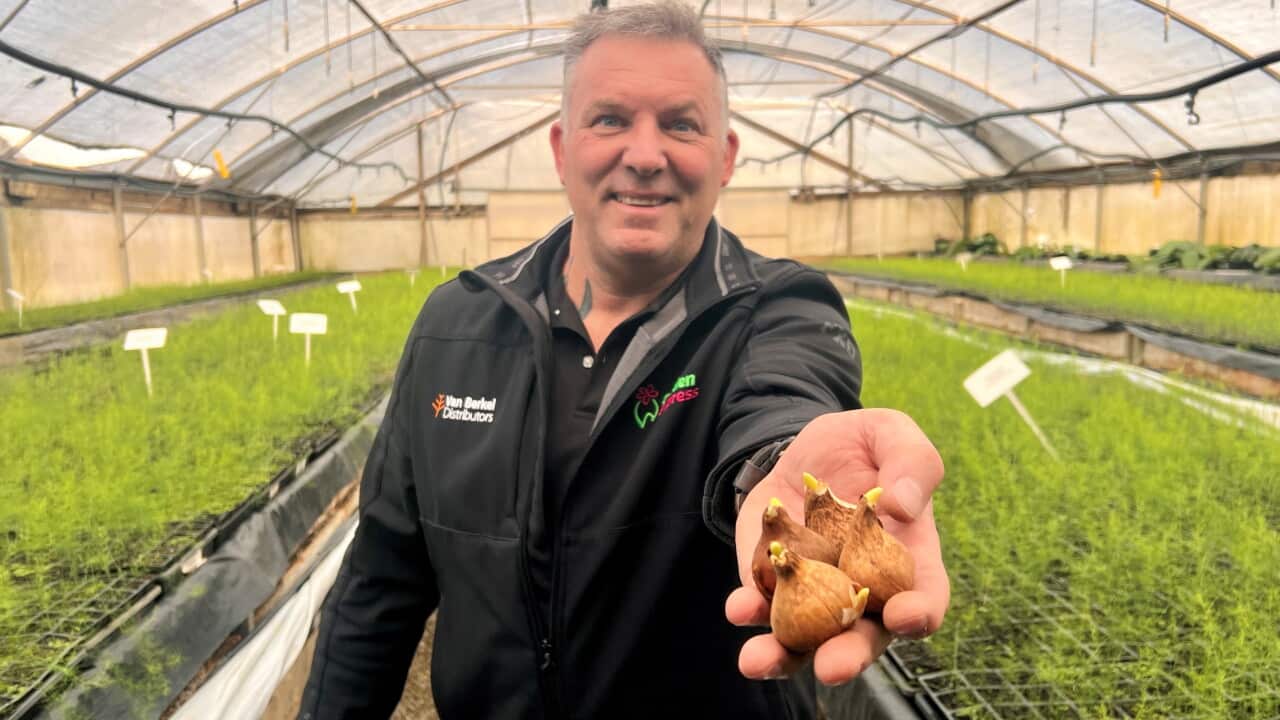
Tulips have long connected David Van Berkel's family to their Dutch roots.
But while the flowers continue to flourish on the family's farm in Victoria, he fears another part of his heritage is fading — the language, stories and shared history that shaped generations of Dutch Australians.
Some of Van Berkel's earliest memories are of his father's flower farm. For as long as he can remember, his Dutch family has grown tulips both in Australia and the Netherlands.
"When my opa [grandfather] first came out in 1950, he brought a passion for flower bulbs and later became one of Australia's largest tulip and hyacinth growers in his time," he told SBS News.
News that makes sense
Your trusted source for staying up-to-date with the world around you. Get free daily news updates and analysis, straight to your inbox.
The legacy continues to bloom decades later.
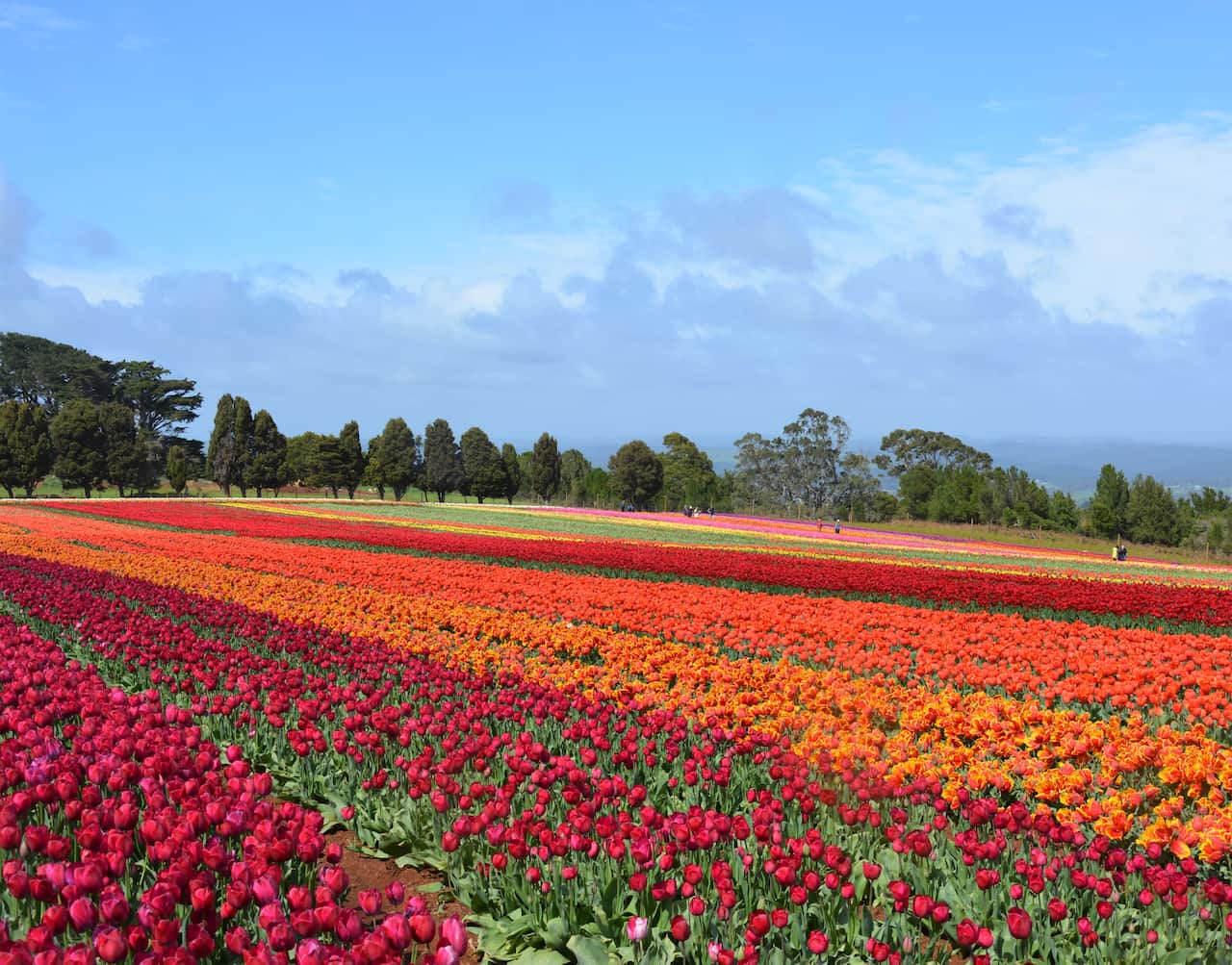
"Tulips are having a major resurgence and they're very popular in our Dutch migrant community," he said.
Van Berkel is the third generation to run the family's farm at Monbulk, a town in Melbourne's Dandenong Ranges, and said gardening "runs in his blood".
But while the flowers have endured, Van Berkel worries other parts of his Dutch identity have not.
A language lost
Like many in Australia's Dutch diaspora, Van Berkel said aspects of his heritage are "slipping away", particularly language.
I wish I learned to speak Dutch growing up. The Dutch language is slowly disappearing from our family and also from the district.
Van Berkel's experience reflects a broader trend. Research by linguist Michael Clyne found Dutch Australians experienced one of the highest rates of language shift to English of any major migrant community in Australia, a change linked to post-World War Two assimilation, intermarriage, and rapid integration.
Census data also shows that while almost 382,000 Australians claim Dutch ancestry, only a minority of Netherlands-born Australians now speak Dutch at home.
Nonja Peters, a historian and anthropologist at Curtin University, said under Australia's assimilation policies, post-war migrants were encouraged to speak only English.
"Once children entered the school yard, they were Australian. No ESL (English as a second language), no help with anything, they just had to deal with it. It was a sink-or-swim education policy," she told SBS News.
"At the time, the children were told that if they didn't cope, it was their fault."
They learned not to talk about their backgrounds. It was like they had no past basically.
For many migrant families, speaking English became a priority as they sought to fit into Australian society, often at the expense of maintaining their native language.
The hidden scars of war
For Peters, that history is more than academic. It is also deeply personal.
She arrived in Australia in 1949 as a young child with her parents. During World War Two, her father was taken by Nazi forces and sent to work in a steel factory in Strasbourg in Nazi-annexed French regions. Peters' mother followed him.
"For 12 hours a day, they forcibly laboured in that steel factory under Nazi SS [Schutzstaffel] guns, to bolster the Nazi war machine," she said.
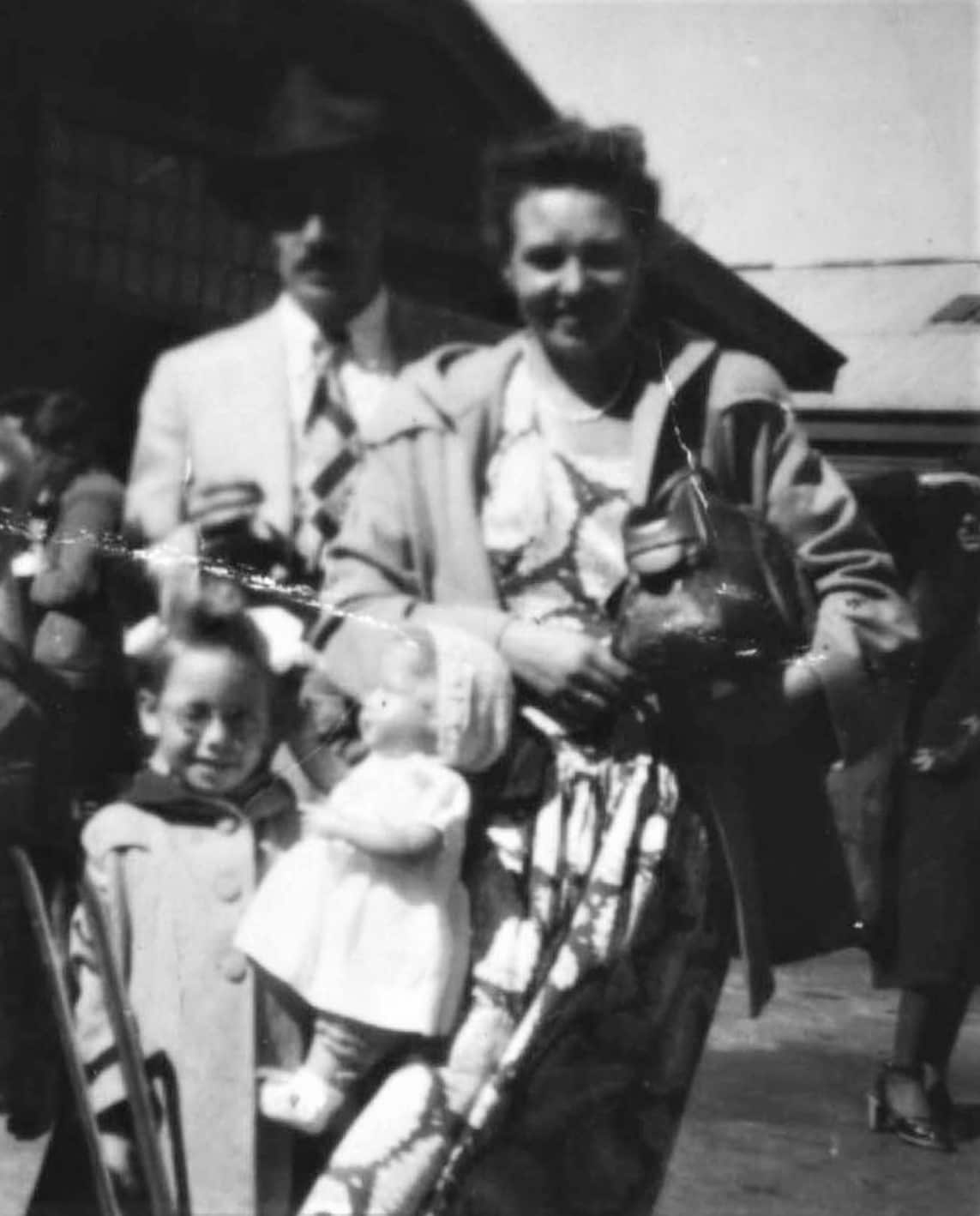
In 1948, Australia began accepting migrants under the Empire and Allied ex-Servicemen's Scheme that offered assisted migration for former soldiers who had fought with Allied forces during the war. Peters' parents were among them.
However, like many post-war migrants, she said they arrived "carrying the consequences of war, occupation, loss, abduction, forced labour, famine, incarceration and enforced family separation".
"Yet they entered an Australia whose assimilation policies expected them to begin again as if those histories did not matter," Peters said.
Most psychological suffering was either silenced, misdiagnosed, or blamed on the migrant themselves.
Despite these experiences, many Dutch arrivals became known as "invisible migrants" because they were widely seen as having integrated quickly into Australian society, according to Jill A'Vard from the Monbulk Historical Society.
For many, Australia also offered the opportunity to rebuild their lives and create a new future after the war.
Recovering hidden stories
Those stories are now the focus of an exhibition in Monbulk — From the Lowlands to the Ranges — a project spearheaded by the local historical society, where community members are working to preserve the experiences of Dutch migrants for future generations.
Jill A'Vard is also compiling the stories into a book to be released in August.
"Many early Dutch migrants here survived unimaginable hardships, living with no electricity or running water," said Maria McCarthy from the Monbulk Historical Society.
"But compared with what they had left behind, Australia was still seen as an opportunity to take their families forward."
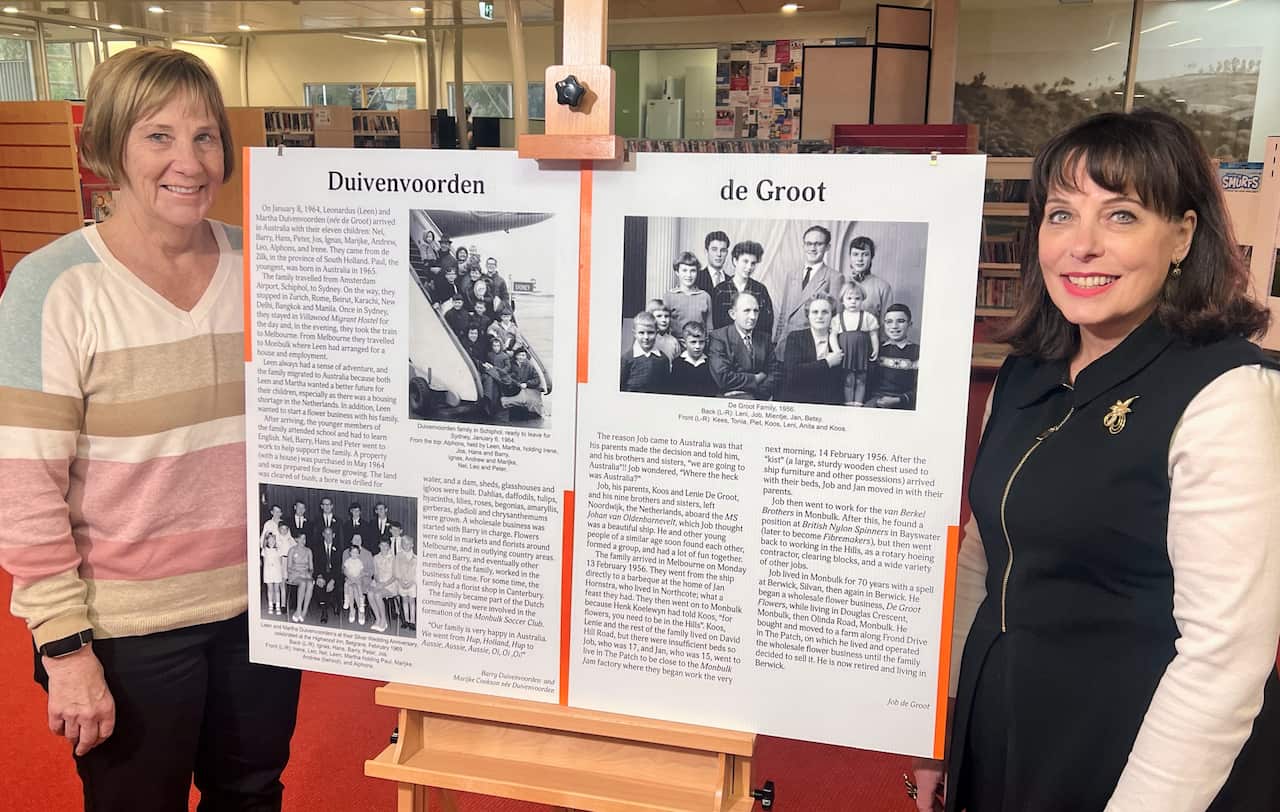
The van Horick family is among those featured in the exhibition. Gerry van Horick was just eight years old when his parents set sail for Australia in 1963.
Upon arrival, they were sent to the Bonegilla Migrant Camp in north-east Victoria.
Between 1947 and 1971, Bonegilla became Australia's largest migrant reception centre, with more than 300,000 migrants passing through its gates.
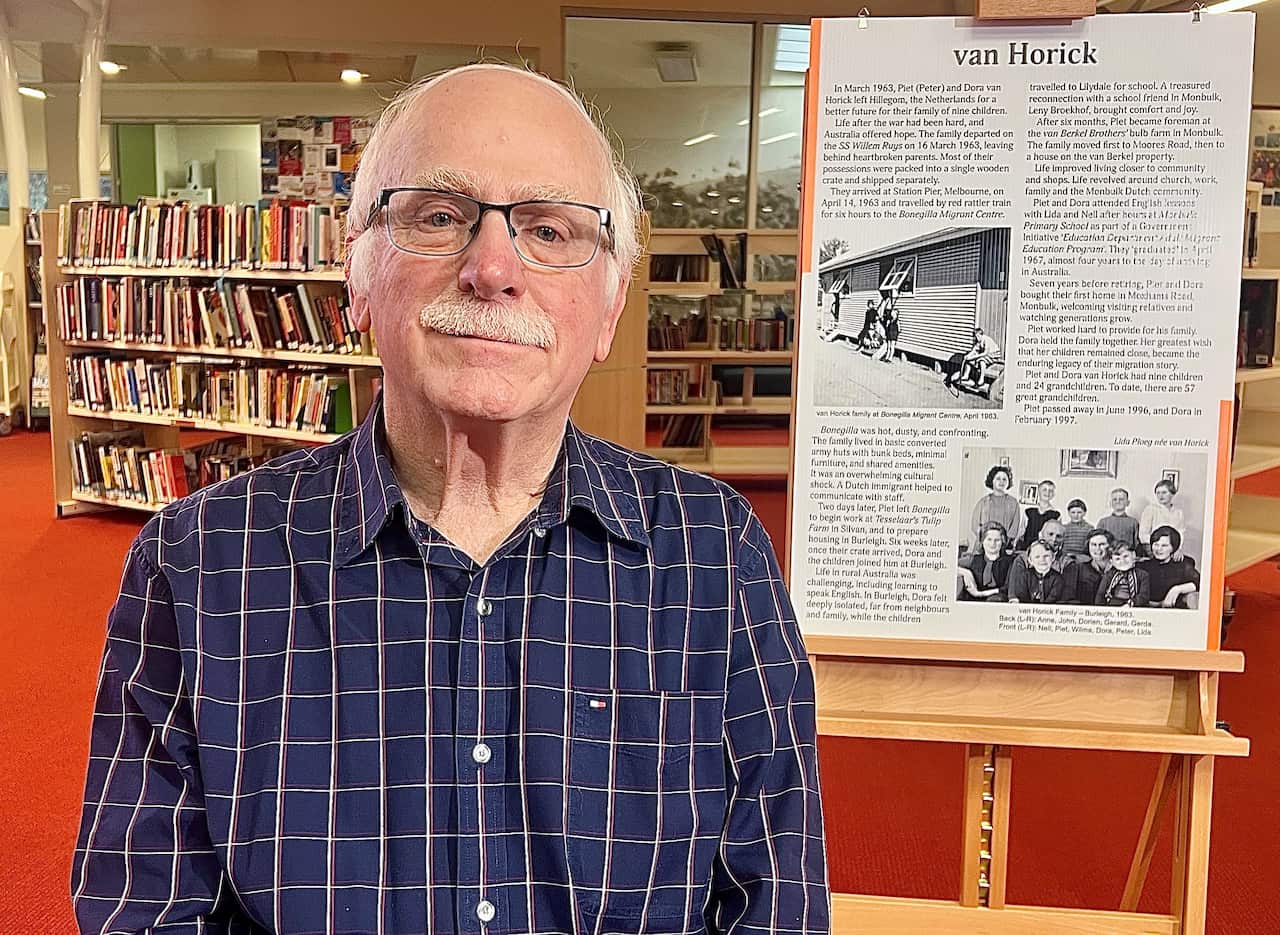
For many migrants, including the Dutch, Australia offered opportunity but few comforts in those early years, van Horick said.
"The accommodation was very sparse, just enough for a bed. We had a communal kitchen where we used to eat, communal shower blocks," he said.
Life changed for his family when the Van Berkels offered his father a job and a place to live.
"Dad joined the garden business at Monbulk, and for almost 14 years we lived in a house on their property," van Horick said.
"It was a very big part of our early experience and migration journey."
.jpg?imwidth=1280)
Stories like these are common among post-war Dutch migrants, Peters said.
"At the start, [Dutch business owners] hire from their own community, because they understand and trust each other. And trust is key to running a family business," she said.
Carrying a legacy forward
Preserving Dutch heritage for future generations is also a focus for Van Berkel.
"We're proud of our history and where we come from, and the impact of such a small country on the world.
It is really important that our children understand how we got to live in this lucky country, through the hard work of others.
This story was produced in collaboration with SBS Dutch.
For the latest from SBS News, download our app and subscribe to our newsletter.

Sharing business secrets of inspiring entrepreneurs & tips on starting up in Australia's diverse small business sector. Read more about Small Business Secrets

Have a story or comment? Contact Us







