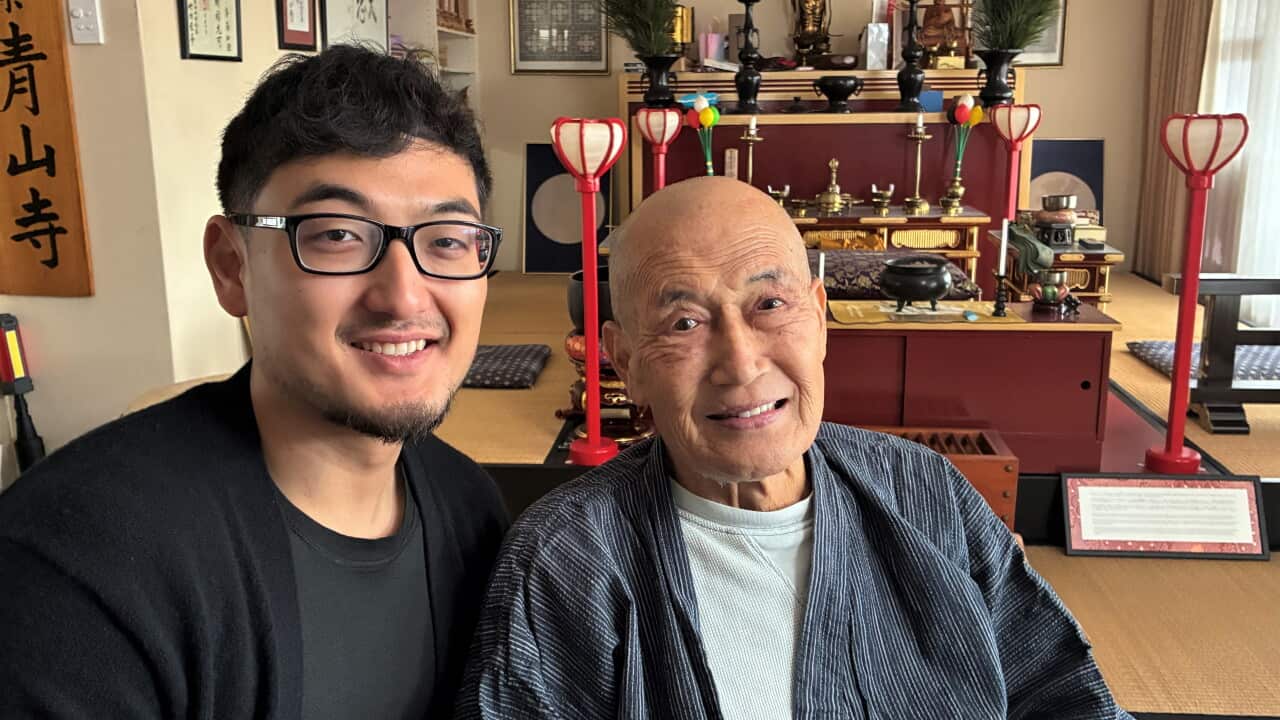
On the balcony of a suburban Sydney home, an 81-year-old karate master moves through a series of strikes and blocks with the precision of muscle memory honed over decades.
Beside him, his son mirrors every movement — a younger fighter carrying forward lessons born not in sport, but survival.
In the background, a eucalyptus forest disappears into morning fog.
Kazuo 'William' Saito has spent more than half a century training in the Japanese unarmed martial art, earning multiple championship titles along the way.
His son Harrison, 28, is now following the same path.
News that makes sense
Your trusted source for staying up-to-date with the world around you. Get free daily news updates and analysis, straight to your inbox.
For Saito, karate was never simply an after-school activity.
"I was born in Tokyo in 1945, and my father died soon after," he tells SBS News. "During the war, Tokyo was badly bombed, and my mother and I lived in a rough area."
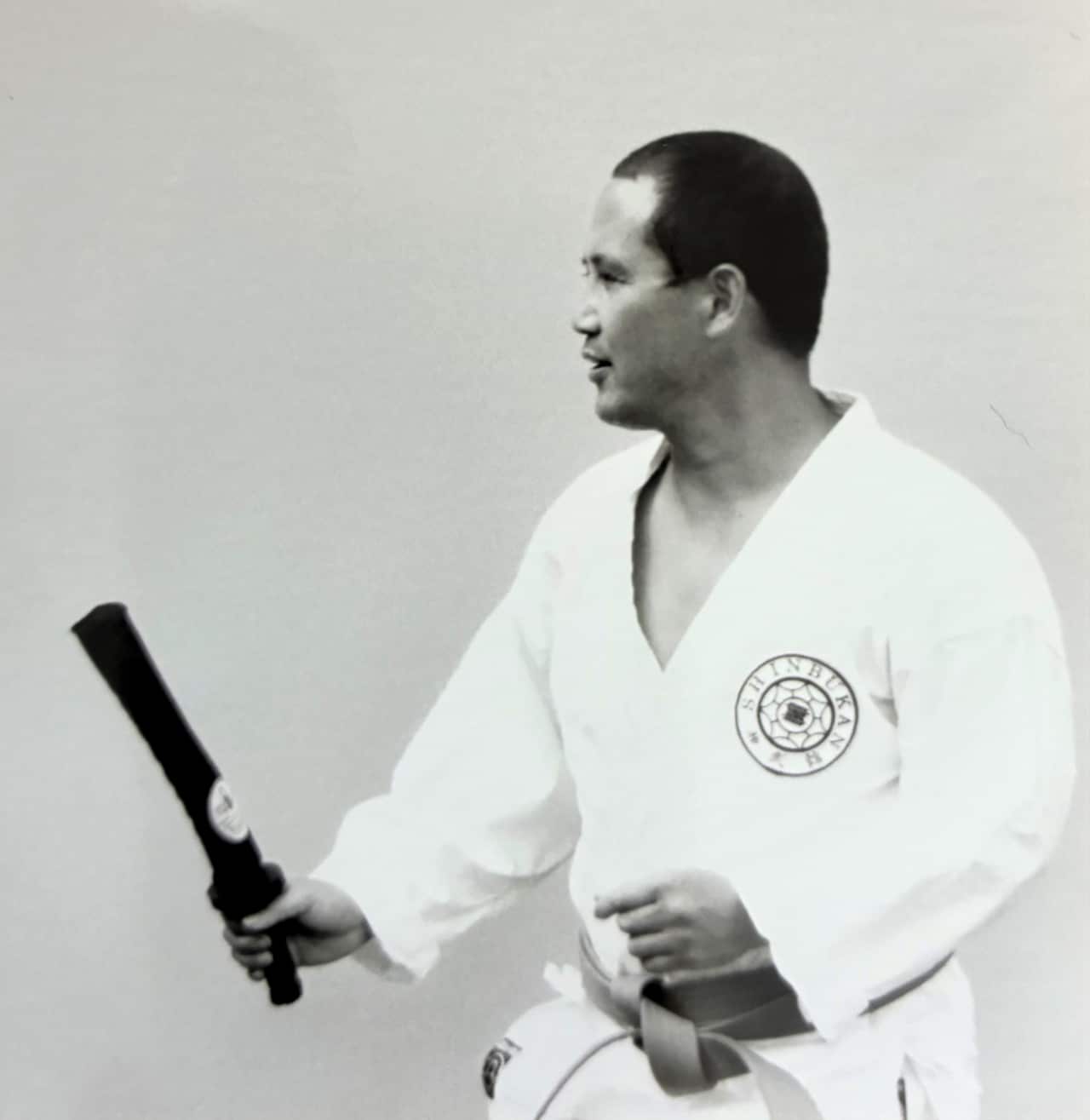
"There were gangs; it was very dangerous. To survive, I had to be strong, I had to fight back," Saito says.
Now decades later in modern Australia, those same lessons of discipline, control and resilience taught through karate are increasingly being explored as tools that may help young people navigate anxiety, stress and social pressure.
Can martial arts help youth mental health?
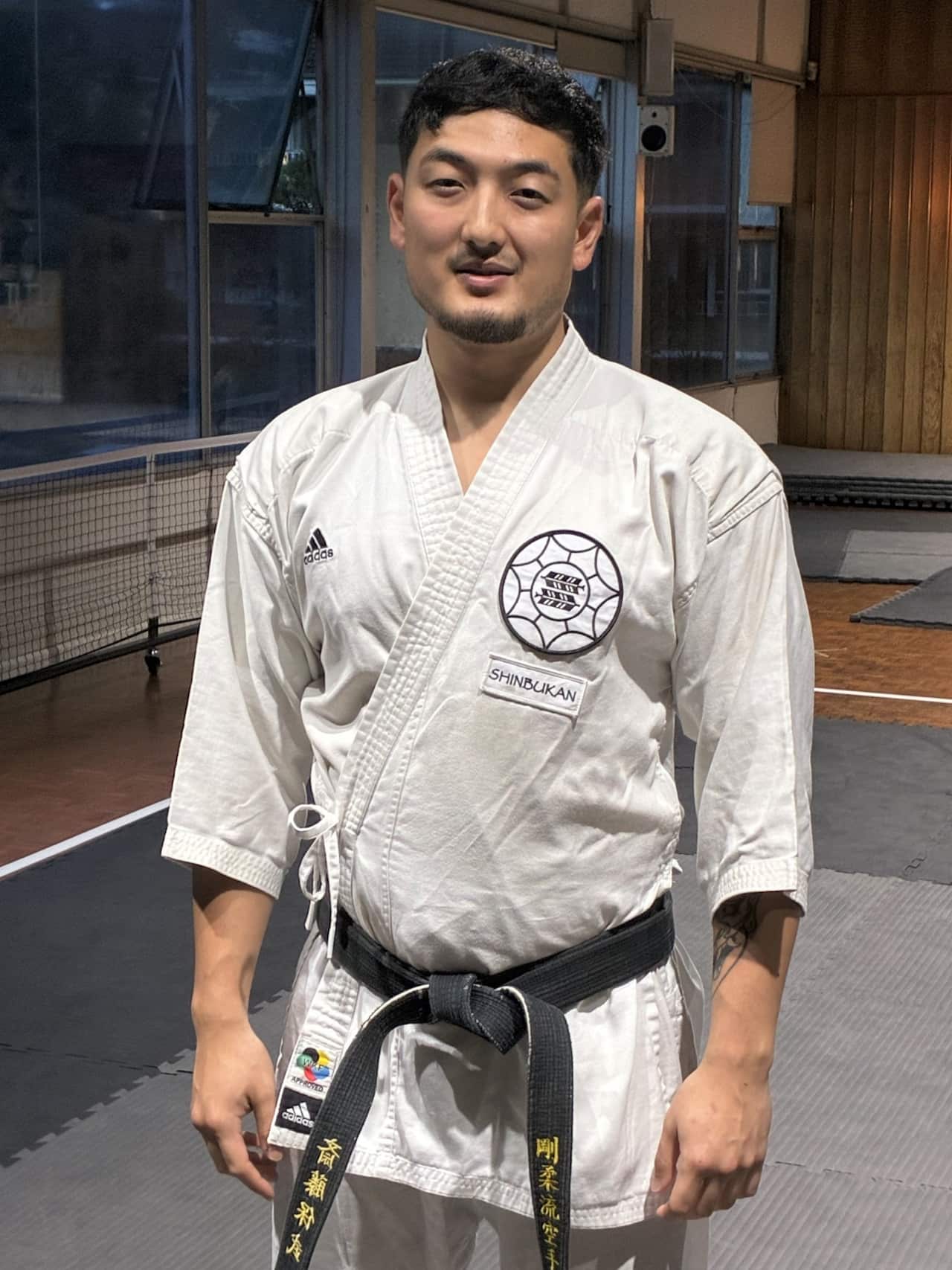
Harrison holds a black belt in karate and also teaches at a local high school. He says he wants children to understand what courage truly means.
"Fear will always be there, but they can learn to sit with that uncertainty, and bring themselves to a functional baseline," he tells SBS News.
Up to half of all Australian teenagers are projected to face depression or anxiety by age 20, unless urgent action is taken to address the drivers of poor mental health.
Research led by the Burnet Institute found that investing between $50 million and $1 billion annually into intervention programs could prevent up to 787,000 young Australians from experiencing anxiety and depression by 2050 and deliver up to $74 billion in societal economic benefits.
Brian Moore is a senior lecturer at the School of Education at the University of Wollongong whose research explores the effects of physical activity on youth mental health.
He conducted a series of randomised trials involving 283 secondary school students aged 12-14. He found that martial arts training has the potential to improve self-efficacy and promote wellbeing through physical activity.
According to the Second Australian Child and Adolescent Survey of Mental Health and Wellbeing, an estimated one in seven — or about 560,000 — Australian youth and children are experiencing mental health disorders.
The survey reported the total prevalence of mental illness among Australian adolescents aged 12 to 17 years was 16 per cent for males and 13 per cent for females.
Moore says martial arts can promote a sense of mastery and accomplishment by creating opportunities for self-improvement.
It may also have broader social benefits.
"Across Australia and globally, government and youth outreach groups use community-focused sports as an intervention to lower juvenile justice crime rates and keep communities safer. Having said that, it's really important that we remember that while martial arts might have mental health benefits, it's not a psychological therapy," he tells SBS News.
A family legacy shaped by karate
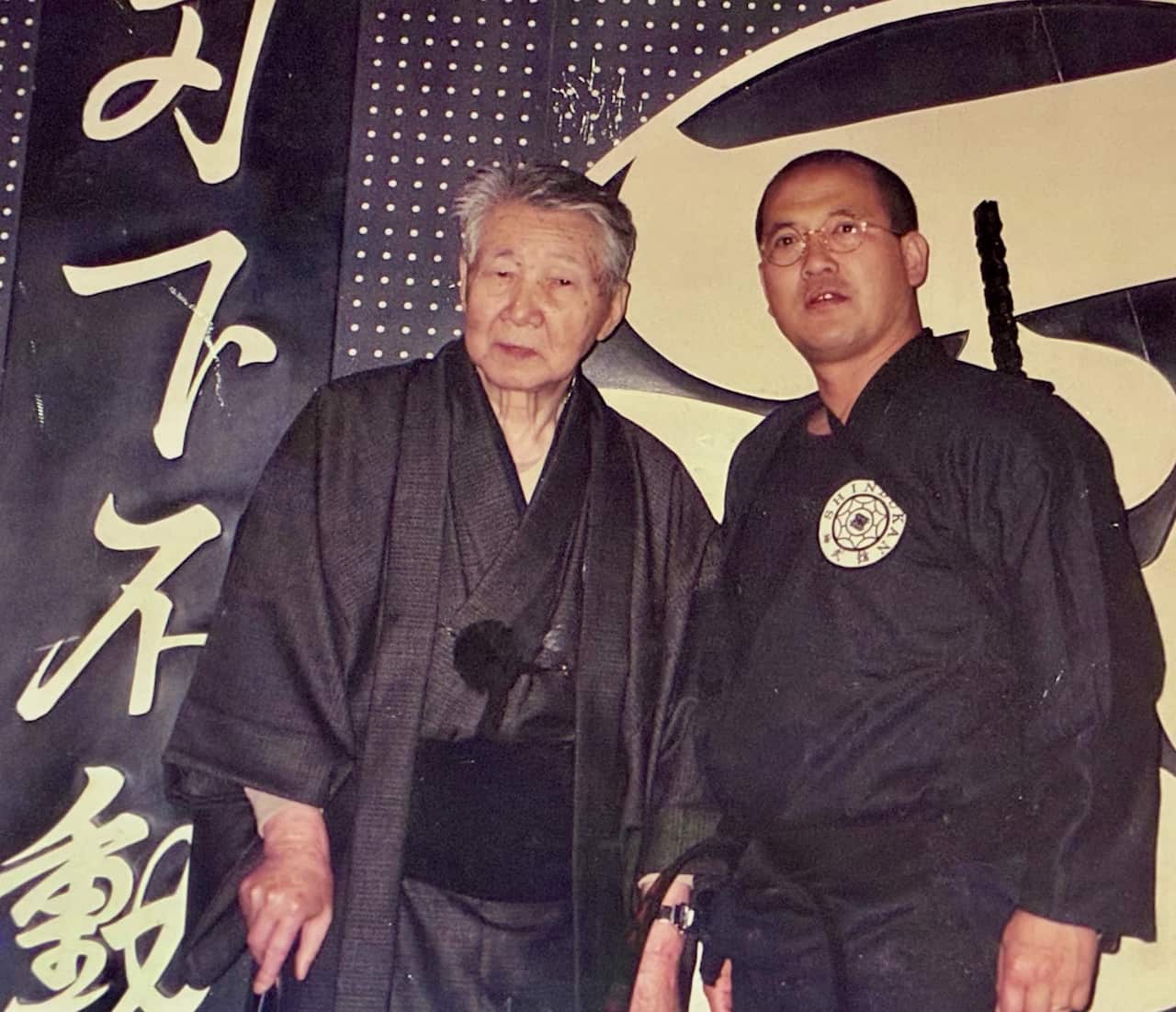
Harrison was born in Australia and, while more than half a century separates him from his father, Kazuo, they share a common goal: passing on skills and knowledge through their martial arts academy.
The karate they teach traces its origins back centuries to Okinawa, Japan's southernmost prefecture, where farmers and peasants — prohibited from carrying weapons — developed defensive combat techniques using their hands and feet.
Karate later evolved into a globally practised martial art and competitive sport, popularised through films, tournaments and international competition.
"As a young man, my father fought a lot and used martial arts, not for competition, but purely as self-defence. It was a matter of survival," Harrison says.
"I am grateful for the experiences and the opportunities that my dad's given me, and I am so proud to use what he's taught me to continue his legacy."
As both a teacher and a martial arts instructor, Harrison says he regularly witnesses the pressures young people face — from academic stress, online escapism and in some cases even substance abuse.
"Early drinking, I think that's a big thing. Early drug usage, big thing. And they do a lot of online virtual reality immersion."
Helping students stay calm and focused on their studies is one reason Harrison says he teaches karate three nights a week.
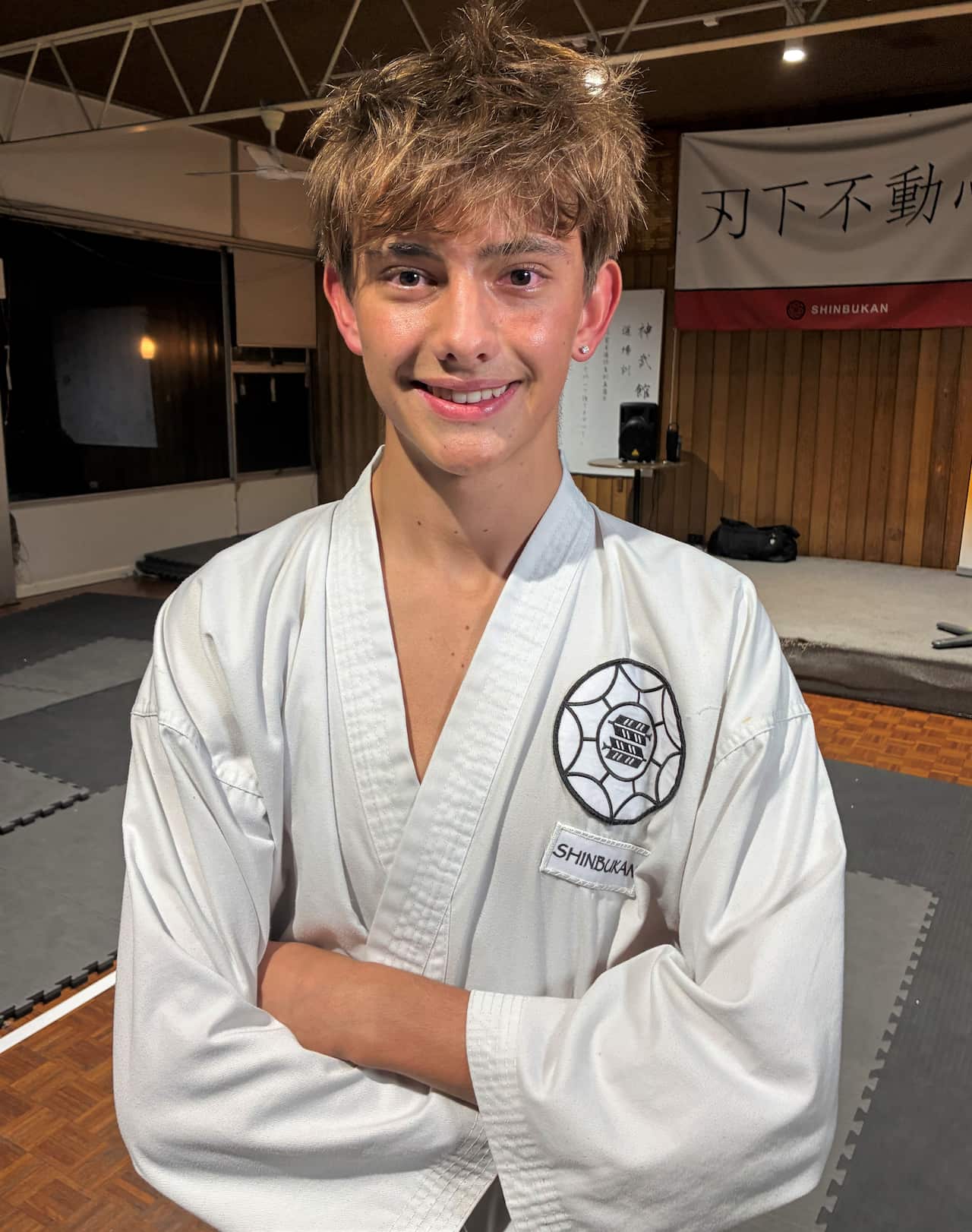
One of his students, Aiden Jacobs, has been training for four years and holds a green belt with a black tip.
The 17-year-old is among thousands of teenagers nationwide feeling the pressure in the lead-up to final year exams.
"It can be overwhelming at times. Sometimes you feel like: 'Oh, maybe I don't have this. Maybe I'm not doing this right'," he tells SBS News.
Jacobs dreams of becoming an actor and hopes to gain admission to a national academy next year.
"There is a lot of pressure that builds up during the week," he says.
But I leave karate class feeling free from stress in my mind. I have a clear head, clear body, clear soul.
Discipline, confidence and criticism
Martial arts training may help build strength, discipline and self-control. However, some critics argue traditional styles that rely heavily on cooperative drills or rigid forms — without realistic combat or "pressure testing" — can create a false sense of confidence that may not translate to unpredictable real-world confrontations.
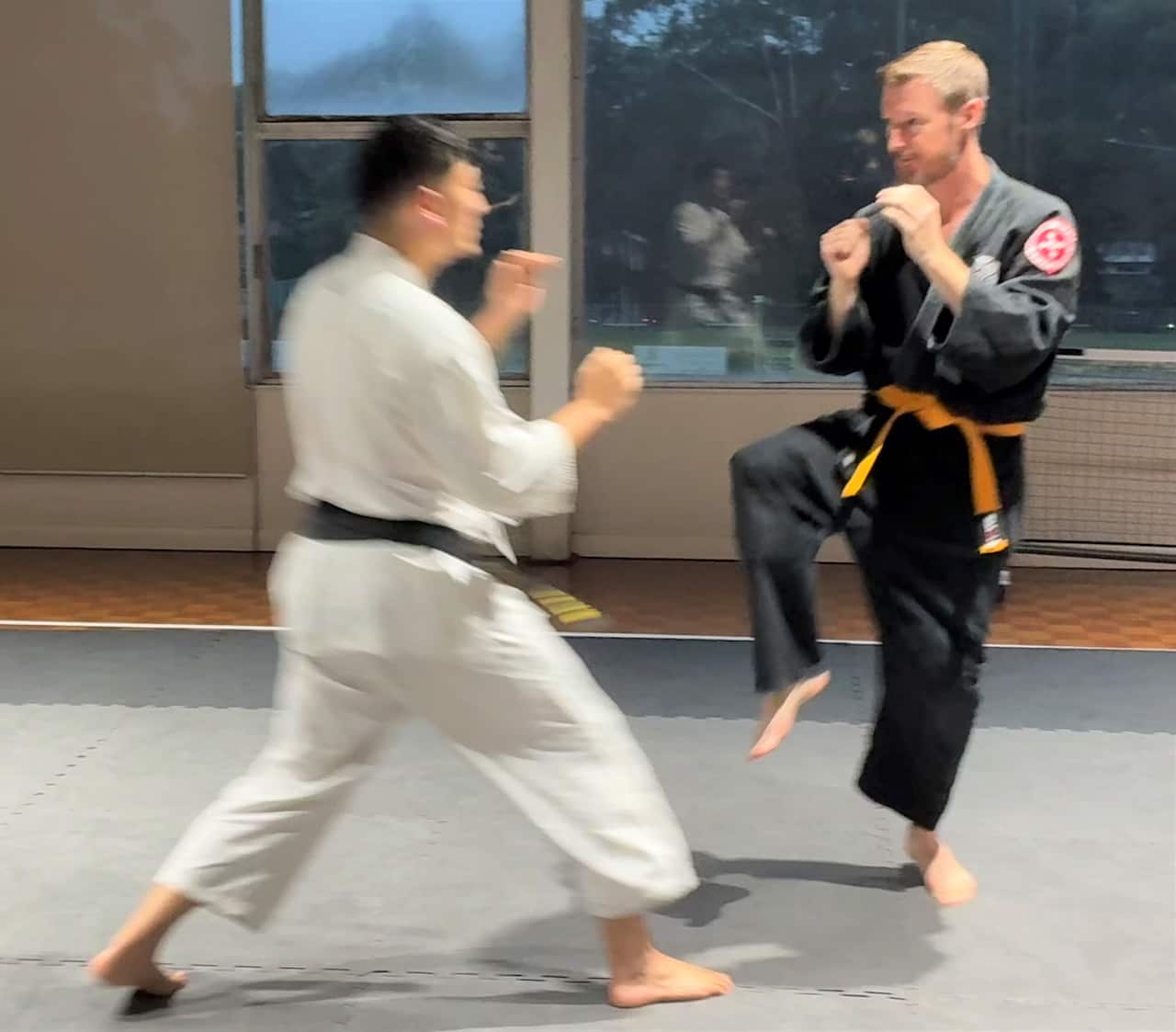
Harrison believes traditional karate offers something deeper than physical technique alone.
"For me, it is about understanding yourself better," he says.
That idea resonates with students like James Bolton.
The 44-year-old construction project manager took up karate a year ago to help manage mental health issues, including depression and anxiety.
"There were several burnouts over the last kind of 10 years," he tells SBS News.
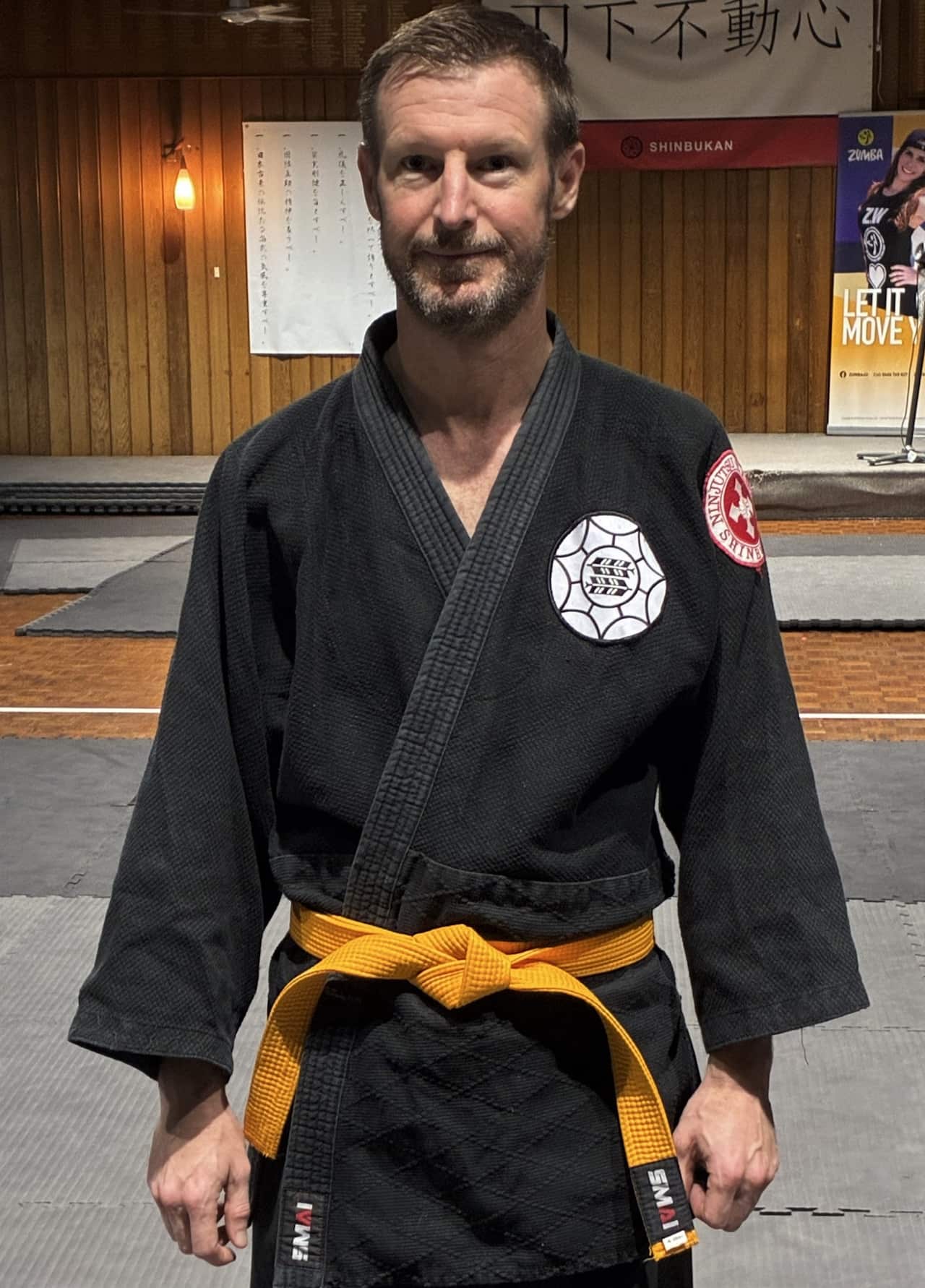
Bolton says learning techniques such as stances, blocks, and kicks is only part of the physical training, but karate is not just about building the body; for him, it's also about strengthening his mind.
The person that walked into this dojo a year ago to the person that is here today in front of you is almost unrecognisable.
"I think, in terms of physical fitness, state of mind, focus, calm, the stress that has just dissolved out of this body, and the resilience and resistance to taking that stress back on, is absolutely rock solid."
Harrison believes the value of the sport lies not only in self-defence but also in the mental discipline and resilience it can help develop.
"Karate is a tried and tested framework that can see people through their day-to-day lives," he says.
It is also a spiritual practise. It is about a mental battle of resilience.
For students like Bolton, that resilience is part of what keeps them coming back — turning karate from a form of exercise into a source of stability, confidence and calm.
Readers seeking support with mental health can contact Beyond Blue on 1300 22 4636. More information is available at beyondblue.org.au. Embrace Multicultural Mental Health supports people from culturally and linguistically diverse backgrounds.
This story was produced in collaboration with SBS Japanese.
For the latest from SBS News, download our app and subscribe to our newsletter.

Sharing business secrets of inspiring entrepreneurs & tips on starting up in Australia's diverse small business sector. Read more about Small Business Secrets

Have a story or comment? Contact Us







