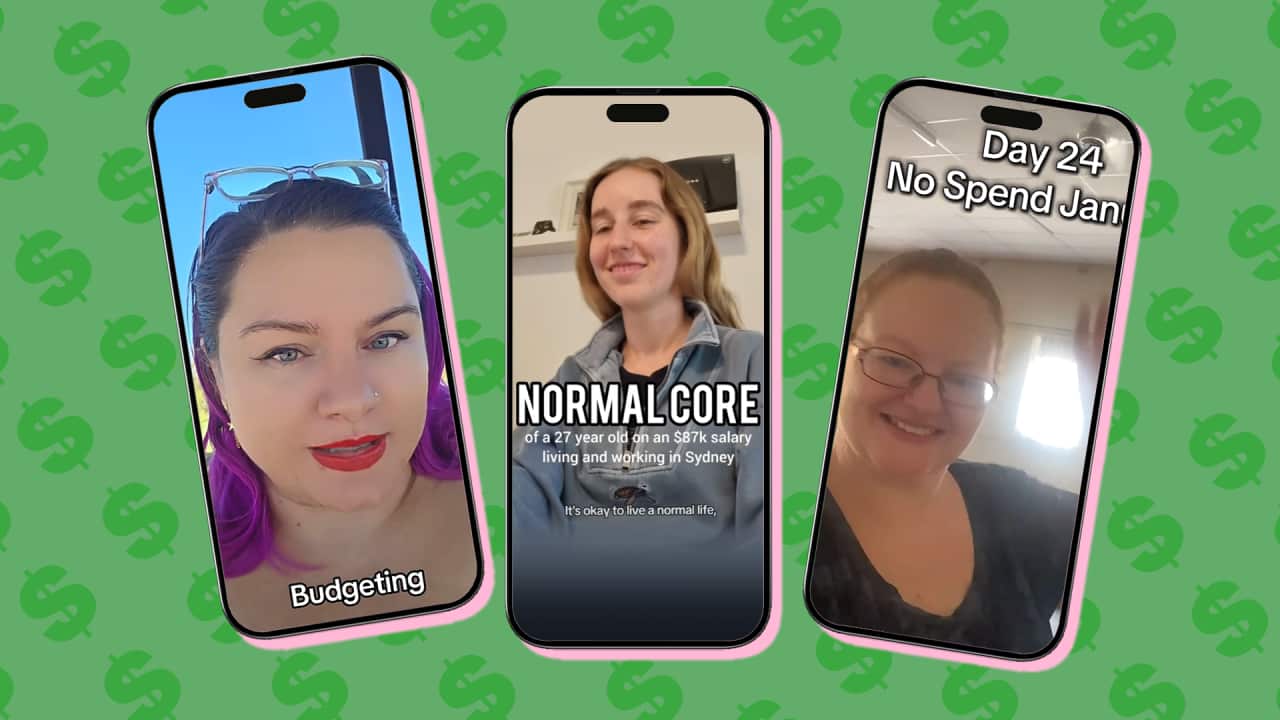
In a world of online influencers often selling idealised and aspirational lifestyles, 28-year-old Ally Perdikaris creates content focused on 'normalising a normal life'.
"We're so good at making it look so effortless and casual: someone's amazing, amazing life," she told The Feed.
"So, I wanted to cut through that a bit, just to maybe pop up on some people's feeds to interrupt that kind of scroll."
Ally is one of a group of content creators that have grown in popularity in recent years known as 'frugality influencers', who provide tips for living a thrifty life in the face of excessive spending and overconsumption online.
She doesn't consider herself someone who's super "budget strict". Instead, her focus is intentionality.
News that makes sense
Your trusted source for staying up-to-date with the world around you. Get free daily news updates and analysis, straight to your inbox.
"I don't encourage people to go out and buy things. Instead, I'll encourage them to maybe spend less or spend more intentionally," she said.
Why frugality influencers are so popular
In recent years, trends like 'frugal chic', 'underconsumption core', 'deinfluencing' and 'no buy challenges' have gone viral — all stemming from the desire to spend less money.
Perhaps it's not a surprise that content focused on saving money has become more prominent. According to a 2025 study by Monash University, 85 per cent of Australians aged 18 to 24 experienced some form of financial insecurity during the year before.
Kelly, 49, is based in South Australia and said a love of bargain hunting and creative stretching of budgets prompted her to start posting online — partly to educate younger people about frugal living.
"A lot of things that we do are from my grandma and they're just everyday basic, simple things. And so that's still how we live our life today," she said.
She wanted to share practical tips on things like grocery shopping and meal planning.
"If their parents didn't teach them skills with budgeting or shopping or meal prepping and planning, then they're kind of just being influenced by the next flash of colour … on social media."
She thinks her audience — which ranges in age from teens to fellow gen Xers — is experiencing financial stress largely due to the housing crisis and job market.
Emily, a 35-year-old frugality influencer in Queensland, also thinks her audience is feeling the impact of financial strain.
"I feel like everyone is feeling the pinch right now. And I also think there's a lot of anxiety induced by the media," she said.
"Rent's gone up, bills [have] gone up, food's gone up definitely … it's that very death by a thousand cuts."
She believes the cost-of-living crisis is a factor in the current popularity of frugality content.
"Everybody is looking for little things that they can do that'll make big differences. And that's where my content lies."
What is financial anxiety?
Around a fifth of Australian households wouldn't be able to raise $2,000 for an emergency in a week, according to Australian Bureau of Statistics data published in June. People are also experiencing more financial stress than in 2020, while life satisfaction has consistently decreased since 2014.
Financial anxiety can develop from a broad array of factors and social pressures, according to experts.
"It could be an anxious style of thinking, a perfectionistic or anxious worrying style, and then a trigger event or a number of trigger events like media, comparing yourself to others or just the worry that goes with financial burden," Dan Auerbach, clinical director of Associated Counsellors and Psychologists Sydney, told The Feed.
Beyond Blue data shows half of Australians say financial pressure is the biggest factor impacting their mental health.
Clinical spokesperson for Beyond Blue Dr Luke Martin said young people are particularly impacted.
"They're often trying to navigate some big life stages. Things like renting, saving, studying, starting out in work, and at a time when everything just feels more expensive and uncertain," he said.
Auerbach agrees — and thinks that while young people are conscientious when it comes to finances, they're up against some significant challenges.
"I think young people today are generally very financially thoughtful and responsible, and really want to do well in their finances — and they're also living in a time of extreme financial pressure and burden," he said.
"People are often dealing with real financial stress, and that financial anxiety is when that tips over into something where the worry gets hold of them in a way that's no longer productive or useful."
How social media can influence financial anxiety
Influencer Ally thinks audiences are drawn to frugality content because it gives them a sense of agency during a time of financial stress.
"We can't really control the rising costs of living," she said.
"I think people want little things they can do that are within their control — the things around the house, the eating from home and making their coffee from home, and going for a walk with friends instead of going to brunch."
Auerbach said the rise of budgeting-focused content is "refreshing" and could provide a beneficial counterpoint to other online content.
"I can understand why it provides real relief and a real sense of the possibility of something better for a generation that's grown up with aspirations that are out of reach for most of us," he said.
"I think it really offers a way of succeeding that counters the current pressure that people are feeling they're under."
But he also warns that consuming frugality content could result in similar feelings of pressure and anxiety produced by any other content on social media.
"One of the concerns can be that people can just as easily compare themselves with people who are really excellent at being frugal and think, 'Oh God, I'm falling behind. I'm not doing all the things I should be doing, I'm not financially responsible enough', even when they are," he said.
"What we're always interested in is, how realistic is the person's concern and how trapped have they gotten in a cycle of worry about something that isn't really productive?"
Even Ally compares herself to some people in the frugality space.
"If I mess up, or if I have a day where I think in my head, 'Yep, I've spent way too much', I spiral way more now," she said.
Seeing others complete challenges like making every meal at home or doing 'no spend' weeks and months can lead to a comparison trap.
"I look at that and I'm like, 'Oh my God, should I even call myself a frugality influencer?'"
Is frugality a trend?
For Kelly, Emily and Ally, frugality is an embedded part of how they approach their lives.
"It just is who I am, who I've had to be. And I think even if we suddenly started making $50,000 more a year, which would be life-changing for us, I think I would still write a budget every week," Emily said.
She doesn't think frugality is a trend — but she does think there are potentially some content creators capitalising on its current popularity.
"As soon as the crisis is over, they'll disappear and never post again, or maybe they'll pivot."
For Kelly, parts of frugality — for example cash stuffing, where take out your income in cash and divide it into envelopes — can be trends online.
"But also, people create things like that because they have products to sell," she said.
Some specific frugality trends are promoted in conjunction with products, like binders or custom envelopes for people interested in cash stuffing.
Kelly says instead, you can simply cash stuff with cheap paper envelopes.
"You don't need all the fancy stuff. If you're really struggling with money, you can't afford to be buying the products from these influencers or content creators to start saving money."
Ally believes that while there are truly frugal people, frugality as it's presented online is a trend of its own — and one that people can make money off through sponsorships and brand deals.
"It's a trend that people — like me as well — can monopolise and make money off, which is kind of ironic," she said.
But she hopes that people will still implement elements of her content that work for them.
"I think people should embrace elements of frugality and continue that forever.
"I definitely think it's popping off as a huge trend, but I don't want to see it die."
Readers seeking support with mental health can contact Beyond Blue on 1300 22 4636. More information is available at beyondblue.org.au.
Embrace Multicultural Mental Health supports people from culturally and linguistically diverse backgrounds.

Through award winning storytelling, The Feed continues to break new ground with its compelling mix of current affairs, comedy, profiles and investigations. See Different. Know Better. Laugh Harder. Read more about The Feed

Have a story or comment? Contact Us







