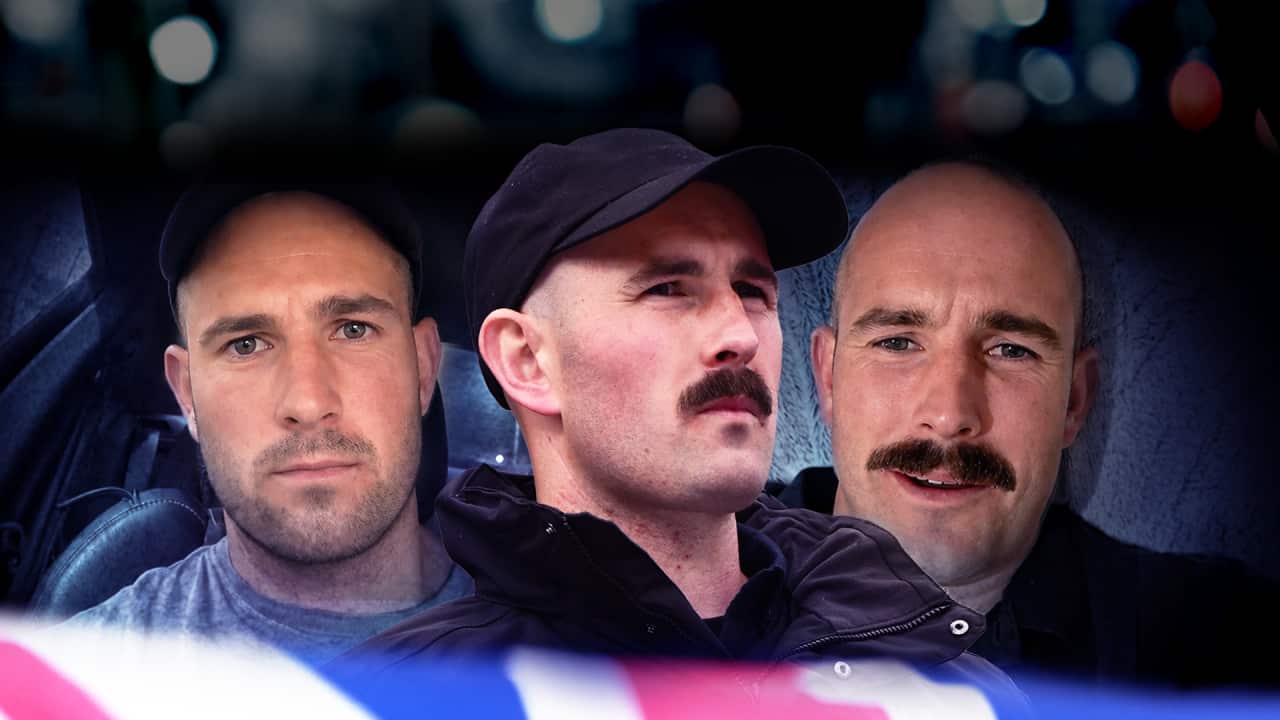
Watch the full documentary 'Autism, Extremism and Recruitment' on our YouTube channel.
This article contains distressing content
"Adolf Hitler, huge autist, massive autist, like all these incredible men, some of the best men that ever lived," Thomas Sewell tells viewers online.
Sewell, a neo-Nazi who led the National Socialist Network (NSN), now White Australia, is 10 minutes into a 22-minute monologue giving his "take" on autism.
His argument begins with what he sees as the problem.
News that makes sense
Your trusted source for staying up-to-date with the world around you. Get free daily news updates and analysis, straight to your inbox.
"What's wrong with them is they've been coddled," the white supremacist says.
"We used to bully nerds and now we coddle them. Now we're like, 'Oh, you have a disability. You're autistic.' And we treat them like that they're f---ing retarded."
Then, a compliment: "They're not. They're actually usually a lot smarter."
Adolf Hitler, huge autist, massive autist, like all these incredible men, some of the best men that ever lived.Thomas Sewell, neo-Nazi
Sewell repeatedly returns to the idea that autistic men do not need to be treated differently, but instead need challenge and to ‘channel their fixations’. He suggests joining the military — Sewell is ex-Army himself — learning a trade or pursuing higher education.
"It won't fix you, but it'll fully build your character," he says.
Sewell dismisses expert understanding of autism in the video — "none of these experts understand autism" — and argues instead that those who struggle have not had "the right mentoring from the right male role models".
Running through his commentary is Sewell’s own movement. Sewell claims that at one point about one-fifth of NSN members were autistic and tells viewers about one former NSN member he says he took under his wing.
"I became like his big brother, and I taught him how to lift [weights], and I taught him how to fight and I taught him how to talk to girls and after two years of just intense bullying … he became like a normal person."
A year later, in 2025, Sewell shared another video speaking about autism. This time as he criticised a Countering Violent Extremism program.
"I've recruited hundreds of autistic teenagers and zero of them have stabbed anyone," Sewell jokes.
We contacted Sewell and he denied that he ever actively recruited autistic people.
But his comments come as the Australian Federal Police (AFP) and researchers stress that extremist groups target young people, who they see as vulnerable, including those who are neurodivergent.
'It is a recruitment video'
Peta Lowe, who spent years leading the NSW government’s Countering Violent Extremism program for young people, has no doubts about the video.
"It is a recruitment video. Whether he frames it that way for himself or not," she tells The Feed.
"For a lot of neurodivergent people, one of the things they really struggle with is social interactions and understanding what people mean and the various layers of communication," she says.
What Lowe sees in Sewell’s language is an attempt to reframe difference as an asset. Something that may leave a person feeling out of place elsewhere is presented as something valued inside his group.
"One thing that extremist groups do is they accept you. 'If you want to come, we're going to accept you. And not only are we going to accept you, you become part of a brotherhood,'" she says.
"It's the idea that the thing that is your vulnerability can be a positive here."
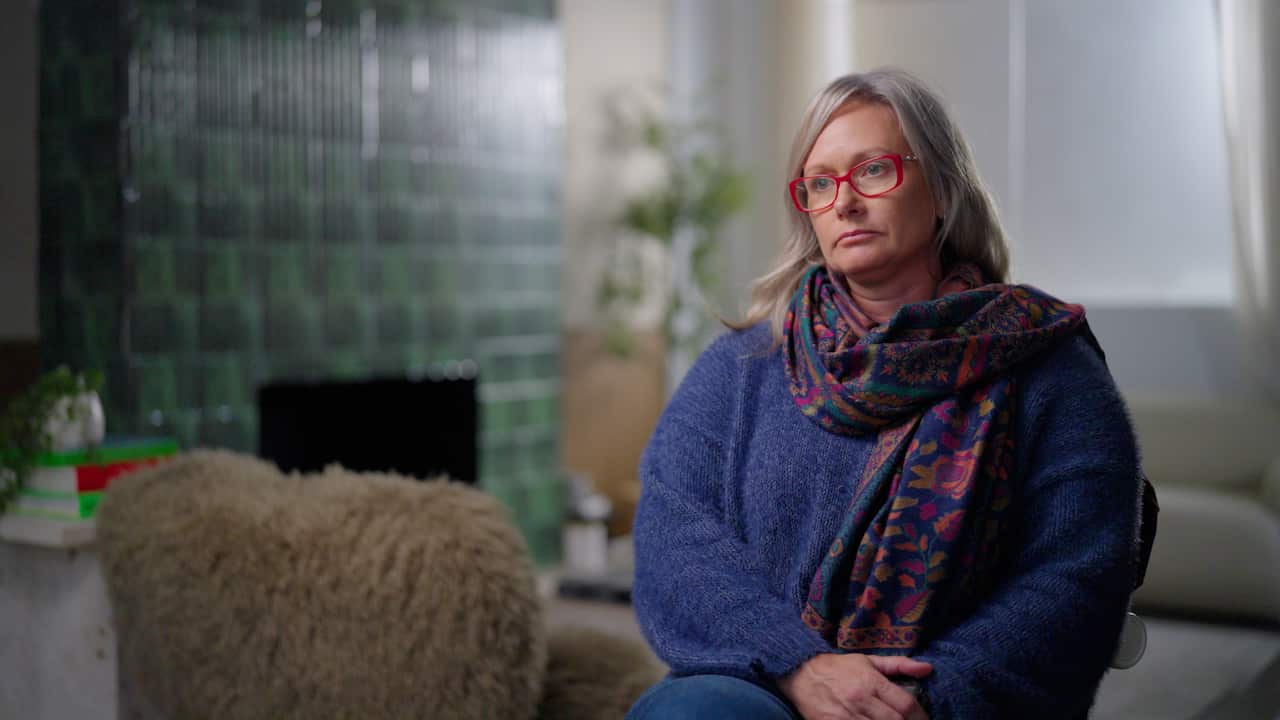
"He used a lot of that language. Be more productive, be more successful, be more valuable."
Sewell led the NSN, which disbanded in January after the government introduced new hate laws in the wake of the Bondi terror attack.
But in May, Home Affairs Minister Tony Burke said the group had effectively "phoenixed", re-emerging in its latest form as White Australia, which was subsequently banned under the laws.
The ban makes it a crime to join, support, recruit and raise funds for the group. The decision followed advice from ASIO, which Burke said considered whether an organisation could heighten the risk of violence.
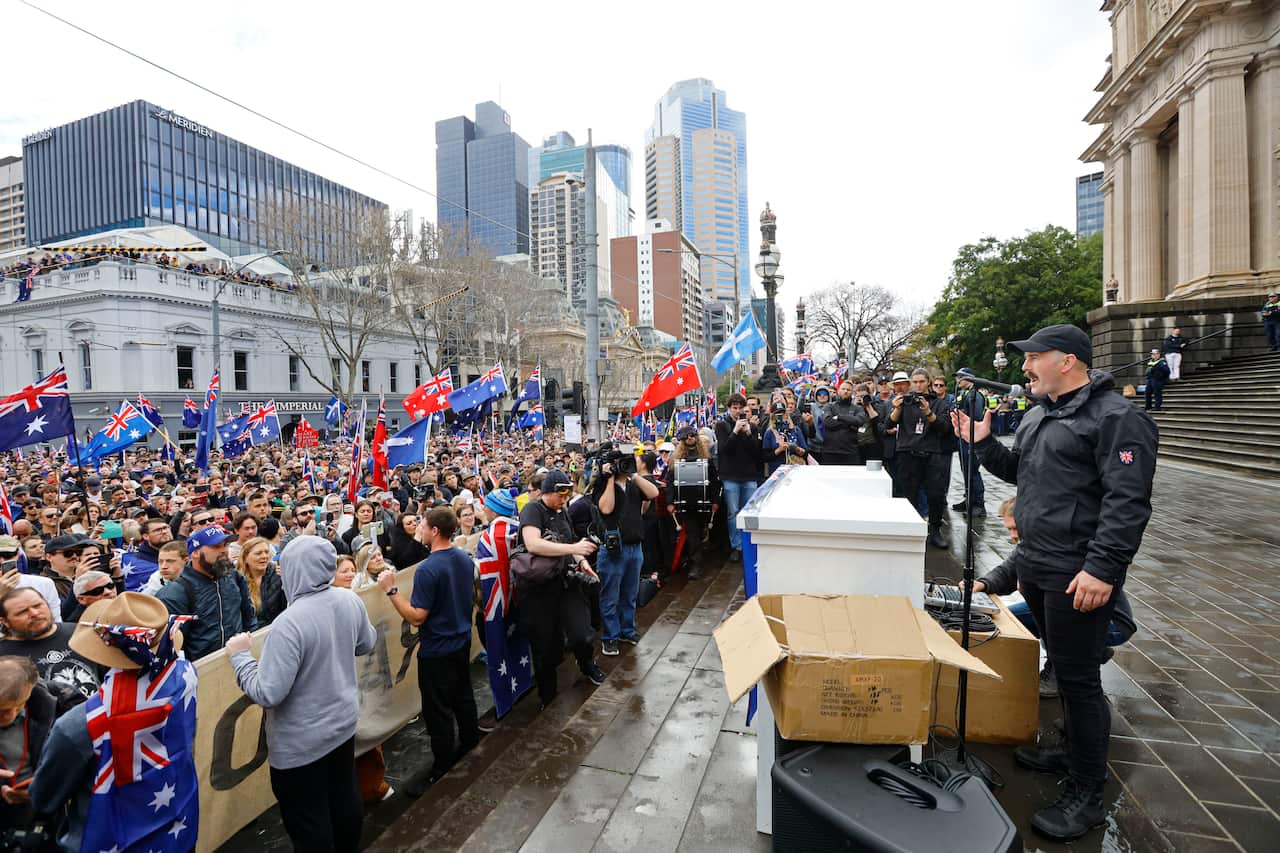
Sewell has been convicted of violent offences, including an attack on a Channel Nine security guard that resulted in a community service order, and an attack on a group of hikers, for which he served five weeks in jail.
He is currently on trial for violent disorder, affray and other offences after allegedly inciting about 40 men to storm an Indigenous sacred site in Melbourne.
For years, he has tried to push a neo-Nazi movement in Australia, organising rallies and public stunts across the country to garner attention and recruit more neo-Nazis.
Sewell is still streaming some of those views online.
Recruiters looking for neurodivergent people
A 2022 analysis published in the Journal of Autism and Developmental Disorders looked at how autism is discussed in alt-right spaces online.
Analysing more than 700 posts on the alt-right platform Gab, specifically the term "weaponised autism", it found that it was largely used by non-autistic users who portrayed autistic people both negatively and as possessing traits that could be useful to the mobilisation of the movement.
For Lowe, recruitment of neurodivergent people is not confined to the far right.
An Islamic State recruiter she spoke to described becoming adept at identifying people online who appeared vulnerable or were searching for a sense of belonging.
"You can't possibly target everyone all the time so you get very good at knowing who to specifically target based on things they say, comments they make on different posts."
That can mean going to online spaces where those vulnerabilities are already being discussed.
"There's actual forums where they talk about things like neurodiversity," she said.
"Recruiters will actively go into those forums and try and encourage people through identifying their vulnerabilities and offering them something."
A growing focus on neurodivergence
In recent years, the AFP has identified a range of factors that can make some young people more vulnerable to radicalisation.
"These include social dislocation, peer influence, mental health challenges, neurodiversity factors, active online engagement with extremists, and triggering or traumatic events," the AFP said in a submission during a statutory review of the Online Safety Act in 2024.
The AFP also shared warnings that extremist groups are deliberately targeting young people in their recruitment strategies based on these vulnerabilities.
But researchers and psychologists caution against drawing a simple line between autism and extremism.
Dr Katie Seidler has worked in forensic psychology for almost 30 years and has assessed violent extremism cases for Australian courts.
"It's unhelpful and it's untrue to suggest that autism spectrum disorder or autistic features make somebody more likely to be violent in an extremist way," she tells The Feed.
"The vast majority of those people who present with ASD [autism spectrum disorder] do not go on to hold violent or extremist ideological positions, nor do they go on to commit acts of violent extremism."
Where autism can be relevant, Seidler says, is when particular traits intersect with other circumstances in a person's life.
"It’s kind of a bit of a perfect storm of events," she says.
"It's not just the autism spectrum disorder, but it's the autism spectrum disorder in constellation with exposure to material online that appeals to that person's thoughts ... with maybe an absence of effective social connections outside of that."
This intersection is also showing up in intervention programs. Academics from Victoria University told a Senate inquiry in 2024 there had been an increase in neurodivergent people referred to extremist violence prevention programs in Australia, particularly young people and those involved in online offending.
Similar trends have emerged overseas. In the UK, one in five referrals to the Prevent counterterrorism program had autism, according to figures released this month.
This is higher than the prevalence of autism in the general population. In Australia, about 1 per cent of the population has autism, according to the Australian Bureau of Statistics, and less than 1 per cent worldwide, according to the World Health Organization.
'Unbelievably manipulative'
Nicole Rogerson, CEO of Autism Australia, has spent two decades at the forefront of autism advocacy in Australia.
She says there are characteristics associated with autism that, for some people, can create vulnerabilities online.
And it would be tragic that they would consider individuals with autism low-hanging fruit to try and join that movement.Nicole Rogerson, CEO Autism Australia
"Some of the vulnerabilities can be things such as an immense interest or focus on something. It can be a misinterpretation. It can be a literal interpretation. There are a whole range of things."
Communication can be another. Some autistic people may misread cues that others pick up on.
When shown Sewell’s videos about autistic young men, Rogerson said it made her sick.
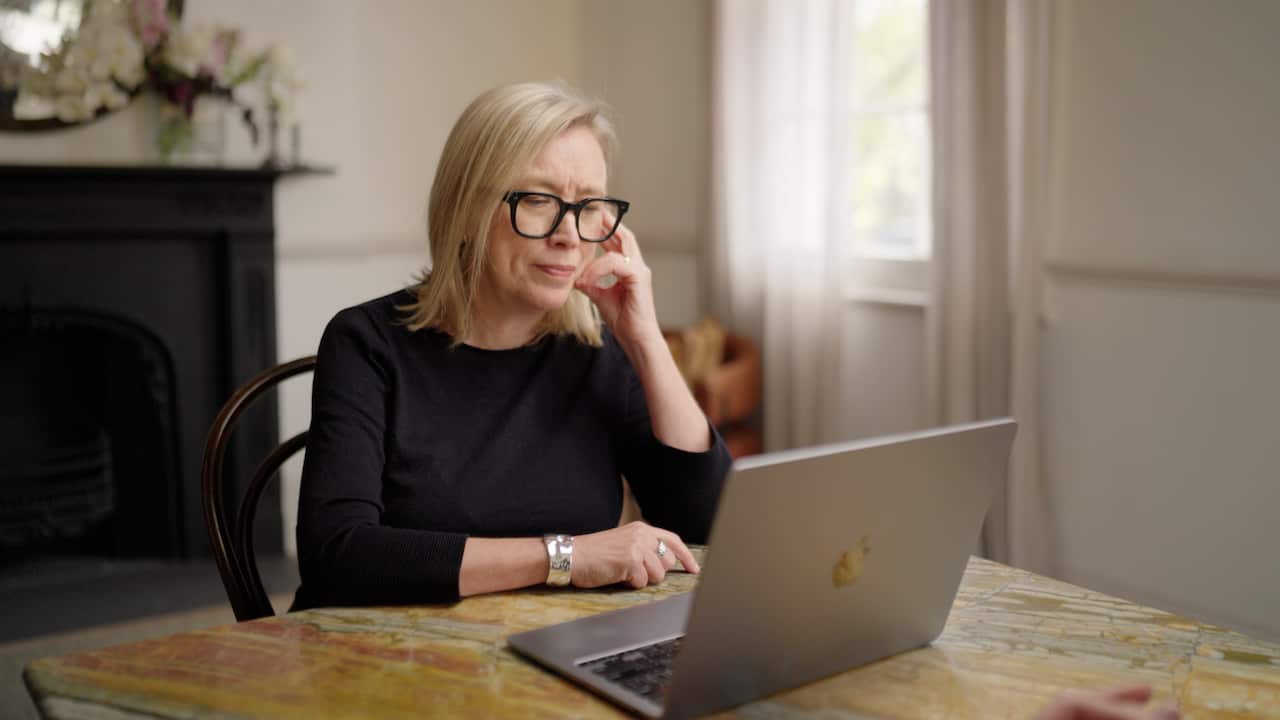
"It's fair to say this is a group of very unwell young men looking to build and grow their network based on hate. And it would be tragic that they would consider individuals with autism low-hanging fruit to try and join that movement."
"Even just thinking like that is unbelievably manipulative to take a group of young men who may have trouble with social interactions," she said.
"And they might be quite lonely."
But for counterterrorism expert, Peta Lowe, she says in the absence of supports, young people will keep being drawn in.
"What worries me is that we haven't yet found a way to counter those effective recruitment strategies."

Through award winning storytelling, The Feed continues to break new ground with its compelling mix of current affairs, comedy, profiles and investigations. See Different. Know Better. Laugh Harder. Read more about The Feed

Have a story or comment? Contact Us







