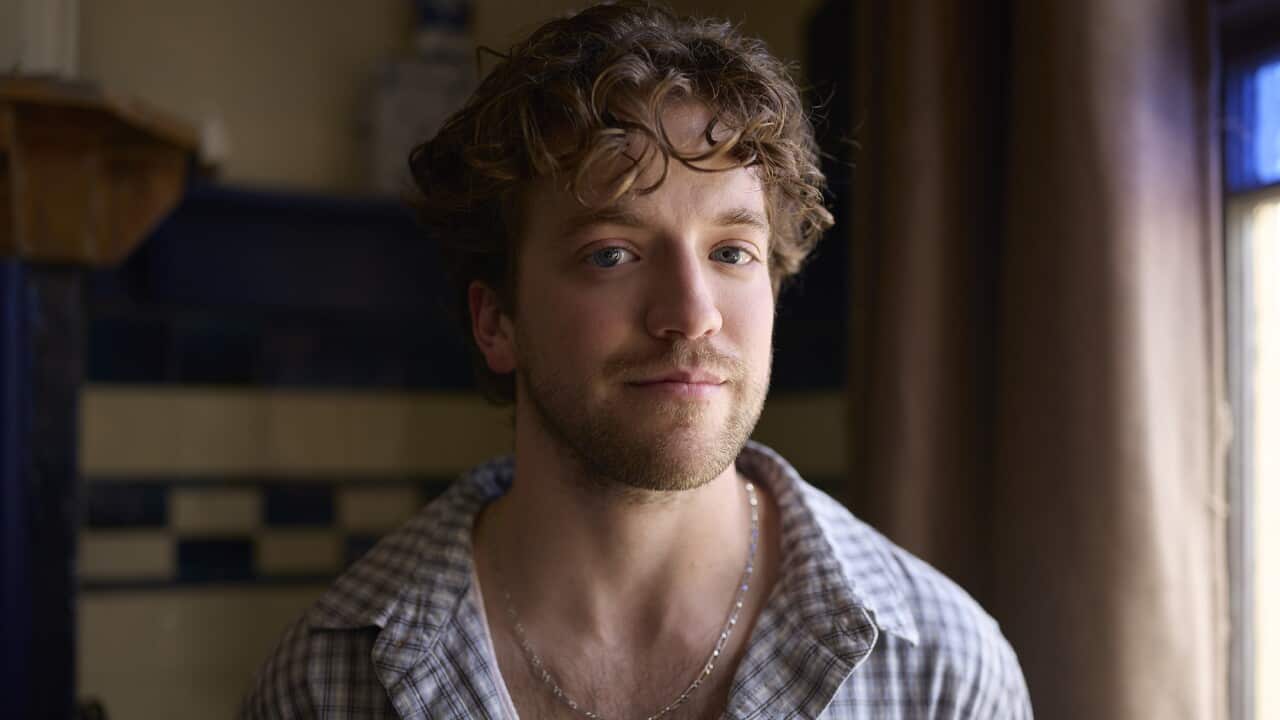
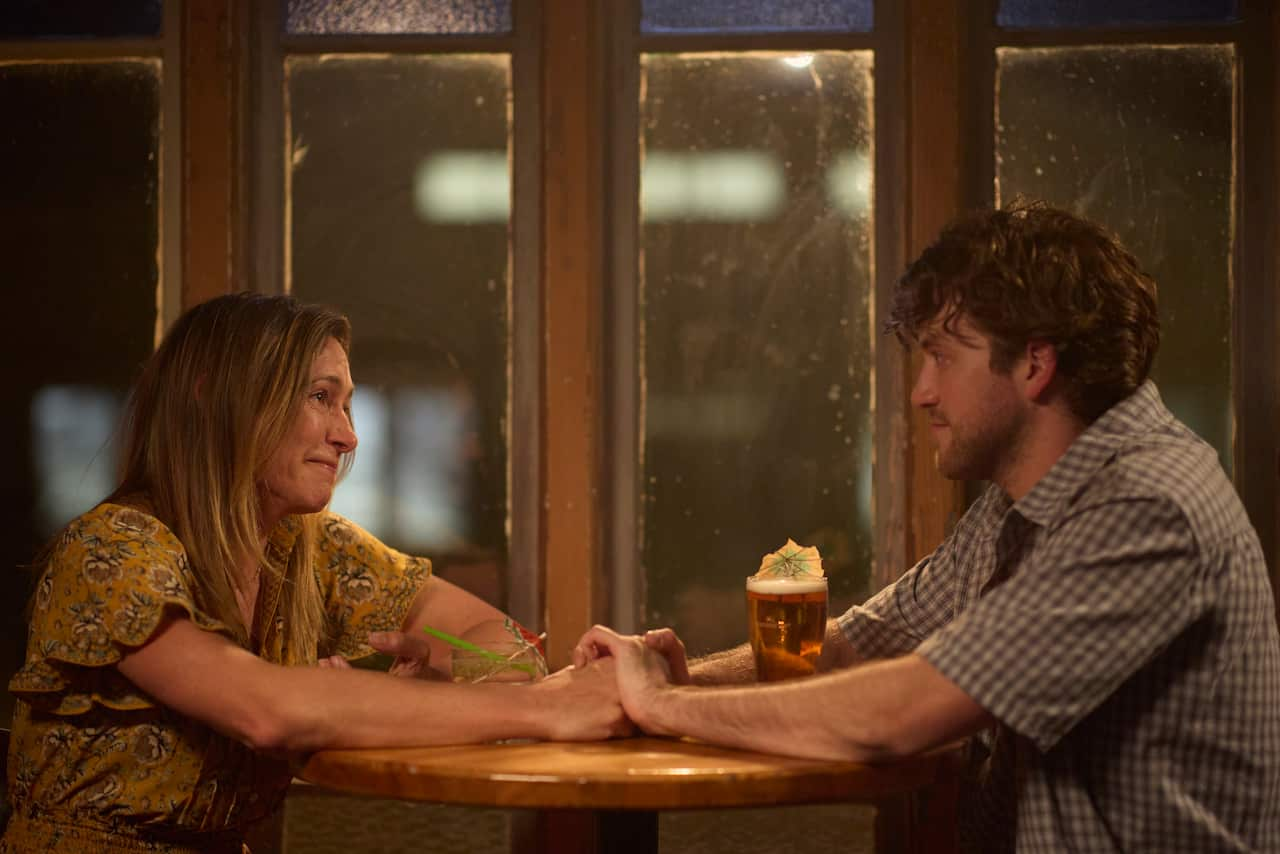
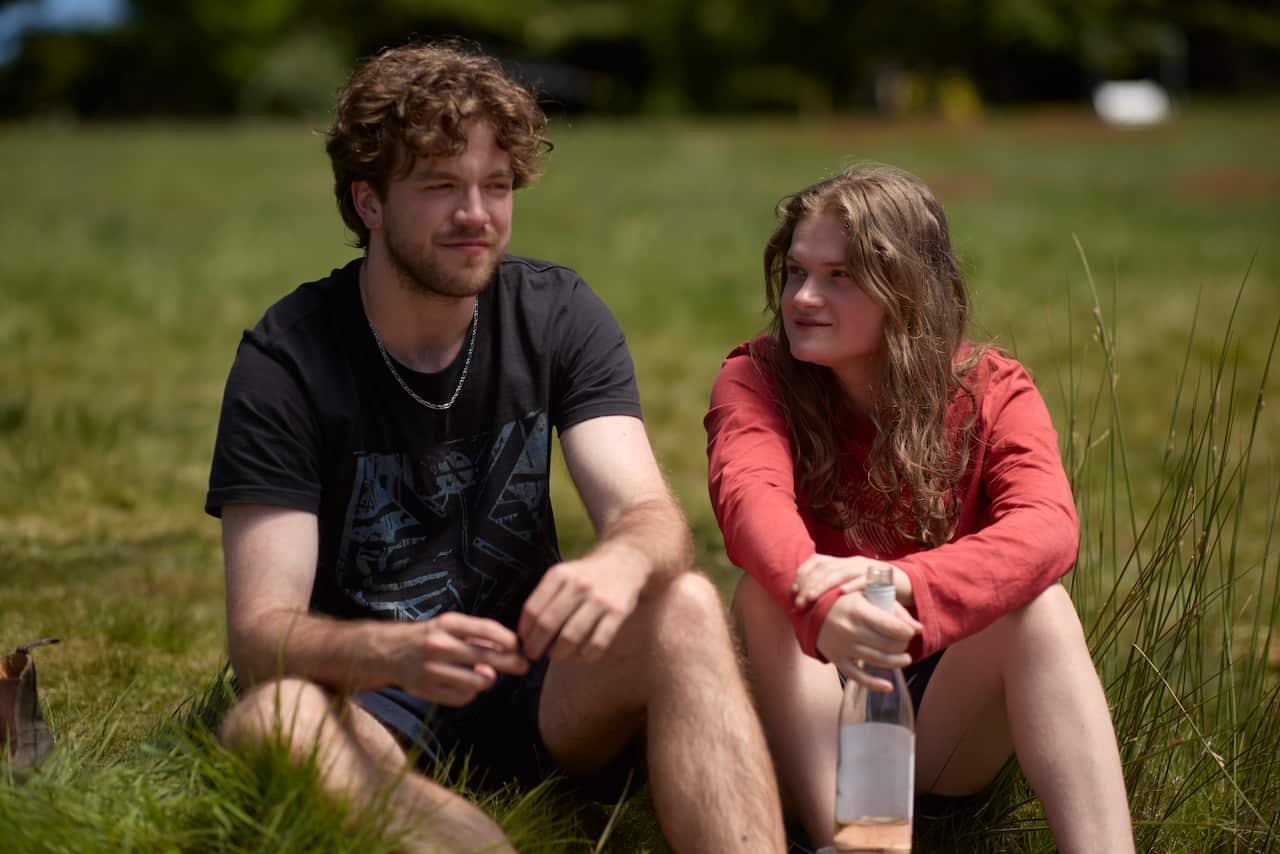
When Darcy moved to the city, he thought he’d left much of his past behind him. But when the smarty but shy 20-something trans man reluctantly returns to his hometown to care for his estranged mother Nora, there’s more than challenging family dynamics for him to deal with. Darcy (played by Luke Wiltshire) discovers Nora (Claudia Karvan) has been living with the teenage ghost of his pre-transition self. Dee (Jazi Hall) is an loveable but impulsive and mischievously chaotic reminder of what Darcy thought he’d left behind.
Surprising and endearing six-part SBS Original series Homebodies is the creation of award-winning writer AP Pobjoy, whose previous work includes coming-of-age series Unerased and the film Why Did She Have to Tell The World.
Pobjoy says that at its heart, Homebodies is a family drama.
“It’s about a mother and son who love each other but don’t always know how to communicate. It’s about the complexity of parental grief and it’s about a man coming home and realising that growth doesn’t have to mean erasure. I wanted to tell a story where a trans character’s journey doesn’t end at ‘coming out’ or transition. Darcy’s story is about what happens next, rebuilding relationships, redefining home, and integrating the parts of himself he thought he had to leave behind, which all of us, regardless of gender identity, are faced with.”
When Darcy arrives home, things quickly escalate. Dee steals Darcy’s car, Darcy faces a life-or-death decision (and finds a possible romance) and Nora is caught between two versions of her child.
Karvan, who has described Homebodies as “a love letter to the parent”, says she hopes the series will also help parents understand what their children might be dealing with.
“What it says about families that resonated with me is just the role of the parent - the crossroads you get to as a parent, where you go from being the boss and the person who says, ‘Okay, you're eating now and you're having a shower now and you're going to school now’ to slowly being the person who has to just allow this mysterious being to have power over their own life and to not intervene and just have faith that they're doing the right thing. So it's about sort of relinquishing the parental role and respecting and having faith in the other family member."
Pobjoy’s own experiences inspired the ‘ghost of the past’ storyline.
“When I transitioned, it was a positive and necessary step in my life. But I quickly realised that while I felt more like myself than ever, some of the people around me were still adjusting. For my family in particular, there was a sense of grief mixed in with love. They were learning this new part of me, whilst also holding onto a version of me that no longer existed in the same way.
"Going back to my childhood home during that time brought those feelings into sharp focus. I felt confident in who I was becoming in my adult life, but when I stepped back into my old bedroom, into old routines and family dynamics, it could feel like I was being pulled into a former identity. It made me think about how we carry our past selves with us and how the people who love us sometimes struggle to reconcile who we were with who we are. Homebodies realises that through the supernatural device of a ghost. Instead of treating transition as a clean break between “before” and “after,” the show imagines what it would look like if both versions of a person had to coexist.”
Homebodies set-up director Harry Lloyd (Rock Island Mysteries, Dog Eats World) ponders the importance of the country town setting. “I think a lot of the time, trans stories live in a place where rejection is deeply felt and society can often ostracise trans people. And I think what's refreshing about Homebodies is that it's about a family coming together. Everybody's at a different stage.
"Homebodies positively represents trans stories because it's set in not only a regional town, but it all centres around complicated family dynamics about going home. And lots of trans stories are about having to leave those places and the rejection that's felt in those places. But what I love about our story is that not only do we live in the grey - where Darcy's felt like he's had to leave to become who he is, and George [a school friend of Darcy’s] has stayed and found her queerness, which I think is also important - but it also represents a family unit where a parent gets to try and fail.
I love that we get to see this family unit try and fail but always find a way back to each other.
“The thing that I love about the representation in Homebodies is that Nora is trying, but she's not perfect, and she's not accepting Darcy's world of transness and the vocabulary that comes with that. She's not doing it very well, which I think a lot of parents can relate to … I love that we get to see this family unit try and fail but always find a way back to each other.”
Homebodies was shot in large part in the New South Wales town of Oberon.
“We were welcomed with open arms into Oberon and the locals were so excited that an SBS show was happening in their town. It also just elevated the show, because we didn’t have to shoot Sydney for a rural location. It was already there for us, and there were just all these sorts of little bits of magic in Oberon that we didn't expect… It offered us these little gems that only come from being in those spaces and embedding yourself in those communities,” Pobjoy says.
Wiltshire welcomed the change to work on a show that shares the experience of trans men.
“We learn about ourselves through what we see in the media. And if you don't see yourself in media, you get taught that what you are isn't okay, and that it's abnormal and that there's something wrong with you. So to work on a show like this, it's about more than just making a TV show. It's about showing kids and younger people that it's okay if they feel this way, that they're not alone, and that it's not just them. And that family can be complicated. But at the heart of it, there's so much love there. Always.”
This article includes material supplied by Mad Ones Films.
Homebodies premieres Saturday 28 March at 8.30pm on SBS and SBS On Demand.