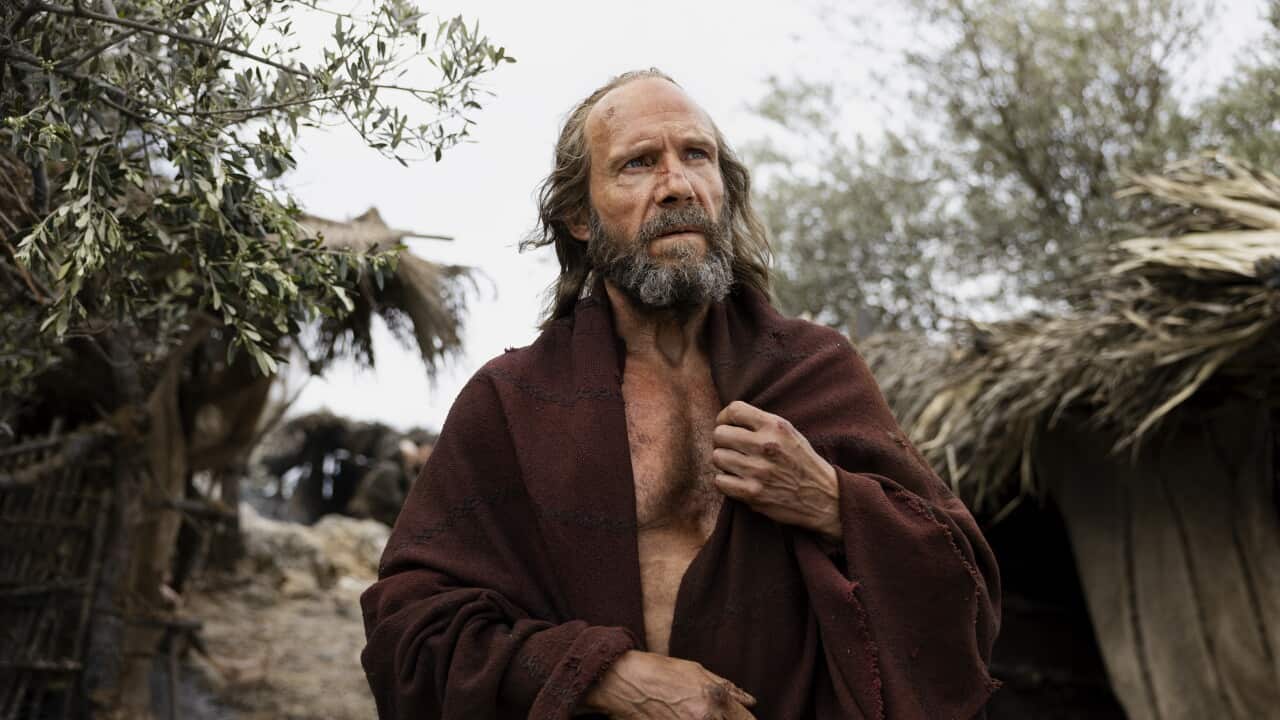
“They took their revenge for all those years away. They burned it to the ground and drowned the flames in blood.” – Odysseus (via Ralph Fiennes).
If you’re wracked with feverish convulsions awaiting The Odyssey, the latest much-ballyhooed cinematic pronouncement from Inception director Christopher Nolan, why not satiate your bloodthirst with Italian director Uberto Pasolini’s The Return?
Gripping stuff, it’s a tldr hop, skip and a jump to the emotionally and physically brutal conclusion of The Odyssey – one of two epic poems, including the Iliad, attributed to the mysteriously shrouded ‘Homer’. A literary titan, he may well be a fiction, himself, or an amalgam of poets harnessing an ancient oral tradition.
Pulling the threads of an ancient story
Whatever the story’s true origins, The Return is woven from remarkable performances.
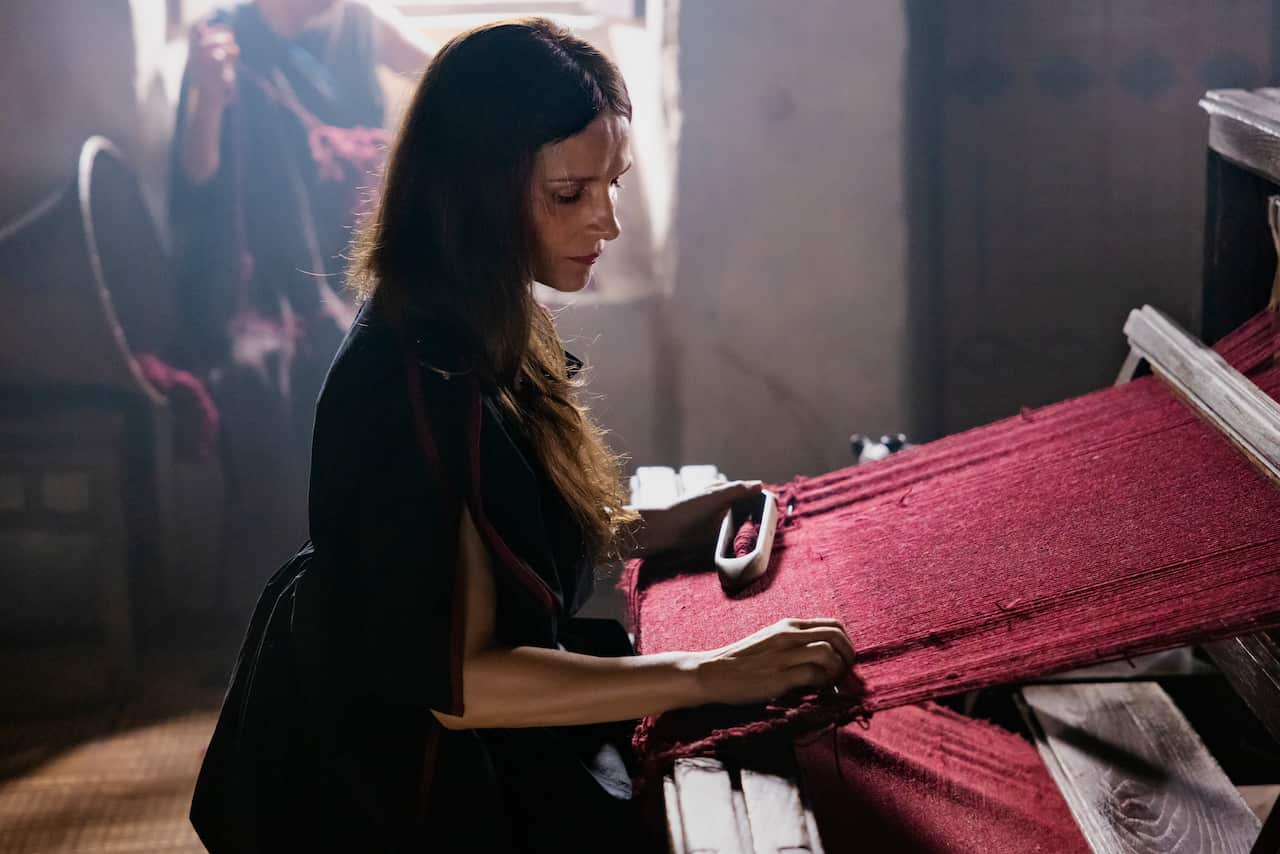
English legend Fiennes plays the lost Ithacan king, with a world-weariness to his beaten bones, deposited bum-up on the beach after the wreck of his ship and the loss of all his crew. Academy Award-winning French superstar Juliette Binoche, who appeared alongside Fiennes in both Emily Brontë's Wuthering Heights and The English Patient, plays his faithful queen, Penelope.
She’s been patiently waiting for his return for two decades, with Odysseus first fighting dirty in the ten-year Trojan War, then getting seriously lost on the way home for another cheeky decade, not least because he pissed off the sea god, Poseidon.
During this extended interregnum, Ithaca has fallen to rack and ruin. Her people are starving, while the palace is lousy with a rowdy bedlam of would-be suitors all hoping to claim the crown through taking Penelope’s hand, whether she likes it or not.
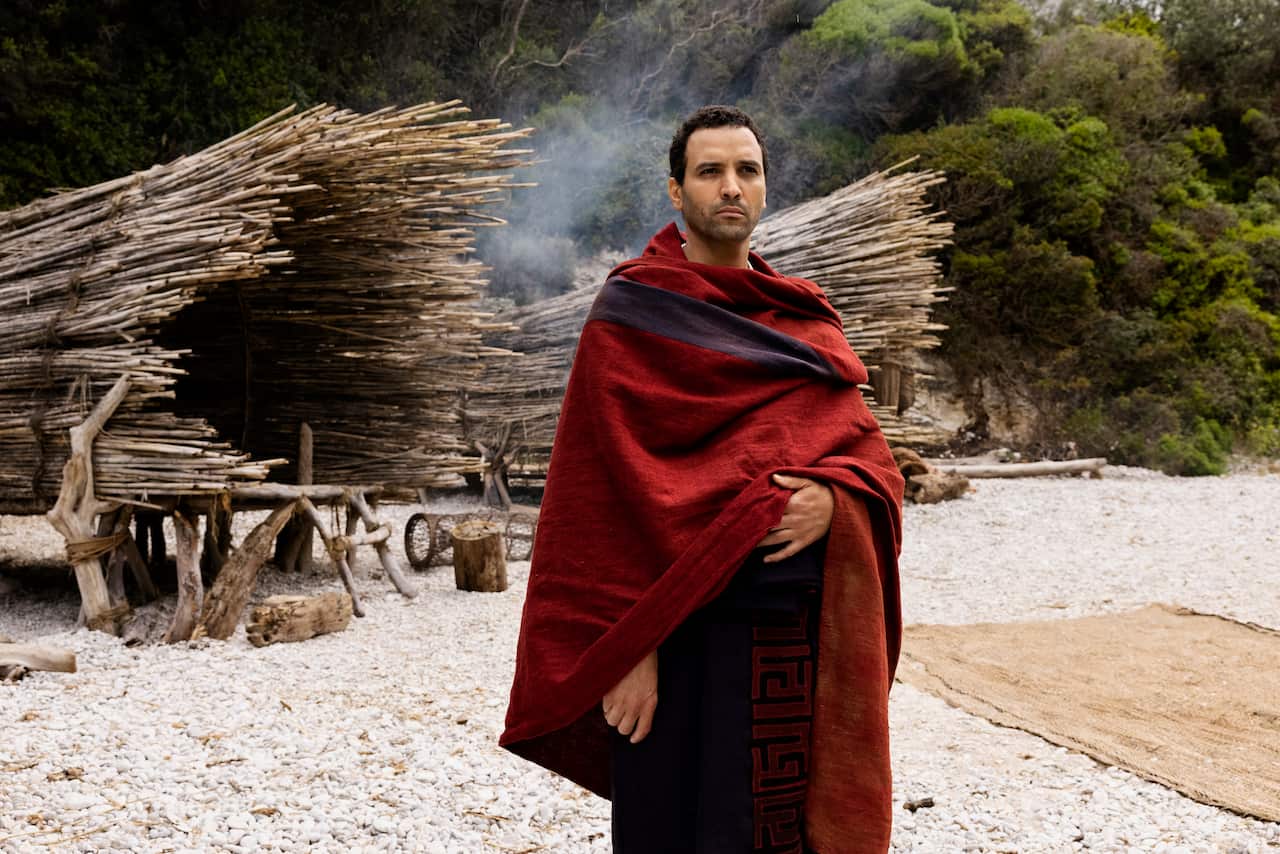
Reader, she does not. Chief among her pesterers is the insidiously slippery Antinous, played by Dutch-Tunisian actor Marwan Kenzari with the sort of passive-aggressive ‘helpfulness’ that’s the curse of many an email CC.
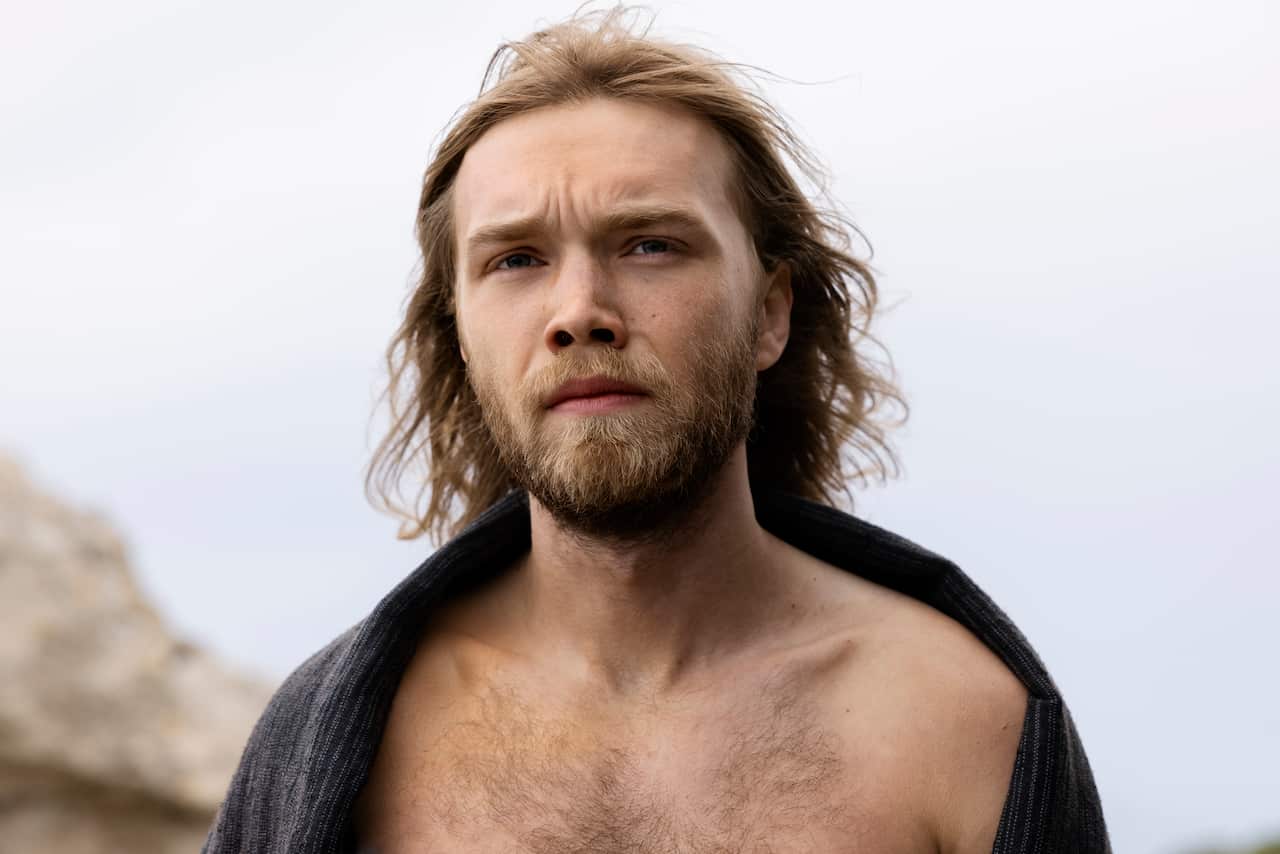
Antinous insists that only he can keep Penelope and her cranky emo son, Telemachus (Charlie Plummer), born just before daddy set sail and bent out of shape by his absence, safe from the brawl of brutes laying waste to ‘xenia’, the mutually-binding pact on being a good host/guest. Telemachus pressures Penelope to choose a new king.
Alas, as the true heir to Ithaca’s throne, Telemachus is a threat to Antinous’ odious plan. He not-so-secretly wants the lad dead and will take Penelope by force if she doesn’t hurry up and submit.
But the steadfast Penelope will not betray her husband, nor lose faith in his triumphant return, stalling for time by insisting she couldn’t possibly select a suitor until she’s finished weaving a funeral shroud for the ailing Laertes (legit Greek actor Nikitas Tsakiroglou), Odysseus’ father. By night, she studiously unpicks her day’s work, a holding pattern spun in red yarn and then discarded on flagstones.
Down to Earth
Stripping out the gods and monsters (well, the supernatural ones), Pasolini’s paired-back, character-driven spin on the fable, co-written by Walkabout scribe Edward Bond and Tanna screenwriter John Collee, is a thoroughly haunting affair.
A bulked-up Fiennes delivers a remarkable performance as a broken Odysseus, his mind clouded by the dark storm that followed his sacking of the impregnable city with the Trojan Horse. A murderous rampage that claimed not only her royal leaders and their loyal soldiers, but also thousands of innocent civilians, as he and his frustrated men ripped their world apart without mercy.
Played as if wracked with PTSD, Fiennes’ Odysseus struggles with his return. How can he simply slip back into pampered luxury by Penelope’s side after all the mayhem he has wrought? And yet, Penelope and their son are in dire danger.
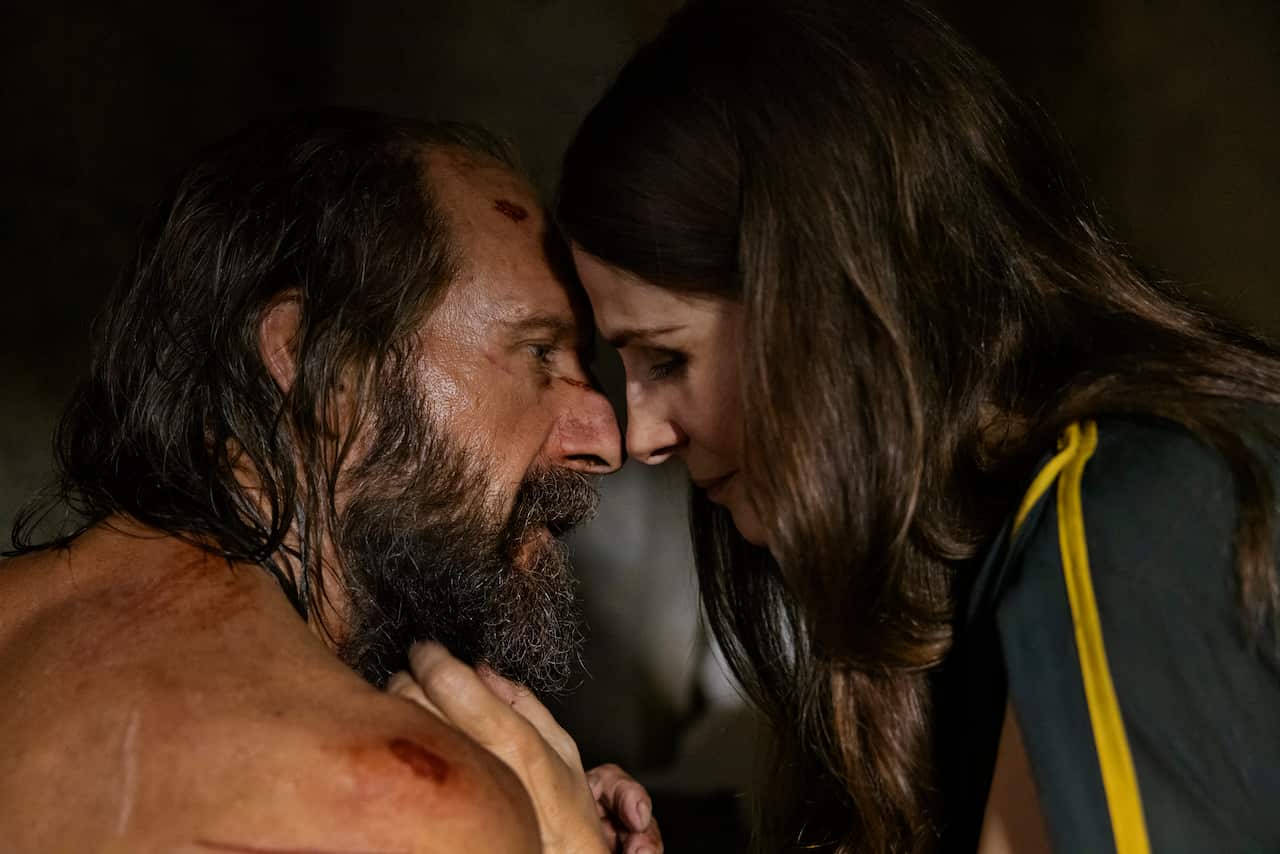
One of our finest, Binoche carries the proud queen’s legacy with a melancholic grace, as kind as kisses and as strong as steel. She will not stoop to the debased level of the squealing pigs that surround her palace with their tawdry camp. There’s an electric crackle as Penelope finally meets her absent husband in the guise of beggar.
Binoche and Fiennes are such powerful performers that they can imbue this scene with lilting ambiguity. Does Penelope discern that it is truly him? There’s also a bitter truth to contend with: Is this hollowed-out man truly the husband she once loved? And can she, or even he, reconcile the atrocities Odysseus has committed?
“Did my husband rape? Did he murder women and children?”
Sails and ails
Pasolini tips us headlong into this thorny conundrum in a theatrical rendition full of Shakespearean gravitas. If you love the drama, The Return has it in abundance.
Handsomely lensed by Romanian cinematographer Marius Panduru, it’s also lush to look at. Shot across the stunning Greek island of Corfu, the Peloponnese peninsula and around Pasolini’s hometown of Rome, their lyrical beauty sings.
Swirling with intoxicating visuals, scarlet blood that matches the brilliant red strands Penelope weaves from their sorry story is spilled in a tumultuous ocean bearing billowing sails bloated by promise.
Italian costume designer Sergio Ballo streamlines Pasolini’s players’ robes, keeping them classically elegant. Rachel Portman, the first woman composer to win an Oscar, for 1996 hit Emma, delivers a score rich with aching horns and sorrowful strings, amplifying the heartsore tragedy.
By the time The Return’s bloody climax comes, yet more vengeance playing out in a throne room armed with an unbending bow and a line of axe heads that a successful suitor must thread an arrow through, we are under Pasolini’s spell.
“My queen. Is this the love you wanted?”
It’s a question for the ages, with The Return unfurling new depths to an endlessly fascinating tale.
The Return is now streaming at SBS On Demand.