Every day Claire Hu drinks a herbal broth with one unusual ingredient: donkey skin, prescribed by a traditional Chinese medicine - or TCM - doctor to treat menstrual problems.
Claire Hu says it's well-known for its medicinal properties in China.
"Especially for women. It regulates your period, and after taking it your body gets warm. It improves blood circulation."
For centuries donkey hide has been sold in China as a tonic of emperors.
Though primarily taken by women, it is prescribed by TCM doctors to treat a variety of universal ailments, including insomnia, low immunity and a low libido.
Now demand is outstripping supply. China's demand for donkeys is soaring.
African countries are slaughtering donkeys at an unprecedented rate to meet Chinese demand and Australia is following suit.
Processed and sold as gelatin or powder, the price of donkey skin has soared in recent years. It's now a luxury health product, often bought as a gift, rather than on prescription.
One kilogram sells for over AU$500.
In two decades the number of donkeys in China has almost halved, from 11 million to 6 million.
The shortage is affecting some Beijing restaurants serving donkey meat, which is common in central Chinese cuisine.
Gao Shi Qiao, the manager of restaurant Li Qiao Shun said, "The price of donkeys is now high. If it wasn't for the skin, the price wouldn't be so expensive. It's the skin that pushes it up."
China now buys donkeys from other countries, mainly in Africa, to meet demand.
Mr Gao says any country exporting to China will have no trouble selling donkeys for a good price.
"If you export donkeys to China, you don't need to worry about sales, the prospects are good."
It has animal rights activists worried.
Alex Mayers, program Manager at the UK-based Donkey Sanctuary says, "We can't see a way that donkeys could possibly be farmed in a way that would allow them good enough welfare and allow them to reproduce to keep the trade at its current level."
Niger and Burkina Faso banned donkey exports to China last year after controversy over the slaughtering of the animals.
Alex Mayers says farmers who rely on working donkeys for their livelihood were targeted by illegal poachers, or were suddenly unable to afford to buy the animal due to price hikes.
"You'd be feeding into a trade and sustaining a trade which is catastrophic for people and animals in other parts of the world. There's no benefit to that, so I think globally, talking about our responsibility to neighbours and other countries around the world, Australia has to take that into account."
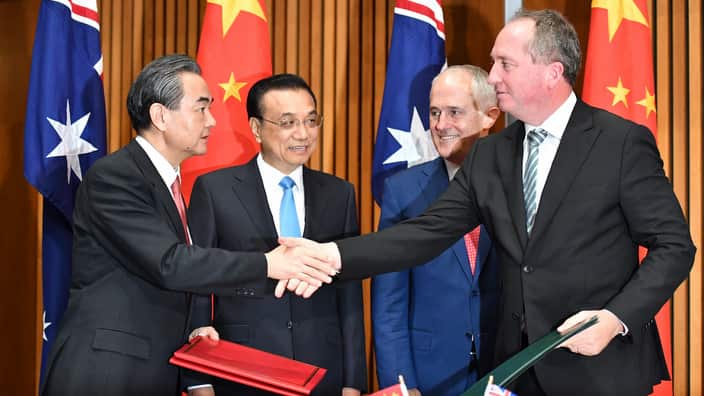
Australia and China have announced a new deal to allow greater access into China for Australian chilled-meat exports, which also includes initiating a trade in donkey meat.
The deal will expand access from 11 current exporters to all eligible Australian exporters.
Agriculture Minister Barnaby Joyce has welcomed the deal.
He says, "You've got to understand the cultural requirement of both nations and if people want edible donkey skins, Australia's going to provide them. We're going to provide them. We're going to make sure that if you want to eat edible donkey skins then you're going to be eating our edible donkey skins. That is about how we do this. We've got other things we want to export as well. Exporting goat meat, pork, all these things that are so important to us."
Story by Katrina Yu in Beijing
Follow us on FACEBOOK