I was a ready-to-make food box sceptic. Why? I write about food (I even wrote a cookbook for busy families), co-own a restaurant and grow my own vegetables. I’m supposed to be that person: the one who plans meals – multiple courses, even - shops for exotic ingredients and straight-up manages it all. A box of pre-packaged, portioned-out ingredients? It felt like cheating.
And then, somewhere in the back half of 2015, I lost my cooking mojo. Between three sporting kids who constantly needed a chauffeur (that’d be me), a commuting husband and a full-time job as a writer, suddenly the idea of having a box of healthy, seasonal food turn up on the doorstep every week with correct portion sizes felt like winning the food lottery.
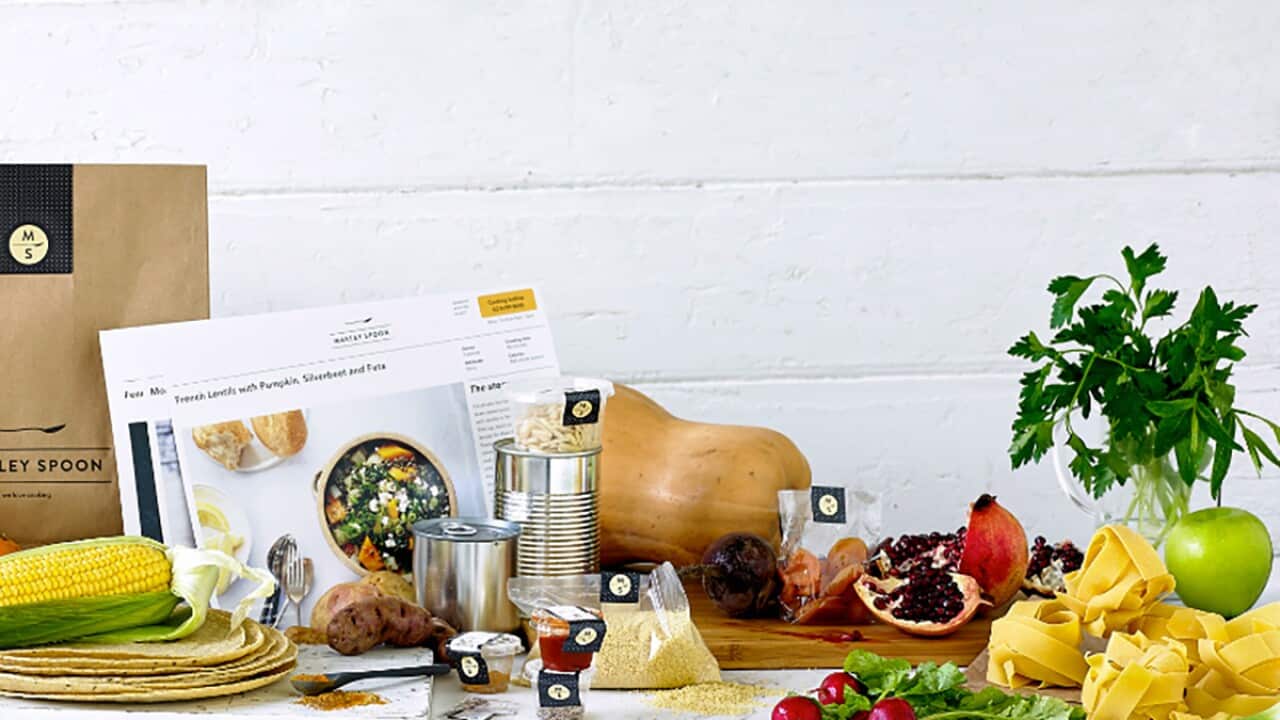
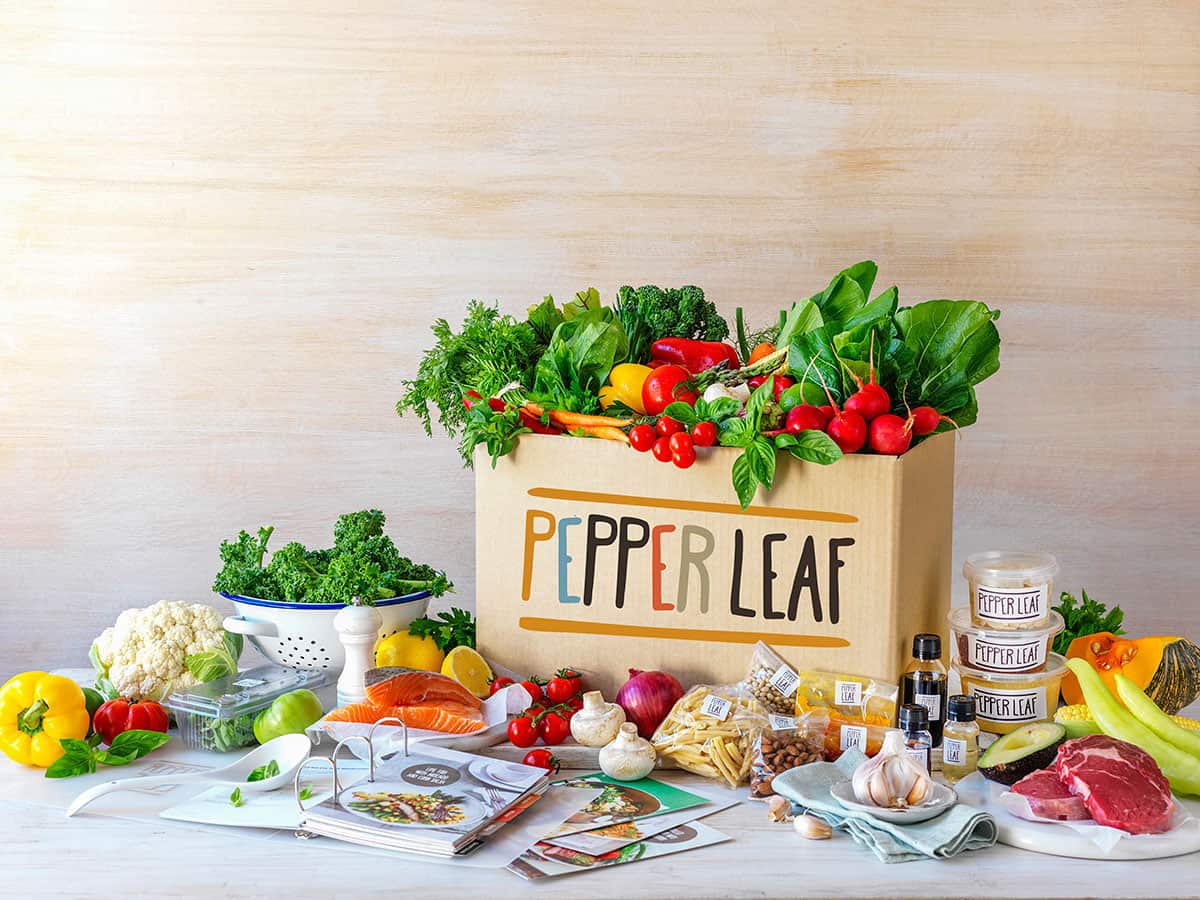
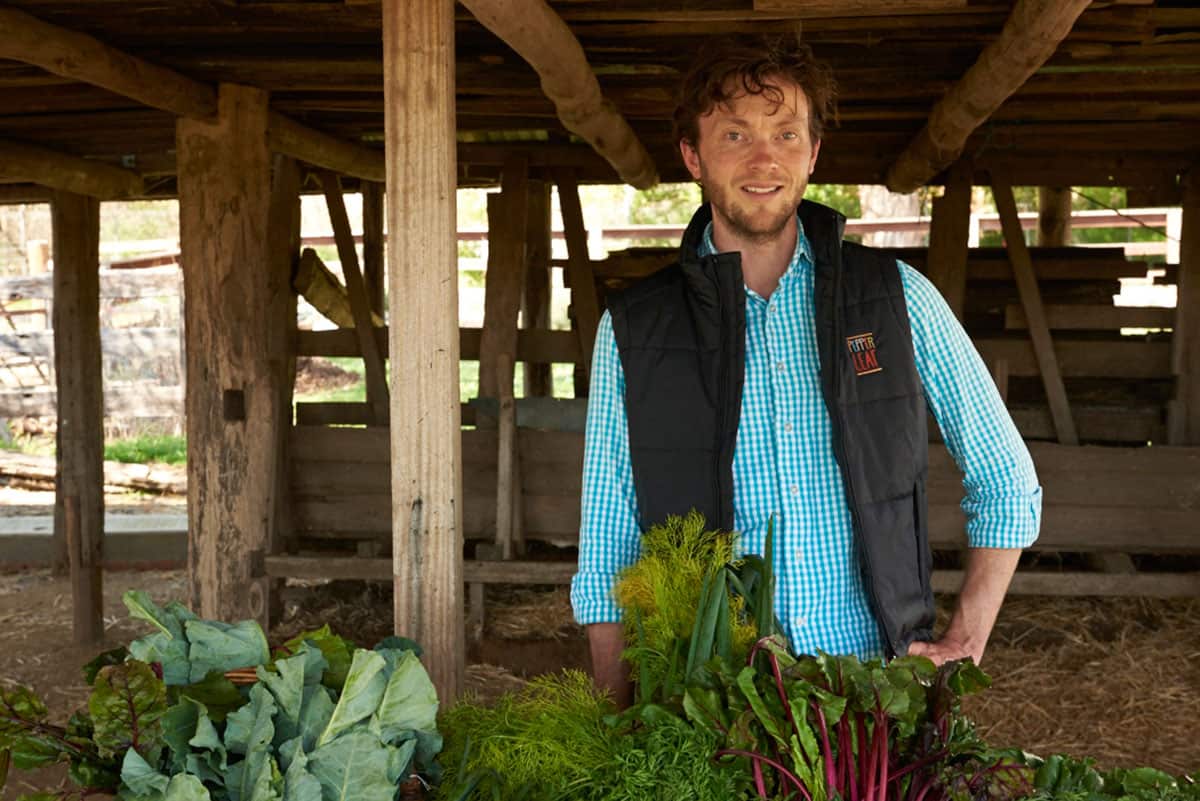
The fresh food box market was pioneered in Northern Europe and the take-up in Sweden and Germany has been huge. In the USA, Blue Apron is a popular model. In Australia, the biggest player right now is HelloFresh. It originated in Germany and began Australian operations in 2012, with 2011 Masterchef finalist Tom Rutledge as a partner. There’s also Marley Spoon, Pepper Leaf and My Food Bag. Pepper Leaf, 100 per cent Australian owned, is run out of Melbourne. CEO Simon Kahil says the reason for the company’s success is simple: “Households struggle with the conflicting priorities of work (and extended working hours) and the time and effort of shopping and cooking for their families. Getting a Pepper Leaf delivery each week allows them to experiment with food they perhaps otherwise wouldn’t have cooked, eat fresh and balanced meals, and support local growers and producers.”
So amid the chaos of our busy family’s life, I bit the bullet and ordered the HelloFresh Classic Box for four people with five meals per week. The portion sizes are quite generous and we found we could easily feed our family of five each week.
There have been many upsides to our food box experiment. Sit-down family mealtimes are sacred and I love having midweek meals planned – all the ingredients are in the fridge when we walk in the door. No more queuing at the registers for that last-minute ingredient I’ve forgotten! The produce, particularly herbs, vegetables and fruit, is far better quality than I often buy at the large local supermarket chains.
I also found our food wastage has dropped. According to FoodWise, Australians discard up to 20 per cent of food they purchase. That’s one out of five grocery bags. How often have you bought a bunch of herbs, used half and left the rest wilting in the wilderness of the fridge vegetable drawer? Or bought a jar of sambal, harissa paste or wasabi sauce and forgotten it existed, opening it months later to find a furry layer of mould has grown over your $12 jar of spice? We’ve all been there, and it’s pretty shameful.
On a broader scale, $8 billion of food is thrown out across Australia annually and 20 to 40 per cent of fruit and vegetables are rejected before they even hit supermarket shelves. Pepper Leaf cuts the number of parties in the food chain. All food is pre-sold, so unlike supermarkets, Pepper Leaf only orders what they need. They put zero food waste into landfill, preferring to give herb stalks and outer leaves of vegetables to a local farmer to use as pig food. Kahil estimates their waste is less than 1 per cent.
HelloFresh adopts a similar low-waste approach, says Rutledge. “Because we work directly with producers, we can cut the time and wastage that comes with processing fresh food from a producer to a wholesaler to a warehouse then a supermarket. We operate with a ‘just in time’ fresh food ordering system, so we order and receive everything we need for that week of deliveries in the days before we pack the box. Instead of languishing for up to 10 days before you even buy at the grocery store, we have a three-day turnaround before it arrives at your front door.”
The downside of having exact portions delivered is the excessive packaging. Not ideal for a household that prides itself on being green(ish). HelloFresh seals the herbs, spices, meats and grains in plastic. Mea culpa. But the fruit and larger items come in recycled cardboard boxes, brown paper bags and recently I was relieved to see they switched from polystyrene boxes to gel ice bags and Woolcool insulation that they collect and recycle. Pepper Leaf is currently developing insulation with a Japanese company, in addition to testing packages for herbs. They try to use paper and cardboard where possible. Marley Spoon says their chill packs can be used at home – but how many do you really need?
All companies were coy about their market share and turnover, but Kahil says his research shows the food box market is valued at $130 million in Sweden. Based on GDP calculations in Australia, Kahil estimates the potential local market at $231 million. That’s a sizeable threat to traditional supermarkets.
So who’s ordering all of these boxes? All three players interviewed say that weeknight boxes for two comprise the largest share, but boxes for families are on the increase. Prices vary from $8.90 to $9.90 for each serve, depending on ingredients – the equivalent of what I spent on groceries for the family for five days. HelloFresh and My Food Bag also offer a weekly juice box and a fruit box, which is helpful for snacks. Now I just need one of the providers to come up with the breakfast box (granola, oats, muesli, yoghurt, milk, fruit, bread, butter, eggs, bacon, avocado, feta) and weekday school lunch box (surprise me!).
As for the food itself, my family loves the diversity and ease of the recipes. The children are 12, 10 and eight – each has a designated night to cook. This week’s HelloFresh autumn menu features prawn spaghetti with chilli, garlic and parsley sauce, chicken tacos with cooling cucumber, teriyaki beef with black sesame seeds and brown rice, Indian-spiced lamb with roast vegetables and mango chutney, and juicy pork steaks with Italian garden salad. There’s also a Veggie Box. Rutledge says, “HelloFresh is all about variety and avoiding dinner déjà vu. We hope you’ll be mastering recipes you may have been too intimidated to try before. Australia would be nothing without multiculturalism, and I think our recipes reflect that.”
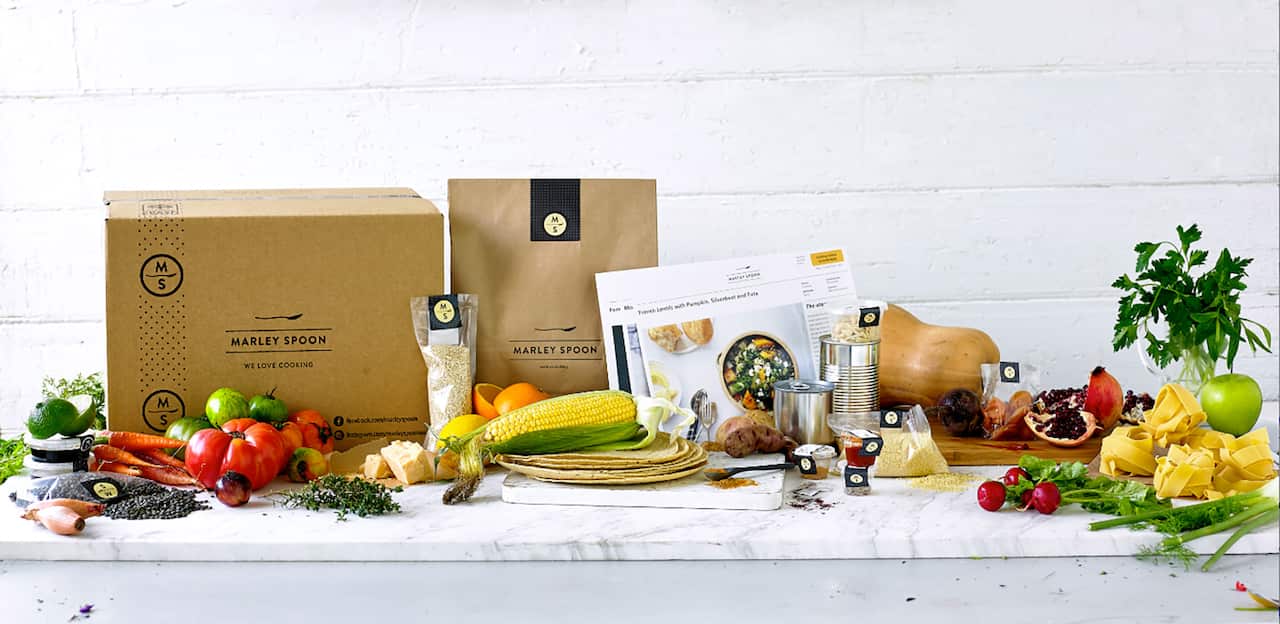
Marley Spoon employed MasterChef contributor Olivia Andrews to plan a balance between different meats, vegetarian options and flavours. “We are highly aware of allergies, or cultural reasons as to why someone can’t eat something, so we make sure that there are always options that aren’t just safe to eat, but absolutely delicious.” Marley Spoon also allows customers to substitute ingredients. One recent week's offering included parmesan chicken schnitzel with red slaw, fish and leek pie with parmesan mash, Moroccan spiced beef with chickpea couscous, Thai veggie patties with warm bean salad, and stuffed zucchini with stretchy cheese.
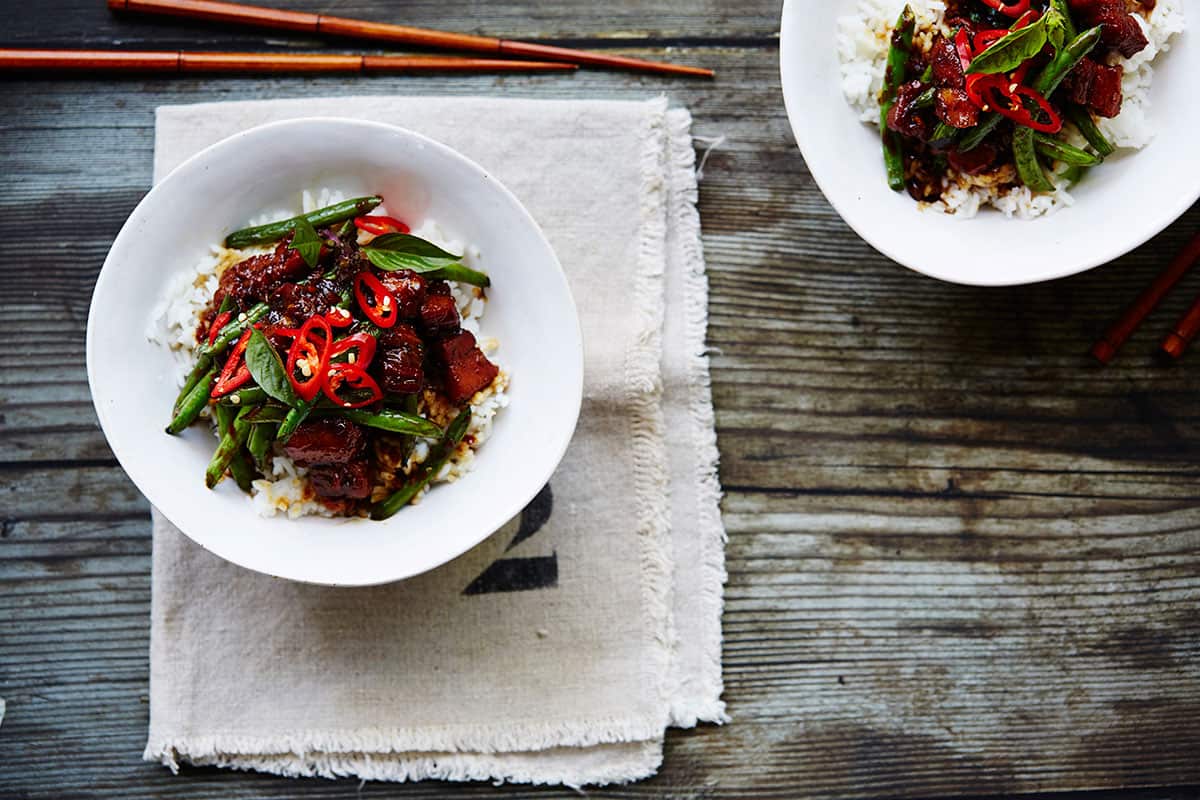
Pepper Leaf teamed up with New Idea and Better Homes and Gardens, ensuring their recipes are triple-tested. Kahil says anecdotal customer feedback suggests Pepper Leaf have more ingredients in each recipe than their bigger competitors and use more herbs. Pepper Leafs opts for a gourmet butcher instead of a meat wholesaler and “try to take the customers on a culinary journey each week”. They also seem to offer the greatest flexibility, allowing variation for delivery times, the number of meals and number of people. And the food sounds delicious: honey soy lamb with beetroot burghul salad, veal and eggplant parmigiana, chicken with Cajun rice and avocado and lime salad, and chickpea vegetable tagine.
But buyer beware – if the full order is not delivered, or the fruit arrives bruised, it throws the household into chaos and back to the supermarket queues! This did occur (once) with HelloFresh, but they were quick to respond to my online feedback (within hours) and halved the cost of my boxes for a fortnight.
After a few months of the meal box experiment, my family has eaten a wider variety of foods, we are eating correct portions (no seconds!) and the kids are cooking and cleaning up afterwards. The convenience of not having to think about the shopping, and the consistent quality of the produce has been a game-changer. The packaging still concerns me, but I’m happy that each of the companies I spoke to were serious about finding ways to cut down on this waste.
As for our meal box future? I will be exploring my (sustainable) options.
Find your local meal prep service
HelloFresh delivers to major cities on the east coast, Adelaide, Albury, Ballarat, Bendigo and Toowoomba. They are planning a WA launch.
Marley Spoon delivers to most of Sydney, Melbourne and Canberra. There are plans to extend to Queensland and the west coast.
Pepper Leaf delivers to Melbourne, Sydney and Adelaide, expanding to Canberra, Newcastle and the NSW central coast.

SBS Food is a 24/7 foodie channel for all Australians, with a focus on simple, authentic and everyday food inspiration from cultures everywhere. NSW stream only. Read more about SBS Food

Have a story or comment? Contact Us