Australia has long been a proud coffee country. But lately tea and tea culture seems to be challenging this dominance. Tea franchises like HeyTea opened to a lot of fanfare two years ago, there are new teahouses in Sydney, bespoke tea shops in Melbourne, and trending beverages like cheese tea point to a surge in popularity for tea.
For many people, tea is a comforting beverage or maybe an ingredient in desserts (think Earl Grey cookies or matcha ice cream) but historically in South and East Asia, tea was favoured for its health properties and used in savoury food. Take laphat thoke (Burmese tea leaf salad), where the tea leaves are fermented and used to make a herby salad. Similarly, in lei cha (Hakka thunder tea rice) and ochazuke (Japanese green tea with rice), brewed tea forms part of the soup. Even the aroma of tea can be a signature component in smoked meats.
Reframing tea leaves as herbs or leafy greens sounds daunting at first but Kym Cooper, a Brisbane based tea specialist, reassuringly points out that cooking with tea is no different to cooking with wine, so it helps to first understand the tea properties. “On one end is white tea, which is the least processed. It is still leafy, just withered and sundried. On the other end is black tea (or red tea from a Chinese perspective, not to be confused with rooibos) which is withered, baked or roasted depending on the country.”
Brewed tea with rice
Some chefs in Australia have started experimenting and introducing tea in their dishes and are finding positive reception. At Adelaide’s Two Sisters Café, ochazuke has become a customer favourite. Although the specific components of this Japanese-inspired dish at the cafe changes every 4-5 months, in general it consists of a bowl of rice, topped with protein (salmon, pork belly, eel) with a tumbler of broth infused with tea on the side. It looks beautifully put together but the mechanics of how to eat it can be confusing to a first-timer.
In Japan, ochazuke is a simple rice dish made by pouring broth infused with tea over cooked rice and submerging the grains. However, Jessica Helinda, the head chef in Two Sisters Café, has put her own spin on it. “We recommend people eat the rice and protein first and then when they are almost done, pour the broth into the bowl and drink it with the last bits of rice. Almost like congee,” she explains.
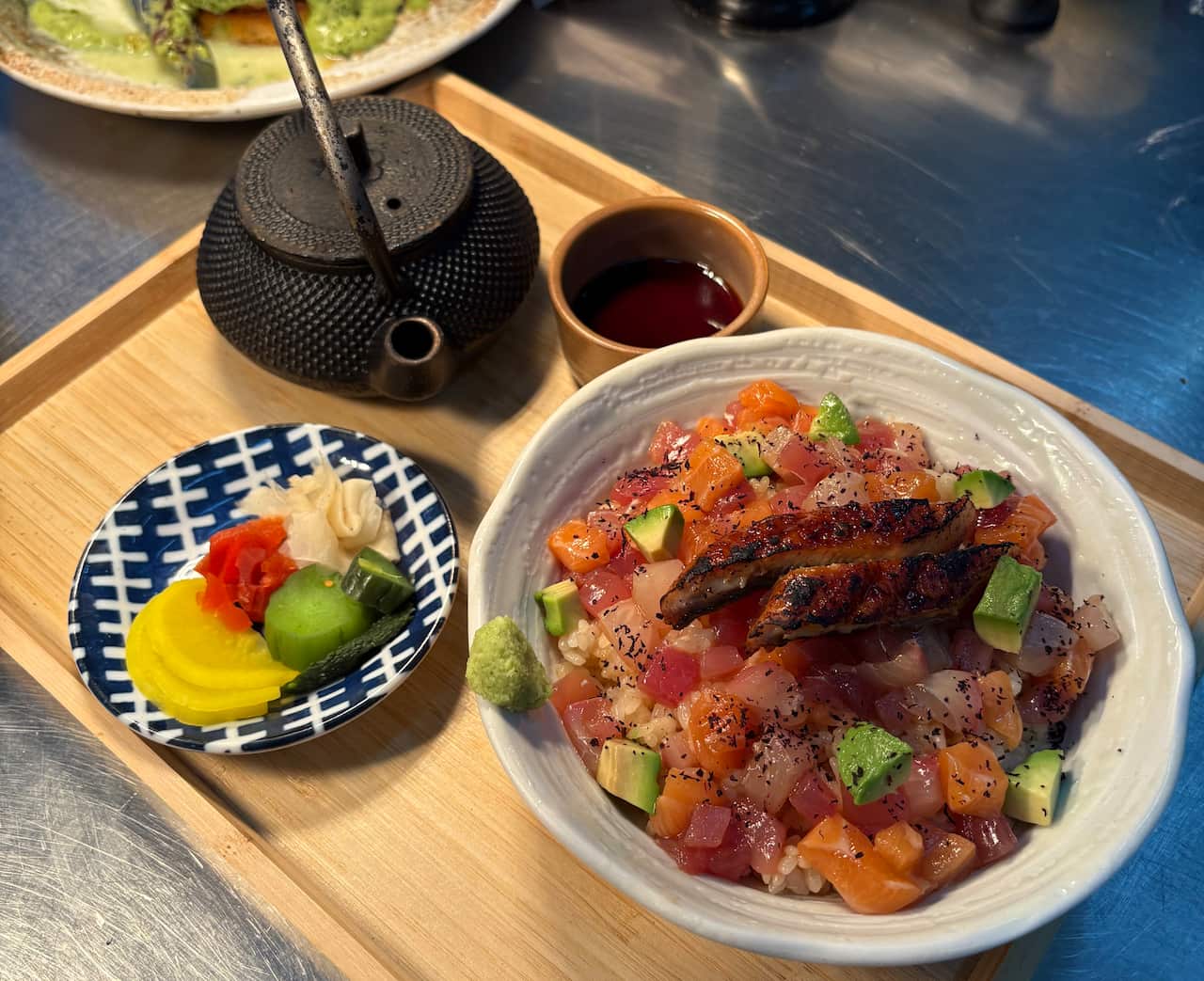
It takes some time and effort to work out the appropriate fish-tea-protein combo, but Helinda landed on snapper bones and green tea, along with mirin, sake and a bit of leek to make the broth. “If snapper is not available, we use salmon which still delivers that delicate flavour. We also tried barramundi and sencha, but it became too bitter.”
Lei cha is another example of pouring tea over rice to make a delicious meal. But where ochazuke is a simple, everyday fare, lei cha is an elaborate, savoury-bitter dish which was traditionally eaten on the seventh day of the lunar new year. It also features three components: rice, toppings and tea. The toppings are vegetarian and typically include leafy greens, tofu, peanuts and radish while the thick-but-pourable ‘tea’ is herbaceous because the ground tea paste is boiled with a range of herbs and vegetable stock.
There is a lot of chopping, grinding, boiling and frying involved, but in Perth’s KCH, owner and head chef, Kang Seng Gan has no regrets having it on the menu. “It is a weekend speciality, and we sell out very quickly,” he explains. Contrary to popular belief, the bright green colour mostly comes from the herbs like coriander and Thai basil rather than the green tea. “We [only] use 7-8 green tea bags and 100g of genmaicha for 3-5 litres of water,” Gan clarifies. Traditionally, green tea is the standard but genmaicha - green tea with roasted brown rice - adds a different dimension as it is a bit toasty and nutty.
Tea aroma in food
Much like wine varieties, each batch of tea has a different taste and aroma because of the terroir, processing methods and age. “Jasmine tea is naturally scented while pu-erh tea is fermented and has a muskier smell depending on how long it has been aging,” Cooper shares.
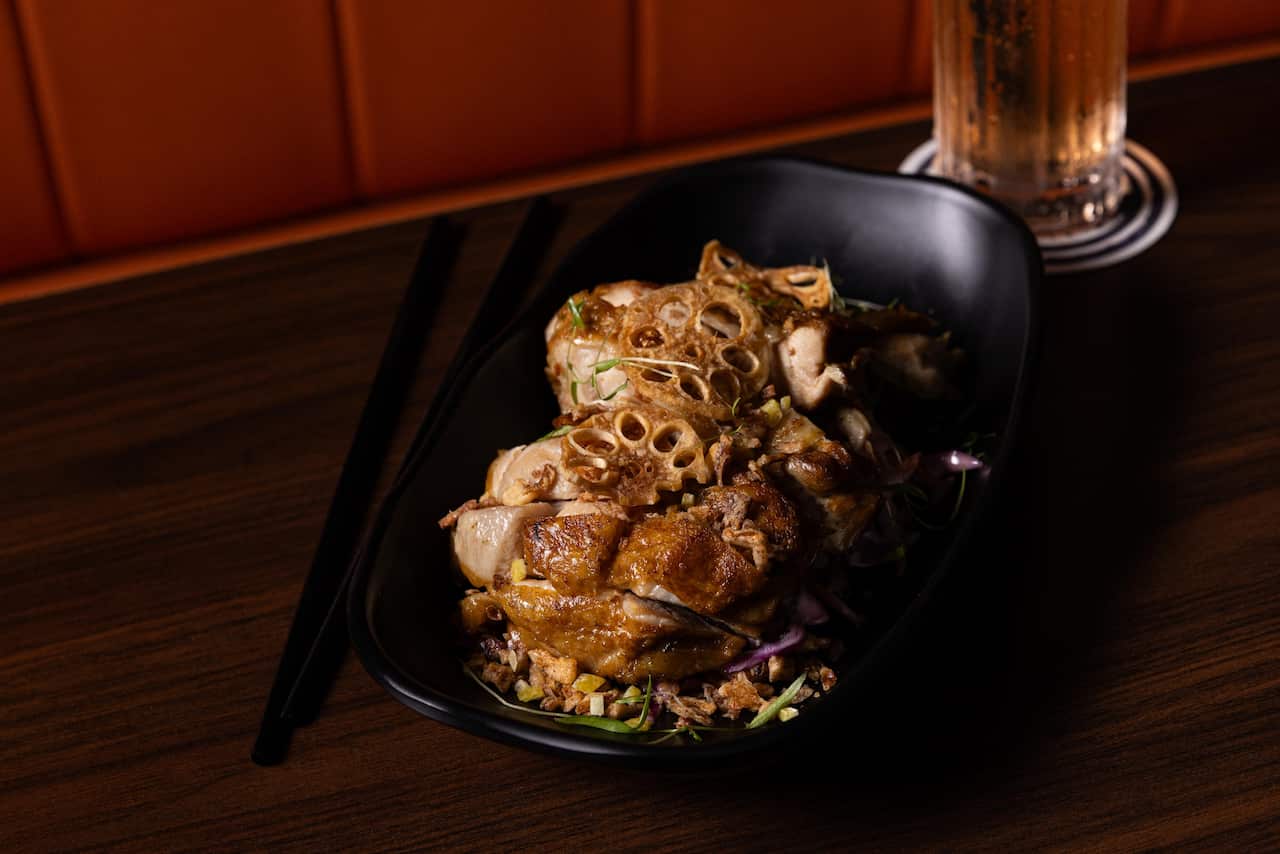
The smoky aroma of pu-erh tea is an important component in Oriental Tea House (OTH)’s tea smoked crispy roast chicken for good reason. As Yanan Zhou, the General Manager of OTH explains, when we have a cup of tea, the first thing we notice is the aroma. The dish is made in a wok and consists of a few layers: dry tea leaves at the bottom, then a metal plate to hold the chicken and finally a bamboo cover to seal it all. “When the chefs cook it, they rotate the wok consistently so that the tea aroma evenly coats the chicken,” Zhou explains.
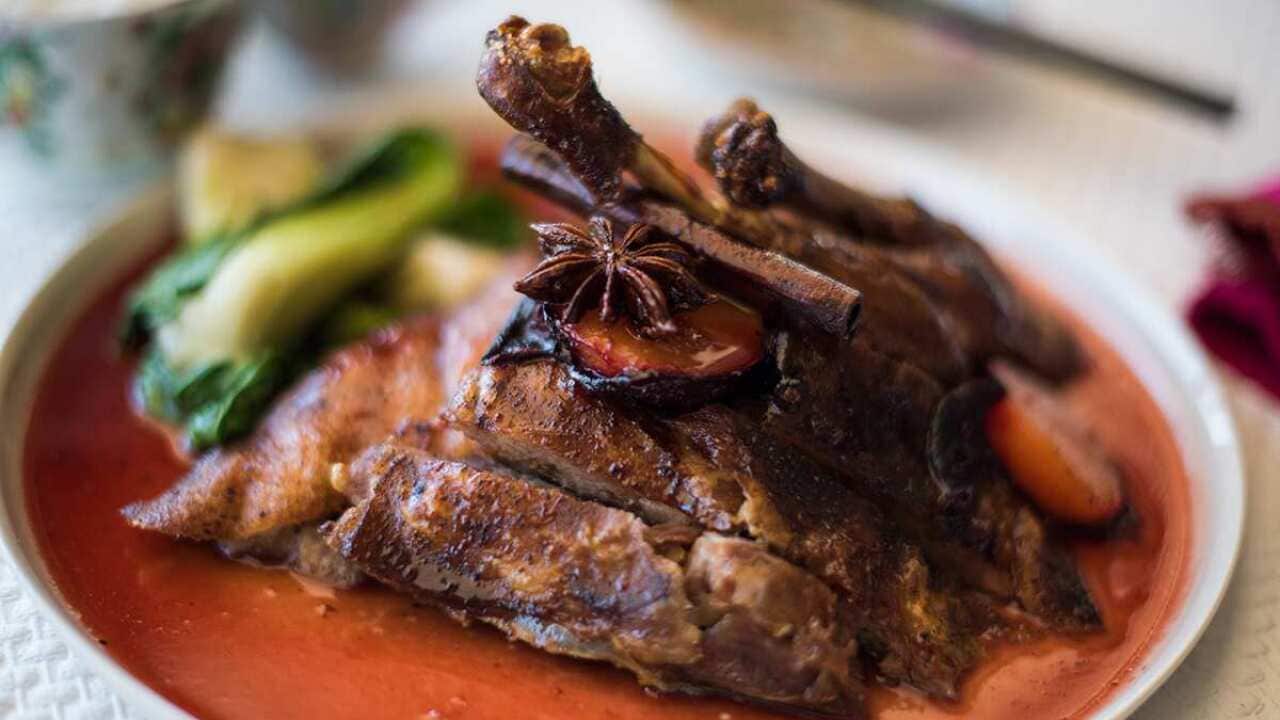
Another dish which relies on tea aroma is also one of Sichuan's signature dishes: the tea-smoked duck, known for its layered preparation. To make this dish, a whole duck is marinated, steamed, smoked over tea leaves and finally, deep-fried to crisp the skin.
How to use tea leaves in cooking
The good news is, there are simple ways to incorporate tea leaves in everyday cooking. For example, Cooper brews tea leaves, drinks it and mixes the remaining tea leaves with ponzu and soy sauce to make a salad. “People just throw away the tea leaves, but you can eat it!” she says laughingly.
Or, use tea leaves to make tea eggs, which is a popular Chinese snack. The idea is to infuse boiled eggs with a concoction of black tea, soy sauce and spices and leave it to marinade for a few hours.
Zhou has a few more tips for people who may want to experiment with tea leaves in savoury food. “If you’re cooking prawns, which is a light dish, pair it with a ‘lighter’ tea like longjing tea. In comparison, oolong tea is strong, so it pairs better with beef. The key is balance,” she concludes.

SBS Food is a 24/7 foodie channel for all Australians, with a focus on simple, authentic and everyday food inspiration from cultures everywhere. NSW stream only. Read more about SBS Food

Have a story or comment? Contact Us