When
Holi is typically marked between February and March. In 2025, Holi will be on Friday March 14.
Origins
Holi’s origins lie in Hindu mythology. The legends celebrated vary from different parts of the country, but the main ones include that of Lord Krishna and Holika and Prahlad. The legend goes that Krishna was believed to be a mischievous young boy and used to play pranks on the gopis (milkmaids) by throwing coloured water over them. These pranks formed part of the games and practical jokes that go into celebrating Holi.
Another legend is that of Holika and Prahlad. As food writer and author Teresa George explains, it’s "all about good overcoming evil and why traditionally bonfires are lit at Holi". Prahalad was the son of Hiranyakashyap, the demon king. The King demanded total devotion of all his subjects, including his son. Prahalad, however, was a faithful devotee of Lord Vishnu, earning him his father’s hatred. One day, his father asked him, 'Who is the greatest, God or I?" Prahalad responded, ' God is, you are only the king." The King was furious and decided to murder his son. But all attempts failed. So the King asked his sister, Holika, a female demon, to help. Holika tricked her nephew into sitting on her lap in a bonfire. She was immune to fire. Because she was using her powers for evil, the plan failed. Prahlad sat praying to Vishnu while the flames lapped around him and he finally emerged from the fire unharmed, while Holika was devoured by the flames. Vishnu killed the demon king and Prahalad ruled as a wise king."
An explosion of colour
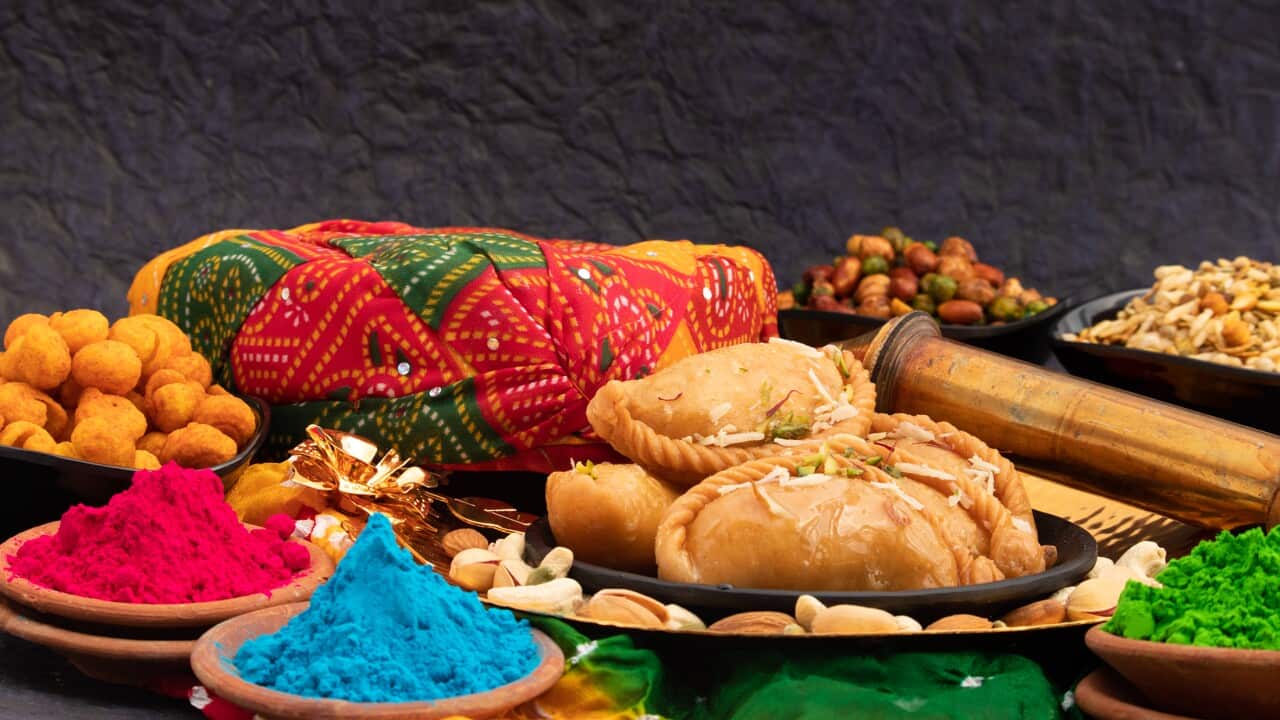
The festival is a time to cast away inhibitions and to flirt, sing and dance. People young and old throw brightly coloured powder, known as gulal, and water over each other. Teresa describes a typical scene in India during Holi – "It seems social chaos reigns on this day. About mid-morning on Holi, excited kids start the day by targeting people on the streets with their colour-filled gubaras (balloons) and pichkaris (water guns made specifically for Holi from materials such as bamboo, plastic, or metal) from roof tops and shouting 'Holi hai'. The air quickly becomes cloudy with a kaleidoscope of bright colours. Families and strangers, pedestrians and motorists join in the fun and good humour on the streets, by throwing or smearing gulal on each other or soaking each other with coloured water-jets."
Time to eat after a morning of fun
The food eaten on Holi mostly consists of your usual Indian cuisine. However, a few special dishes are prepared in different parts of India to celebrate Holi. Shakarparas (a sugar-coated deep fried snack) and gujias (a type of samosa filled with dried fruit and coconut) are popular in North India. In parts of Gujarat, sweet kichdi (a sweet rice dish) and sweets like kheer and halwa are made. Pooran Poli (a stuffed sweet flatbread) is popular in the states of Karnataka, Maharashtra and Gujarat, and eaten especially on Holi.
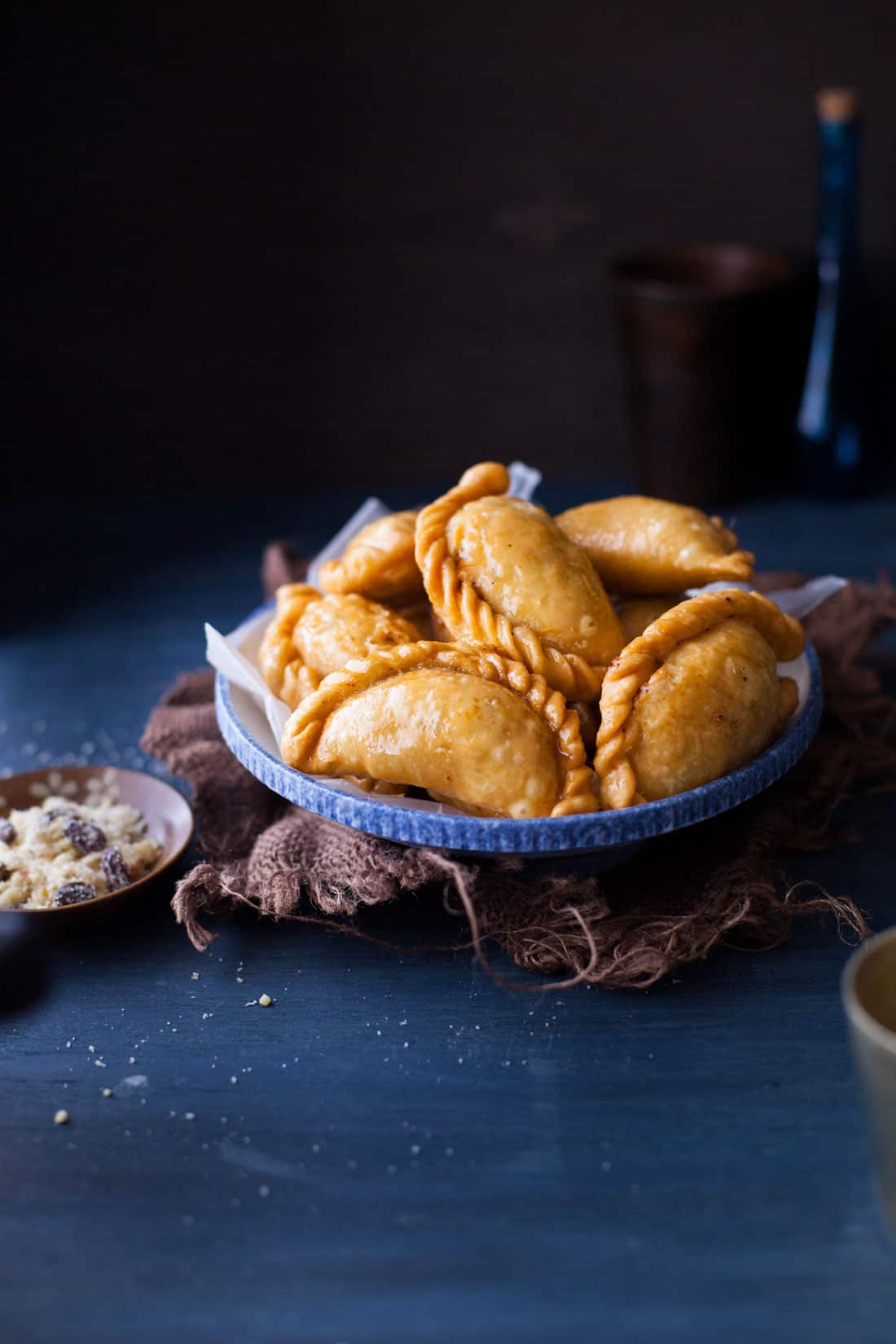
Try making your own mava gujiya (coconut and nut pastries).
Celebrations in Australia
Hindus in Australia spend Holi visiting friends and family, and attending large-scale events held in cities and large towns. As Priyamvada Dixit, a friend of Teresa George, from Sydney says, "In everyone’s home, there would be a large metal thali containing coloured powders and sweet paan. We would rub powder on each other’s faces, give each other loving hugs and feed each other paan. Sweets would quickly follow with the customary drink of thandai. This would continue from one friend’s place to another and would include people you may have had a previous disagreement with. The essence of Holi to me is you let go of grudges, let bygones be bygones, and forgive each other." On a larger scale, events such as the Holi Festival in Melbourne and Holi - Festival of Colours event in Sydney allow Hindus and others to take part in the traditions of food, singing, dancing and throwing water and coloured powder that mark the celebration back home.

SBS Food is a 24/7 foodie channel for all Australians, with a focus on simple, authentic and everyday food inspiration from cultures everywhere. NSW stream only. Read more about SBS Food

Have a story or comment? Contact Us