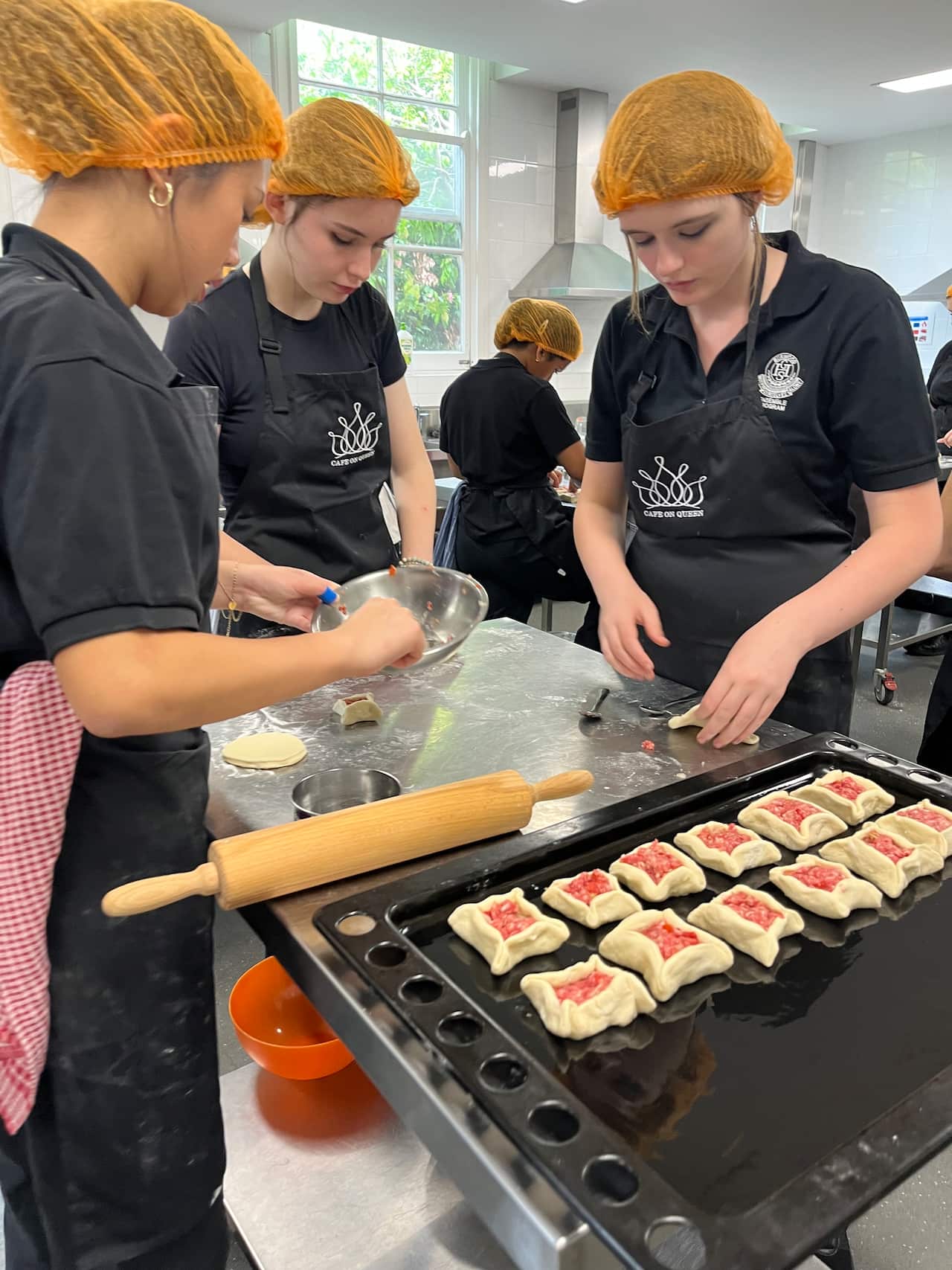
In a kitchen classroom in Sydney’s inner west, a group of year 10 and 11 students are cooking up a feast. The afternoon has been spent making sugar syrup, punching dough, chopping tomatoes and crimping pastry.
As the clock marks the end of the normal school day at 3.15pm, the students barely glance up. Because there is cooking still to be done, and this feast won’t be finished and eaten for many hours yet. These students from Burwood Girls High School are cooking an iftar dinner for their families, fellow students and members of the school and wider community.
Iftar is the evening meal that marks the end of the daily fast during Ramadan. At sunset, Muslims break their fast — often beginning with dates and water — before sharing a larger meal with family, friends or community members. It is a time of gratitude, reflection and togetherness after a day of fasting.
“We are so happy to be doing this Iftar dinner,” say Esha and Amelia. "We are so happy to help make the food. And we are learning different cooking techniques and different meals that we’re definitely going to make at home."
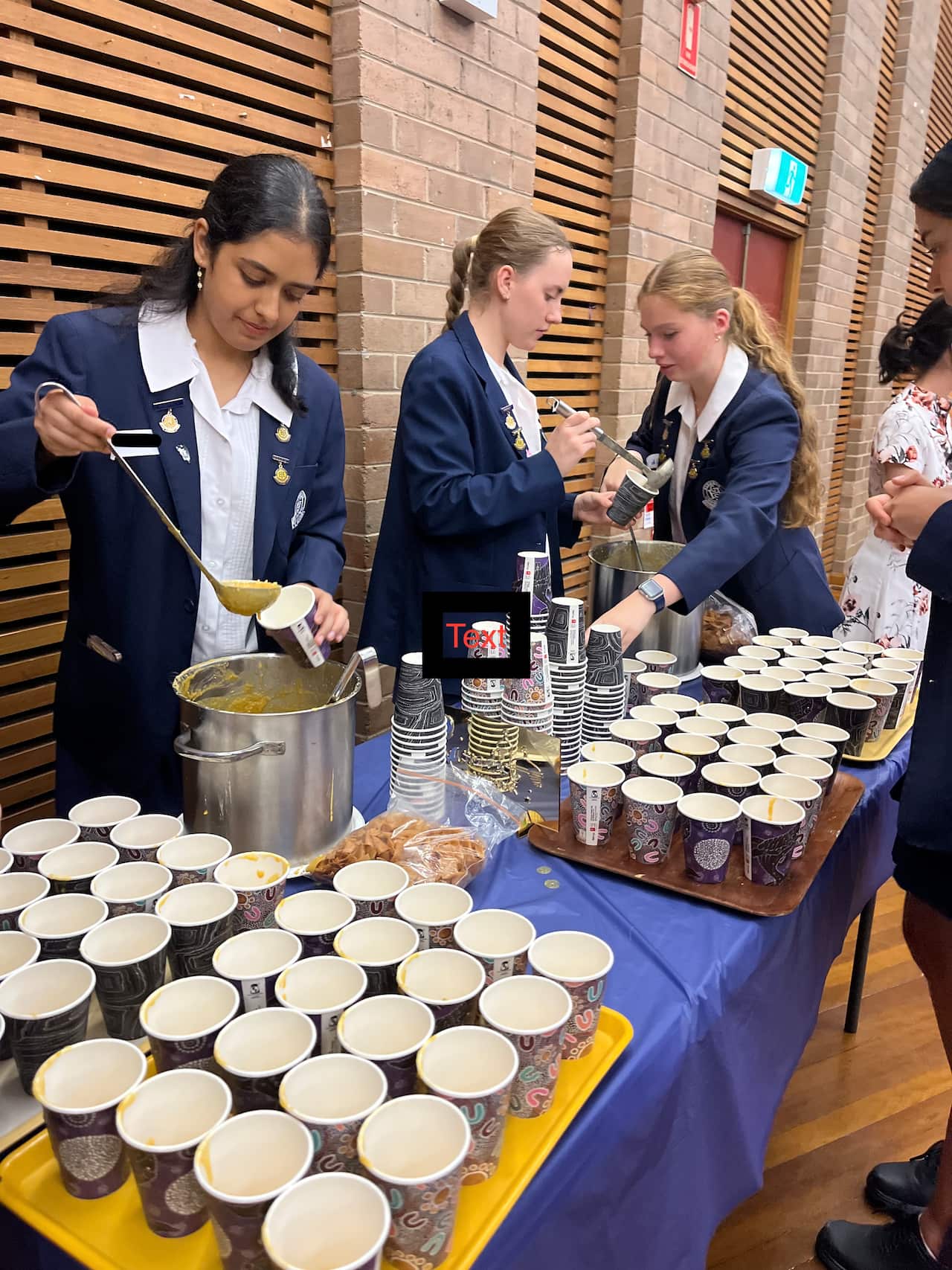
Cook Fatimah Omran and her mother Rawia Abdallah are leading the students preparing dishes they have chosen especially for the occasion: Egyptian noodle soup, mini sfiha (mini meat pizzas), and halawet el rez (sweetened rice).
“I chose Egyptian noodle soup for the students to make because after a long day of fasting, we need to nourish our bodies and this soup provides so many nutrients from the lentils and vegetables,” explains Fatimah.
“The mini pizzas were chosen to teach students how to make dough from scratch. The meat filling was added because it’s a popular choice in Middle Eastern cuisine, plus it’s high in protein.
“Halawet el rez is special to me because it’s from the city my parents grew up in - Tripoli, Lebanon - and I knew the students would love to see the stretching of the dessert as it is being mixed with the cheese.”
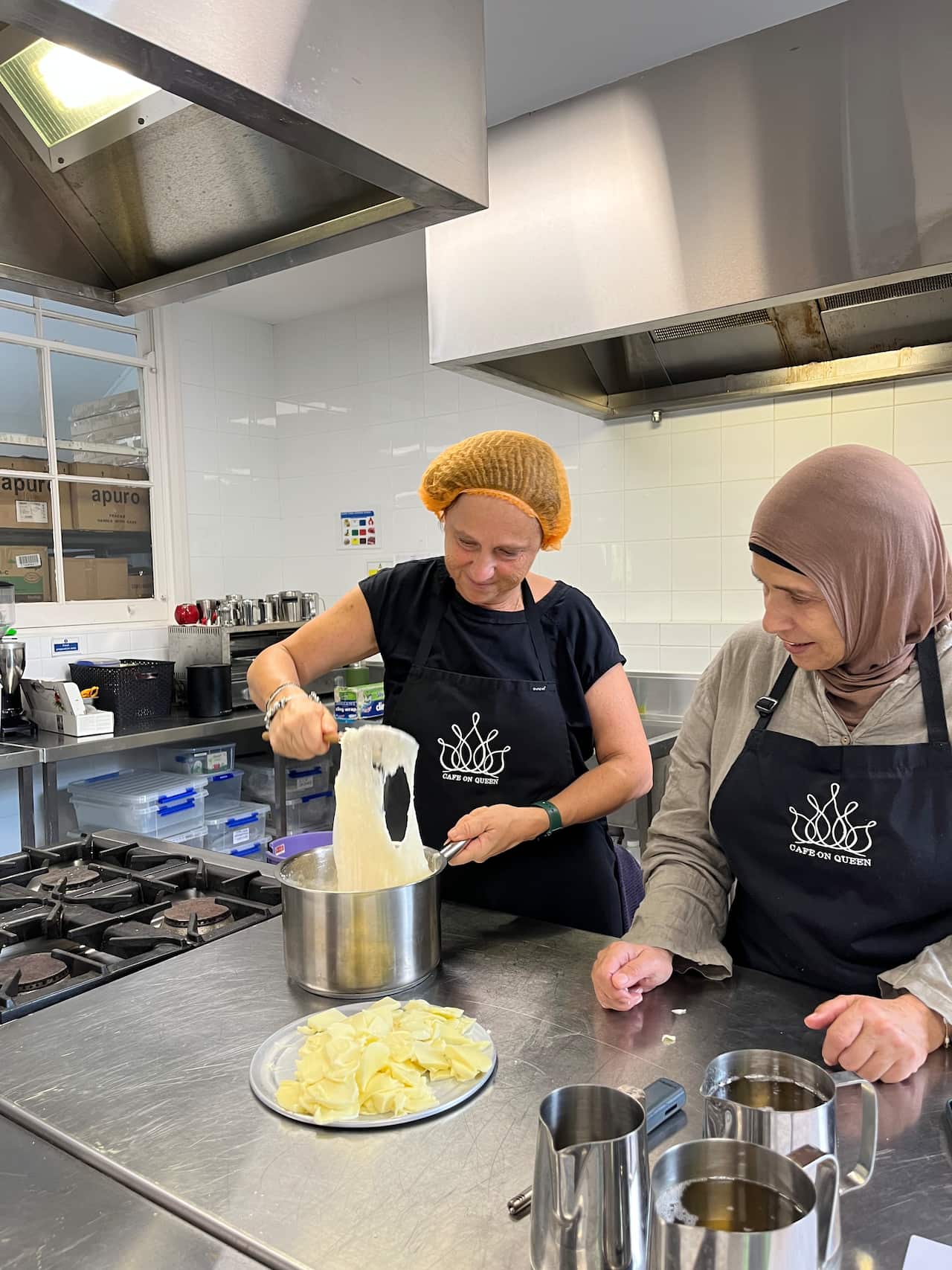
For the mother and daughter duo, passing on their knowledge, culture and tradition to the diverse group of teenage girls in the class is a beautiful and special opportunity.
“Actually it means a lot,” says Rawia.
“First of all, you know, we show people our culture, our fasting, which is very important because people don't know why we fast. And today to have those girls involved in it just it shows me they're very excited about the idea to do the iftar.
“And it's good to tell other people, you know, welcome to our culture and our Ramadan as well. It's something beautiful.”
When the school started holding an Iftar 12 years ago, it was a small event, involving about 50 students. Since then, the annual event has continued to grow. These days it is student-led event, says teacher Erin Dib, who has students rushing up to her, keen to offer their help, as she walks around the school.
“We have many students from different cultural backgrounds and speaking many different languages. So we like to celebrate everybody,” Erin says.
“And it brings a sense of community. It brings some more harmony, understanding. We're very big on understanding. So it helps all the students to understand one another.”
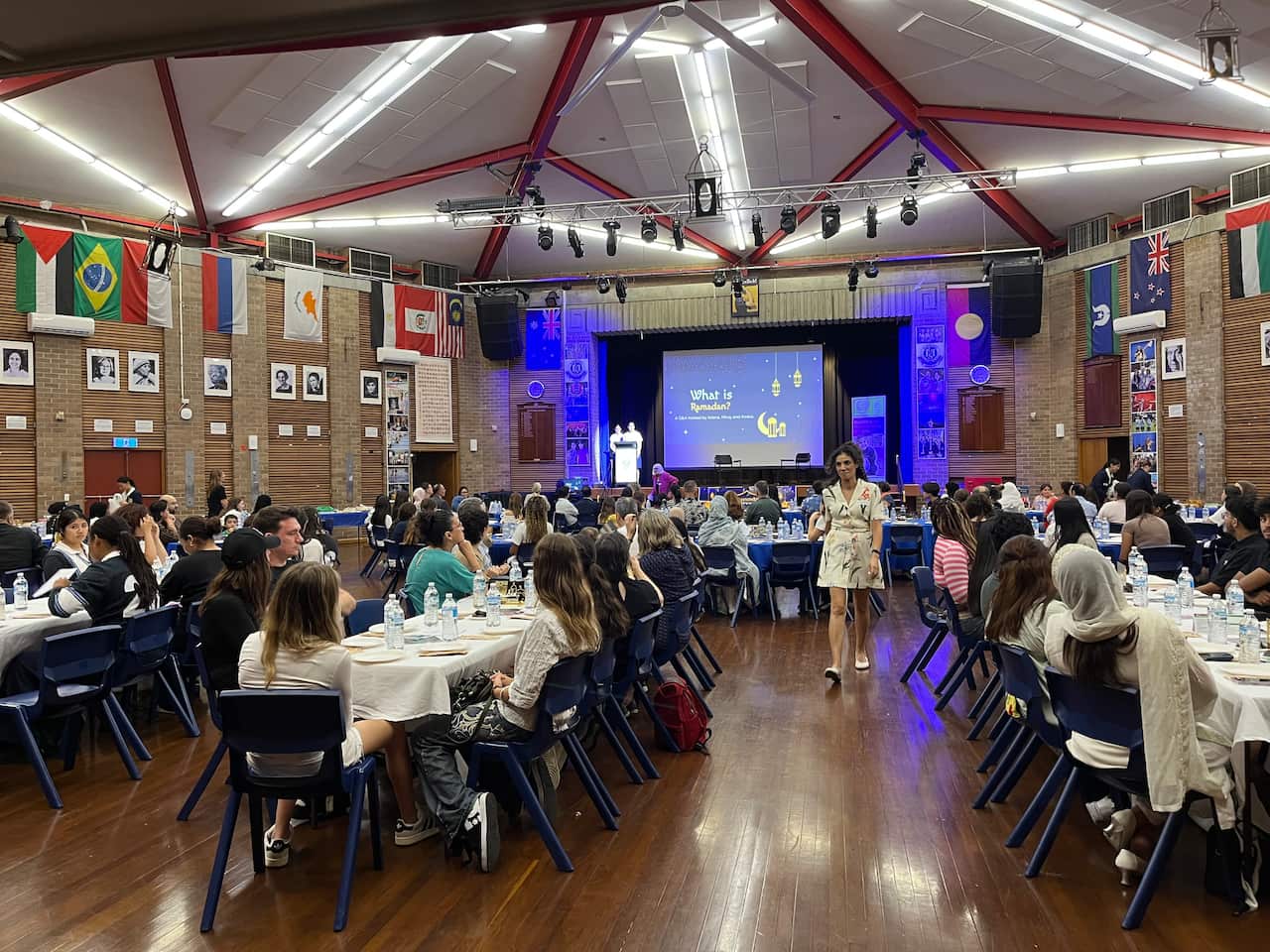
The students do all the planning, decorate the school hall, cook the dishes, set the tables, serve the food and make the speeches on the night.
“It’s a night where the staff come and the community comes,” Erin says.
“We encourage staff to sit with the students and their families so that they learn about their cultural background or about what Ramadan is and how Muslim students do a Ramadan fast. It’s a really special night.”
There is a lot of chatter in the kitchen classroom as a the students put the finishing touches to the dishes, sprinkling chopped pistachios on the halawet el rez, and stirring crushed noodles into the soup.
Then they carry the platters of food over to the school hall, where bottles of water, bowls of dates and printed out recipes have been carefully laid out for all 200 guests.
"I love that it's a day where we can appreciate other people's culture," says student Xinyi. "And they've been fasting for so long, and we come together as, like, a community. It's just so amazing."
Esha agrees: "I think everyone should spread positivity and love. That's our message for Ramadan."

SBS Food is a 24/7 foodie channel for all Australians, with a focus on simple, authentic and everyday food inspiration from cultures everywhere. NSW stream only. Read more about SBS Food

Have a story or comment? Contact Us