Kina, or sea urchin, has been a beloved Māori delicacy for centuries. Now, increasing numbers of non-Māori people — myself included — are becoming intrigued by it, thanks to the surge of kina videos popping up on TikTok and Facebook. Every time a kina video crosses my social media feed, I always stop to watch the diver crack open the spikey urchin and slurp up bright golden roe found within.
Curiosity piqued, I spoke with experienced kina divers and chefs to learn more about this one-of-a-kind seafood.
What is kina?
Kina is the Māori word for the common sea urchin (Evechinus chloroticus), an edible urchin species native to Aotearoa New Zealand. It is used to refer to either the whole sea urchin or the silky roe within. Currently, parts of New Zealand’s reefs are overrun by kina, due to the overfishing of kina’s predators.
When people eat kina, what part are they eating?
When people eat kina roe, they are eating the sea urchin’s reproductive organs. Creamy, salty, briney, silky, bearing the scent of fresh ocean water — these are the common terms used to describe kina.
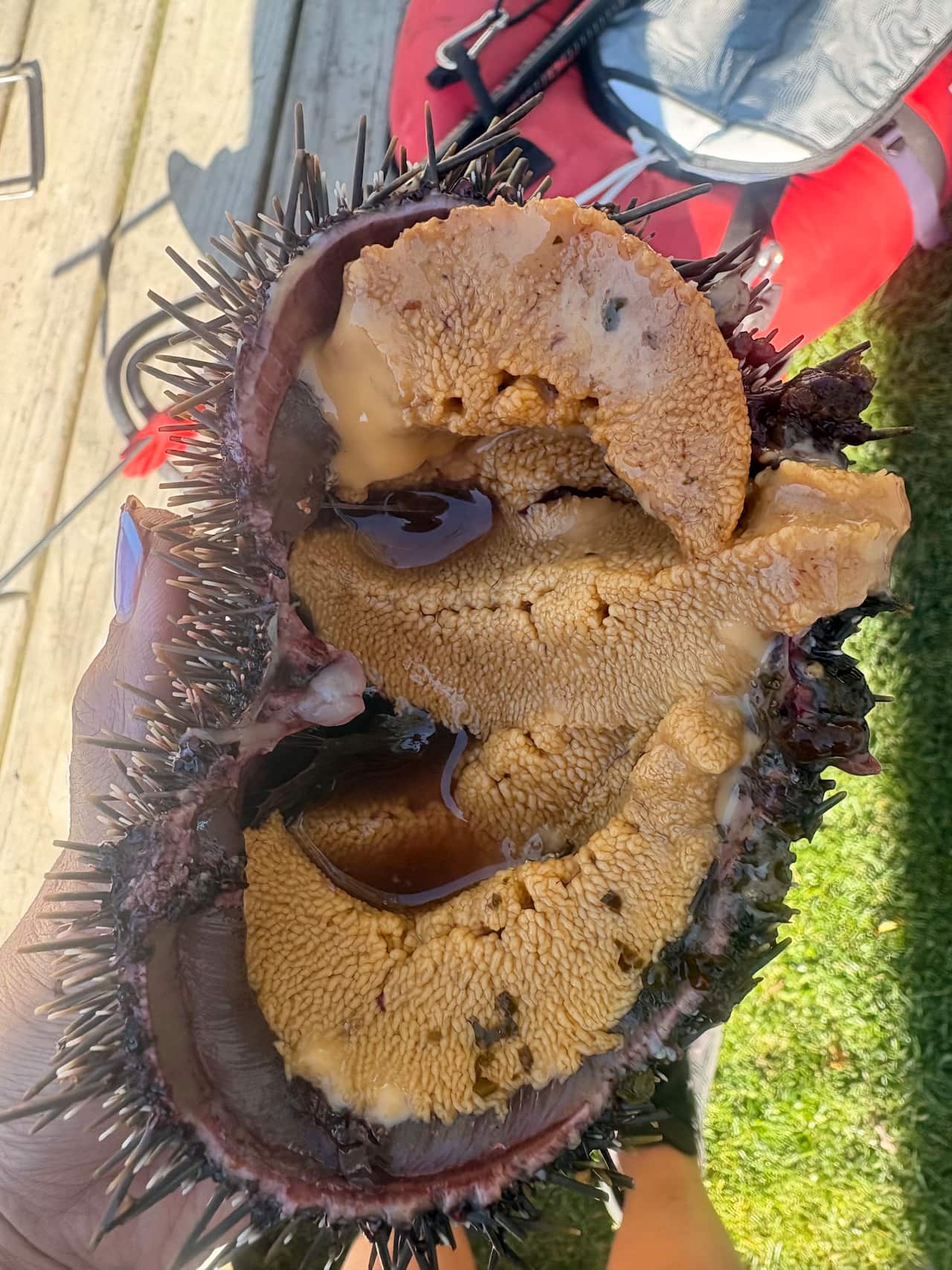
The dark purple guts, called hua, are also edible. But most Māori do not eat it, except some older folk, says Wikatana Popata, kina diver and founder of Far North X Tours in Aotearoa New Zealand. Kia Kanuta, a chef specialising in modern Māori cuisine in Aotearoa New Zealand, describes hua as having a “fishy, seaweedy, almost mossy flavour”.
Why do people squeeze kina through their lips when eating it?
According to Juanita Mariee, a kina diver in Aotearoa New Zealand, some ‘squeegee’ the kina with their lips to separate the hua, the dark coloured guts, from the roe. But many people just pop the kina straight into their mouth.
Why are some kina orange and others brown?
Orange roe comes from female urchins, and the tan or brown ones from males. Mariee and Popata describe the female kina as being more bitter, preferring the creamier and sweeter male kina. Whereas for Kia Kanuta, a chef specialising in modern Māori cuisine in Aotearoa New Zealand, the female roe tastes less bitter. Their textures differ as well, females being more firm and grainy, and males more silky and soft.
What are the differences between pre-packaged kina versus kina out of a freshly cracked shell?
The divers and chefs I chatted with say that nothing beats a kina that’s just been harvested from the ocean. Popata takes folks out to dive for fresh kina as part of his tours, so that people can experience it.
If you are getting pre-packaged kina, its flavour would be comparable, provided the kina has never been frozen, says Mariee. Monique Fiso, a chef based in Aotearoa New Zealand, agrees. “They’re just as delicious, but do not have that ocean breeze scent that you get from having a freshly cracked shell, so I find it’s more mellow.” The punnets often hold both female and male kina together, so for Kanuta, the roes taste slightly more bitter as they intermingle.
Kina roe that has been frozen is more limp. If it gets freezer burn, parts of it turn translucent and it doesn’t taste great, Mariee adds.
If you’re selecting whole kina at a sea market, there are signs to indicate it is fresh. Make sure the spikes are straight and strong, preferably still moving. Spikes that are drooping downward or falling off are a clue that the kina is spoiling, Popata says.
Inside the shell, Kanuta explains that the hua should be a dark purple, not pale or almost green. Roes should be lively and plump, not drying out, and still be attached to the shell.
Spoiled kina carries an intense, funky smell, says Fiso. A fresh one will smell “like the smell of the ocean when you've been underwater and you pop your head up. Like brine, like a little bit of seaweed,” Kanuta shares.

Ideally, choose kina that are harvested from the region you’re in. If you are in the north of New Zealand, for instance, the best kina are the ones fished out of northern waters, because they have spent less time being transported, says Popata.
Consider also when kina season is. Mariee says, “It's generally from the start of November pushing it to the end of April, the reproductive season.”
What are the best ways to serve and eat kina?
All the divers and chefs I spoke with love eating kina fresh out of the shell or punnet as is. For beginners, Kanuta suggests having kina on toasted brioche or sourdough with a bit of butter, finished off with cracked pepper.
Mariee adds that Māori people also like to leave kina in the fridge for a couple of days, as it becomes sweeter. They save the juice from the shell, strain it, then pop the roe back into the juice. If they have whole kinas, they store these in seawater. Keeping the kina in its own juices or in seawater helps keep the roe intact, says Popata. If you don’t have access to seawater, Kanuta advises mixing a tablespoon of salt into a litre of water, and storing your kina in that.
You can also cook kina. “I like to take a punnet of kina and saute it in a hot pan with a touch of cream and white wine, serving it with rēwena, a traditional Māori sourdough,” says Fiso. “Another thing you can do with that same sauce in the pan is to add a good handful of fresh pasta and toss it together for an incredibly luxurious dish.”
Where can I find kina in New Zealand or Australia?
If you’re in New Zealand, you can find kina at sea markets or fish and chip shops. Mariee advises trawling through local community groups on Facebook for people’s recommendations.
In Australia, try Kiwi or Pacific Islander food and grocery stores, suggests Chris Theodore, an urchin diver in Australia. You can also find Australian species of edible sea urchin in fish and seafood markets, such as Sydney Fish Markets, South Melbourne Market or Aussie Seafood House. Call in advance to double check that it is currently in stock. Theodore says he also has people ringing him up or contacting him via his website to find out where he delivers his harvest.

SBS Food is a 24/7 foodie channel for all Australians, with a focus on simple, authentic and everyday food inspiration from cultures everywhere. NSW stream only. Read more about SBS Food

Have a story or comment? Contact Us