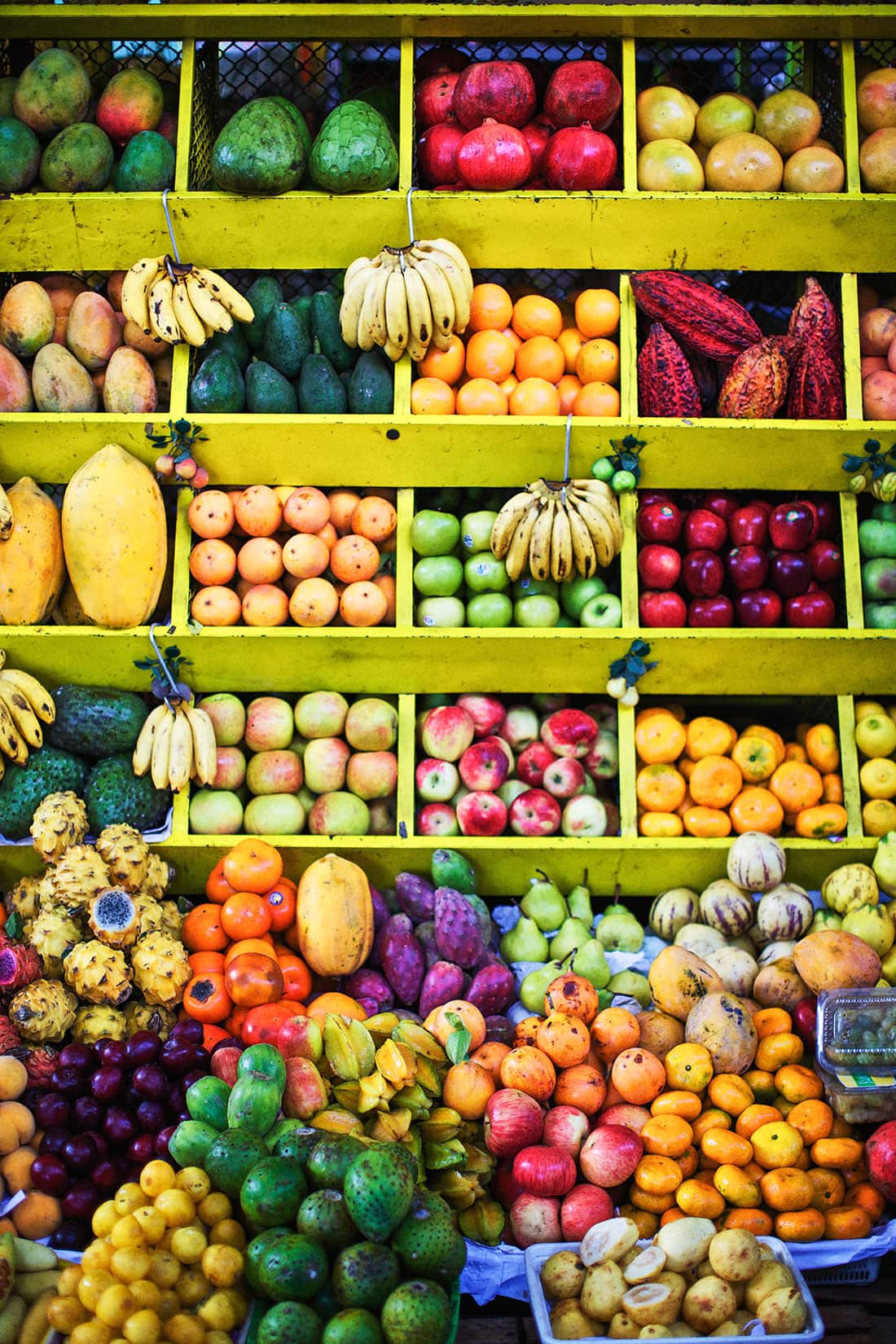
Driving through Lima on a Sunday night, with salsa music blasting from the car’s stereo, the streets are quiet and the city is dry. It’s election weekend, and in accordance with Peruvian laws, the sale of alcohol is banned. “You don’t want to go in drunk, not knowing what you vote,” explains our food tour guide, Lucho Lazarte Bolognesi. “You can usually get around it with a few coins, though,” he adds – but with a shake of his head, our waiter dashes any hope of a Pisco sour tonight. Instead we sip on chicha morada, tall glasses of sweet fermented purple corn drink, over a meal of piqueos, or snacks. I’m here to eat my way from Lima, the modern capital on the coast, to Cusco, the ancient Incan capital in the Andes mountain range. Melbourne-based Peruvian chef Alejandro Saravia (see page 16) is joining our eating odyssey, and gives the rundown on the food of Peru. With such a varied terrain, Peru’s regional cuisines are markedly different, but what ties it all togetheris an ancient food culture, and an awe-inspiring range of native produce. “People here say God must be a Peruvian,” laughs Alejandro, citing some 3000 native varieties of potato as proof.
While multicultural Lima’s recent gastronomic revolution has led to a focus on the city’s higher-end offerings, authentic street-food dishes remain at the heart of this cuisine and the lives of locals. Perched on a cliff above the Pacific Ocean, it’s no surprise that the signature dish is ceviche. We snake along the coastal road in the direction of the huge luminescent cross of Chorrillos that looms high above the water. Chorrillos is one of many seaside districts in Lima, with a busy fish market selling the haul brought in by a fleet of brightly coloured wooden boats moored on the water. Beside the fish market is a row of food stalls, a vibrant blaze of yellows, reds and oranges. Again, salsa music pumps into the mid-morning air.
“These restaurants began because the fishermen wanted somewhere to eat,” says Alejandro. “Then, because of the freshness of the product and the great ceviche, locals started to come too, and it grew from there.” Run by the fishermen’s wives, the stalls are all named after the women. I can see Rosita’s, Esterita’s, Pascualita’s and so on – adding the diminutive ‘ita’ is a form of endearment. We end up at Florcita’s, for a lesson in ceviche. Flor Huaman Zuñija’s mother began the restaurant that Flor now runs, and they’ve been making ceviche here for 40 years. “We start at 10am and stay open until the last one leaves,” she says. “Everyone has their own recipe for ceviche,” explains Alejandro, “but this is a traditional fisherman’s version.”
A few rules – the fish has to be fresh (no doubting that here), and the lemon has to be freshly squeezed. The diced fish is then seasoned with salt, rocoto chilli paste, minced garlic, chopped coriander leaves, and lastly the lemon juice – to ensure that the fish doesn’t get ‘overcooked’. The acidity of the lemon turns the outside of the fish a pale milky white, but true Peruvian ceviche should remain raw on the inside.
It’s garnished with red onion, and served with corn and sweet potato to balance the heat and the acidity. Washed down with an icy cold Pilsen Callao beer, the combination of flavours – citrusy, spicy, and vibrant – is addictive. “If you are a Peruvian and you order a ceviche, you get a spoon, and you finish all of the juices. It doesn’t matter how fancy the restaurant is, you’ll do it,” advises Alejandro. Known as leche de tigre, or ‘tiger’s milk’, the juices are also a popular local hangover cure, knocked back in a shot glass.
On Alameda Chabuca Granda, a busy boulevard in the old part of Lima, women in matching red outfits and carts sell desserts, each one specialising in just one dish. “These women are the master cooks of each of these desserts,” explains Alejandro. Once, this stretch was an unorganised free-for-all of street food, but it’s since been overhauled. In addition to the makeover, only the best vendor for each dish is allowed to operate there, determined by an annual taste test. Beneath the glossy touches of modernity are traditional desserts still made to recipes that have been handed down for generations. Carmen Briseño has been selling piping-hot picarones in the same spot for more than 30 years, dropping rings of the gently spiced pumpkin and sweet potato batter into sizzling oil, then dousing the doughnuts in a sweet, sticky syrup. Across the walkway is Meche Fernandez, doling out arroz con leche, a caramelised rice pudding made from condensed milk, and mazamorra morada, a thick, sweet purple corn pudding spiced with cinnamon. Served together, this weak-at-the-knees combination is called a ‘clásico’, the starkly contrasting colours reminiscent of a classic match between two of Lima’s football teams – Alianza Lima (purple) and Universitario (white). Meche has been doing this since she was nine, helping to make the sweets for her family’s stall at Chincha markets in the south of Lima. “That’s why she’s the best,” says Alejandro.
No trip along the coast to the beach is complete without a pit stop for a fried pork fix. In Lima there are many simple eateries specialising in chicharrón, deliciously tender pork that is braised then fried in its own fat, but 34-year-old Restaurant Chicharronería Sarita is the favourite of many, including Alejandro. The pork forms the basis of the much-loved Peruvian sandwich, pan con chicharrón, commonly eaten for breakfast. You choose your cut of pork at the counter (we pick rib, the juiciest), and order it by the kilo – it arrives on our table for self-assembly, with all the accompaniments. “This is the best way to start a day,” says Alejandro happily, piling the thickly cut, succulent pork onto a fresh white roll with slices of pan-fried sweet potato and spicy salsa Criolla, a mix of red onions, lime juice and chillies. Just one bite of this heart-stopping combination, and it’s at the top of the list of Reasons Why God is a Peruvian.
Cusco
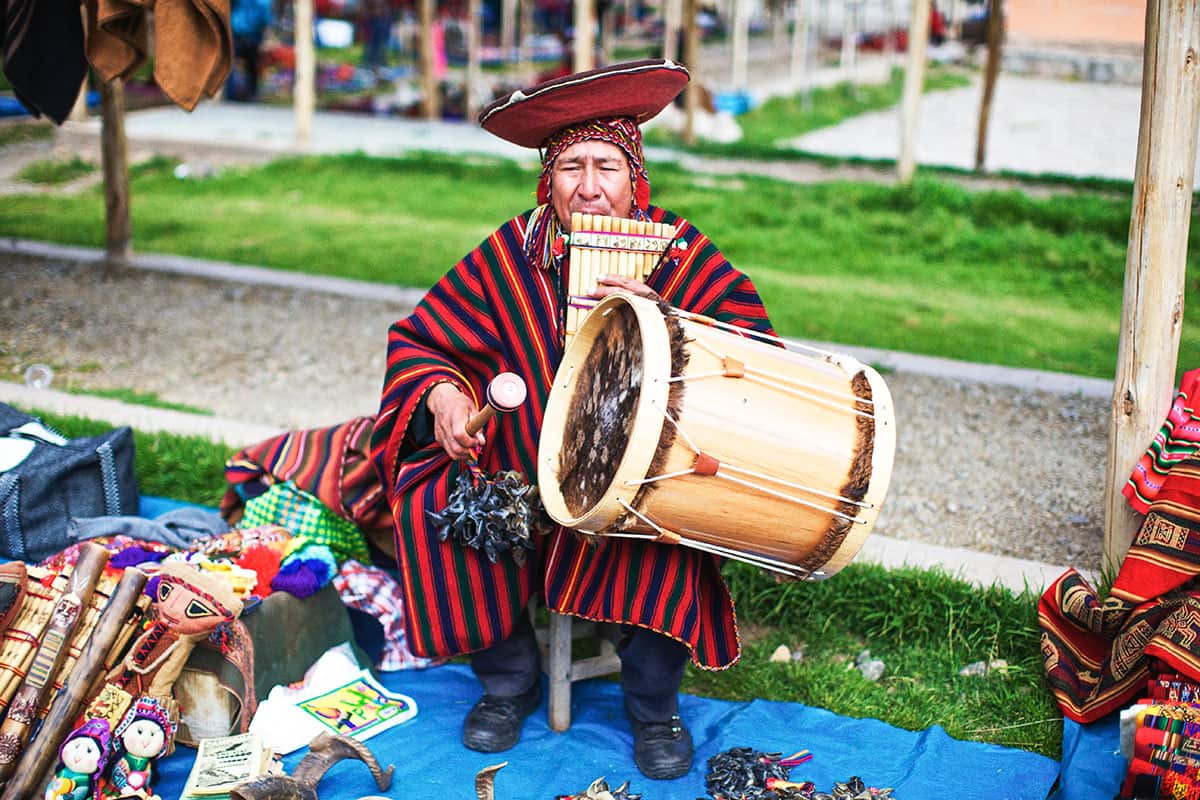
In Cusco, the historic capital of Peru, everything moves slower in the thin, high-altitude air. Up here in the Andes, the infectious lively salsa is replaced with melancholy pipe music and the diet – primarily potatoes and maize, with guinea pig and alpaca as the traditional sources of protein – is just as different. Once the centre of the Incan Empire, Cusco is best known as the gateway to Machu Picchu, Peru’s most famous landmark. But today we’re not joining the throngs of coca leaf-chewing trekkers – instead, we’re tracing food traditions that are just as ancient, and celebrated in the village communities just outside of Cusco in the Sacred Valley.
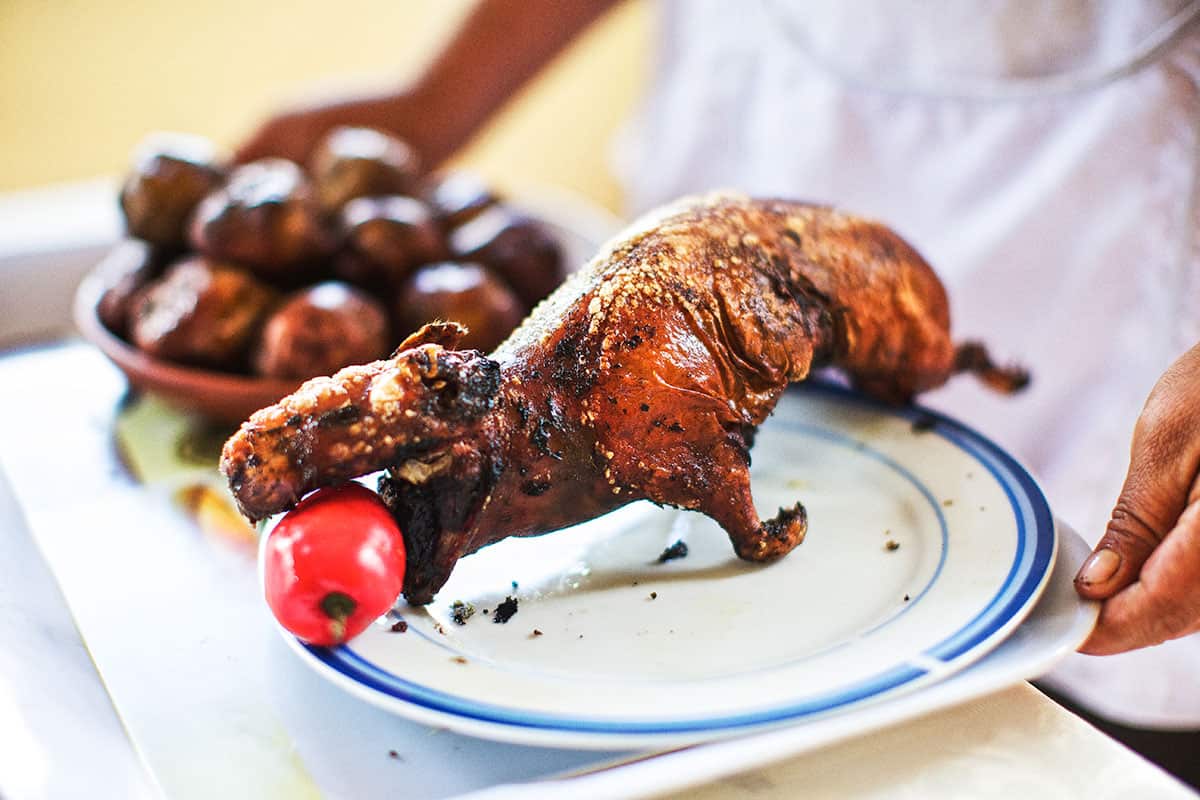
We wind down through green terraced peaks into the valley, and I learn to spot the difference between a llama and an alpaca (tip: alpacas have a shorter snout). A woman standing outside a cuyeria waves and smiles from the roadside, brandishing a skewered, roasted guinea pig. Cuy, guinea pig, is a delicacy here that is only eaten for special occasions. It proves to be one as we arrive in Chichubamba, meaning ‘pregnant land’, a small farming village in the Sacred Valley. We are welcomed into the home of local woman Elizabeth Capcha, who cooks us a lunch showcasing their bountiful crops including corn, quinoa, potatoes and herbs. It ends with an elaborate finale of roasted whole guinea pigs, presented in the style of a suckling pig, with a Peruvian rocoto chilli held between their teeth. “I wouldn’t usually eat this, because I’m from the coast,” Alejandro says. “This is Andean food.” The scene is reminiscent of an old painting we’d seen days earlier in Lima, in the 17th century Convento de San Francisco. At first glance, it’s a typical depiction of the Last Supper. But there, on the table before Jesus and the apostles, is a roasted guinea pig. If it’s good enough for Jesus, who are we to refuse – I grab a tiny leg and dig in.
A few doors down is the home of Celia Torres, a jovial, ruddy-faced woman in a faded pink apron. She has lived in Chichubamba all her life making chicha, fermented corn beer. It’s an age-old Incan practice, traditionally made by women who would chew on the corn and spit it out, their saliva prompting fermentation. Thankfully, Celia has adopted the more modern method of brewing taught to her by her mother. After harvesting the corn in May, it is left to dry in the sun, then the kernels are soaked, wrapped in corn leaves and left to germinate. Once they’ve sprouted, the kernels are dried and ground, then boiled with water to make the chicha. It’s not very alcoholic – about 3 per cent – but what it lacks in strength is made up for in quantity, as it’s traditionally drunk in a caporal, an enormous bucket-sized cup. Celia, who looks like she could down her fair share of caporales, pours us a round.
Chicha in hand, it’s now time to play sapo. Against the wall of Celia’s courtyard is a small table with a few round holes, and a golden frog, or sapo, in the middle with its mouth very slightly ajar. “There’s no chicheria (chicha bar) without a sapo game,” explains Lucho. “We always play this game in chicherias and write the score on the walls. The loser has to pay for drinks.” There are various points for getting the coin through the holes on the board, but the aim is to get it into the frog’s mouth.
We split into teams (boys and girls), and soon realise it’s a lot harder than it looks. With our male competitors about to declare a marginal victory, heckling for a round of local Cusqueña beers, we realise Celia hasn’t had a turn – giving us girls one last shot.
She laughs and declines, shaking her head and holding up her hands in a way that suggests she wouldn’t know how, but we insist.
Celia stands with her bare feet apart, not even bothering to take the extra step to the marked line, and with a well-practised flick of the wrist, flings the coin clean into the frog’s mouth from across the courtyard.
A second of shocked silence, and then we all erupt in cheers. She laughs, yelling in Spanish to Lucho. “She said she didn’t want to buy the men beers!” We discover later that not only can she outdrink most of the men in Chichubamba, she is also something of a local sapo champion.
Pachamanca, the Andean answer to a hangi, is yet another link to this region’s ancient past. “We only have pachamanca at festivities,” explains our driver, Enrique. “But – we have festivals all the time, so we have pachamanca all the time,” he adds, laughing.
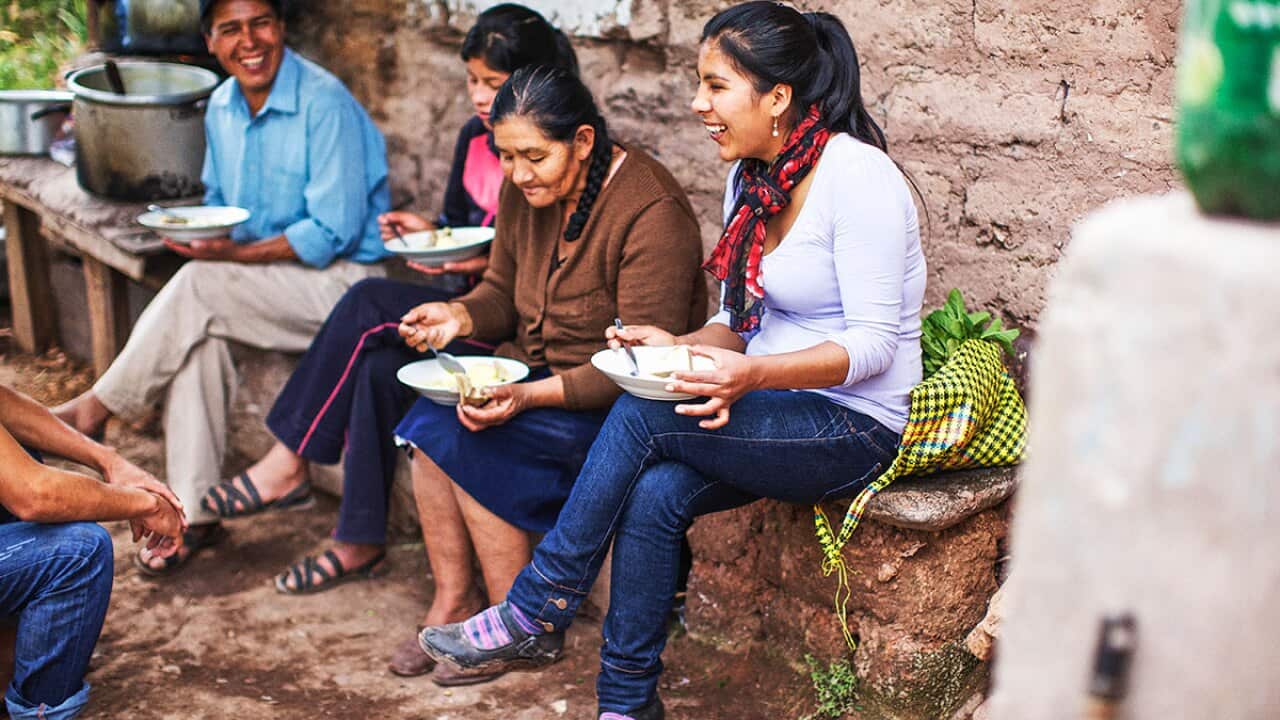
In Ollantaytambo, we meet local couple Willy and Justa Carrion and their friends beside the Urubamba River, just as the sun is beginning to drop behind the hills. They’ve dug a large pit in preparation for this Incan culinary tradition. Mountains of meat sit in large plastic tubs, marinating in an aji amarillo chilli mixture. There’s also a handful of different potato and sweet potato varieties, bright green Lima beans, ears of corn, and bananas. Once the coals are hot enough, it’s all layered into the pit divided by greased waxy paper and ember-red coals, each layer thwacked with a large bunch of aromatic huacatay, Peruvian black mint, to impart some of its strong flavour.
Alejandro and Lucho hoist themselves into a creaky old cable car to cross the river in search of beers, and the rest of us wait patiently. The anticipation makes those roasted potatoes every bit sweeter once they’re eventually unearthed. After the feast, things get rowdy as we explain the concept of a beer shandy to several bemused Peruvians, and our host Willy returns, having driven into town to buy us some Anis Najar. This fiery anise-flavoured digestive liqueur, commonly drunk after pachamanca, boasts a 45 per cent alcohol content.
The bottle of Anis Najar is passed around, and the chatter in Spanish, English and Quechua, the local dialect, grows louder. The Anis Najar reaches my limbs, and the happy drowsiness that comes from eating five different types of slow-roasted potatoes in the one go kicks in. God could well be a Peruvian.
The writer travelled courtesy of Intrepid Travel and LAN.
Photography by Paul Barbera.
As seen in Feast magazine, August 2014, Issue 34. For more recipes and articles, pick up a copy of this month's Feast magazine or check out our great subscriptions offers here.

SBS Food is a 24/7 foodie channel for all Australians, with a focus on simple, authentic and everyday food inspiration from cultures everywhere. NSW stream only. Read more about SBS Food

Have a story or comment? Contact Us