Easter is my favourite time of year, mostly because of the rituals that come with it (many of them, delicious).
One of those rituals for many Christians like myself is dyeing eggs. Eggs themselves symbolise new life and rebirth – we hard-boil and crack them open with others on Easter Sunday, representing the resurrection of Christ.
Traditionally, Orthodox people dye eggs red to symbolise the blood of Christ. But over the years, the ritual has become trendier, and with that new options have been introduced to the Easter egg colour wheel. (However, red by far is still the most popular choice.)
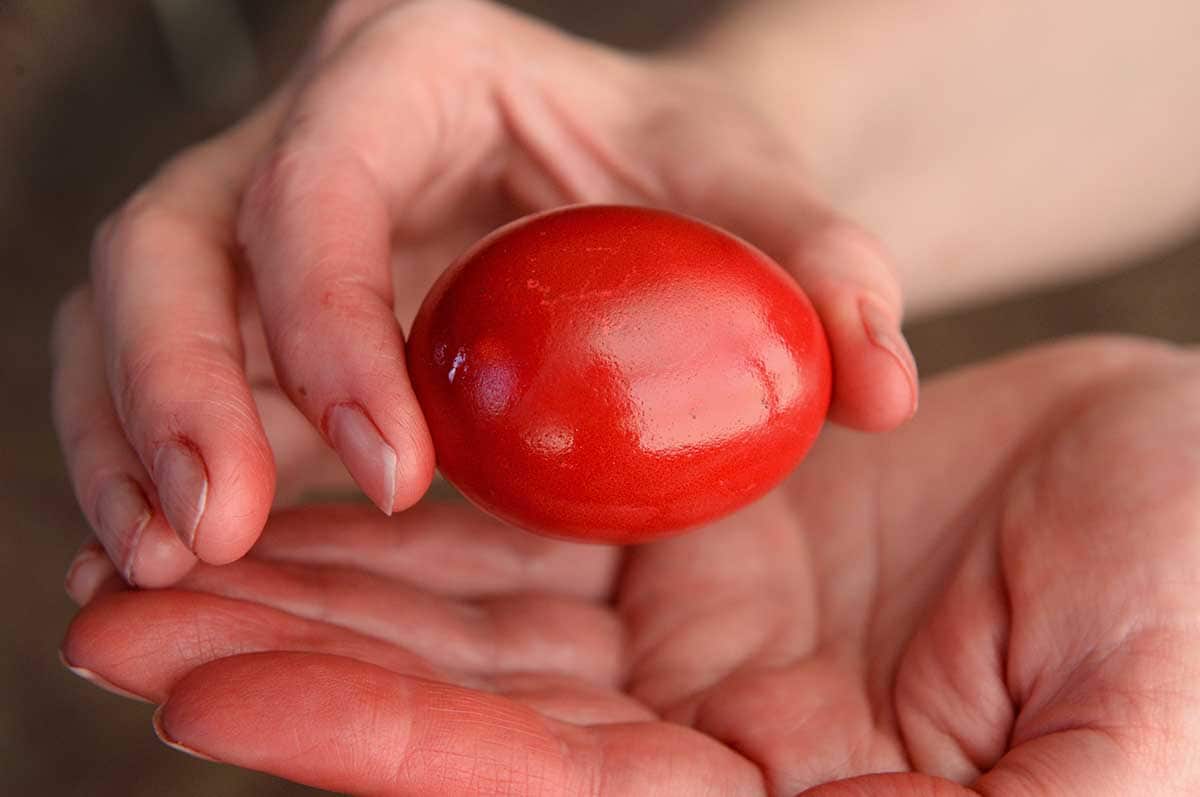
There are two ways to dye eggs. One is with a dedicated egg dye, which usually affords bold, vibrant colours (these are either synthetic or naturally derived). The other is to use natural ingredients that are high in pigment but result in comparatively natural colours.
If you’re interested in dyeing eggs naturally this Easter, here’s what you can use:
- Red: red onion skins or beetroot
- Orange: brown onion skins or paprika
- Yellow: turmeric or saffron
- Green: parsley, spinach or spirulina
- Blue: purple cabbage
- Indigo: blueberries
- Violet: dried hibiscus flowers, or a combination of red cabbage and beetroot
Tips for naturally dyeing eggs
The overall process is quite simple, but a few smart choices can make all the difference to the end result.
Light or white-shelled eggs will give you the crispest colours, similar to painting on a blank canvas.
To mitigate the eggs cracking as they boil, ensure they’re at room temperature first. Going straight from the fridge to hot water can be too extreme a temperature change.
After boiling the eggs, take a cotton pad or soft cloth, soak it with some vinegar and rub the eggs. This will not only remove any residue, like dirt, but allow the dye to take to the egg effectively and evenly.
Generally, the longer the eggs sit in the dye, the richer the colour they become. If you’re after a pastel look, go for a shorter submersion. But if you’d like more saturation, leave them in the dye for up to 24 hours.
Eggs can be adorned with shapes and stickers. A common option is to use small flowers or fresh herb leaves with a distinctive outline, such as parsley or coriander. Wet the flowers or leaves, place them on the egg, secure them with small pieces of unused stockings (roughly 6cm x 6cm squares), wrap the egg and tie a knot before placing in the dye. After the eggs are coloured, unwrap to reveal beautiful outlines.
A simple natural egg dye recipe
This method works for any of the colours listed above. Note that no two eggs are going to look eggsactly the same – and that’s part of this ritual’s beauty.
Ingredients:
- A dozen eggs
- Water (for both the dye and to boil eggs)
- White vinegar (5 tablespoons for dye, 2 for cleaning the eggs)
- The ingredients above, based on your preferred colour
- Oil (optional)
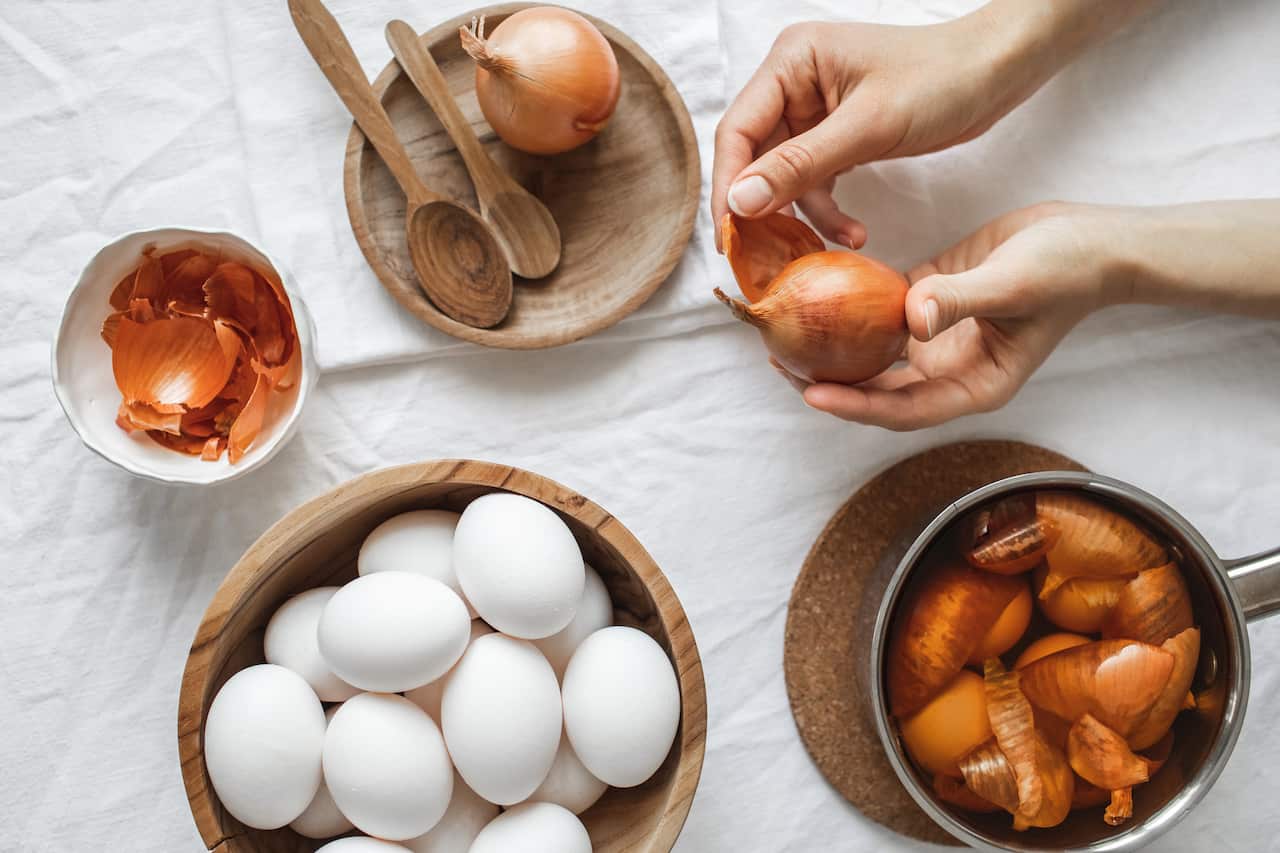
Method:
Preparation time: approx. 10 minutes
Cooking time: 1.5 hours to 24 hours, based on your preferred colour saturation
- Place your dye ingredient of choice and 4 cups of water into a saucepan. Bring to a boil, reduce the heat and simmer for 20 minutes with the lid on. Here’s a guide of ingredient quantities needed for each colour:
- Red: 4 cups of red onion skins or 3 cups of roughly chopped (or shredded) beets
- Orange: 4 cups of brown onion skins or ½ cup paprika
- Yellow: ½ cup of turmeric or 8 saffron threads
- Green: 4 cups of parsley, 4 cups of spinach or 4 teaspoons of spirulina powder
- Blue: 4 cups of roughly chopped red cabbage
- Indigo: 3 cups of blueberries
- Violet: 3 cups of hibiscus flowers or 4 cups of roughly chopped red cabbage and shredded beetroot (50/50)
- In a separate pot, place the eggs, cover with water and bring to a boil. Cook for 8 minutes. Allow them to slightly cool in the pot.
- Then transfer the eggs to a bowl filled with cold water. (This makes them easier to peel when it comes time to eat.)
- When the dye liquid has finished boiling, strain it into a container or pot, removing the solids.
- Stir 5 tablespoons of vinegar into the dye liquid. Allow it to cool.
- If you’d like to adorn your eggs with flowers or leaves, do this now following the tips mentioned earlier.
- Strain the water the eggs were cooling in into the dye liquid. Stir to combine.
- Then gently add the boiled eggs to the liquid, aiming to space them out as much as the pot or container allows. Ensure the eggs are fully submerged.
- Cover the eggs and refrigerate for at least an hour for pastel colours or 4 hours for more pigmented results. If you want them as deep in colour as possible, leave overnight or up to 24 hours.
- When the eggs are the colour of your liking, strain to discard the dye liquid and allow the eggs to dry naturally on a plate.
- Optional: Want the eggs to glisten? Simply grab a paper towel or cloth, place some oil on it and give the eggs a gentle rub for a natural shine.

SBS Food is a 24/7 foodie channel for all Australians, with a focus on simple, authentic and everyday food inspiration from cultures everywhere. NSW stream only. Read more about SBS Food

Have a story or comment? Contact Us