I collect old cookbooks. A lot of old cookbooks. So many that we don’t have enough space for them at home or at work. So many that my wife wonders what I do with all those old books.
Here’s what I do: I go through them, and smell them, and try to understand why the authors wrote what they did back in the 1700s or the 1800s. What were people really like in those times? What did they eat and why? How is it that The Virginia House-Wife, published in 1824 by Mary Randolph, includes ten Spanish recipes? Her book was reprinted nineteen times before the Civil War, and included the mixture of European, African, and Native American influences that were all present at Thomas Jefferson’s Monticello. Randolph was part of the extended Jefferson family, so her cookbook tells us important stories about the people and places that make the United States what it is today.
You see, recipes tell the story of the people who cooked and ate that food. Every dish has a story. So I never thought I was just opening a restaurant when I created my menus. Each restaurant is filled with the many stories of the many people behind those dishes, including my own. My life would have been much easier if I had just focused on one or two restaurants – a Spanish restaurant serving tapas and a creative place to push the boundaries of cooking. But I couldn’t live life that way. I opened more restaurants to learn more, and to tell other stories, the same way a painter creates multiple paintings in different styles, or an author writes different types of books.
That’s the way a cook expresses himself: after learning about Chinese cooking, how could you not open a Chinese restaurant? That’s like not finishing a painting or writing a book. I opened a Mexican restaurant because of my love for Mexican cooking. From the first time I drank a pomegranate margarita and a smoky mezcal, and the first time I ate fresh guacamole and tasted an incredible mole sauce, I had to drink, eat, and learn more. I needed to be part of this selfish way of learning. I always say, I don’t open restaurants; I tell stories.
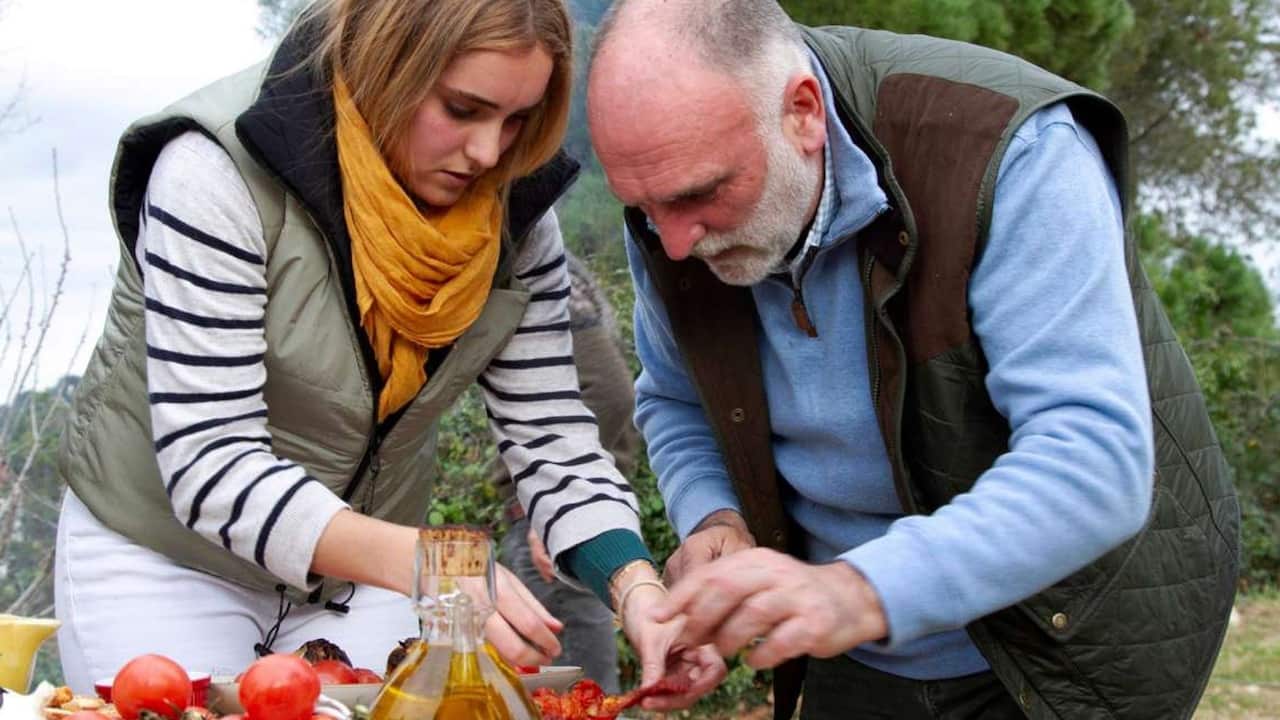
You don’t need a collection of old books, or even restaurants, to dig into these stories. Sometimes you just need to ask an expert you meet along the way. Every summer I go back to a small fishing village in Andalusia, at the southern tip of Spain, called Zahara de los Atunes.
Every year there are more and more tourists, but it’s still at its heart a tiny place with a big history. The name tells you some of its story, close to where they catch the majestic bluefin tuna with an ancient technique called the almadraba, trapping the giant fish in a tightening circle of nets and boats. It’s a technique that dates back to the Phoenicians, before the Romans, and was later perfected by the Moors from North Africa, who left such a rich legacy across southern Spain. The Romans thought the best garum sauce – their essential fishy condiment – came from Cádiz, a little to the south. So you can stand on the beach at Zahara and see entire civilisations that touched the land and those waters. You can talk to the fishermen who tried and failed to teach me how to cast a net on the beach at sunset.
I wrote part of this book in Zahara, looking at the sea, the beaches, the sunset, and the Moroccan coast on the horizon.
If you’re hungry for stories, you can learn so much about where we’ve come from – and where we’re going.
You can and you should read those stories. But you also should show up, with your bare feet in the sand, or your knife and fork in your hands, and feel those stories for yourself. Because you are part of the next chapter of those stories.
This is an edited extract from Change the Recipe - Because You Can't Build a Better World Without Breaking Some Eggs by José Andrés with Richard Wolffe (Harper Collins).
Find out more about chef and author José Andrés and his humanitarian work at his website joseandres.com and on Instagram @chefjoseandres
Travel with José – including a visit to Zahara de los Atunes – in six-part series José Andrés & Family in Spain, streaming at SBS On Demand.

SBS Food is a 24/7 foodie channel for all Australians, with a focus on simple, authentic and everyday food inspiration from cultures everywhere. NSW stream only. Read more about SBS Food

Have a story or comment? Contact Us