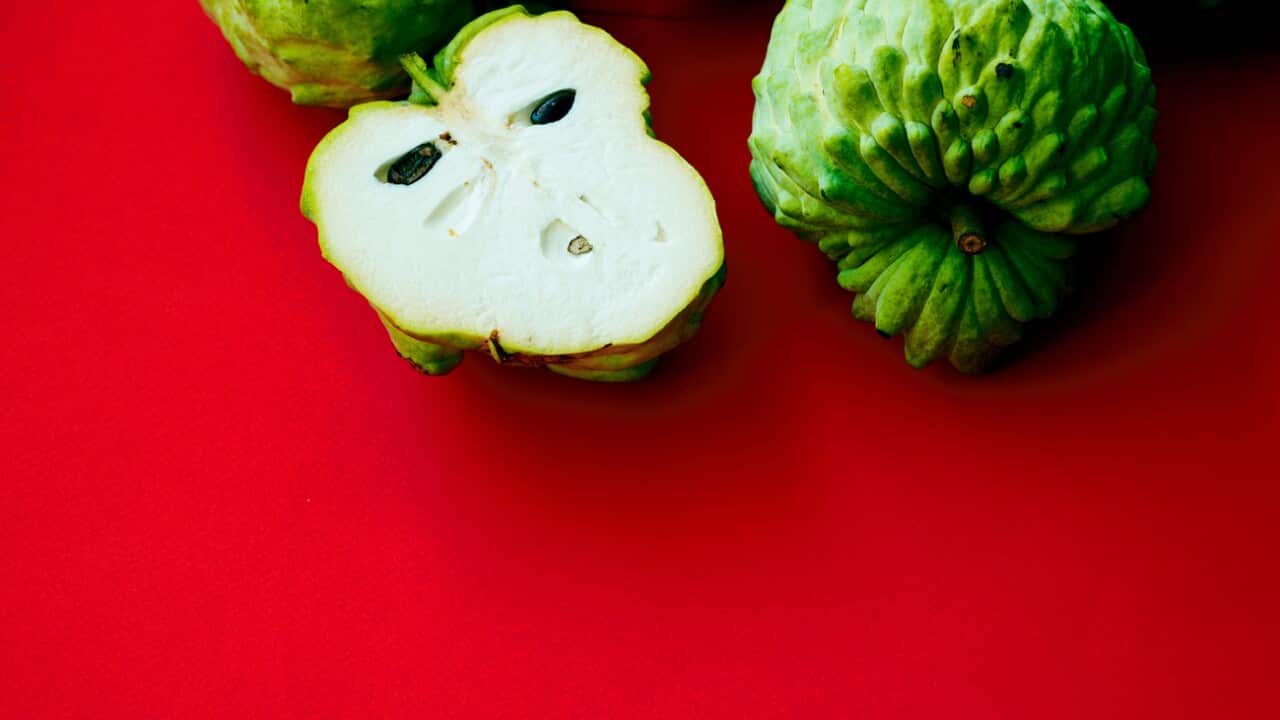
Close relatives to the custard apple are grown in tropical regions around the world, including the cherimoya, sweetsop, soursop and bullock’s heart. They all share a similar look and taste to our custard apple, which is actually a hybrid of the cherimoya and sweetsop.
These can all largely be used interchangeably. Frozen soursop, available from Asian food shops, is a good substitute when custard apples aren’t available – peak season is from March to September.
The custard apple’s white, juicy flesh has a sweet flavour, like a combination of banana, pineapple and strawberries. Its ripeness can be determined in a similar way to the avocado – when the stem end starts to crack and yields to gentle pressure. In Australia, two varieties are available; the pinks mammoth which is large and very sweet, and the African pride which is rounder. To remove the flesh, cut the fruit into quarters. Using a spoon, remove flesh then, using your fingers or a small knife, remove and discard seeds and any hard fibrous strands.
As with most fruit, simple is usually best and custard apple is often eaten straight from the skin with a spoon. The flesh is also used to make smoothies and drinks in a number of countries from Asia to South America. Its sweet flavour lends it to desserts, whether added to fruit salads, or used to make ice-cream. In the Dominican Republic, soursop is used to make a custard dish, and in Indonesia, a soursop treat, dodol sirsak, is sold by street vendors.
However, it’s not just for sweet-tooths. This versatile fruit and its relatives can also be used in savoury dishes, added to curries and salads. It’s even roasted when green in north-east Brazil.
Recipes

SBS Food is a 24/7 foodie channel for all Australians, with a focus on simple, authentic and everyday food inspiration from cultures everywhere. NSW stream only. Read more about SBS Food

Have a story or comment? Contact Us