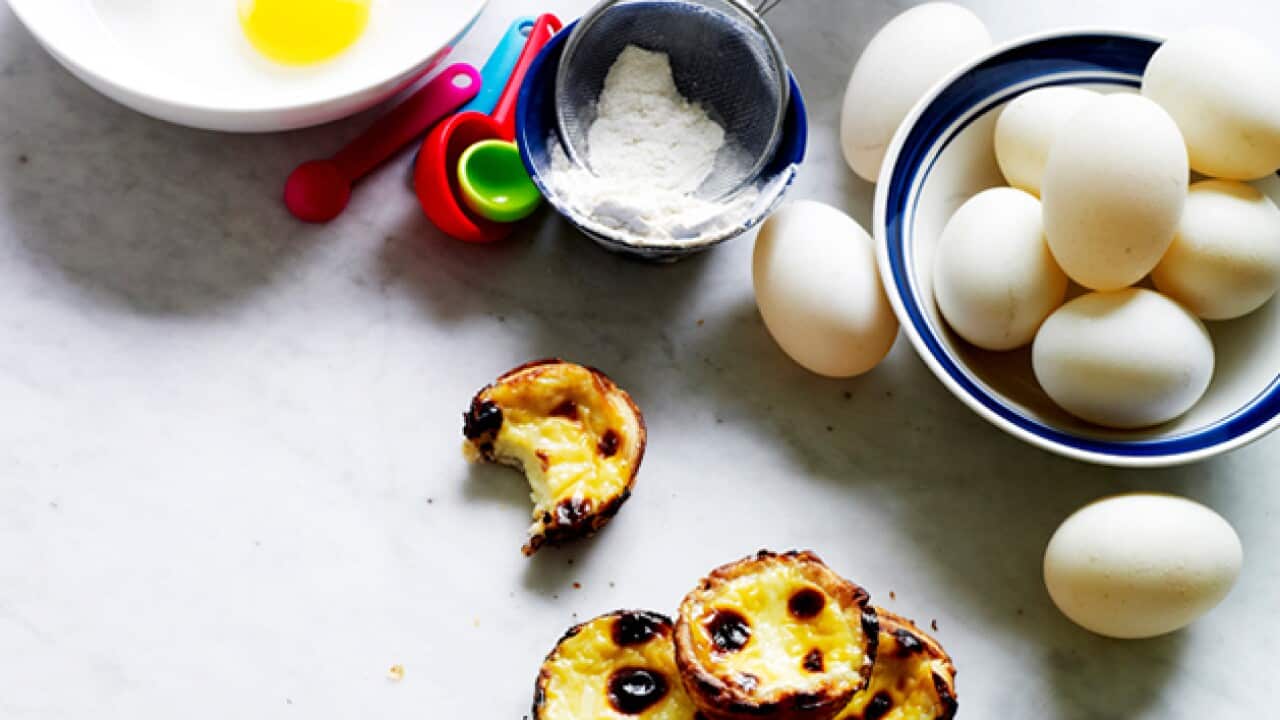
Ranging in colour from white to pale blue, they are larger in size than chicken eggs with a thicker shell, a higher fat content and a richer, stronger taste. Favoured by bakers, they produce lighter, fluffier cakes and baked goods – a result of having more protein in their slightly thicker whites. While this makes the whites harder to beat, the result is certainly worth the effort. Larger and richer yolks also mean they are ideal for making custard, and we’ve used them here to create luxuriously creamy Portuguese tarts. Their use is not limited to baking though, and you can easily substitute them in any recipe you’d normally use chicken eggs – just be sure not to overcook them, as they easily become rubbery.
Duck eggs are best stored in the fridge, pointed-end down. They have a longer shelf life than chicken eggs because of their thicker shell, and will last for about six weeks. A simple way to tell if an egg is fresh is to put it in water – a fresh egg will sink to the bottom, slightly older eggs float halfway, while rotten eggs float to the surface.
Despite their culinary advantages, duck eggs often prove difficult to find, as ducks do not produce eggs as economically as chickens. So, unless you’re lucky enough to have your own supply, farmer’s markets, greengrocers and Asian food shops offer your best chance of getting your hands on some. They’re definitely worth a try!
Recipe
Photography by John Laurie

SBS Food is a 24/7 foodie channel for all Australians, with a focus on simple, authentic and everyday food inspiration from cultures everywhere. NSW stream only. Read more about SBS Food

Have a story or comment? Contact Us