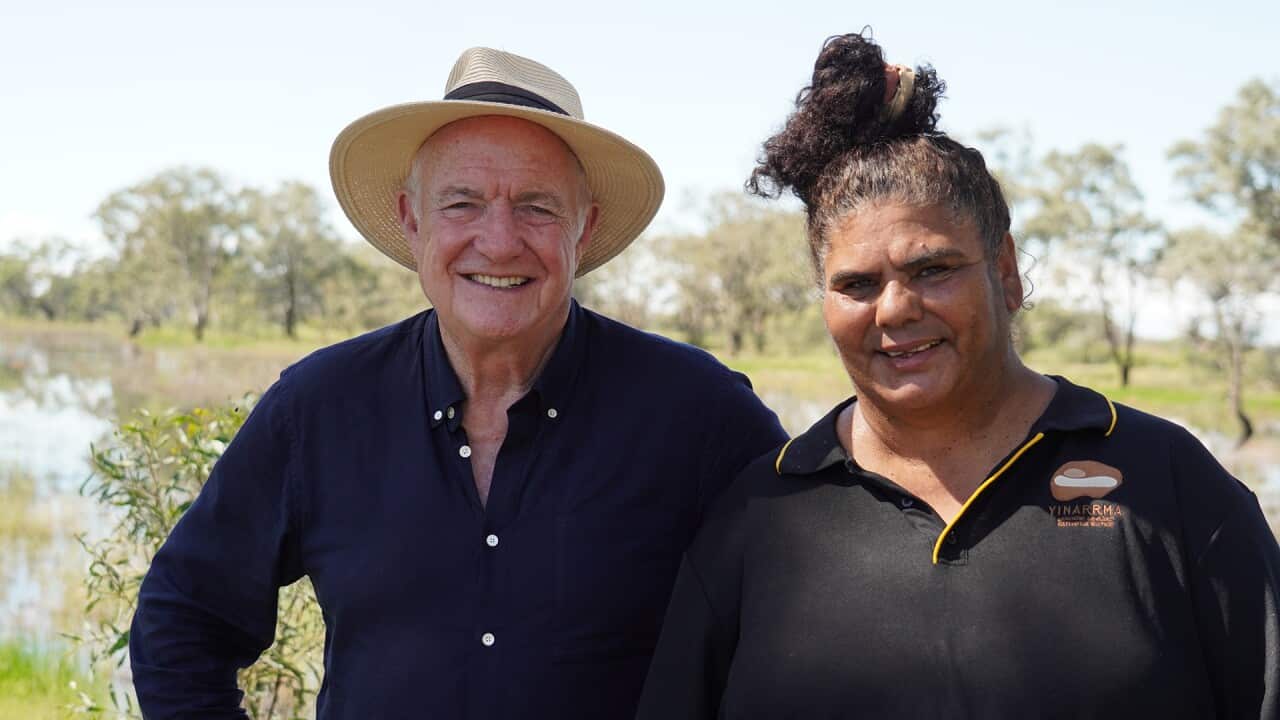
On the floodplains of Gomeroi Country in north-west New South Wales, an Indigenous food system centred on bread making and ancient native grains is being brought back into focus.
At the centre of this work is Gomeroi woman, Kerrie Saunders. She’s a cultural educator and advocate who has spent years working across agricultural lands around Moree, where cotton and wheat dominate the landscape.
As she tells SBS, long before European farming practices transformed the region, native grasses flourished across floodplains and wetlands, providing food for local Indigenous people. Grains gathered from these grasses, used in traditional baking methods, sustained Indigenous communities through early forms of bread making.
These native grains, they’ve been eaten by my old people for thousands of years.
“When I was a small girl growing up on Gomeroi Country, I smelled a lot of water and saw a lot of grasses,” says Saunders, founder of Yinarrma Bush Tucker Tours (a Gomeroi-led business focused on native foods, native grains and cultural learning). “I played in them and saw frogs, magpie geese and tadpoles like you've never seen before.”
Today, Saunders is helping to revive knowledge around guli (or gooli) in Gamilaraay language. It's also known as native millet or 'river grass'. The grain is used to make bread for the world's oldest continuous culture. Now, those grains and that bread are being re-explored through cultural practice, academic research and storytelling.
Guli and Indigenous damper are explored in episode four of the new SBS series Rick Stein’s Australia. On the show, Saunders guides the British chef Rick Stein through Gomeroi Country, teaching him about harvesting, processing and cooking with native grains.
“These native grains, they’ve been eaten by my old people for thousands of years,” Saunders tells Stein.
How to make bread from native grass
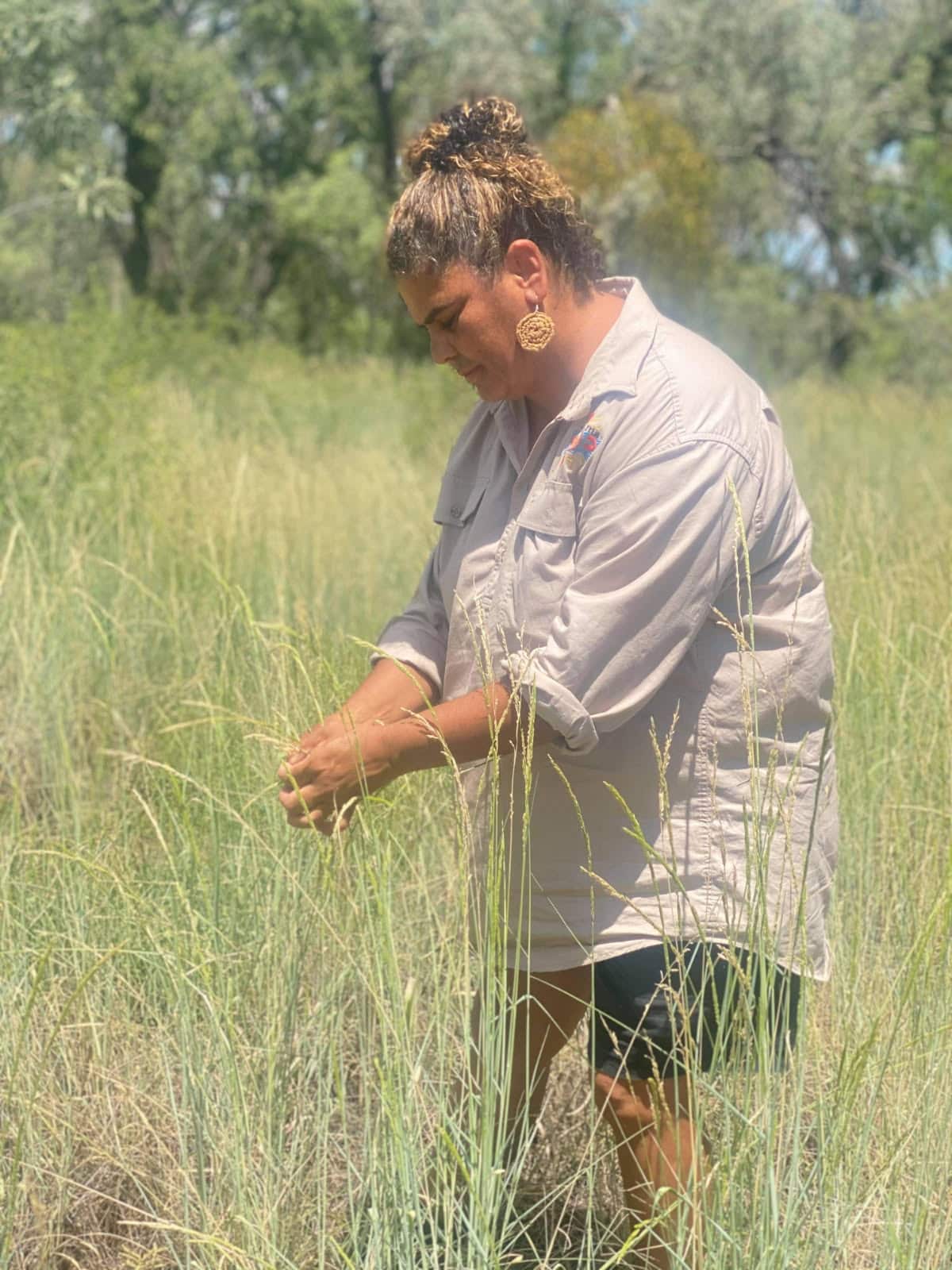
Saunders explains that the first step to making traditional damper is to collect the seeds from the native grasses by hand. Next, as we see on Rick Stein's Australia, Saunders separates the husks from the seeds by threshing and winnowing. She then grinds the seeds into flour using stone.
“My old people been harvesting and processing guli into flour for a long time,” Saunders says on the show. “They would’ve just used grinding stones.”
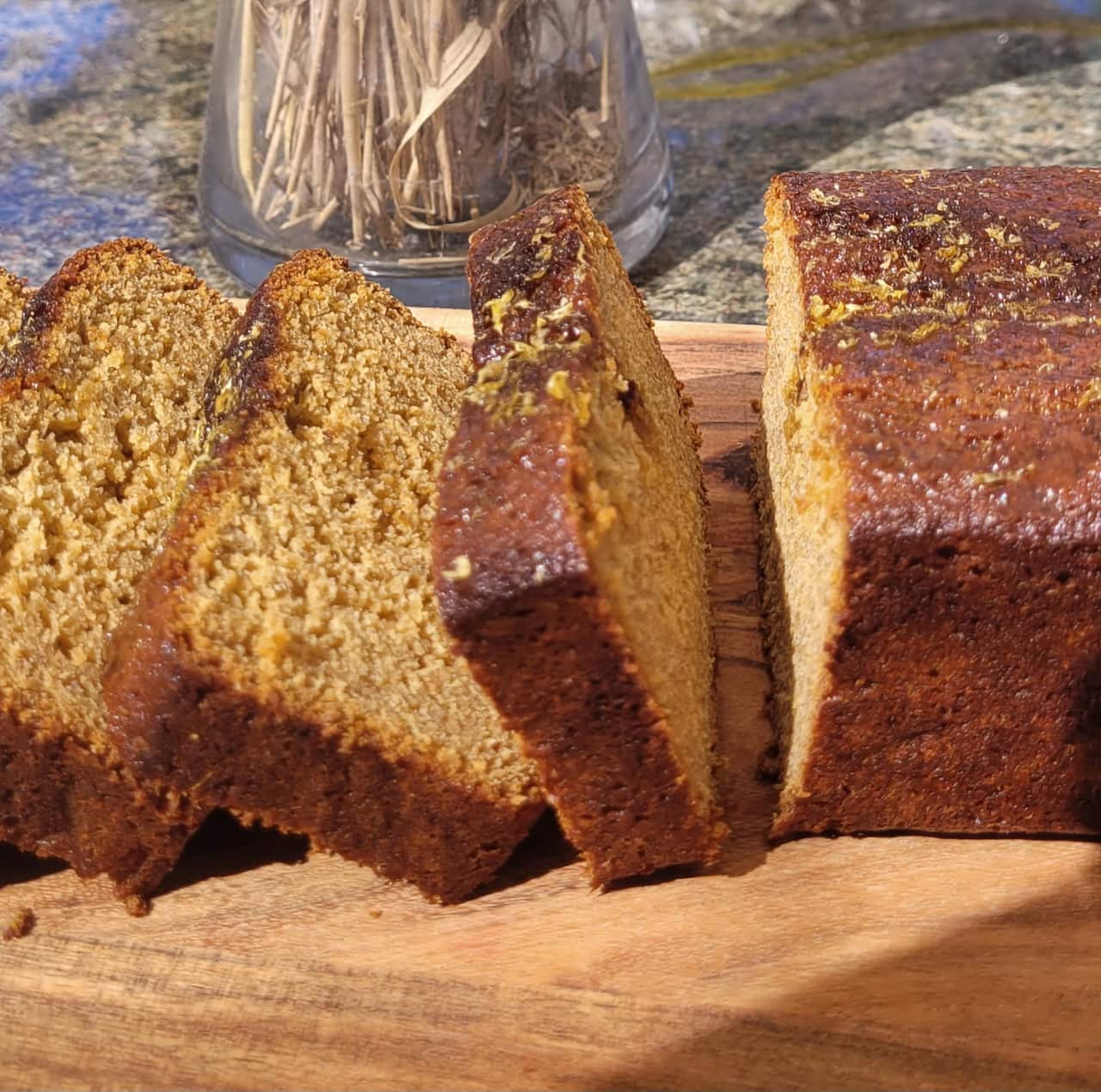
Then, it's time to make a simple dough. Mix native grain flour with water and, that's it. All you have left to do to make bread is to cook the dough over hot coals.
The result is a pure, gluten-free damper that tastes "earthy, wholesome and subtly nutty". "This bread sits somewhere in between a flatbread and damper. Honey goes nice with it."
Saunders says if viewers want to make Indigenous damper with native grains at home with pre-purchased native millet, it’s quite easy to do. As the grain is naturally light and highly nutritious, even small amounts can be incorporated into modern baking recipes for flavour and nutritional purposes. “You don’t have to use 100 per cent native grain flour,” she tells SBS. “Even five or 10 per cent can add goodness back into wheat flour.”
As the celebrity chef continues to talk to Saunders and sample one of the world's oldest styles of bread, Stein exhibits genuine fascination and cultural respect of Indigenous bread making.
“I just find it really interesting the way these ancient traditions are now being revived,” Stein says after watching Saunders harvest and grind guli, and then cook bread by hand.
A grain tied to Country
Alongside Saunders’ cultural education work and tours, she works with the University of Sydney’s Indigenous Grasslands for Grain program. In doing so, she contributes cultural knowledge and practical harvesting experience to help research the future of native grains in Australia.
As a passionate advocate for native grains, Saunders believes that native millet holds enormous nutritional and environmental potential.
“These grains hold a lot of nutrients,” she says. “They’re also gluten-free.”
Research connected to the University of Sydney program has also explored how native grains may support more climate-adapted farming systems. Native grasses typically require less intervention than introduced crops and have deep root systems capable of surviving harsh Australian conditions, including drought and flood cycles.
“A lot of our native grasses have got long root systems so they touch the moisture in the ground way down,” Saunders says on Rick Stein’s Australia. “They have survived through droughts and floods.”
Unlike heavily modified agricultural crops, guli continues to grow within living ecosystems and responds naturally to seasonal cycles.
Saunders says the revival of native grains is deeply connected to identity, belonging and caring for Country.
“These grains represent our identity, who we are, where we’re from, unlike cotton and wheat….The grasses are here, and the knowledge is still here too. They're all just waiting to be listened to.”

SBS Food is a 24/7 foodie channel for all Australians, with a focus on simple, authentic and everyday food inspiration from cultures everywhere. NSW stream only. Read more about SBS Food

Have a story or comment? Contact Us