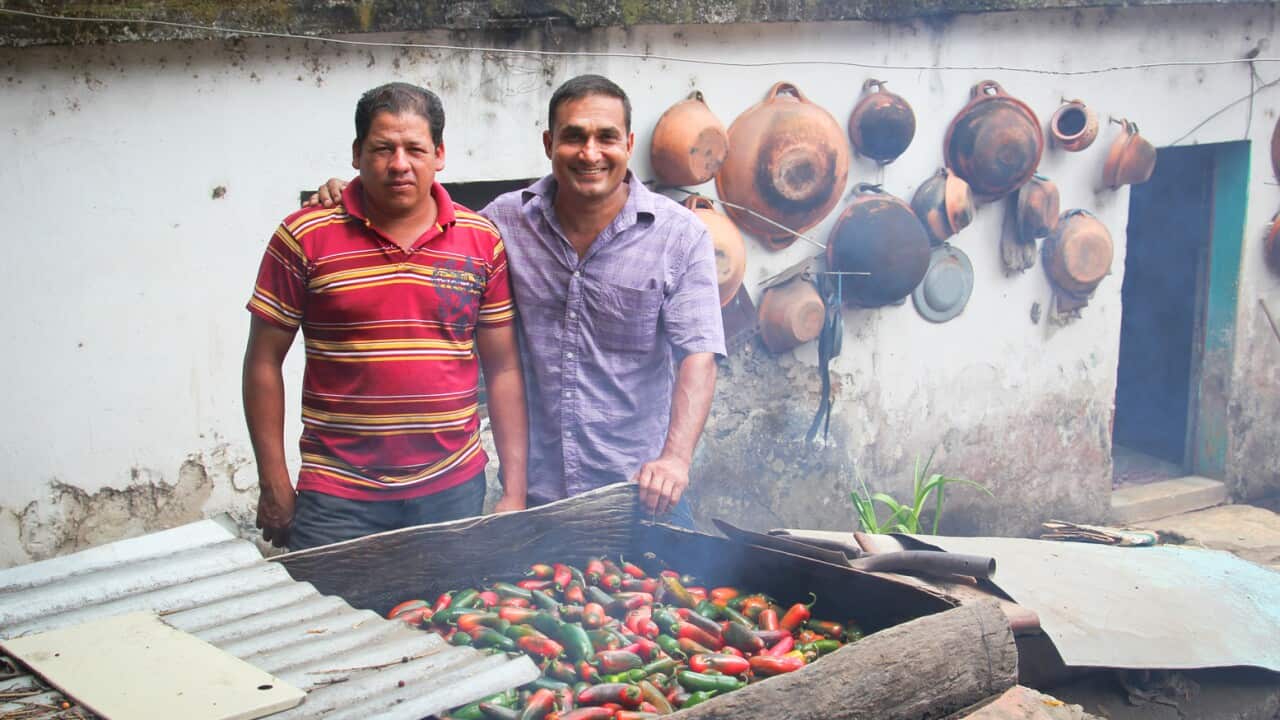
The farmers leave selected jalepeño chillies on the vine until the end of the growing season when they turn a rich, dark red, lose most of their moisture and begin to shrivel. After picking, the chillies are dried over low heat and shuffled around frequently to allow maximum exposure to the wood smoke – the smokier a chipotle, the better. A true artisan chipotle cook will do the entire process by hand, whereas many larger factories cheat and use gas dryers and even liquid smoke. Smell your chipotle before you buy it – liquid smoke has a thin, artificial scent that can never truly mimic wood chips.
Chihuahua is renowned for producing chipotles, although they are also created in Véracruz, Oaxaca, Sinaloa and Southern New Mexico. The chipotle maker I visited helped us to film the cooking process, although the growing season was actually over. He used mesquite wood to smoke them and I don’t believe I’ll ever forget that smell – earthy, heavy and rich. Mesquite is a favourite for chipotle making as it burns slowly and infuses its smoky flavours deep into the chillies.
When you buy a chipotle in a Mexican market, you’ll choose from three types – split open, without seeds, or whole with seeds. Seeds contain the most “kick” in a chilli, so if you want the rich taste without the heat, choose a chilli without seeds. Chipotles can be rehydrated to use in soups or stews, ground to use as a spice, or diced and used in anything that wants a little extra oomph.
Chipotle is also an important part of the spice mix known as “adobo”, used as a Spanish marinade and seasoning. You may have seen me make adobo in the Philippines, but it is a completely different dish. When the Spanish colonised the Philippines, they saw the traditional vinegar-based marinade and, for lack of a better term, named the Filipino dish “adobo”.
Mexic-OH! fact Caliente is Spanish for “hot”. The heat from chillies stimulates the production of endorphins in the brain, which leads many chilli-lovers to claim that they’re addictive. Once the heat wears off, you’re left wanting more.

SBS Food is a 24/7 foodie channel for all Australians, with a focus on simple, authentic and everyday food inspiration from cultures everywhere. NSW stream only. Read more about SBS Food

Have a story or comment? Contact Us