Mexican salsa, while outside Mexico it may conjure images of coloured bottles and droplets of fire, within Mexico, will be house-made and set on the table in little ceramic or wooden bowls as soon as you sit.
It was shortly after moving to Mexico that I became familiar with this custom of salsa roulette – these little pots of freshly made salsa in varying colours, usually at least two, have a spice level the result of chance and preference. If asked, staff will generally offer ‘salsa roja’ (red salsa) or ‘salsa verde’ (green salsa). Others might be ‘salsa tatemada’ (blackened salsa, coloured by the charred skin of the ingredients), ‘salsa cacahuate’ (peanut salsa), or neon-orange habanero salsa, its fiery Scoville level softened with pineapple or mango.
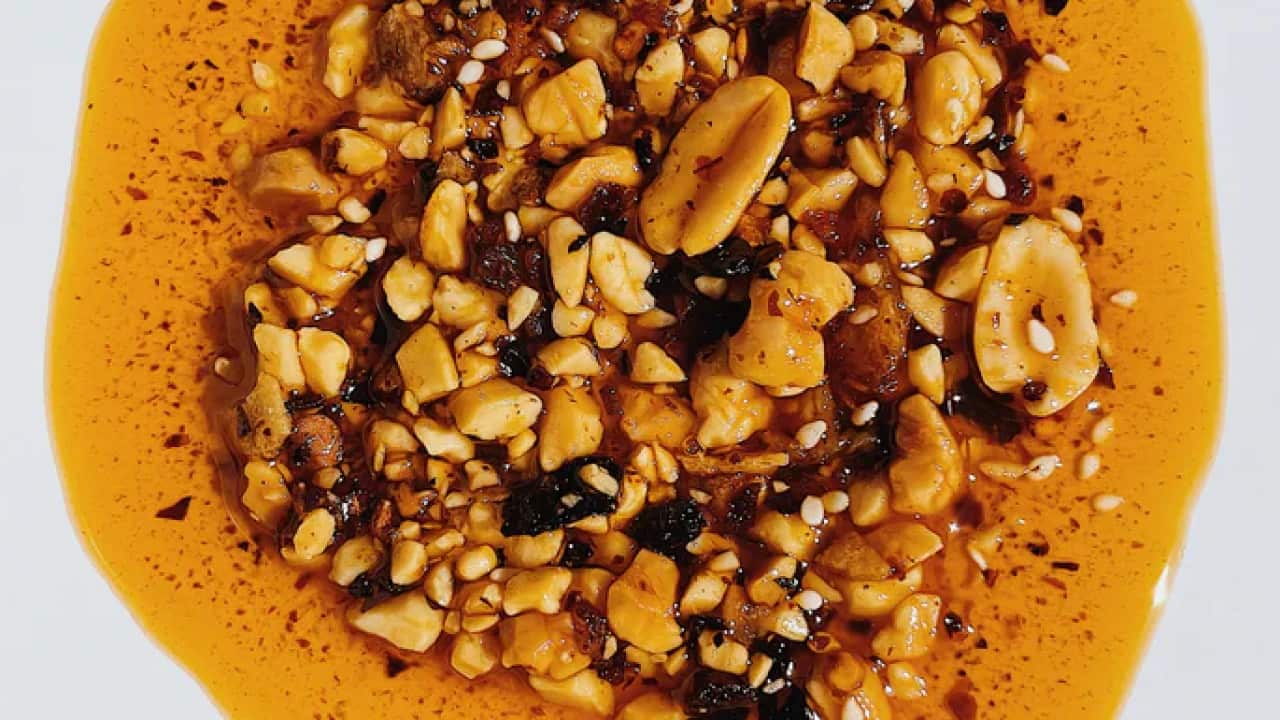
Then, there’s one bowl of a textured, crushed dried chilli sediment covered with a vermilion oil slick.
That salsa is salsa macha.
Where most Mexican salsas fall into the broad categories of tomato or tomatillo, raw or roasted, salsa macha sits in a category unto itself.
‘Peanut, chilli and oil’ is how Zayr Huescas distils it – chef-owner of La Casa de las Brasas, a seafood restaurant in Guadalajara, and former sous chef at the now Michelin-starred Restaurante Alcalde. Salsa macha’s crunchy, grainy texture immediately sets it apart. Huescas says it is ‘silky’ despite its texture – and that it’s the oil that gives it this quality.
Chef Miguel Rios of Melbourne’s Maíz y Cacao says, ‘The roasting creates layers of smokiness, nuttiness and richness, making it bold, aromatic and well balanced. The heat is important, but the flavour is what people remember.’
The heat is important, but the flavour is what people remember.Miguel Rios
Salsa macha classically tops everything from tacos, tostadas and all manner of masa-based iterations to seafood, soups and grilled meats – but just as naturally finds its way onto pizza, sandwiches and eggs, gets stirred through pasta sauces, stands alone as a dressing, and even works with desserts or a piece of cheese. The flavoured oil is often used as much as the solids themselves.
Rios says his own favourite way to eat it is perhaps the simplest: ‘a warm handmade corn tortilla, fresh cheese and a spoonful of salsa macha. When the ingredients are exceptional, you do not need much else.’
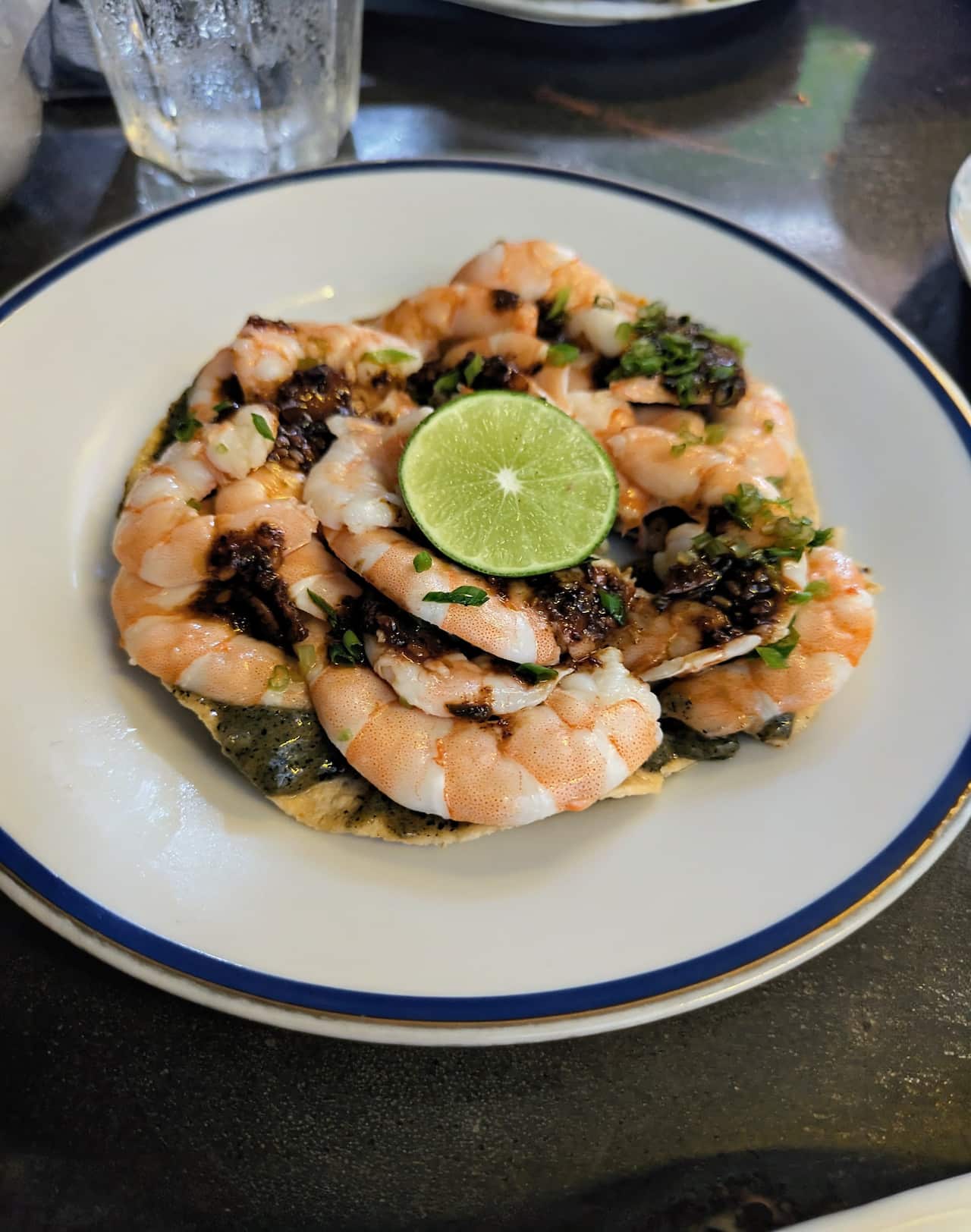
I like salsa macha on seafood, and ideally with morita chile – it’s one of my favouritesZayr Huescas
‘I like salsa macha on seafood, and ideally with morita chile – it’s one of my favourites,’ says Huescas.
The roots of the sauce are ancient, traced to the High Mountains of Veracruz, where Mesoamerican Nahua communities of the Sierra de Zongolica – a rugged, mountainous region in the central-south part of the state – prepared mixtures of dried chillies, building on culinary traditions that stretch back to the Totonac, Olmec and Huastec peoples. The earliest preparations, several accounts suggest, were pastes of dried chillies, sesame seeds and salt, ground in a molcajete by indigenous communities around Orizaba. These relied on dehydrated morita and comapeño chillies native to the area.
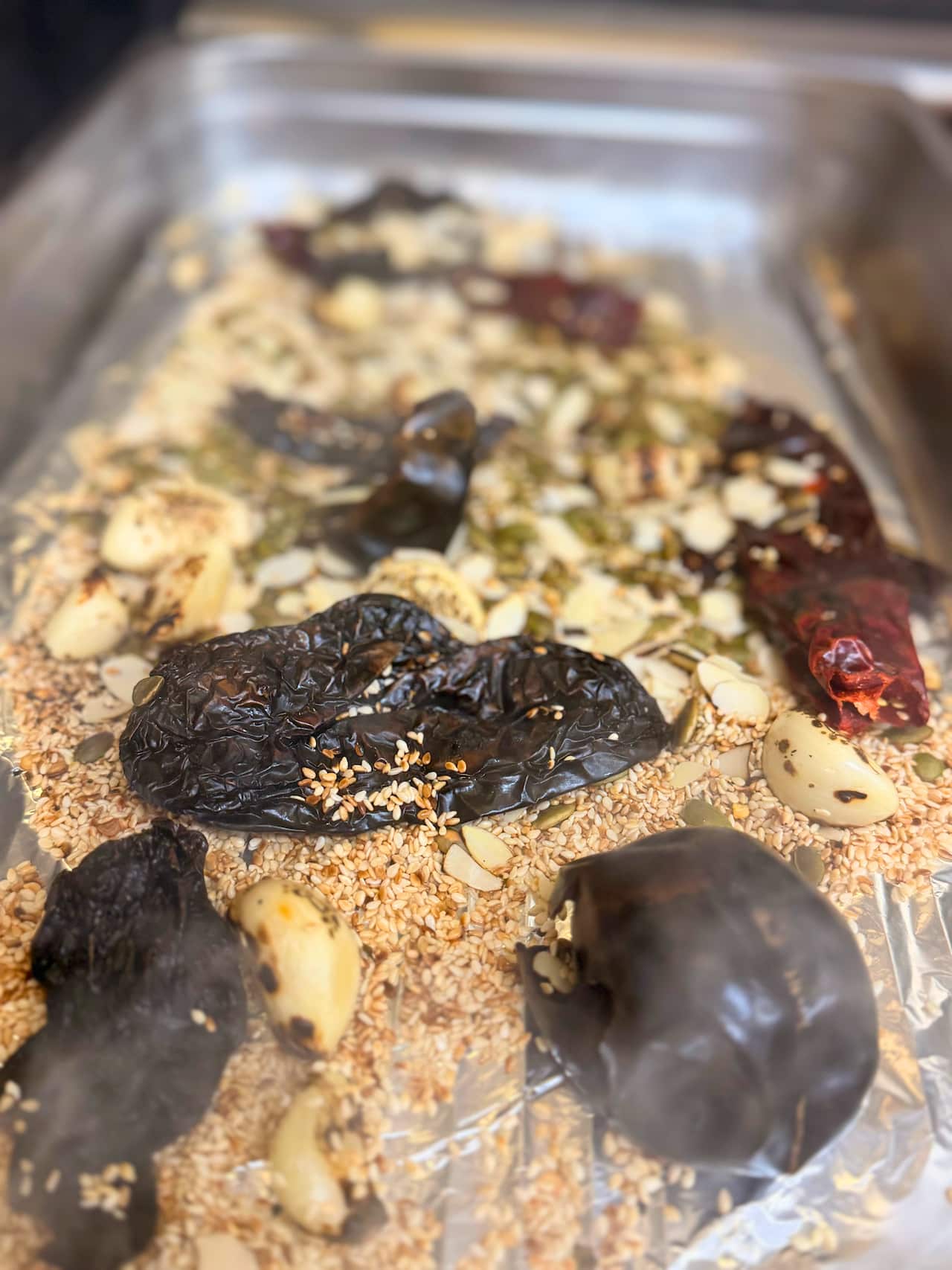
If salsa macha has a formula, it is a remarkably loose one.
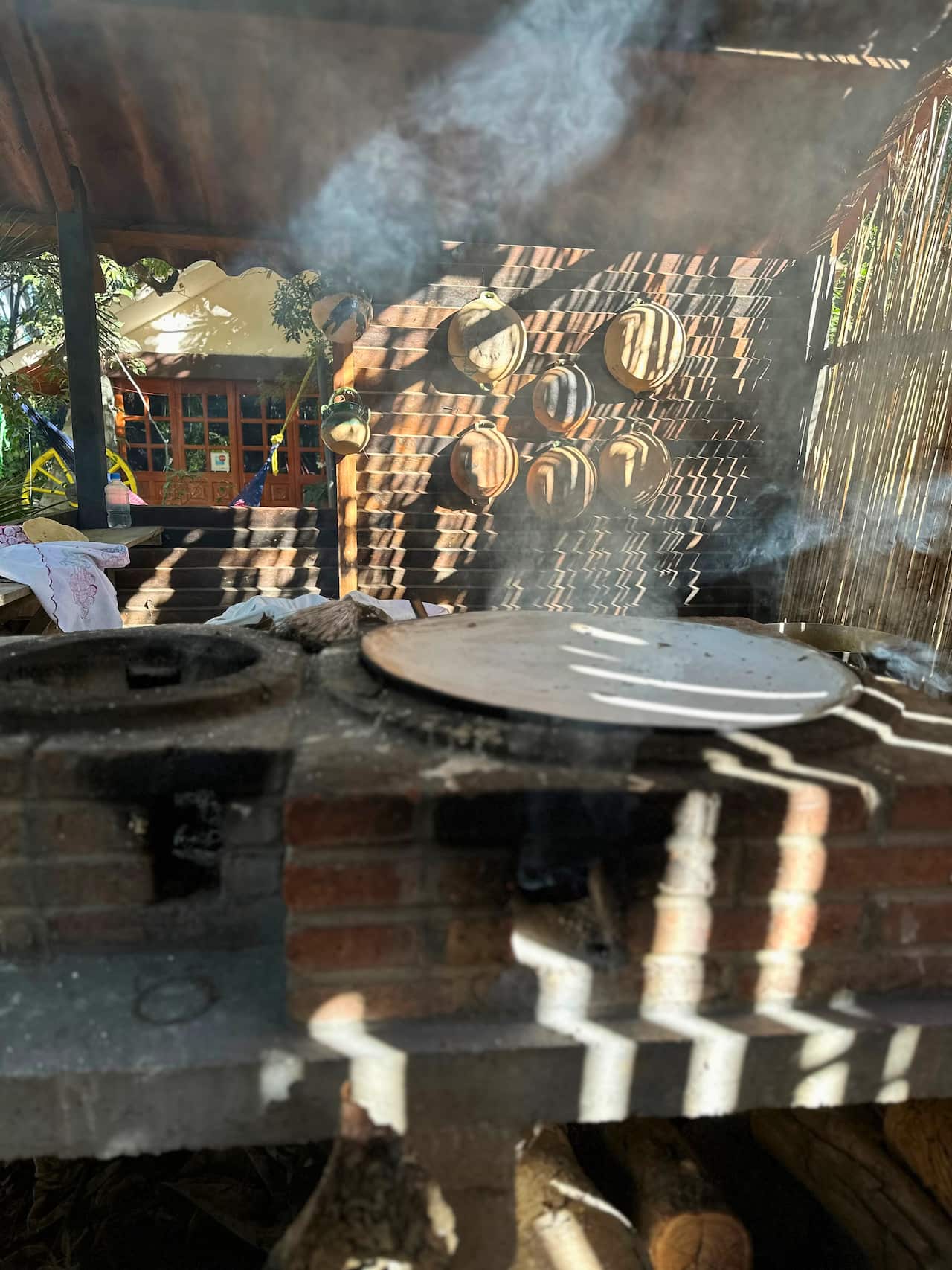
Unlike other fresh salsas, salsa macha is characterised by its oil base, built around dried chillies, garlic and, in many versions, seeds or nuts such as peanuts or sesame. Its main ingredients reflect the agricultural richness of Veracruz, where peanuts, sesame and dried chillies have long been cultivated. Traditionally, it is prepared on comales (flat griddles) and ground in molcajetes (a mortar and pestle).
While remaining true to those roots, salsa macha has continued evolving across generations. Ingredients introduced after the Spanish conquest – sunflower seeds, different types of oil, pumpkin seeds and even cranberries – have all found their way into different regional and family versions.
Huescas replies when I ask him what kind of ingredients can be added: ‘Ooof, so many things – fish sauce, acidity, other kinds of nuts.’
In Oaxaca, some versions incorporate toasted chapulines (grasshoppers) for extra crunch, umami and citrus. Today, it’s possible to find salsa macha made with pistachios, pecans, almonds, cashews, black garlic, cacao, coffee, honey and dried mango.
That diversity is not a departure from salsa macha. It is its defining characteristic.
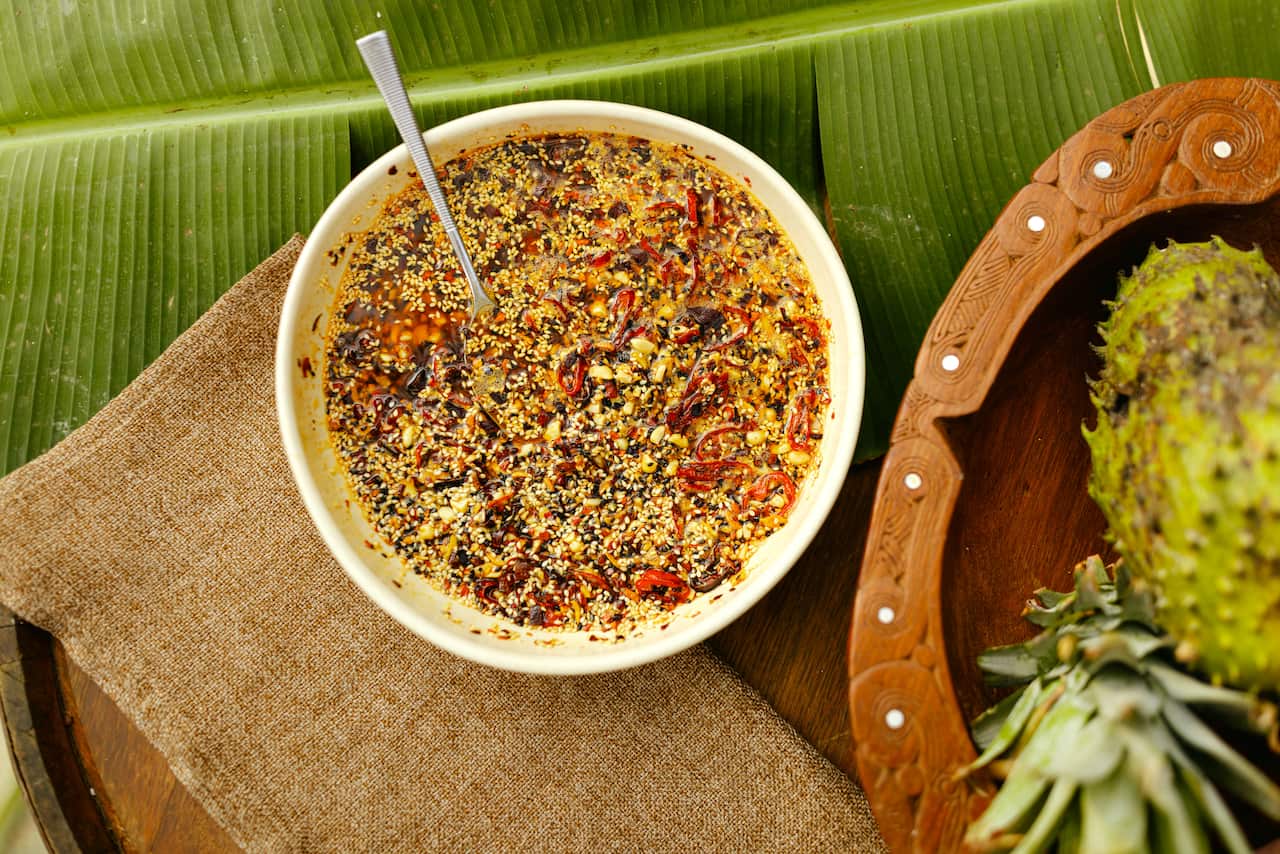
For Rios, salsa macha represents what he loves about Mexican cuisine – ‘it is humble, deeply regional, and every family has its own version’.
Born in Acapulco, Guerrero, into a family of coffee growers, Rios grew up knowing that ‘every ingredient has a story long before it reaches the kitchen’. Under the tutelage of chefs Gerardo Rivera and Nicolás Ramírez in Baja California, he learnt that ‘cooking is not simply about creating beautiful plates; it is about respecting culture, preserving tradition and honouring the people behind every ingredient’. His own recipe stays close to tradition – Mexican chillies, peanuts and ingredients toasted over charcoal, anafre-style (a clay or metal brazier).
Huescas’ version proves the versatility: built around his preferred chilli for salsa macha, morita – the dried, smoked jalapeño native to Veracruz, the salsa’s home state – but he adds garum, a months-long fermented sauce, ‘to give it my own personality and a deeper flavour’. Huescas says ‘of course every cook makes their own version’. His recipe, he describes, is one ‘born from memories’, inspired as much by the flavours he has eaten in markets and street stalls. ‘Where I learn the most is eating on the street,’ he says. ‘That’s where I read the flavours.’
Where I learn the most is eating on the street, that’s where I read the flavours.’Zayr Huescas
In Sydney, Filipino-Australian owner and chef of Tito Taco – and local salsa macha producer, Robin Dalipe, builds his salsa macha around four chillies – árbol for a steady baseline, pasilla for earthy, coffee-like notes, piquín for a delayed kick and habanero for a lingering finish – before adding pepitas, peanuts, sesame, fried shallots, crushed fried corn tortillas and an unexpected final ingredient: miso.
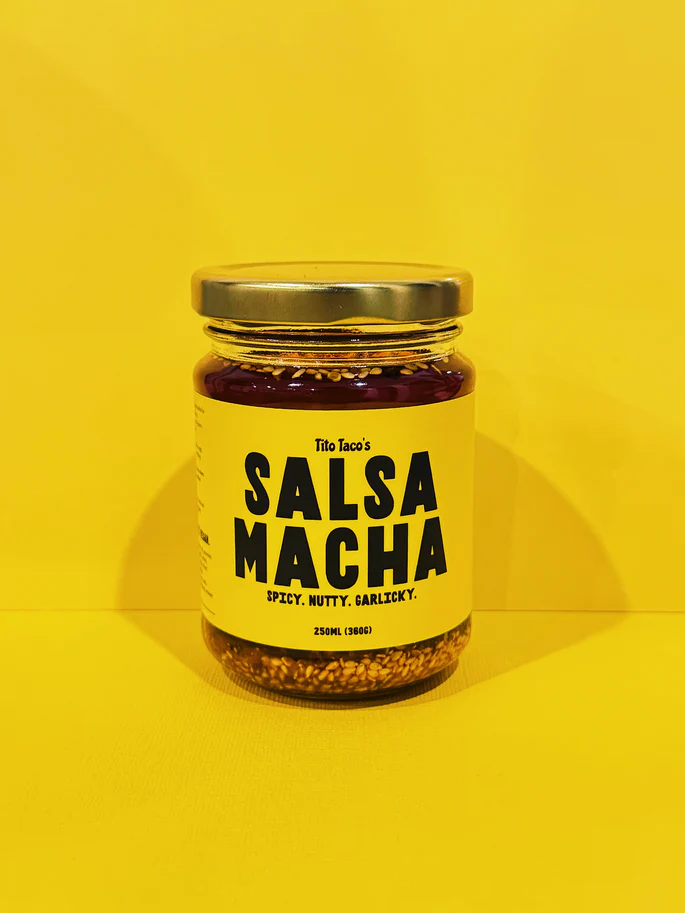
The exact balance and process, he says, is where the real work lies. He was chasing a flavour that was ‘smoky, earthy, savoury and layered’, with heat that builds gradually ‘instead of one flat burn’.
His inspiration came from travelling through Mexico City and Los Angeles, eating at taco shops, markets and food trucks before returning to Sydney wanting to recreate that feeling.
An everyday chilli oil that people keep on the table rather than save for special occasions.Robin Dalipe
Like many Australians, Dalipe already had a pantry shaped by chilli sauces from across Asia. Rather than reproducing a traditional Mexican recipe exactly, he set out to bottle something that remained true to salsa macha while fitting naturally into Australian kitchens.
At first, Dalipe resisted calling salsa macha ‘chilli oil’ on the label because he wanted Australians to understand it on its own terms. Eventually, he added the descriptor because it helped customers understand it more quickly. Once they tasted it, he says, they appreciated the differences – the smokiness, crunch and the way it ties back to Mexican food and culture.
Dalipe describes it as 'an everyday chilli oil that people keep on the table rather than save for special occasions'. The comparison Australians most often make is with Chinese chilli crisp. Rios hears it often in Melbourne.
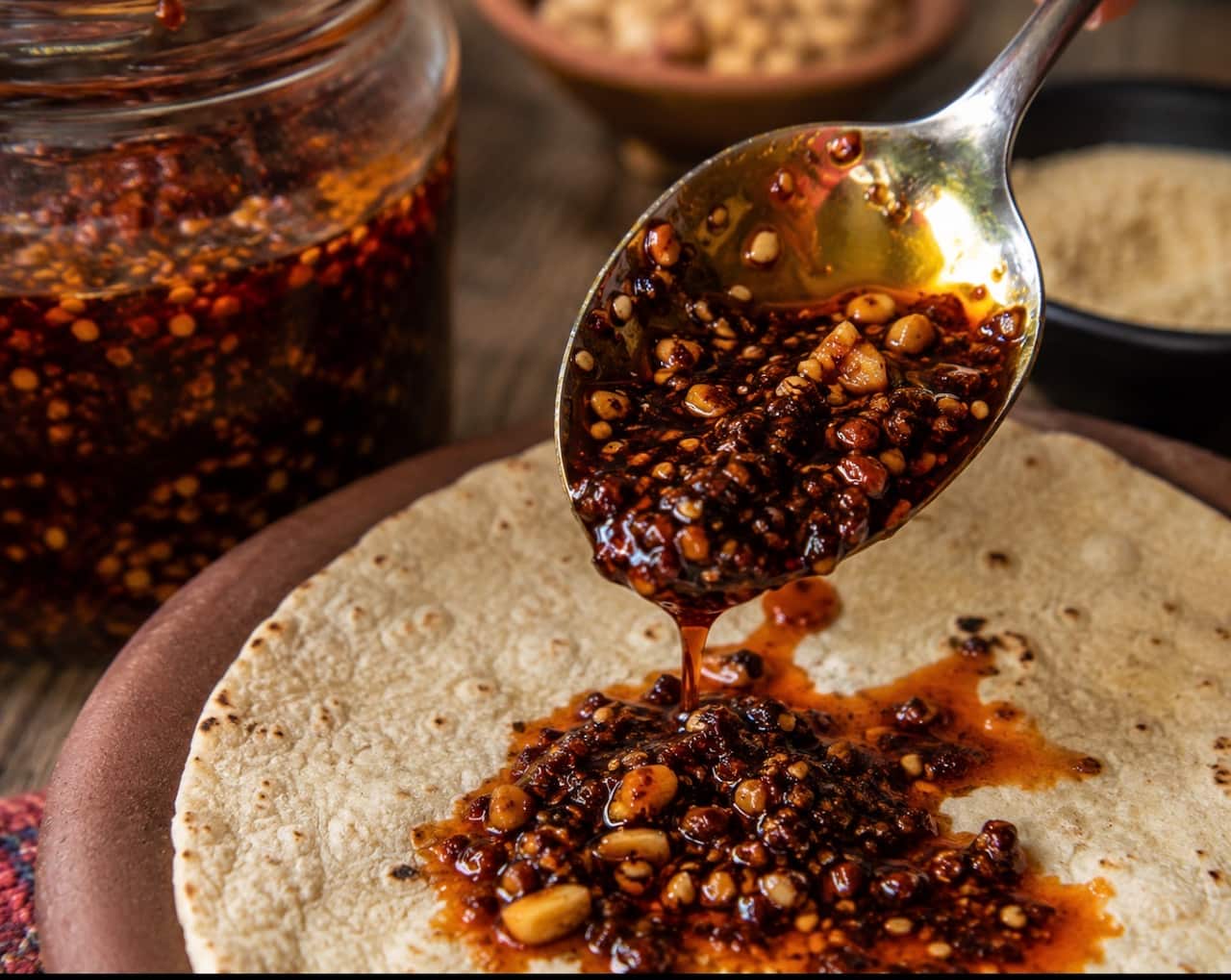
‘Many people make that comparison at first,’ he says, ‘but after tasting it, they realise they are very different. Mexican chillies each have their own personality, and when combined with carefully roasted ingredients, salsa macha becomes much more than something spicy. It is layered, aromatic and incredibly versatile’.
For Rios, the distinction isn’t simply one of ingredients.
‘Salsa macha is not just another chilli condiment. It is an expression of Mexican agriculture, regional ingredients and traditional techniques passed down through generations.’
‘I think Australian diners are becoming genuinely interested in the stories behind food,’ he adds – and that curiosity helps explain why salsa macha has begun appearing far beyond Mexican restaurants, finding a place in home kitchens already stocked with sambal, harissa, chilli crisp and Japanese rayu.
‘If a spoonful of salsa macha inspires someone to learn more about Mexico’s culinary heritage, then we’ve done our job,’ says Rios.
‘When you see an oily-looking sauce, give it a try – it’s bound to be the one with the best flavour,’ says Huescas.

SBS Food is a 24/7 foodie channel for all Australians, with a focus on simple, authentic and everyday food inspiration from cultures everywhere. NSW stream only. Read more about SBS Food

Have a story or comment? Contact Us