In Thailand, Lunar New Year is not an official public holiday. The schools close anyway.
"For us, it was just a few extra days off," says Rowena, owner of Ama in Surry Hills, laughing. "Most of my friends were Thai-Chinese. We never really labelled ourselves - we were just happy to celebrate together."
On the table, however, the identity was clear.
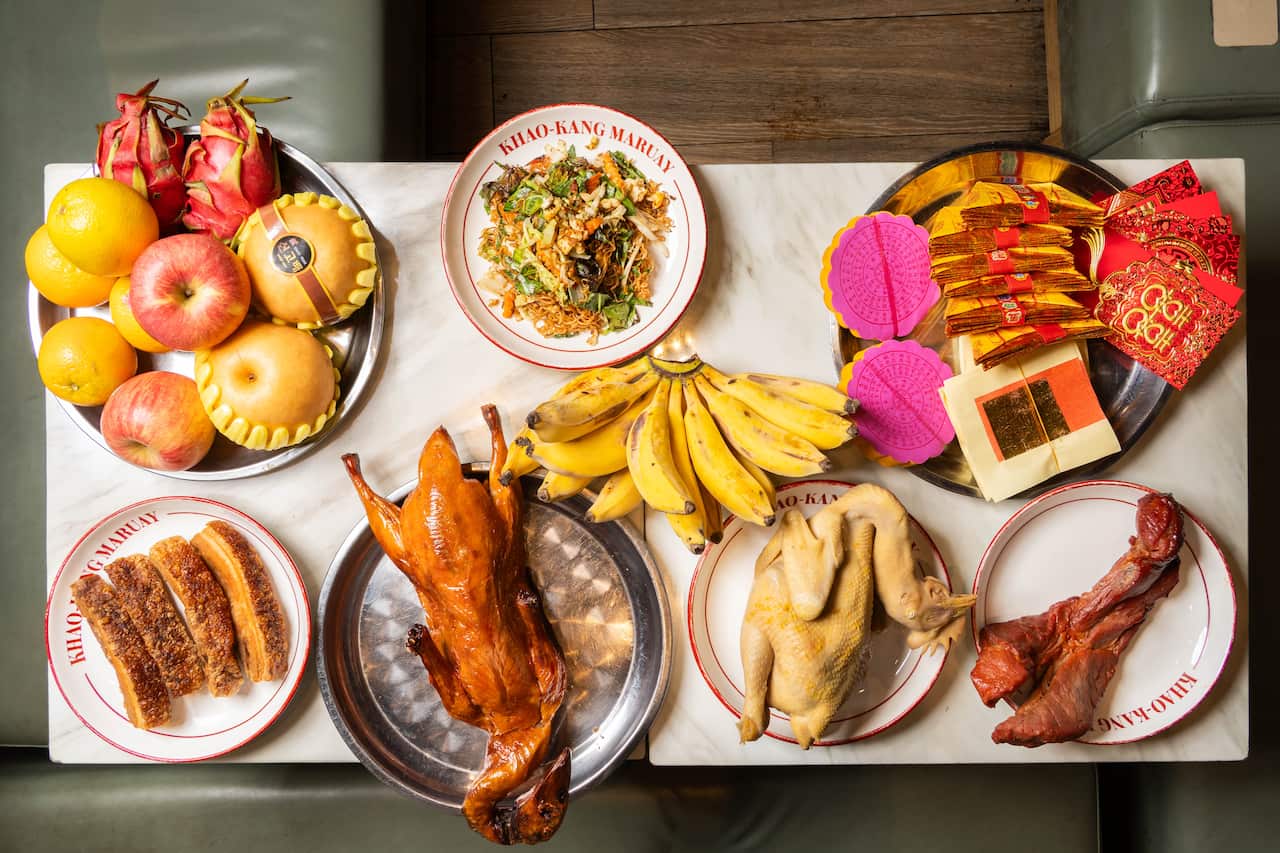
There was always dark soy-braised pork, chicken, roast duck - the ceremonial meats offered during ancestral prayers. But when the incense burned down and the rituals ended, something subtle happened. Half the dishes would remain traditionally Chinese. The other half would shift.
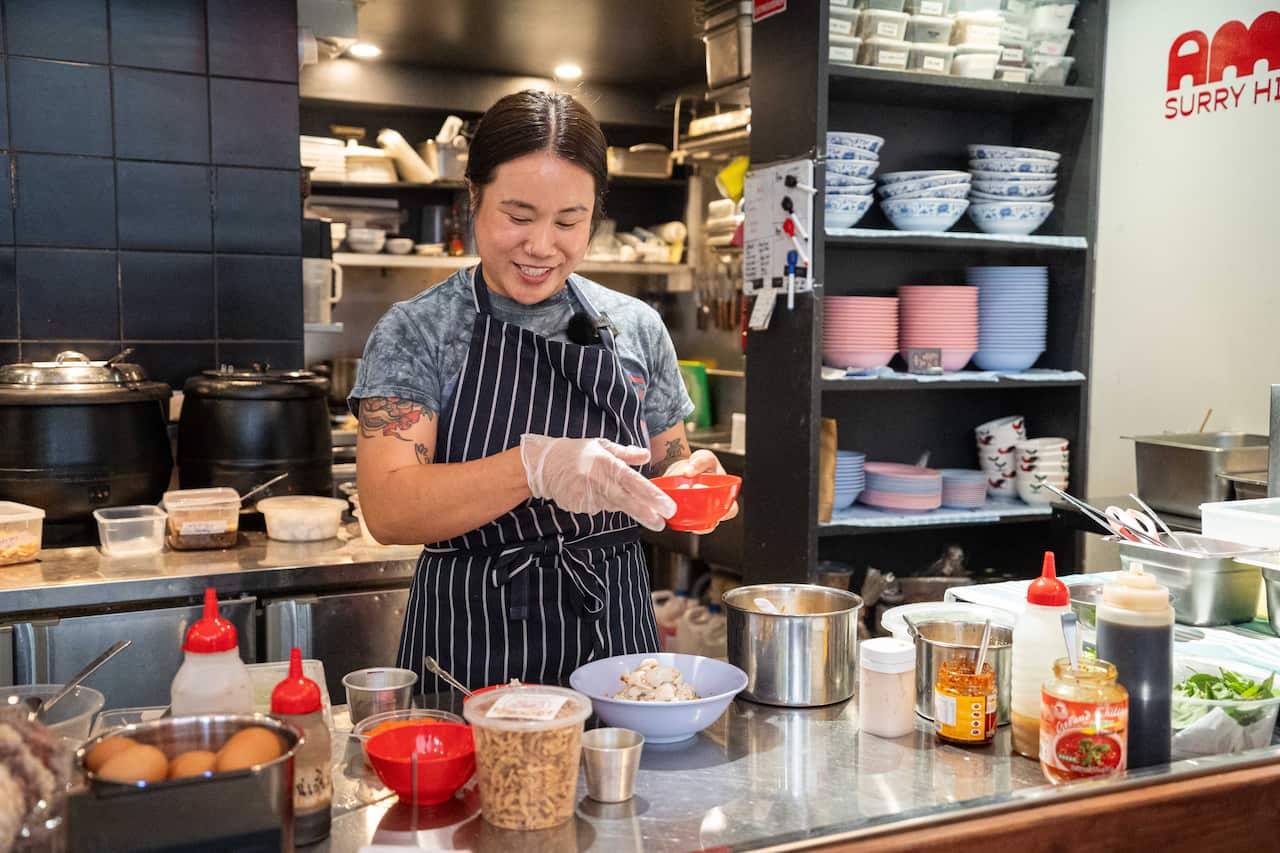
"My mum always leaned towards cooking things more Thai," Rowena recalls. "She would shred the chicken and fry it with garlic in the wok until it was crispy and fragrant. We'd eat it for months after - even taking it to school."
That moment - when prayer meets garlic, chilli and lime - is where the intersection between Thai flavours and Chinese custom truly lives.
Ceremony first, flavour second
At Chat Thai in Haymarket, Lunar New Year begins before service. Owner Pat Laoyont, who migrated to Australia aged seven, continues the tradition his mother established when she opened the restaurant. In the morning, food offerings are laid before the shrine. Roast meats, whole fish, sweets. Staff gather. Blessings are made - not just for prosperity, but for protection from the spirits who watch over the shop.
"As a kid growing up in Australia, my fondest memories were during Chinese New Year," Pat says. "Mum would prepare amazing dishes and teach us about our family in Thailand and China. And of course, asking for red packets was the best part."

Now a father himself, Pat sees the celebration differently. The red envelopes remain - his children still look forward to them - but what he hopes to pass on is something deeper: history, continuity, adaptation.
On the menu, symbolism holds firm. Fish represents wealth and abundance. Long noodles mean longevity. Chicken reflects the traditional barbecue offerings laid out during prayer.
Yet the flavour profile is unmistakeably Thai.
A barramundi that might once have been delicately steamed is now deep-fried and topped with fermented soybean paste. Stir-fried noodles come with a spicy seafood dipping sauce - bright with chilli, garlic and lime. Even the sticky rice dessert, traditionally wrapped in lotus leaf, is adapted in banana leaf for fragrance.
"My mum always taught us that our customers are our family," Pat says. "They're not just our family during Chinese New Year - they're our family all year round."
In that sense, hospitality itself becomes part of the ritual.
The noodle must not be cut
For Trin of Khao Kang Maruay, Lunar New Year begins with a 700-kilometre journey.
When he was young, his family would travel across Thailand to gather at his Hakka grandparents' bakery. His grandparents migrated from China to Chonburi nearly a century ago, later moving north during World War 2. The bakery they build still operates today.
Every year, they prayed to ancestors before sitting together at the table to eat.
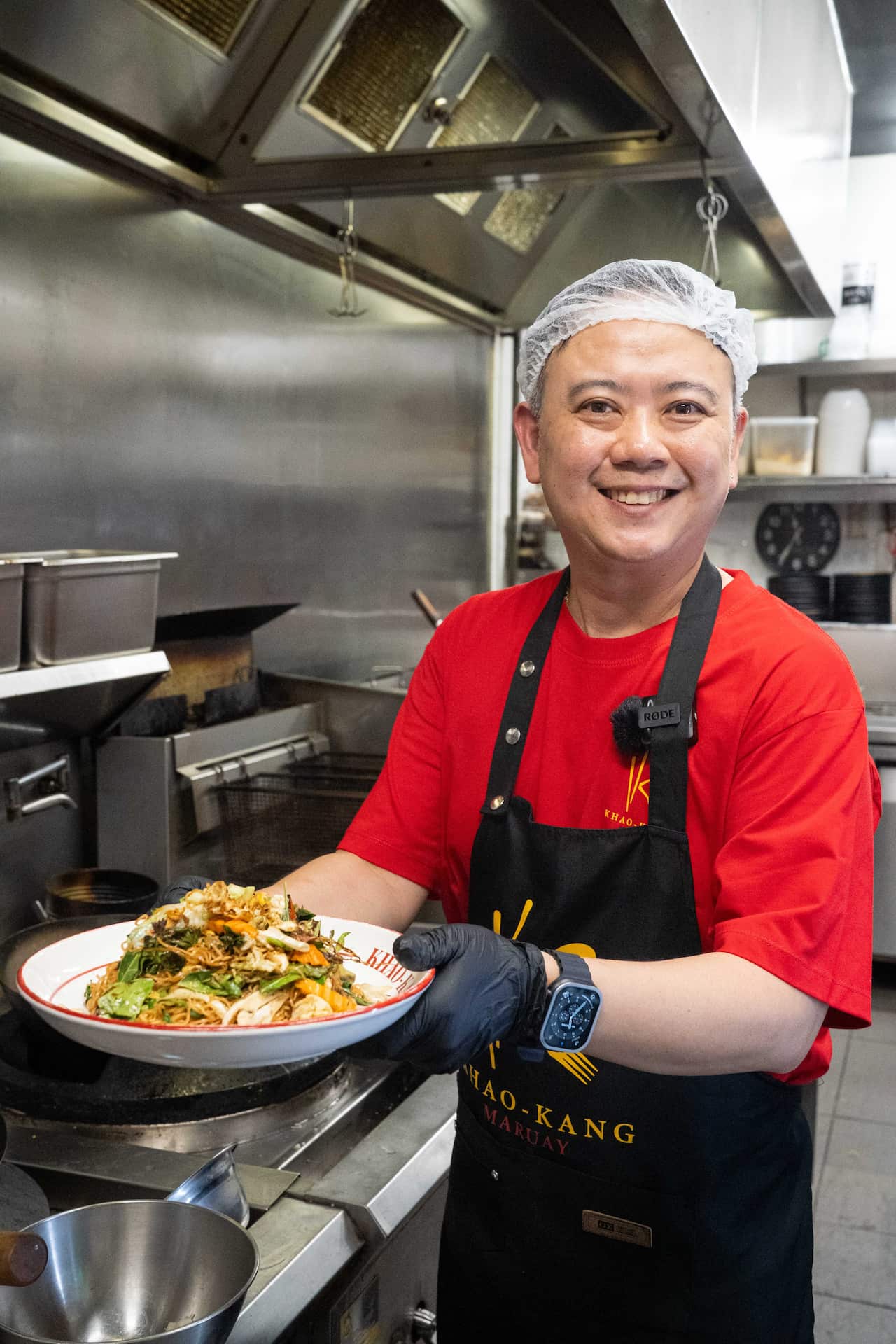
"One dish I always loved was the long noodles," Trin says. "My mum told me if the noodle is long, your life is long. Don't cut it."
The noodles themselves are unmistakably Chinese in origin, but Trin's version today carries Thai instincts. A little more spice. Vegetables folded through to balance the heavy roast meats offered alongside. Oyster sauce deepening the stir-fry.
"When I was young, my Mum cooked very traditional Chinese food," he explains. "But I'm third generation. I like it a little bit more Thai."
After prayer, whole duck, chicken and roast pork are sliced and shared. "You have to eat all the meat," he laughs. "To make you lucky."
Luck, here, is collective.
Trin's mother once made more than 20,000 khanom tian - sticky rice flour dumplings - in just five days for Lunar New Year orders. It was from her that Trin learned not only recipes, but scale, management and the rhythm of festive cooking.
The skills of survival became the flavours of celebration.
A cuisine shaped by movement
Across all three kitchens, the pattern repeats; ritual remains Chinese in structure; seasoning becomes Thai in spirit.
Five-spice and sesame oil share space with coriander root and lime. Roast duck meets seafood sauce. Noodles absorb chilli heat. Banana leaves replace lotus.
Rather than fusion, it feels more like layers - built over generations of migration between China, Thailand, and now, Australia.
Lunar New Year, in these spaces, is not about preserving something untouched. It is about carrying it forward intact enough to recognise, but flexible enough to feel like home.
When incense smoke fades and the feast begins, the table tells a story: of ancestors honoured, red packets exchanged, noodles left uncut.
Somewhere between soy sauce and lemongrass, prosperity tastes bright.

SBS Food is a 24/7 foodie channel for all Australians, with a focus on simple, authentic and everyday food inspiration from cultures everywhere. NSW stream only. Read more about SBS Food

Have a story or comment? Contact Us