There's nothing quite like the flavour of food cooked over flame. Particularly when you're atop a hill overlooking the Tasmanian coast, it's the middle of winter, and the food being lovingly charred is a feast of Lutruwita's distinctive flavours.
It's also the way Tasmania's Aboriginal people have been cooking and eating for thousands of years.
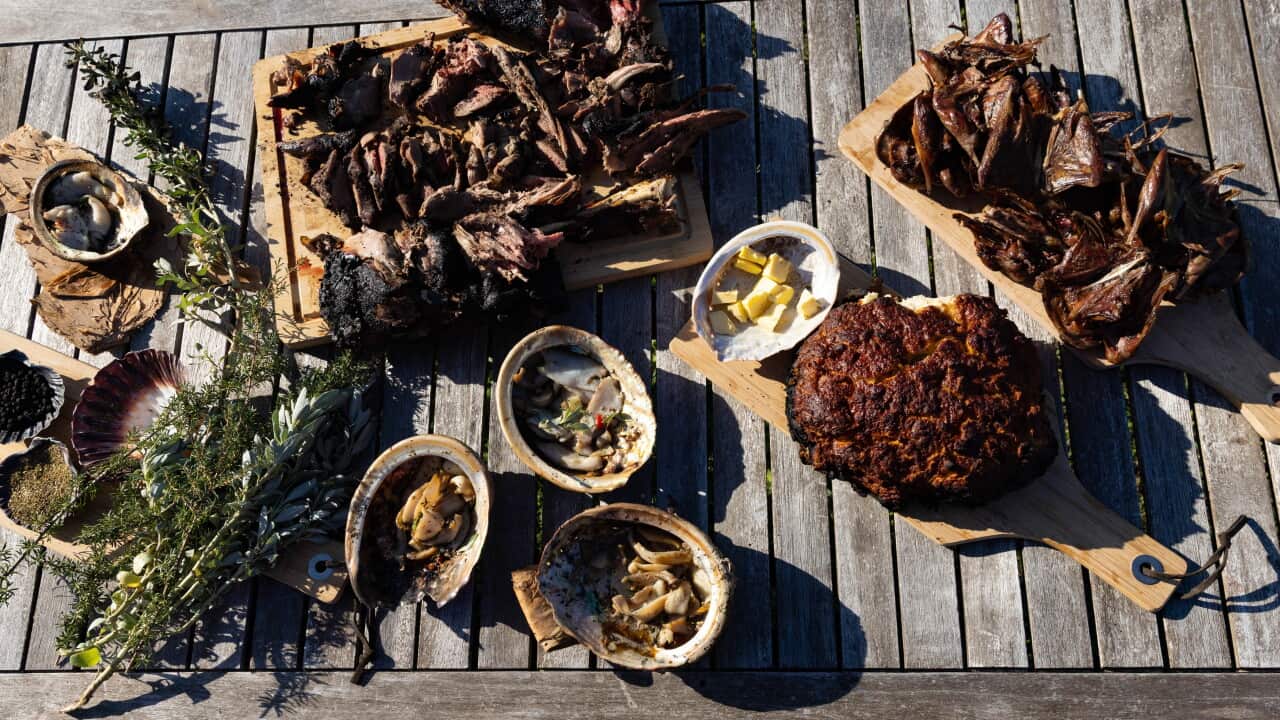
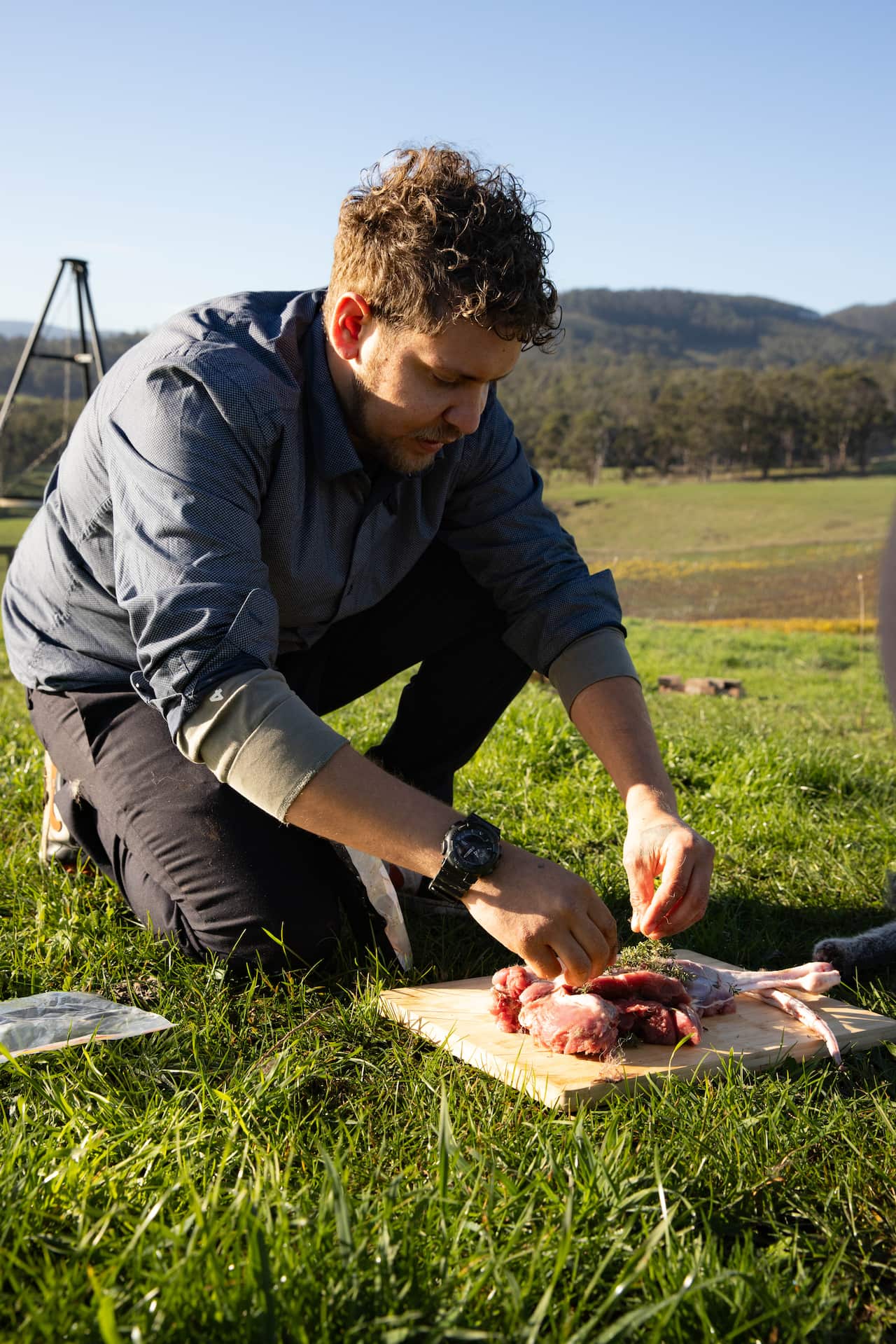
Today's menu features muttonbird, abalone, and damper, flavoured with native ingredients such as wattleseed, lemon myrtle, pepperberry, kunzea and baeckea. At the centre of it all is a wallaby, prepared by cultural educator and caterer Djuker Hart.
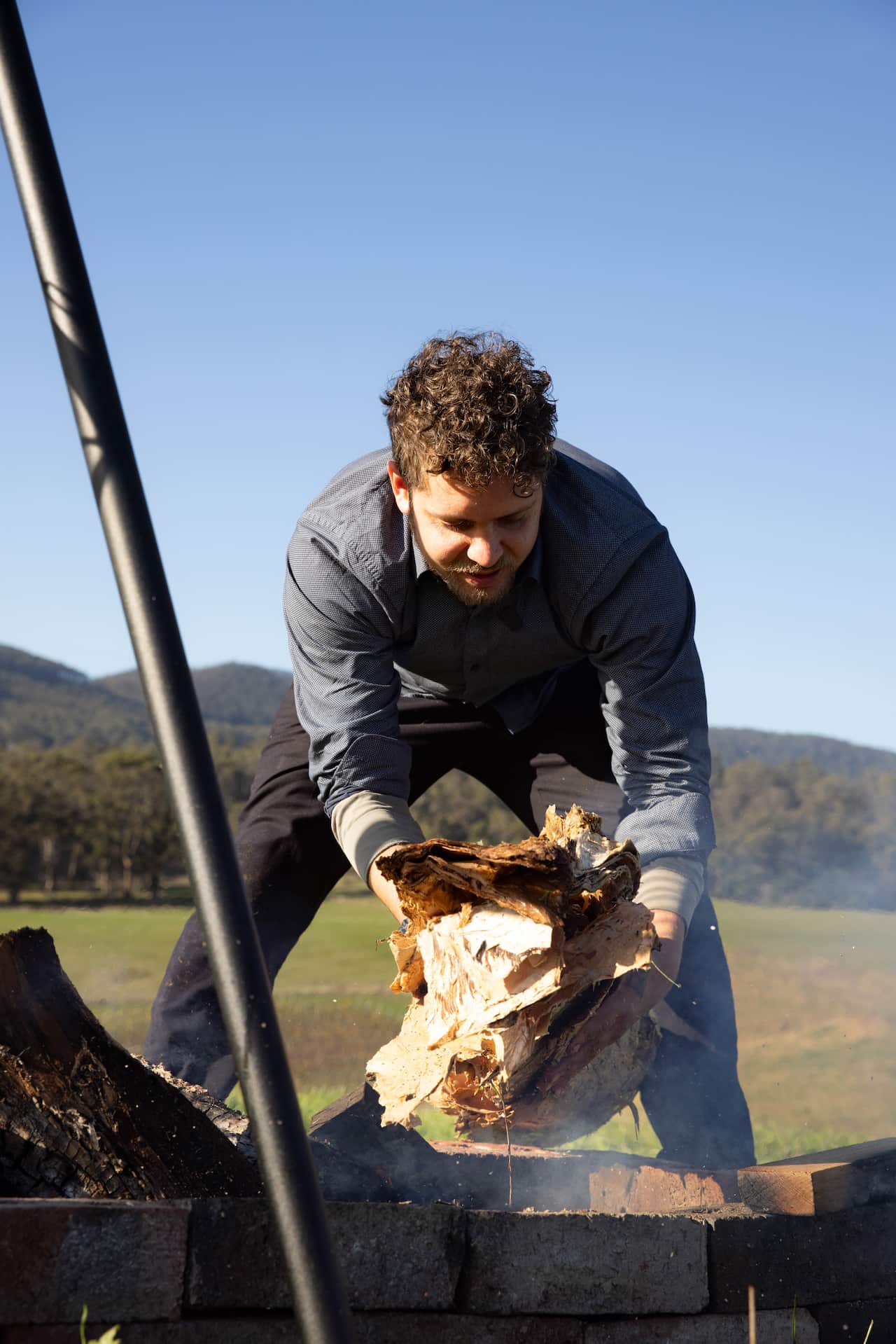
For Hart, cooking over fire is about much more than preparing a meal.
"Personally, the way that I look at fire and I was taught to look at fire growing up is it's a giver of life," Hart says.
"We don't have healthy country without fire, we don't have warmth and safety and comfort. Our mobs used to use fire to heal the country, seasonally and year round, sometimes leaving it for a year and going through doing burns the next year."
And, he adds with a smile, "It's a delicious way of eating."
Keeping those traditional cooking methods alive is important to Hart, despite the conveniences of modern life.
"At the end of the day, you know, if we don't keep the culture alive and we don't pay homage to where we've come from, that stuff will one day be lost if it's not continued," he says.
"So for me, making sure that we understand where we've come from and pay respects to those things by continuing on those practices is very, very important because if we don't continue culture, we will lose it."
As a cultural educator, Hart regularly shares his culture with non-Indigenous people.
It's work he believes helps break down barriers and "take away that divide of the unknown".
At the same time, he says some aspects of culture should remain within community.
"There's certain cultural practices that I do believe should not be shared when it comes to law and ceremony.
"So things like that, I believe, should still be kept sacred because that's part of who we are and that's what makes us who we are."
Outside of those sacred practices, Hart is eager to share as much as he can.
"A lot of racism and stuff comes from people not understanding properly," he says.
And what better way to build understanding than over a shared meal?
"I think food is the way to most people's hearts," Hart says.
"All across the world, food has been used as a tool to bring people together."
That is exactly what's happening today.
Joining Hart around the fire are Daniel Kelleher from the Land and Sea Aboriginal Corporation Tasmania, who brought the abalone, and Trish Hodge from nita Education, who provided a selection of native plants to flavour the feast.
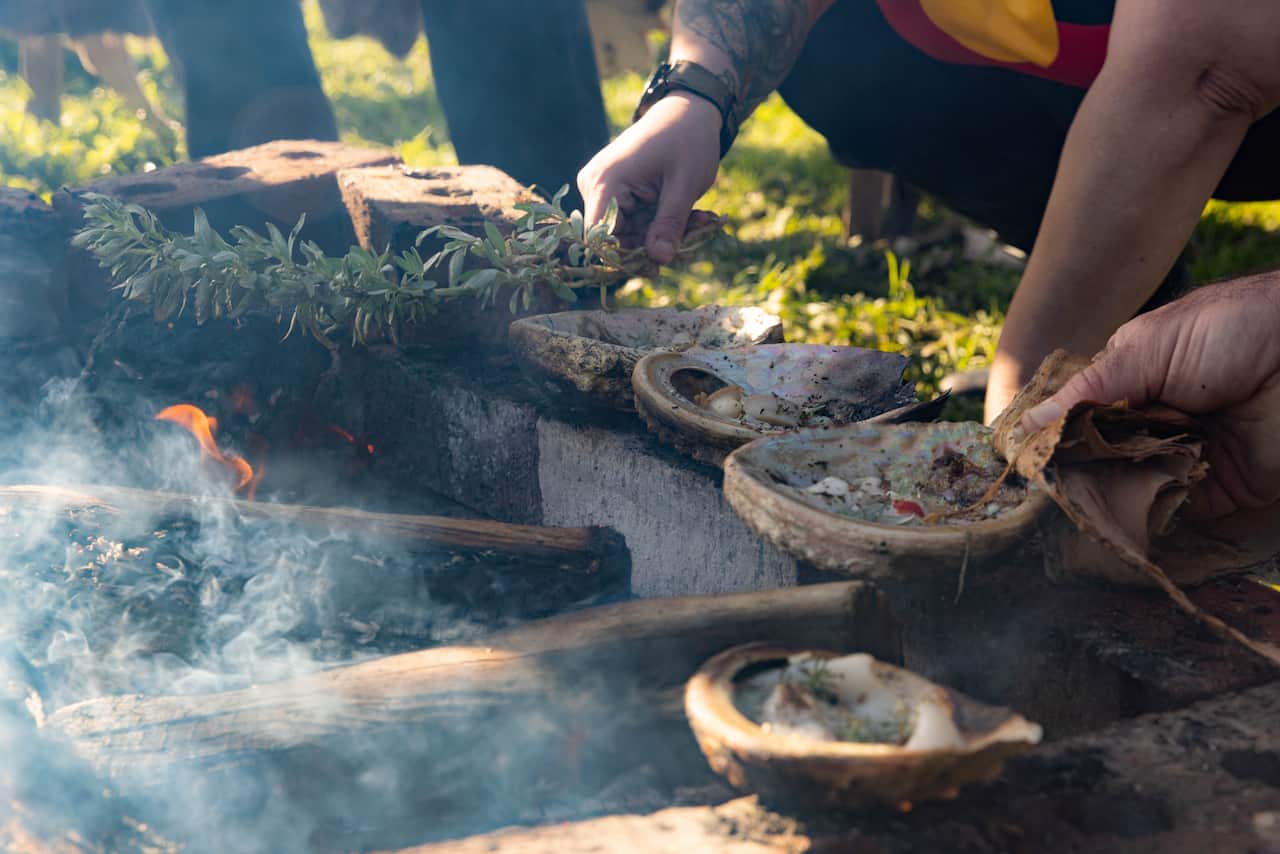
Cooking and eating together in this way makes Hodge feel a connection with her ancestors.
"They looked after this Country for such a long time so that we can still harvest these beautiful foods," she says.
"It's thanks to them that we're here."
Kelleher says seeing the bush, the sea and the fire come together in a single meal is something special.
"For me, the fire links everything. It links the land and the sea," he says.
"We're all sitting around here and we're watching the fat drip off the muttonbirds, and it gives that smell."
It's an experience that simply can't be recreated indoors: "It's got to be done outside here with mob and eating like this."
Hodge smiles.
"It's the oldest restaurant in the world."
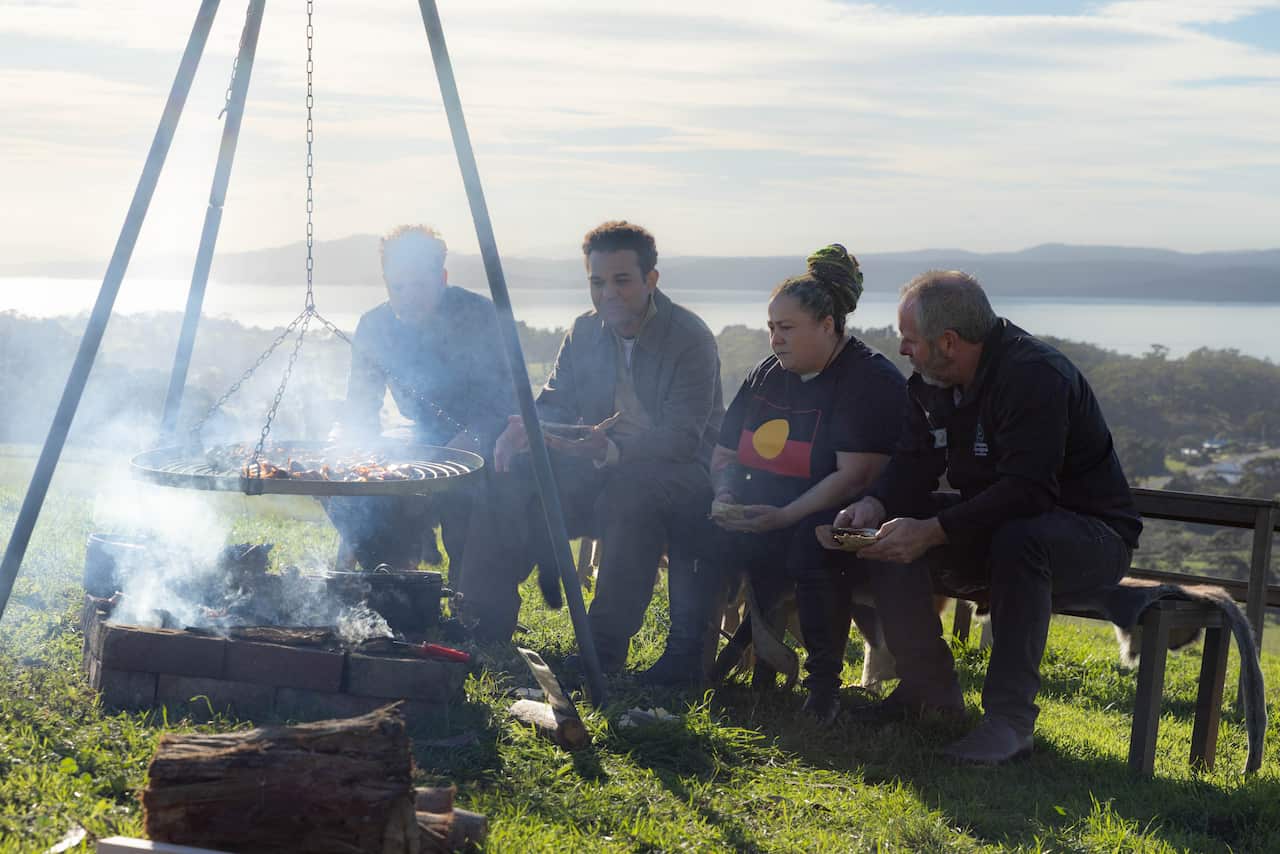
For Hart, though, the greatest reward isn't the cooking itself — it's watching people enjoy the meal.
"So growing up with big communities, a feed was always a good time," he recalls. "Whenever [I] went to someone's house, I was always offered, 'Are you hungry? Are you thirsty?'
"Being hospitable is a major part of our culture dating back before colonisation. So for me, being able to host people and cook a feed for people and see their enjoyment and the appreciation that comes from that just fills my heart with a lot of love."
Djuker Hart was interviewed by NITV's Zev Ryall, who travelled to Tasmania as a guest of Tourism Tasmania.

SBS Food is a 24/7 foodie channel for all Australians, with a focus on simple, authentic and everyday food inspiration from cultures everywhere. NSW stream only. Read more about SBS Food

Have a story or comment? Contact Us