The Dragon Boat festival celebrated by Chinese communities evokes images of competitive rowers, loud drums and food galore, but it starts with a tragic backstory. After a beloved poet in China committed suicide by throwing himself in the river, locals used their boats to try to find him and threw rice parcels in the river so that the fish would eat them, rather than the poet’s body. Since then, Chinese communities around the world mark this occasion, which falls on the 5th day of the 5th month in a lunar calendar, with boat races and rice dumplings. In 2026, this date falls on 19th June.
These rice dumplings (or rice cakes) are known regionally and internationally as zongzi/ joong/ chang/ zhang/ bánh tét. Broadly speaking, it is glutinous rice with pork or vegetarian filling, wrapped with leaves and cooked. But it is also hyper-localised from China to Singapore which means variations in the meat (roasted, dried, sweet sausage), add-ons (mung beans, chestnuts, dates), flavouring (soy sauce, pandan), leaf wrappers (banana, bamboo), shape (cylindrical, triangle, pyramid), cooking method (steamed, boiled) as well as taste (savoury, sweet).
Taiwanese-Hakka style (Triangle shaped parcels, wrapped in bamboo leaves)
Omar Hsu, owner of Ommi’s, a frozen meal and catering company, sells a Taiwanese-Hakka version of this dumpling. “There’s about 15 ingredients that make up the filling, such as pork belly, chestnut, salted egg, mushroom, dried shrimp, dried radish so it’s quite flavourful,” he shares. “The filling to rice ratio is about 50-50, so eating one Taiwanese rice dumpling is a full meal. It’s like a bento but in a rice parcel.”
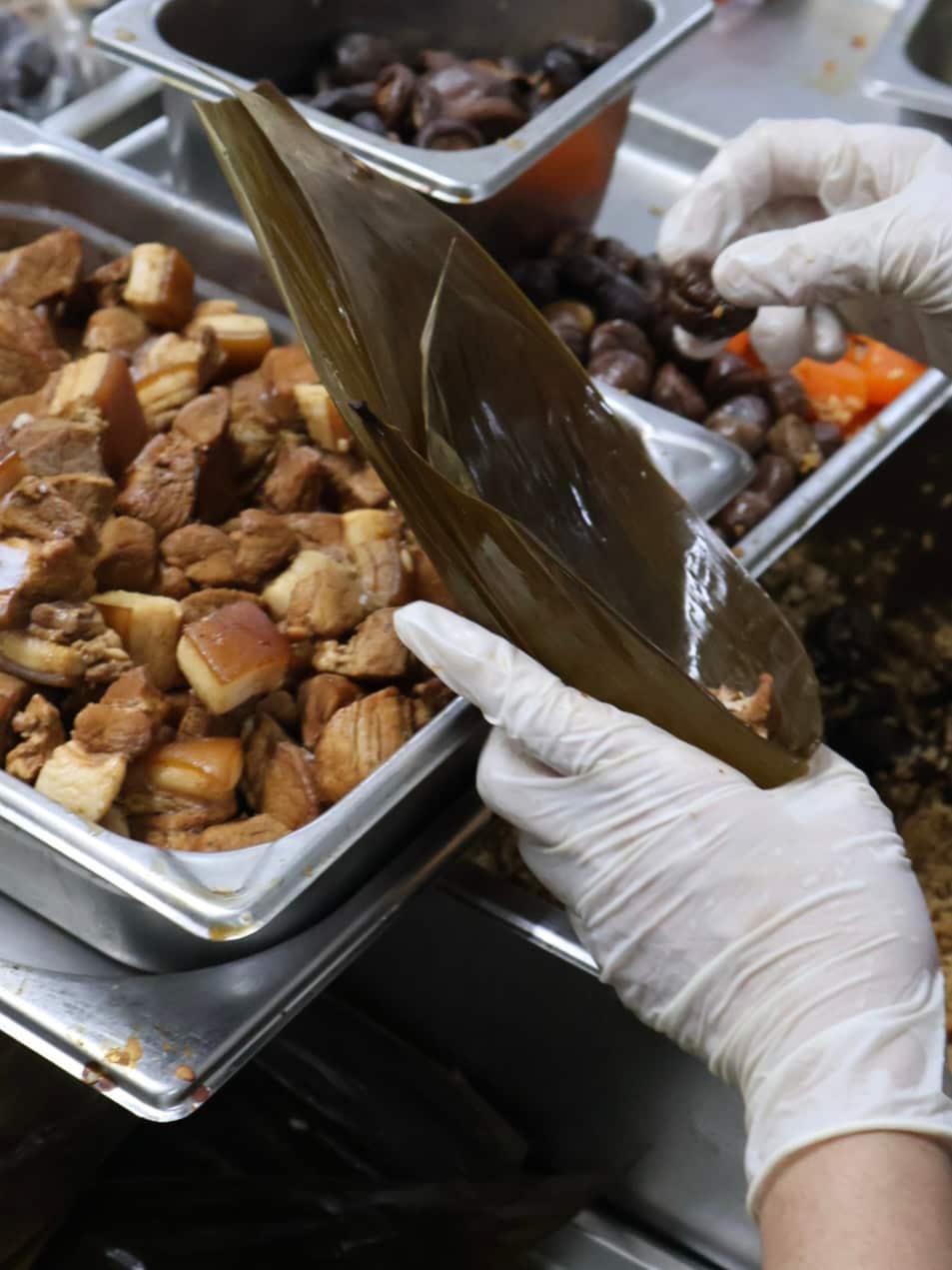
Hsu acknowledges that making zongzi is time consuming, starting with washing and drying the leaves, cooking the rice and filling and then moving on to assembling, wrapping, tying and cooking the parcels. The hardest part is the wrapping, which takes years to master because it needs to be properly fastened with the string. Otherwise it will break apart when cooked.
“We sell zongzi from the end of March to June. During this time my mum and aunt will come over from Taiwan to help us make it. Together they can make 400 zongzi in 6-7 hours. I can make less than 100 in the same time,” he says honestly.
Singaporean-Hokkien style (Pyramid shaped parcels, wrapped in bamboo leaves)
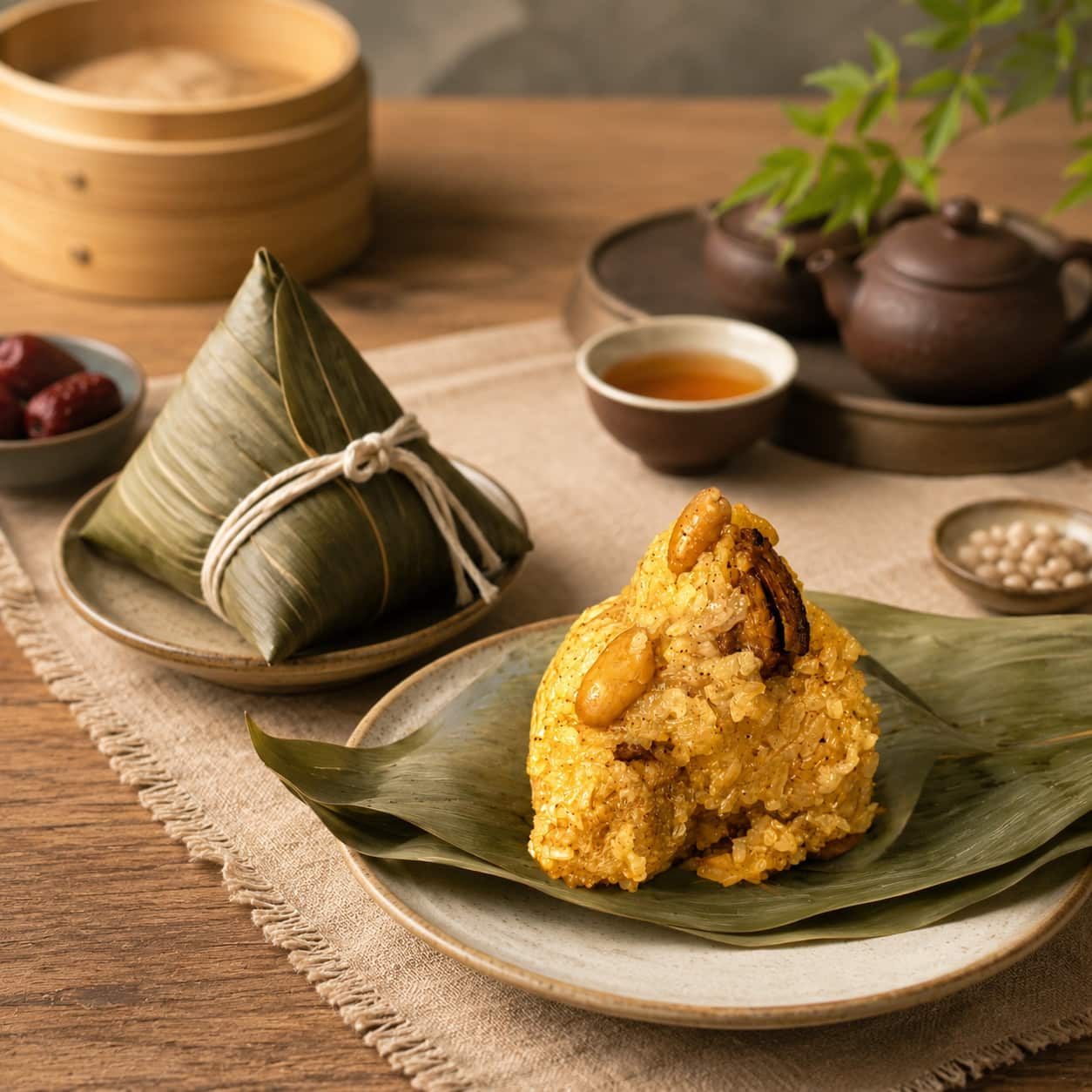
While it might seem like pork is a big part of the rice dumplings, Huai Fen Neo only knows the vegetarian versions. “I grew up eating vegetarian style chang in Singapore and remember picking out the mushrooms as a kid because I didn’t like the taste.” Today, she sells a Hokkien style vegetarian version from her food business, LamYong, and the zongzi is filled with chestnuts, peanuts, mushrooms (an ingredient that Neo has grown to like) flavoured with soy sauce and Chinese 5-spice powder, which includes star anise and Sichuan pepper.
Neo makes zongzi at home to celebrate the festival and provides more context on why it is a multi-day, multi-person affair. “The glutinous rice needs to be soaked first and the next day we drain and stir-fry it in a wok. Each element for the filling also must be prepared separately. And then you need one person to assemble, one person to wrap and one person to boil it.”
Neo recruits her family to do this and is adept at assigning tasks to the person best suited for it. “The bamboo leaves require soaking to soften and then must be cleaned one by one. This is where I get my kids involved because it doesn’t require a lot of skill. “
Vietnamese style (Multi-shaped, wrapped in banana leaf)
Thuy Tran, a chef in the family run Melbourne restaurant Hoang Yen, explains that in Vietnamese culture, the dragon boat festival is a mid-year celebration where rice dumplings (or rice cakes) are one of the foods offered to the ancestors along with fruit, tea, wine and pork. “We have different versions of the rice dumplings. There’s bánh tét (cylindrical), bánh chưng (square) and bánh ít (triangle),” Tran explains.
There are also variations in flavour. “The savoury version has marinated pork, mung bean and salted egg yolk while the sweet version has mung bean and banana,” she continues.
One of the main differentiators of the Vietnamese rice dumpling version compared to others is that the glutinous rice has a purple tinge from la cam extract or green tinge from pandan extract. “We grow the plants in our backyard so we can make our own extract. This is what gives the rice the aroma and flavour; you cannot get it from just colouring,” Tran emphasises.
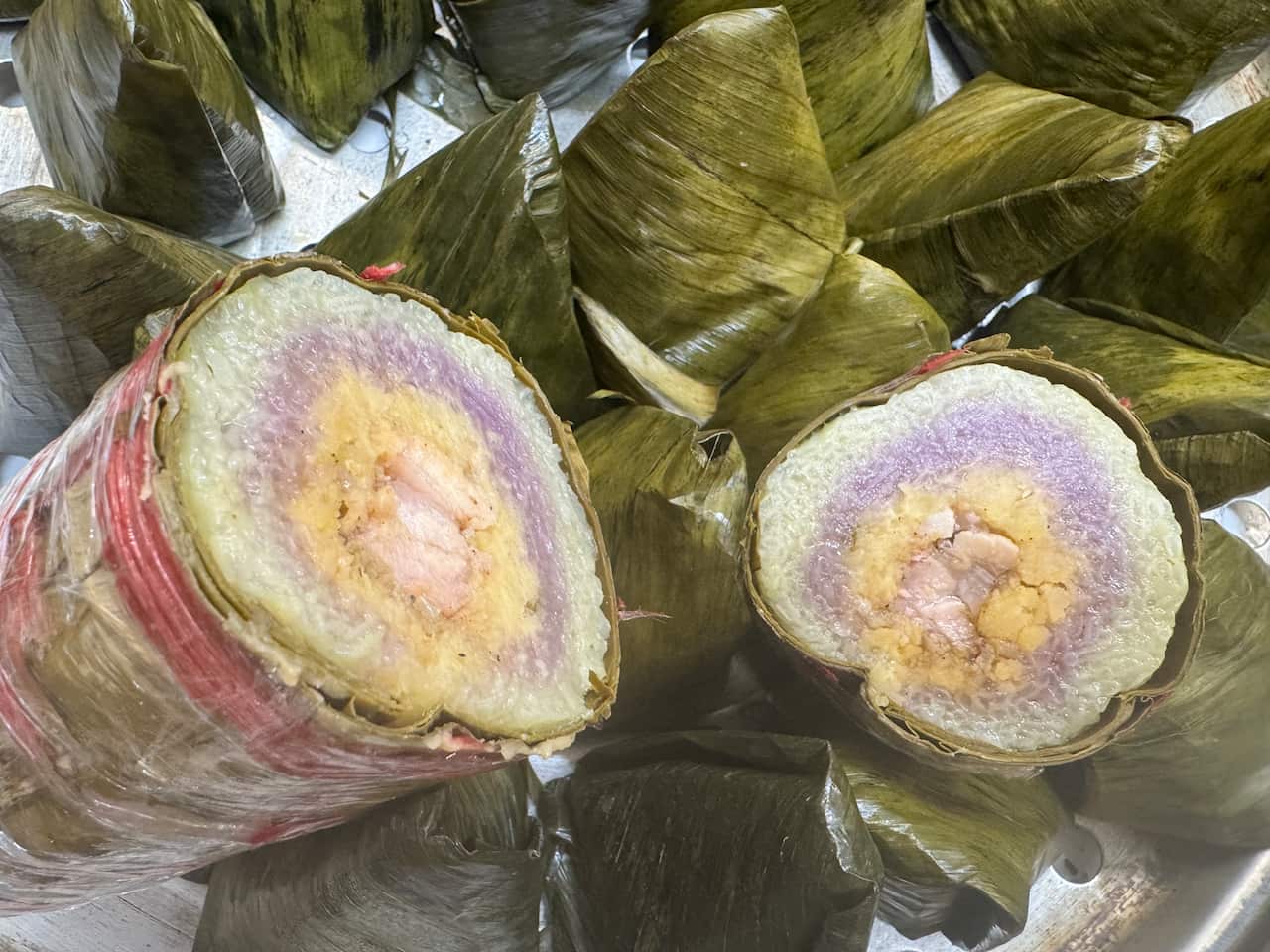
Like Hsu and Neo, Tran acknowledges that making these rice dumplings is labour intensive, hence she doesn’t have it on the restaurant’s menu, opting instead to take pre-orders from regular patrons in the know. For Tran, the hardest shape to make is the triangle because the pork can be irregularly shaped, so it takes some skill to stuff it into the rice and meld it into a triangle without any bits sticking out. Here she too defers to her mum, Lyn Pham’s skills.
“My mum can wrap one pair in 10 minutes, but I take about 20 minutes. If someone was doing this for the first time, I think it would take them 30 minutes!”
Many hands make light work
There’s no escaping the labour-intensive work that goes into making these rice dumplings. As a business owner, Hsu has wondered if there’s any way to automate or mechanise this process but concluded humans are still best suited for it. “I’ve seen videos of factories in China, that seasonally recruit hundreds of people to make zongzi.”
For those who are making it home, it’s best to have a few people to help even if they have varying interest and skill. “My kids think it’s a chore,” Neo says laughingly. “But they love eating it, so they know they need to contribute. We live in Sydney and they have never seen a dragon boat. To them, this is the rice dumpling festival.”

SBS Food is a 24/7 foodie channel for all Australians, with a focus on simple, authentic and everyday food inspiration from cultures everywhere. NSW stream only. Read more about SBS Food

Have a story or comment? Contact Us