Native Australian ingredients like saltbush, wattleseed, finger lime and Davidson plum have become increasingly familiar on restaurant menus, supermarket shelves and home shopping lists. But Tasmania, or Lutruwita, is home to a wealth of native bush foods that remain largely undiscovered outside the island.
Woodsorrel, native cherry, Alpine heathmyrtle and native pepper are just a few of the ingredients that deserve a place in the spotlight, according to Trish Hodge, a Palawa woman who has spent more than 25 years sharing cultural knowledge. Hodge has documented around 350 native Tasmanian plants and their traditional uses for food, medicine, tools and seasonal knowledge, helping to preserve and share the rich botanical heritage of Lutruwita.
Through her work with nita Education, she shares knowledge about the bush foods that the Tasmanian Aboriginal people have known and used for centuries.
“I think it’s always been a passion of mine to educate everyone about how special this place is, and the connection that we have that is so ancient and so deep,” Hodge says.
“We use our bush foods at home every day in our bush medicine. There are lots of ones I harvest as often as I can that dry really well, so we can keep them in the pantry. Then there are other ones we harvest fresh, which are only good when they’re fresh.”
Here's a few of Hodge's favourites.
Grassland Woodsorrel / Oxalis perennans
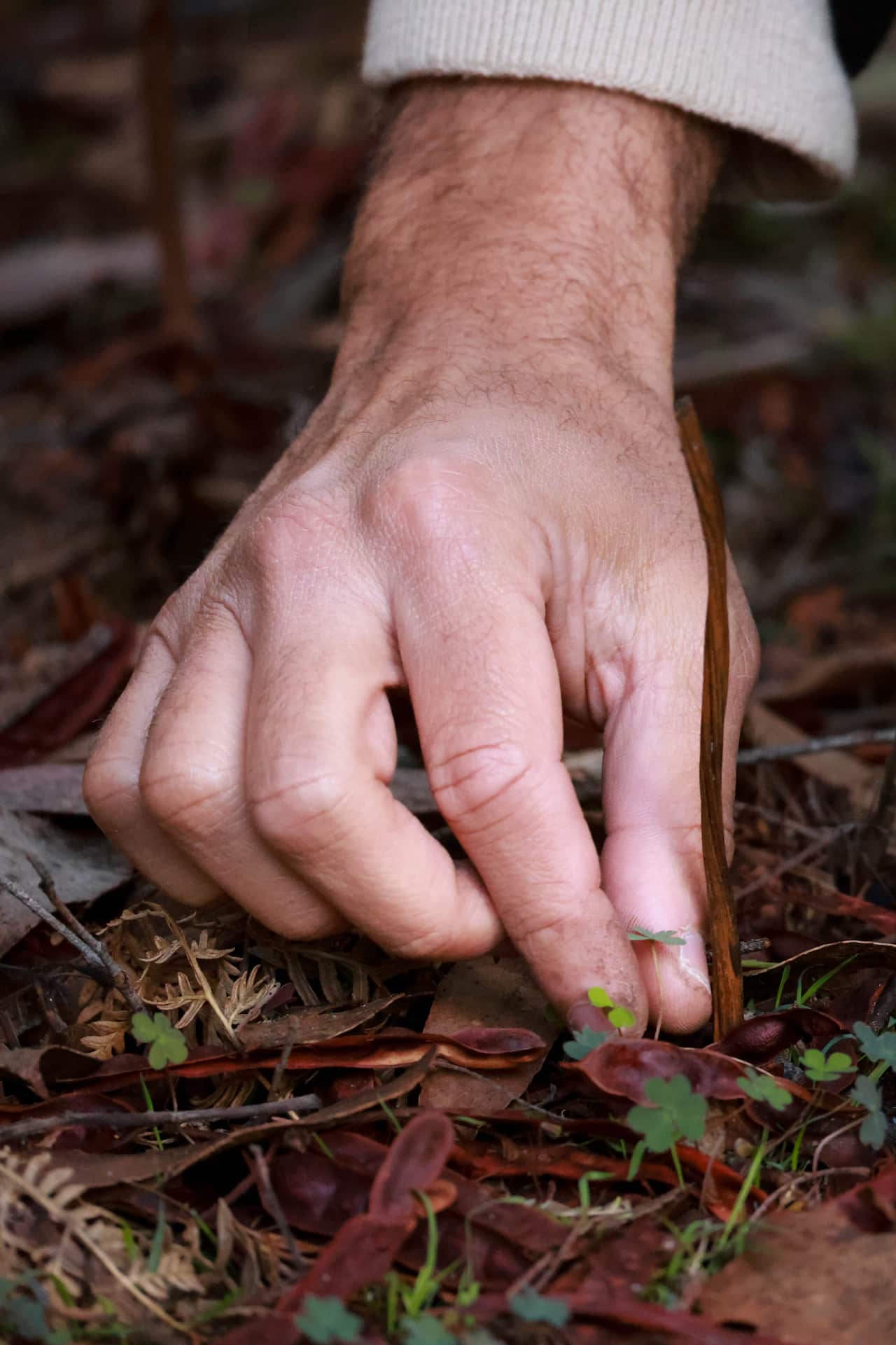
Grassland woodsorrel may be small – growing to about the size of a 20-cent coin – but it packs a surprisingly big flavour. Its three heart-shaped leaves are purple underneath and taste remarkably like sour gummy worms, much to the delight of the children Hodge teaches.
“It always brings a smile,” she says. “I tell the kids these are sour gummy worms, and they love it. Kids absolutely love them.”
The tart leaves are versatile, too.
“[You can use them] as a flavouring with stews and things like that. You can eat them fresh, put them in a salad, use them as seasoning.”
As tasty as it is, woodsorrel offers more than just a fun burst of flavour.
“There is actually a little bit of a story with these guys," Hodge says. "Oxalic acid is bad for you. It can shut your liver down, but you’d have to eat your body weight in these every day for three weeks. These guys are tiny, and good luck finding your body weight in them!”
She warns people to be careful though, as introduced species have much higher oxalic acid content that can cause liver complications.
Alpine Heathmyrtle / Baeckea gunniana
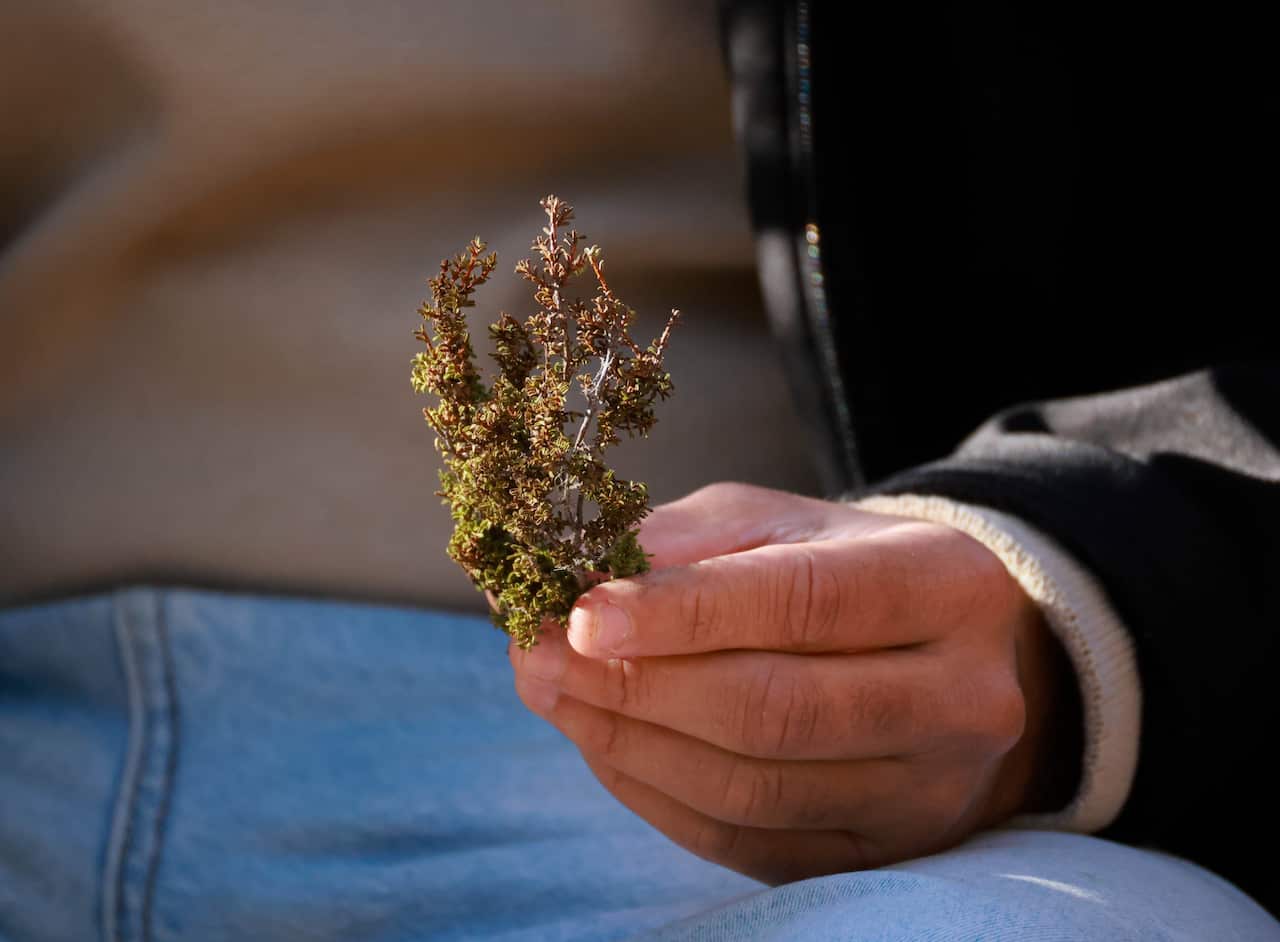
As the name suggests, Alpine Heathmyrtle is an alpine plant, which grows above 1,100 metres altitude. The leaves smell like citrus, but the flavour is hard to pin down, and has been described as “magic” and “incomparable”.
“It’s a flavour unlike anything else,” says Hodge. “There’s nothing to compare it to. You have to try it to believe it."
“With this one, because it’s alpine and has tiny little leaves, you only need a couple of leaves for a taste.”
It can also be used in sweet or savoury dishes, or as a fragrant cup of tea.
“[You can use it] like you would use salt and pepper,” Hodge says. “We use it for scones, breads, wallaby, lamb, stews, soups, fish — you name it. You can make a tea with it. You can heat up cream with it to put on your pav.”
Don’t go foraging for it in the Tasmanian wilderness though. Alpine heathmyrtle grows in such high altitude areas that they are usually found in national parks and protected areas. Hodge's recommendation? “Buy them in nurseries and grow them at home."
tapu / Mountain pepper / Native pepper / Tasmannia lanceolata
Another favourite is native pepper, or tapu, which Hodge jokingly calls the "bubblegum bush" when she's teaching children.
"It doesn't taste like bubblegum," she says with a smile. "But we tell the kids it's bubblegum flavour, and the more they chew it, the more bubblegum flavour they'll get. They love it."
The leaves and berries are both spicy, but the leaves deliver a bigger punch. The berries start with a fruity, tangy sweetness before delivering a distinctive peppery heat, while the crushed fruit turns a vivid purple. Hodge uses the berries in place of black pepper and finely chops the leaves to flavour soups and stews, or adds whole leaves to slow-cooked dishes much like bay leaves.
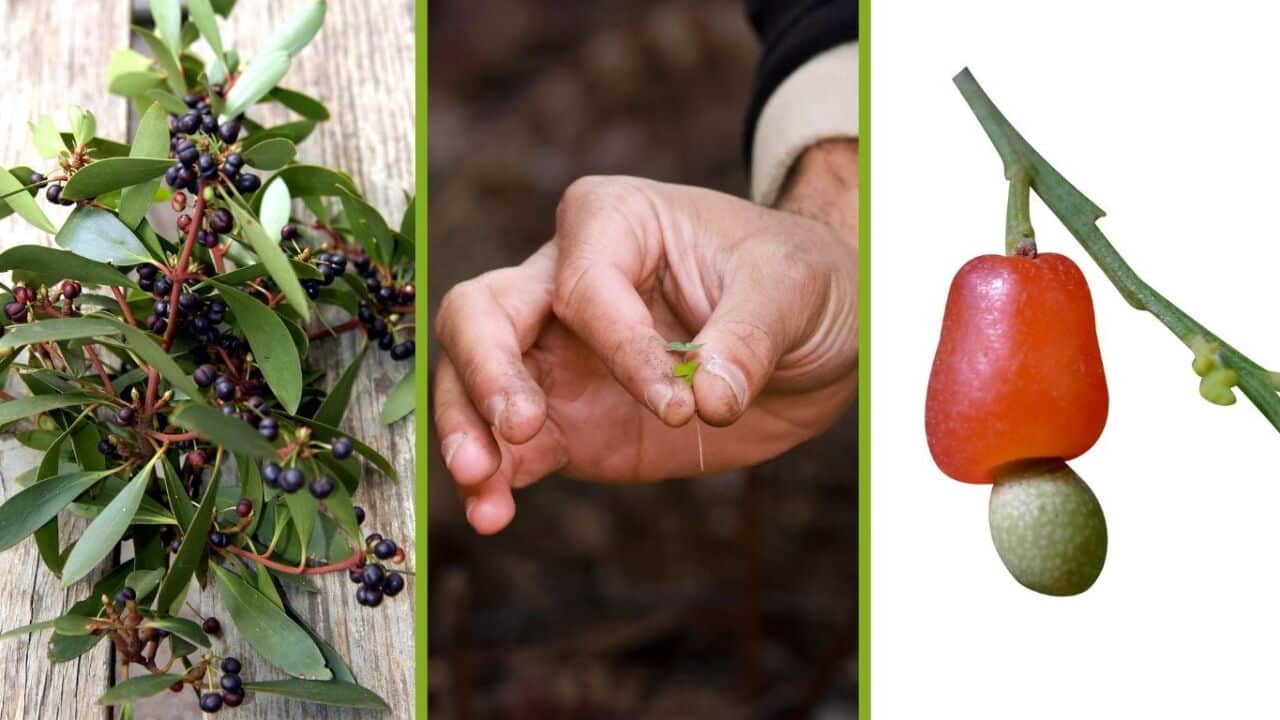
lintulamala / Native cherry / Exocarpos cupressiformis
"This one is another one of my all-time favourites," says Hodge.
"We call this lintulamala, or the native cherry. These guys have a little red fruit, anywhere from a pea to maybe two peas in size, with a little green seed on the outside. They’re really high in vitamin C and super delicious."
Hodge's top serving tip is to make them into an ice creaming topping.
"With the cherries, I like to mix them with a little bit of balsamic vinegar and heat it up so it’s like a syrup. [Then eat it] with ice cream, it’s incredible. They taste like a cherry."
While they are a lovely sweet treat to eat, the young leaf tips can also be used to stop wounds bleeding, or in traditional snake bite treatments.
Keeping cultural knowledge alive
It's this kind of detailed knowledge of culture, history and tradition that Hodge was concerned could be lost as Elders passed away.
So Hodge set out to document what had been shared with her. The result is Palawa tunapri – Knowledge of Our Ancestors, a compilation of traditional knowledge about native Tasmanian plants and their uses.
"One of the biggest things was growing up and having these incredible Elders that I really looked up to. When someone passes away, they take all their knowledge with them," she says.
"When you think about the thousands of generations that have come before us, you also think about how much knowledge has already been lost. I really felt it needed to be recorded."
Hodge is quick to stress that the book is not her work alone.
"This is community knowledge. It's not my knowledge. That's why the book says 'compiled by', not 'written by', because it's community knowledge. It's collective, and it's here for everyone."
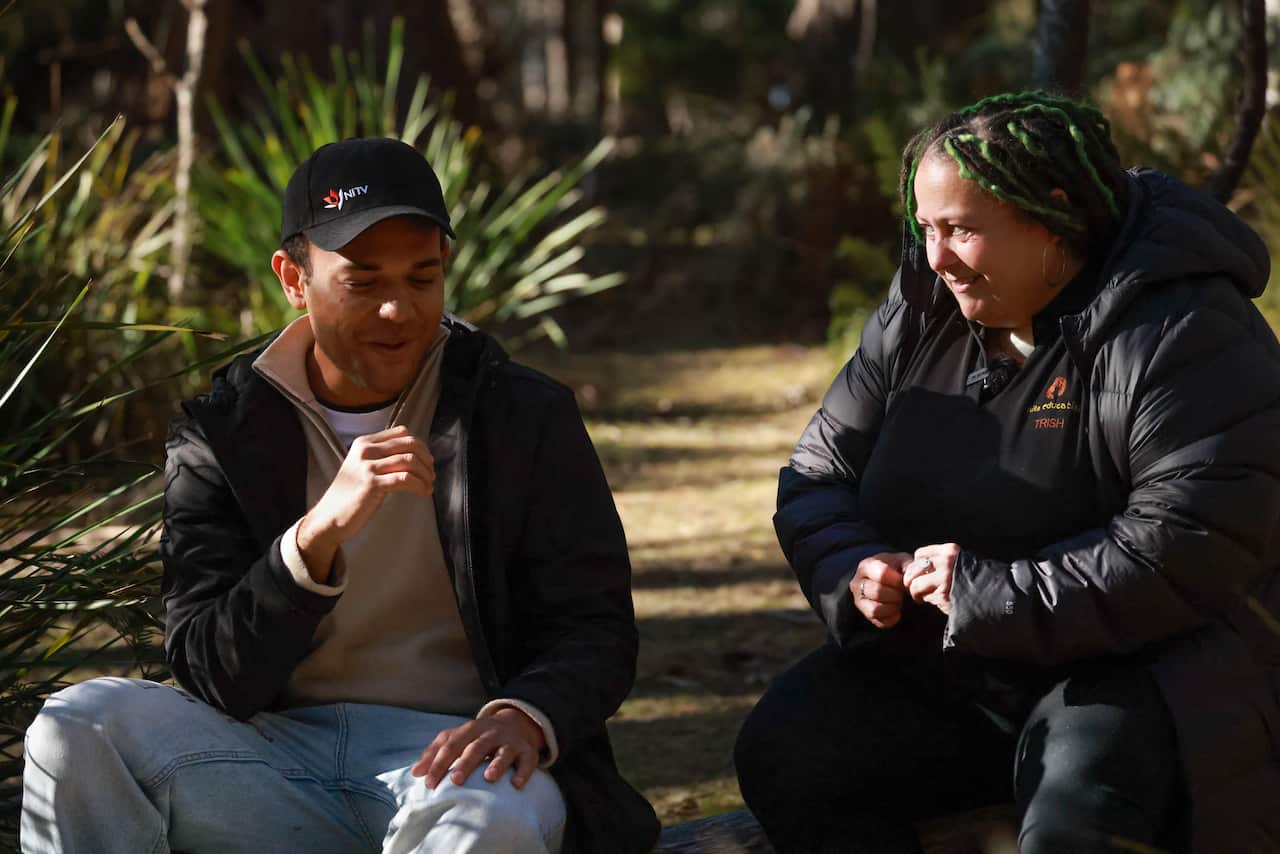
Trish Hodge was interviewed by NITV's Zev Ryall, who travelled to Tasmania as a guest of Tourism Tasmania.

SBS Food is a 24/7 foodie channel for all Australians, with a focus on simple, authentic and everyday food inspiration from cultures everywhere. NSW stream only. Read more about SBS Food

Have a story or comment? Contact Us