- makes 12 serves
- preparation 25 minutes
- cooking 5 minutes
- difficulty Easy level
Ingredients
- 300 g (10½ oz) desiccated coconut
- 400 g (14 oz) caster (superfine) sugar
- 2 tbsp cornflour (corn starch)
- 1 cinnamon stick
- pink food colouring
Setting time: 2 hours.
Instructions
- Line a baking tray with baking paper. Place the desiccated coconut in a large heatproof bowl.
- Combine the sugar, cornflour, cinnamon stick and 400 ml (14 fl oz) water in a saucepan. Set over medium heat and stir constantly until the mixture comes to the boil.
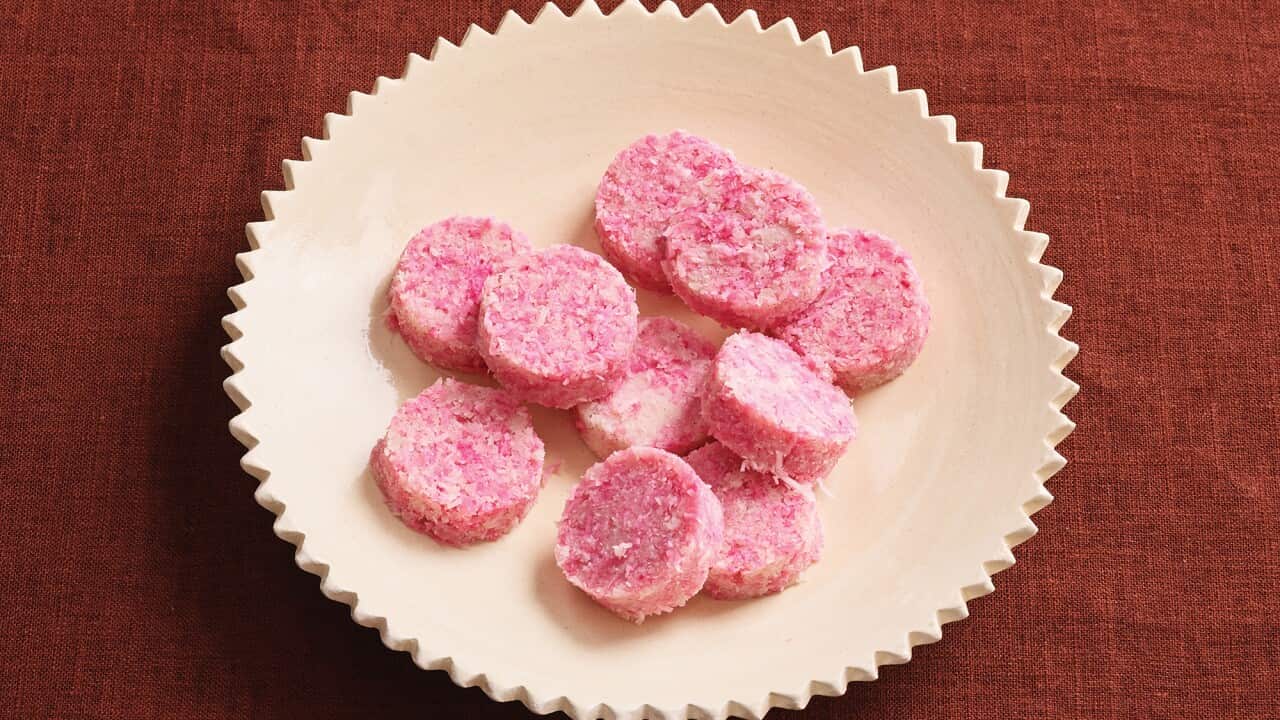
- Very carefully pour the hot sugar mixture over the coconut and stir well with a spoon until you have a firm paste. Scoop out 200 g (7 oz) of the mixture into another bowl and add a few drops of pink food colouring, mixing it in evenly. Return the pink coconut mixture to the plain coconut and gently mix through.
- While the mixture is still warm and working quickly, place a 5 cm (2 in) cookie cutter on the prepared tray, scoop 60 g (2 oz) of the coconut mixture into the centre of the cutter and press to evenly spread the mixture. Gently remove the cutter, then repeat with the remaining coconut mixture.
- Refrigerate for 2 hours to set.
- Store the alfarojes in an airtight container in the fridge for up to 1 week.
Notes
- ‘Alfajor’ comes from the Arabic word ‘al-hasú’, meaning ‘stuffed’ or ‘filled’. When the Spanish colonised Mexico in the 16th century, they brought with them their culinary traditions, including alfajores – which had been gifted to the Spanish much earlier by their Moorish rulers. In Colima, on Mexico’s central western coast, the tropical climate and local produce inspired a version using coconut, sugar and a pinch of cinnamon. Unlike South America’s sandwich cookie alfajores, Colima’s coconut alfajores are a type of solid candy made by layering different coloured mixtures in a mould.
- Not all food colouring is vegan. Use a vegan version if you need this to be vegan.
Recipe from La Mesa Mexicana: The Food of Mexico by Rosa Cienfuegos (Thames & Hudson).
Cook’s Notes
Oven temperatures are for conventional; if using fan-forced (convection), reduce the temperature by 20˚C. | We use Australian tablespoons and cups: 1 teaspoon equals 5 ml; 1 tablespoon equals 20 ml; 1 cup equals 250 ml. | All herbs are fresh (unless specified) and cups are lightly packed. | All vegetables are medium size and peeled, unless specified. | All eggs are 55-60 g, unless specified.
Share

SBS Food is a 24/7 foodie channel for all Australians, with a focus on simple, authentic and everyday food inspiration from cultures everywhere. NSW stream only. Read more about SBS Food

Have a story or comment? Contact Us