- makes 15 serves
- preparation 20 minutes
- cooking 1:05 hour
- difficulty Easy level
Ingredients
- 250 ml (1 cup) milk
- 250 ml (1 cup) goat’s milk
- 350 g (12½ oz) soft brown sugar
- 1 tsp natural vanilla extract
- pinch of baking soda
- 250 g (9 oz) pecans or almonds, chopped
Cooling time: 15 minutes
Instructions
- In a large saucepan, warm the milk and goat’s milk over medium heat, stirring occasionally until the mixture comes to a gentle boil.
- Stir in the sugar, vanilla and baking soda. Cook over low heat, stirring often, for about 1 hour, or until the mixture thickens to a caramel-like consistency (similar to dulce de leche). It’s important to keep the heat low to prevent the caramel splattering and burning.
- Remove from the heat and leave to cool for about 15 minutes. When the caramel is warm but not hot, stir the pecans or almonds through.
- Have at least 15 squares of red cellophane ready before starting the next step.
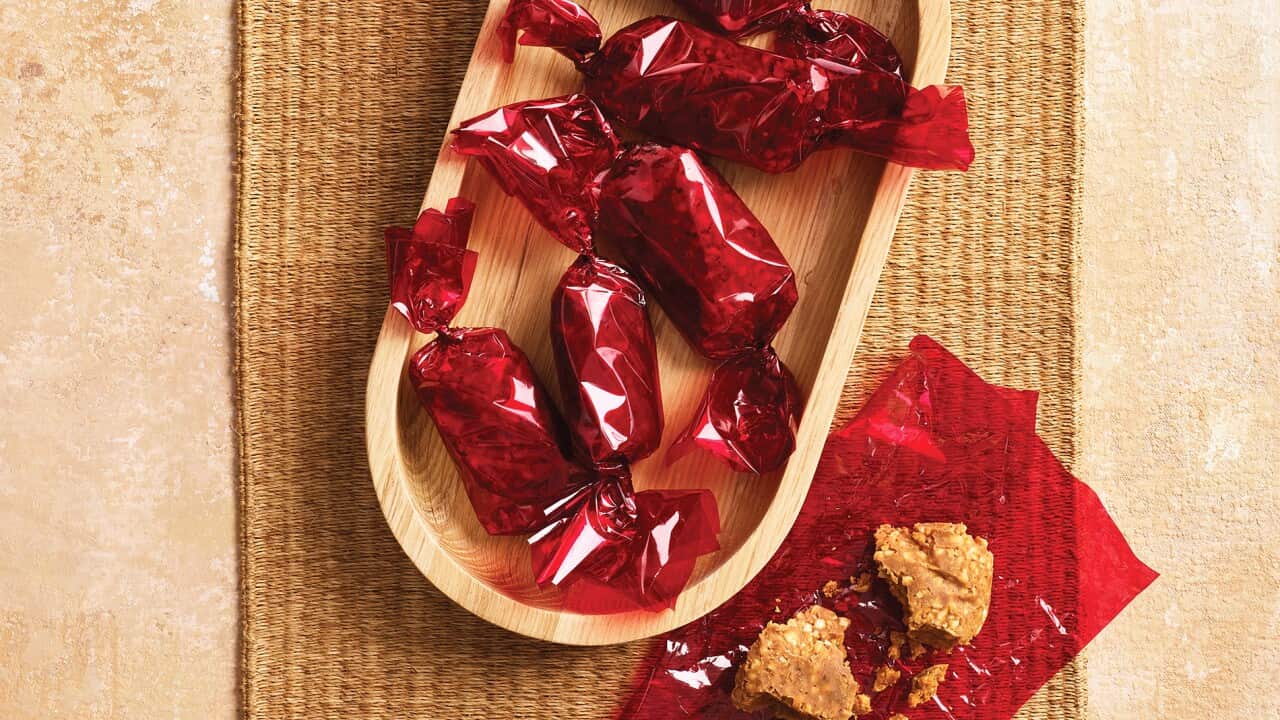
- When the caramel mixture is cool enough to handle, using a spoon, take 2 tablespoons of the mixture and roll it into a cylinder, about 4 cm (1½ in) long. Place the caramel cylinder on a piece of cellophane and wrap it tightly, twisting the ends to seal. Repeat with the remaining caramel mixture.
- Let the glorias set at room temperature for a few hours, so the caramel firms up and the sweets can be easily removed from the cellophane wrappers. Glorias will keep in an airtight container in the fridge for 1 month.
Notes
These sweets are officially known as Glorias de Linares – named for their birthplace, the small city of Linares in Nuevo León, where the woman who first crafted them reputedly claimed that they tasted like ‘glory’. Over the years, glorias have spread across the country, easily recognisable by their vibrant red cellophane wrappers. They’re often given as sweet tokens of love at celebrations such as baptisms, first communions and family or friend reunions, and they evoke great nostalgia for many older Mexicans.
Recipe from La Mesa Mexicana: The Food of Mexico by Rosa Cienfuegos (Thames & Hudson).
Cook’s Notes
Oven temperatures are for conventional; if using fan-forced (convection), reduce the temperature by 20˚C. | We use Australian tablespoons and cups: 1 teaspoon equals 5 ml; 1 tablespoon equals 20 ml; 1 cup equals 250 ml. | All herbs are fresh (unless specified) and cups are lightly packed. | All vegetables are medium size and peeled, unless specified. | All eggs are 55-60 g, unless specified.

SBS Food is a 24/7 foodie channel for all Australians, with a focus on simple, authentic and everyday food inspiration from cultures everywhere. NSW stream only. Read more about SBS Food

Have a story or comment? Contact Us