- serves 12-16 people
- preparation 25 minutes
- cooking 40 minutes
- difficulty Easy level
Ingredients
- 2 large (US extra-large) eggs
- 30 g (1 oz) sunflower oil or any other flavourless oil
- 1½ tbsp (30 ml / 30 g / 1 oz) water
- 2 tsp vanilla extract
- 120 g (4¼ oz) granulated sugar
- 160 g (5⅔ oz) plain (all-purpose) flour or gluten-free plain (all-purpose) flour + ½ tsp xanthan gum
- 1½ tsp baking powder
- Pinch of salt
- 30 g (1 oz) sunflower oil or any other flavourless oil
- 60 g (2 oz) salted butter, softened to the consistency of yoghurt
Shortbread rubble
- 20 g (¾ oz) icing (confectioners’) sugar
- 50 g (1¾ oz) plain (all-purpose) flour or 60g (2 oz) gluten-free plain (all-purpose) flour
- ¼ tsp baking powder
- 30 g (1 oz) cold salted butter
Caramel milk
- 180 g (6 ⅓ oz) caramel condensed milk
- 150 g (5¼ oz) milk (any type)
- 100 g (3½ oz) double (heavy) cream
Ganache
- 200 g (7 oz) milk chocolate
- 175 g (6¼ oz) double (heavy) cream
Cooling time: 15 minutes
Instructions
- Set the oven to 160°C fan-forced (350°F/gas 4) and line a 20 cm x 30 cm (8 inch x 12 inch) brownie tin with a single large sheet of baking paper.
- In a jug (pitcher), roughly blend the eggs, oil, water and vanilla with a fork.
- To a stand mixer (fitted with a whisk attachment) or large bowl, add the sugar, flour (and xanthan gum, if making gluten-free), baking powder and salt. Mix briefly to evenly combine. Add the oil and butter. Start the mixer on slow to combine everything to a damp breadcrumb-like mix.
- Turn the mixer to fast and slowly pour in half the egg mix. Beat for 30–60 seconds or until the batter becomes thick, fluffy and lump free. Stop the beaters and scrape the sides of the bowl.
- Start the mixer again on fast and trickle in the remaining egg mix. Once it has all been added, beat for 30 seconds or until the batter looks smooth. Scrape into the lined brownie tin, level the top and bake in the middle of the oven for 20 minutes or until a metal skewer comes out clean.
- While the cake bakes, make the shortbread rubble. Line a flat baking sheet with baking paper. Mix the dry ingredients together in a bowl. Coarsely grate over the butter and work it in with your fingertips to make small crumbs. Squash handfuls of the crumbs in your fists, then crumble onto the baking sheet so the clumps are a mix of sizes. When the cake is out of the oven, drop the temperature to 150°C fan-forced (325°F/gas 3). Bake the rubble on the middle shelf for 15 minutes or until golden. Leave to cool.
- Leave the cake to cool for 15 minutes, then make the caramel milk. Add the ingredients to a heavy-bottomed pan and whisk together on a medium heat. Bring just to the boil, then remove from the heat. Using a chopstick, poke deep holes across the surface of the cake. Spoon half the caramel milk into the holes. Once that has soaked in, repeat with the remaining milk. Using the paper, lift the cake from its tin onto a wire cooling rack.
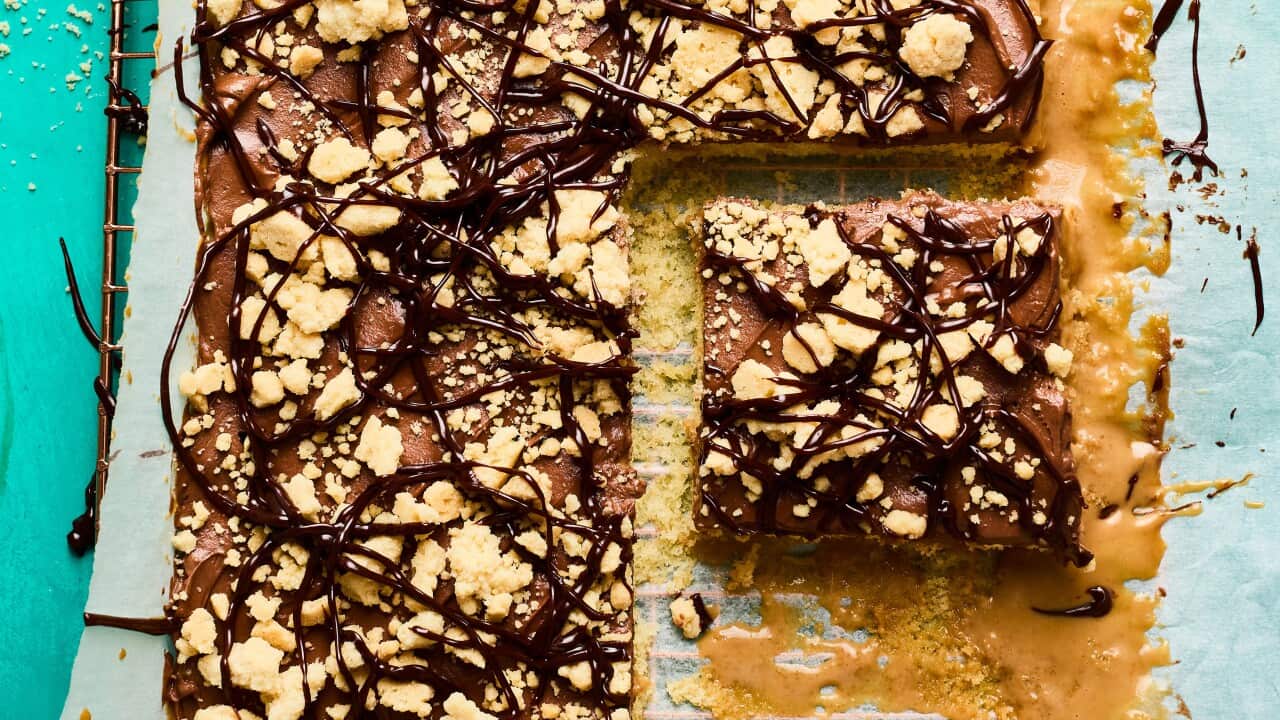
- While the cake cools, start the ganache. To a medium bowl, add the chocolate and cream and microwave in short bursts to gently melt the two together. Pour 75 g (2⅔ oz) of warm ganache into a separate small bowl and leave at room temperature. Put the medium bowl in the fridge to chill. When firm, beat until thick, pale and fluffy. Spread over the cooled cake. Scatter the shortbread rubble over the top.
- Warm the reserved ganache until just runny. Wobble the ganache over with a teaspoon. Serve at room temperature. Any leftovers can be stored in an airtight container in the fridge.
Recipe and image from Bake Your Sweet Time by Tat Effby, photography by Mowie Kay. (Murdoch Books RRP $45)
Cook’s Notes
Oven temperatures are for conventional; if using fan-forced (convection), reduce the temperature by 20˚C. | We use Australian tablespoons and cups: 1 teaspoon equals 5 ml; 1 tablespoon equals 20 ml; 1 cup equals 250 ml. | All herbs are fresh (unless specified) and cups are lightly packed. | All vegetables are medium size and peeled, unless specified. | All eggs are 55-60 g, unless specified.

SBS Food is a 24/7 foodie channel for all Australians, with a focus on simple, authentic and everyday food inspiration from cultures everywhere. NSW stream only. Read more about SBS Food

Have a story or comment? Contact Us