- serves 4 people
- preparation 25 minutes
- cooking 10 minutes
- difficulty Easy level
Ingredients
- 200 g daikon (see note), cut into fine long matchsticks
- 1 large carrot, cut into fine long matchsticks
- 3 spring onions, finely sliced
- 1 tsp black sesame seeds, toasted
- 400 g sashimi-grade salmon belly (see note), sliced
- 2 slices lemon
- salt and white pepper
Pickled nori
- 4 sheets yakinori (see note)
- 3 tsp light soy sauce
- 2 tsp mirin
- 2 tsp malt vinegar
- a few drops sesame oil
Dressing
- 2 tbsp olive oil
- ¼ tsp sesame oil
- 1 tbsp rice vinegar
- 1 tbsp mirin
- ½ tsp horseradish cream
Instructions
To make the pickled nori, soak the yakinori sheets in cold water for a few minutes until soft. Drain and squeeze out excess water using your hands. Place the yakinori in a small saucepan with the remaining ingredients. Bring to a simmer over a medium heat and cook, stirring regularly, for 8–10 minutes until the liquid has been absorbed. Season to taste with white pepper. Transfer to a bowl and refrigerate until ready to use.
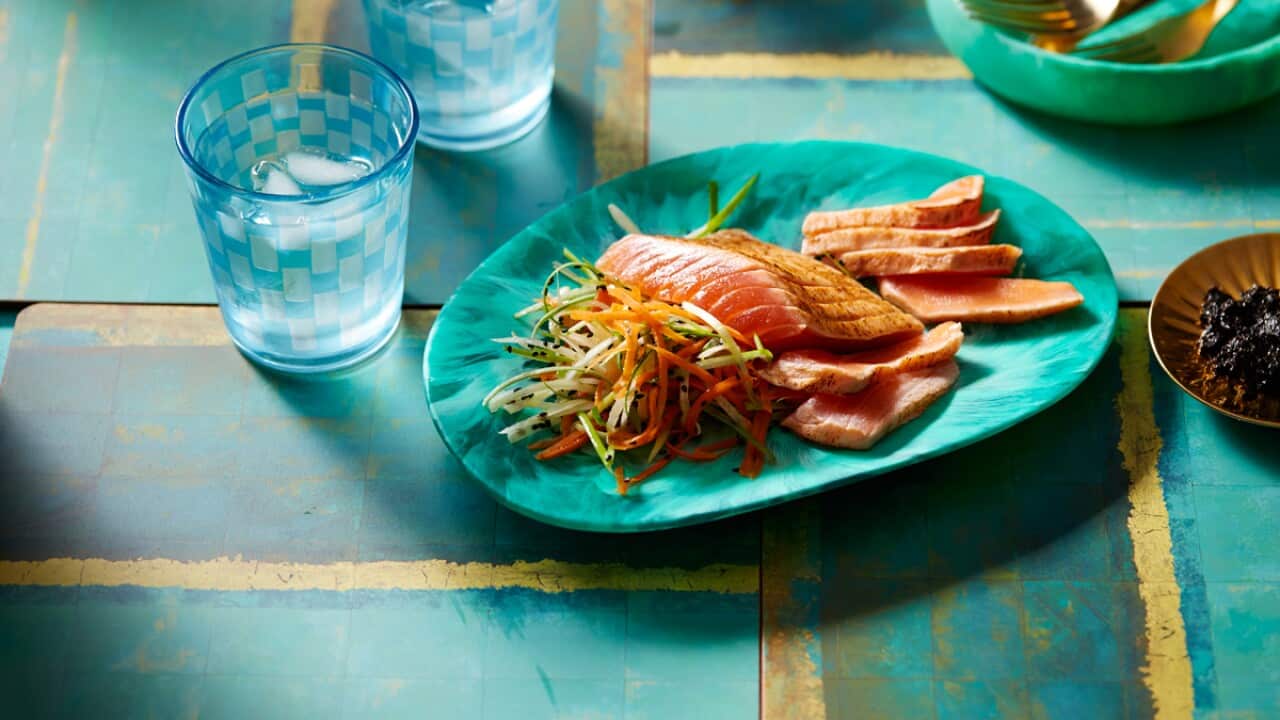
Combine the daikon, carrot, spring onion and sesame seeds in a bowl. Combine all the dressing ingredients in a jar, along with 1 tsp pickled nori, season to taste and shake until combined. Toss daikon salad with enough dressing to lighly coat. Divide the salad between plates.
Using a kitchen blowtorch, lightly sear the top of each piece of salmon. Rub lemon over the top of salmon, then arrange on serving plates. Serve immediately with pickled nori.
Note• Daikon is a Japanese radish available from select greengrocers.
• Salmon belly has a higher concentration of fat than other parts of the fish, which lends to light searing to loosen some of the fat. Preorder salmon belly sashimi from quality fishmongers. If unavailable, substitute with tuna belly or regular salmon sashimi.
• Yakinori are dried sheets of roasted seaweed most commonly used to wrap sushi rolls. It is available from Asian food stores and some supermarkets.
Photography by Benito Martin. Styling by Jerrie-Joy Redman-Lloyd. Platter from Dinosaur Designs. Glass from The Country Trader.
Cook’s Notes
Oven temperatures are for conventional; if using fan-forced (convection), reduce the temperature by 20˚C. | We use Australian tablespoons and cups: 1 teaspoon equals 5 ml; 1 tablespoon equals 20 ml; 1 cup equals 250 ml. | All herbs are fresh (unless specified) and cups are lightly packed. | All vegetables are medium size and peeled, unless specified. | All eggs are 55-60 g, unless specified.

SBS Food is a 24/7 foodie channel for all Australians, with a focus on simple, authentic and everyday food inspiration from cultures everywhere. NSW stream only. Read more about SBS Food

Have a story or comment? Contact Us