- serves 2 people
- preparation 5 minutes
- cooking 15 minutes
- difficulty Easy level
Ingredients
- Salt and black pepper
- 200 g pasta (of your choice)
- 1 tbsp olive oil
- 2 garlic cloves, bruised
- 8–16 sage leaves (depending on size)
- 200 g pork mince
- ½ cup (125 ml) dry white wine
- 50 g butter
- ½ cup (40 g) finely grated parmesan cheese, plus extra to serve
- 1 lemon, finely zested
Instructions
- Bring a large saucepan of well-salted water to the boil over high heat. Cook the pasta according to the package instructions, checking 2 minutes before the end of the cook time.
- Meanwhile, heat the olive oil in a large frying pan over medium-high heat. Add the garlic and sage, then fry for 1-2 minutes, or until the sage leaves are crisp. Scoop the leaves out of the pan, reserving the garlic and oil.
- Crumble in the pork mince, using a wooden spoon to break up the mince. Spread out in the pan and allow to cook undisturbed for 2 minutes, then break up with the wooden spoon and cook for a further 2 minutes, until the mince is cooked through and golden. Season with a generous pinch of salt, then pour over the wine and allow it to bubble up, using the wooden spoon to scrape off any browned bits from the base of the pan.
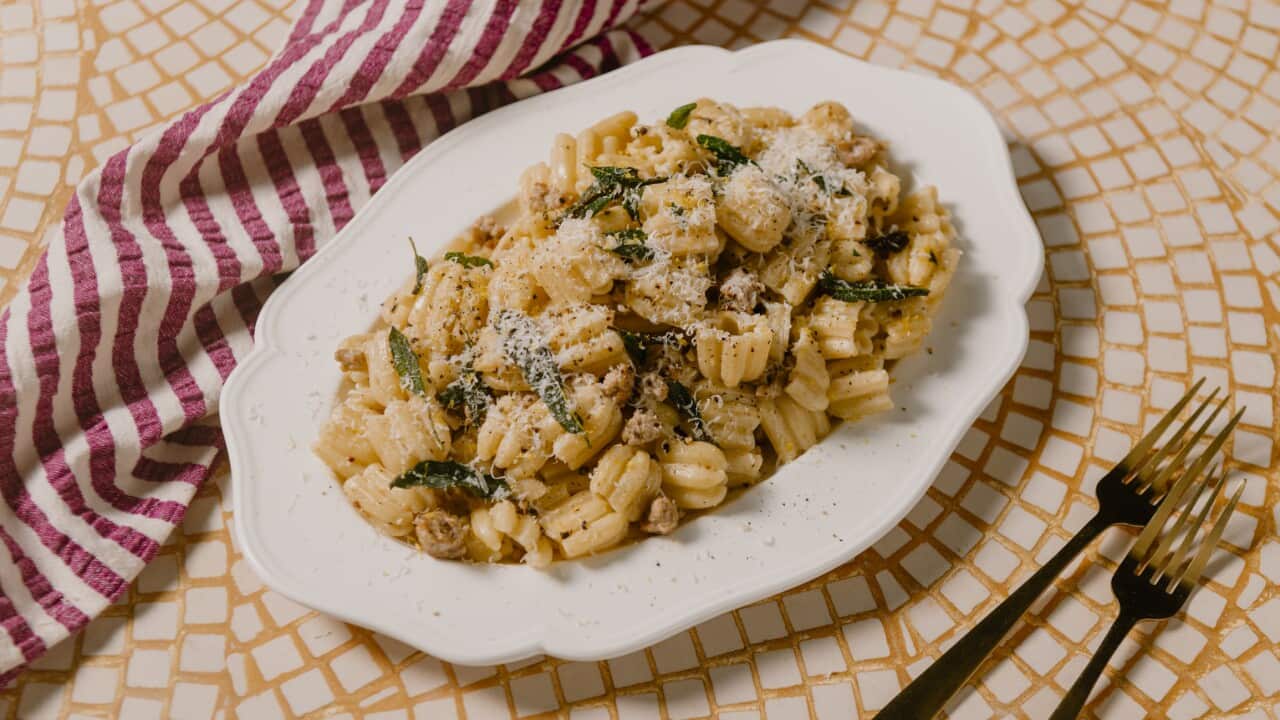
- Simmer for 2-3 minutes, until the wine has reduced, then reduce the heat to low. Scoop out the garlic cloves, then use tongs or a slotted spoon to transfer the cooked pasta directly into the frying pan. Pour over around ¼ cup pasta cooking water. Add the butter and parmesan cheese and toss forcefully for 1 minute, until the sauce thickens and turns creamy. Add the lemon zest, then remove from the heat. Divide the pasta between plates and top with pepper and crisp sage leaves.
Want more from The Cook Up? Stream all the seasons here and for free at SBS On Demand.
Cook’s Notes
Oven temperatures are for conventional; if using fan-forced (convection), reduce the temperature by 20˚C. | We use Australian tablespoons and cups: 1 teaspoon equals 5 ml; 1 tablespoon equals 20 ml; 1 cup equals 250 ml. | All herbs are fresh (unless specified) and cups are lightly packed. | All vegetables are medium size and peeled, unless specified. | All eggs are 55-60 g, unless specified.
Share

SBS Food is a 24/7 foodie channel for all Australians, with a focus on simple, authentic and everyday food inspiration from cultures everywhere. NSW stream only. Read more about SBS Food

Have a story or comment? Contact Us