

Globally, dengue fever infects 50 to 100 million people each year, according to the World Health Organization. Brazil is one of the most affected countries in the world with more than 1 million cases of dengue reported in 2020. But the 'Wolbachia Method', a pioneering, self-sustainable technology developed in Australia to combat mosquito-borne diseases is being applied in Brazil and showing rates of up to 70% efficiency. Dr Luciano Moreira, Program Lead of the World Mosquito Program in Brazil, spoke to SBS Portuguese about how he successfully applied the award-winning Australian technology in Brazil.
It is self-sustainable, efficient and has being applied in 11 countries around the world: the Wolbachia Method, developed in Australia, has the potential to eradicate the deadly dengue virus in Brazil and other parts of the world.
The technique consists of introducing a natural bacteria called Wolbachia into Aedes aegypti mosquitoes, reducing the ability of dengue and other viruses to replicate in the mosquito and therefore to be passed on.
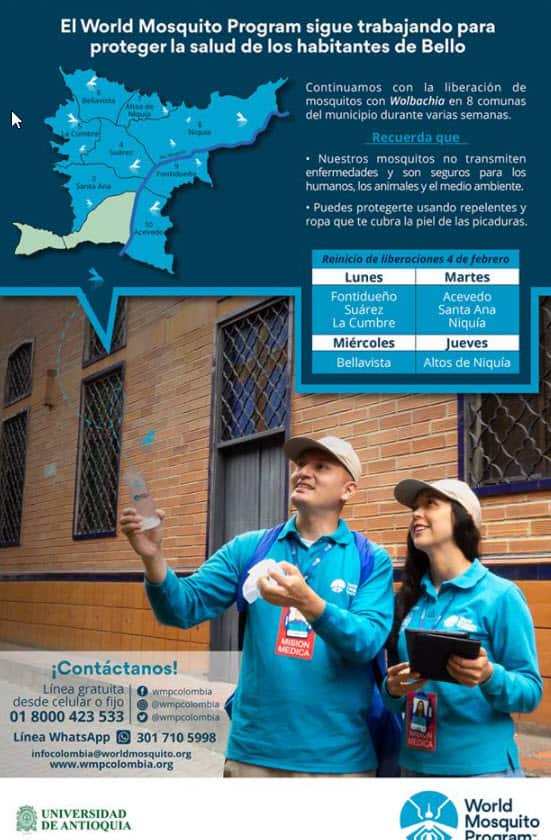
The Wolbachia-carrying mosquitoes are released in areas where these mosquito-borne viruses (dengue, Zika, chikungunya and yellow fever) are endemic.
“For about four months, once a week, we walk or drive through the suburbs releasing the infected mosquitoes. The goal is to create a new population of dengue-free mosquitoes.
“Cases of dengue and chikungunya fell by more than 70% in 2018 - 2019 among 100,000 people in two different areas of Rio de Janeiro following the release of the mosquitoes in these areas,” said Dr Luciano Moreira, from Fiocruz Foundation and Program Lead of the World Mosquito Program in Brazil.
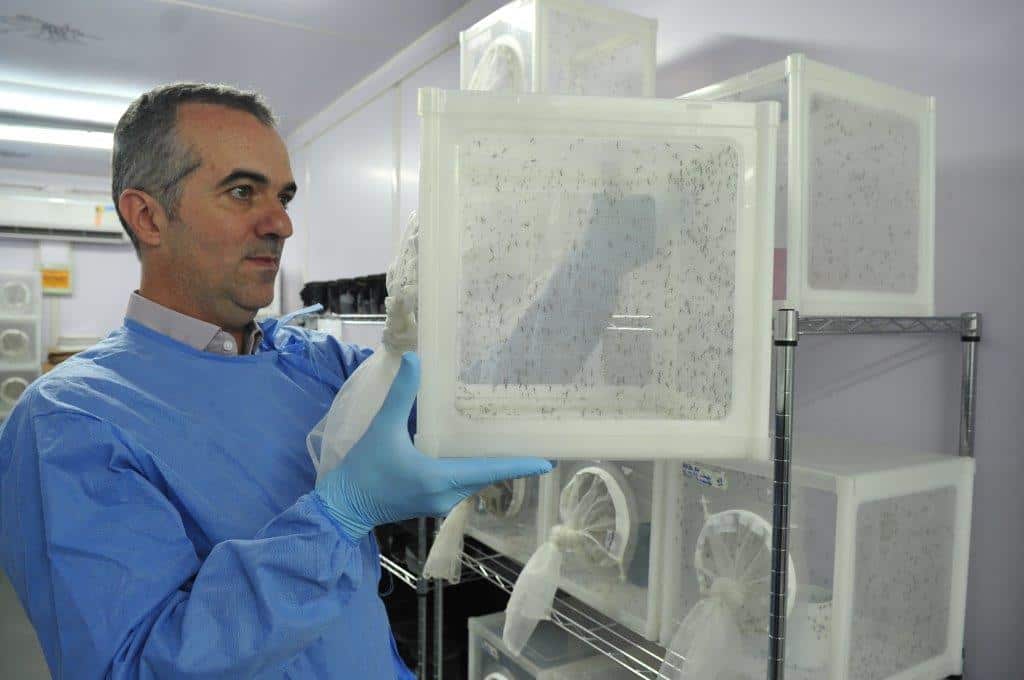
Dr Moreira was in Brisbane in 2011-13 and saw firsthand the ‘Eliminate Dengue’ program launch. An international collaboration of scientists and researchers led by Professor Scott O'Neill, Monash University, created the Wolbachia Method and won the prestigious Eureka Prize for Infectious Diseases Research in Australia in 2013.
Since then Dr Moreira has successfully applied the Method, with the support of the World Mosquito Program, in Brazilian municipalities.
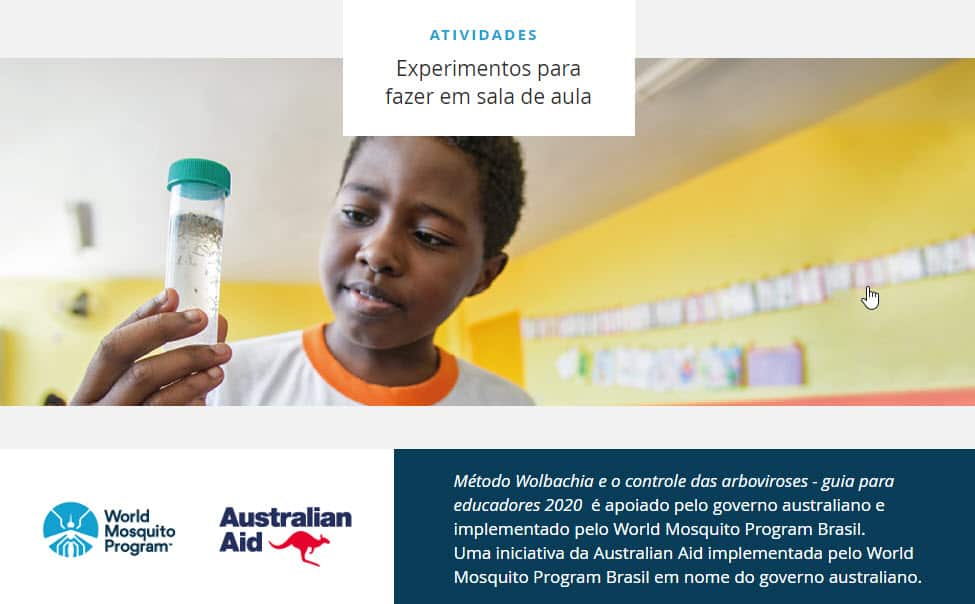
But the decade-long partnership with Australia hasn't ended, Dr Moreira recently launched the Educator's Guide wolbitonaescola.org, with Direct Aid Program support – a small grants program funded from Australia's aid budget.
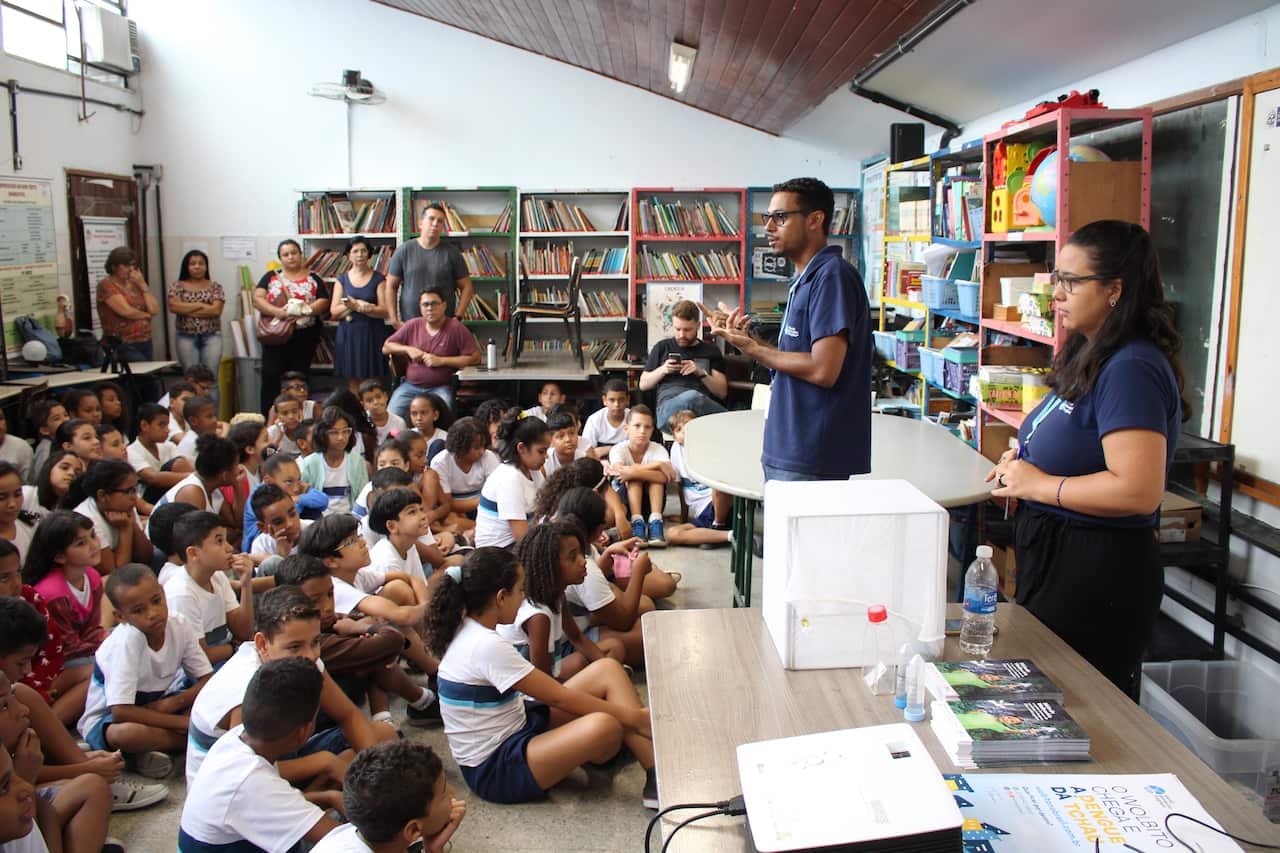
The Educator's Guide aims to expand the knowledge of school-age children and young people about the Wolbachia Method.
It is part of a dengue awareness campaign for teachers and students that reached more than 5,000 children in public schools. An itinerant exhibition is scheduled at schools in Belo Horizonte, capital city of Minas Gerais, a large inland state of southeastern Brazil.
It is important to make the population aware of the method, and we are doing this by training teachers so that they can pass this knowledge on to students and those to their families
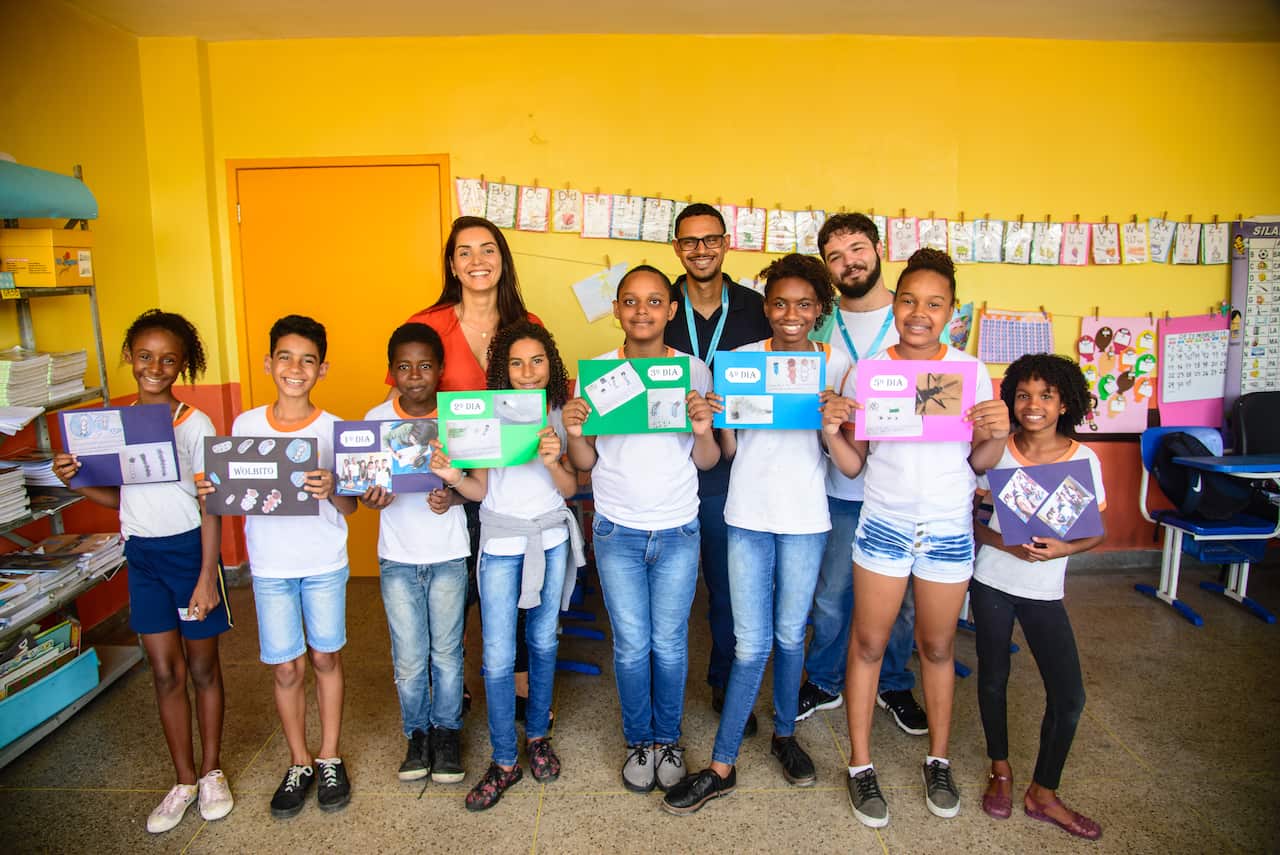
"One of the fundamental points for the success of the initiative is the engagement of the population," says Dr Moreira. “Families are informed about the release of the mosquitoes and how this will help in the control of dengue in their neighbourhoods.”
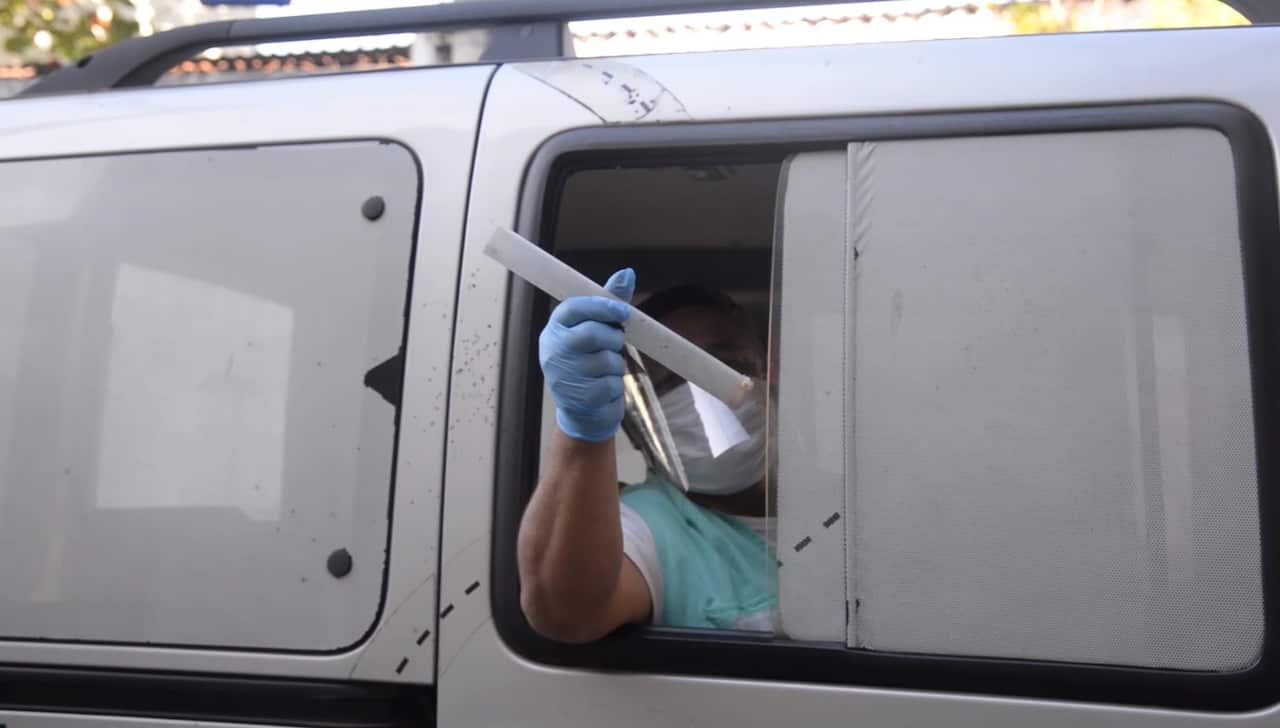
The Educators' Guide is easily accessible and can be translated into several languages.
Today, Brazil has the greatest number of dengue cases in the world. Brazil has also been severely affected by outbreaks of Zika virus and chikungunya in the last few years. The Wolbachia Method aims to change these numbers.
The Direct Aid Program (DAP) is a grants program funded from Australia's aid budget. It has supported five humanitarian initiatives in Brazil in 2020: the Wolbachia Method/WMP, Amazon 4.0, SOS Favela/Viva Rio, Life after Prison/Igarape Institute, and the Venezuelan Migration Crisis in Pará/Caritas.
Folow SBS Portuguese on Facebook, Twitter and Instagram