

Tasmania is actively seeking skilled migrants through nominated pathways. But for many of those building a new life there, it hasn’t gone quite as expected.
According to the Activate Australia’s Skills campaign, over 250,000 permanent migrants in Australia with qualifications in licensed professions are working below their skill level, despite significant skill shortages in our workforce.
Their latest report found that the process to get overseas skills and qualifications recognised in Australia is "expensive, confusing, time-consuming and often unfair".
Rabea was an obstetrician in a gynaecology department in Bangladesh.
She told SBS Examines, after moving to Australia, she has struggled to secure a job in the health sector. She said her lack of local experience might be one of the possible reasons.
"I tried in [Launceston General Hospital], not as a doctor because I can't do that, because I don't have license still. So I tried in administration, in different GP centres as an assistant. I also tried in a chemist shop."
But Rabea was never even offered an interview.
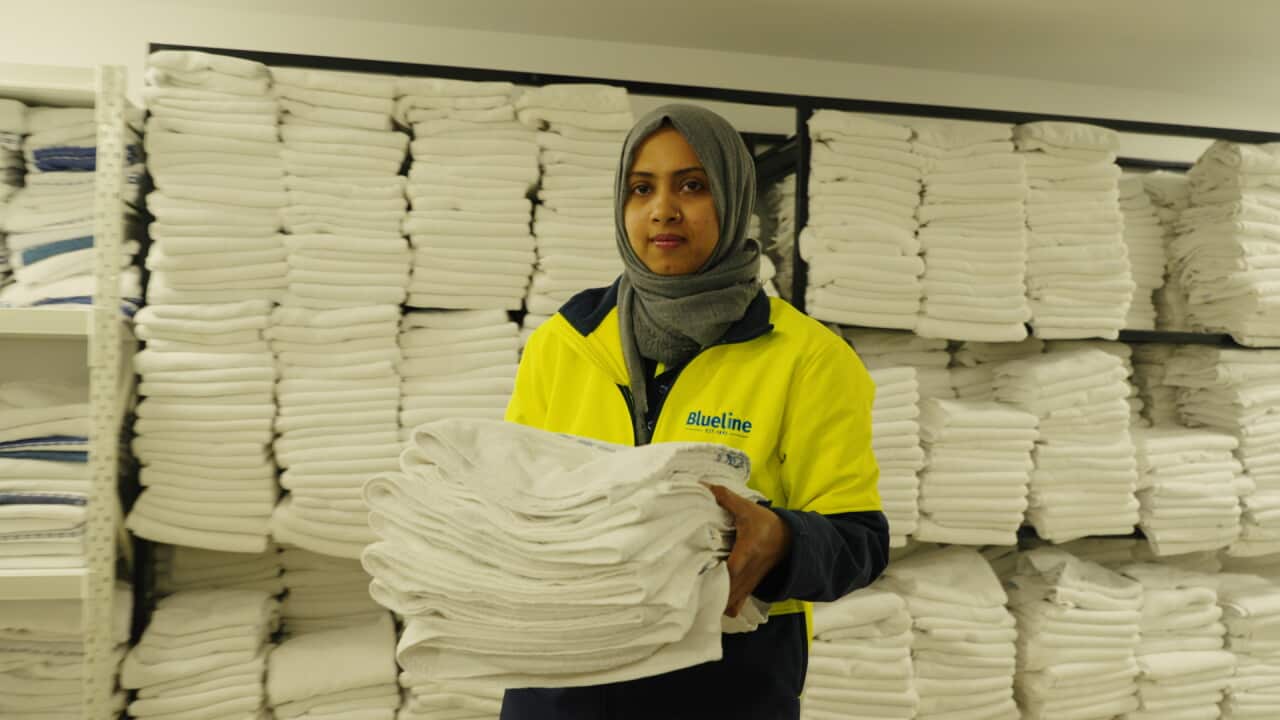
She's now finishing her masters degree in laboratory medicine, hoping this will soon help her secure a job in her sector. In the meantime, she's working at Blueline Laundry, a job-centric social enterprise employing many migrants in the same situation.
In late 2025, the Federal Government announced an investment package of over $85 million over the next four years for the Migration Skills Recognition Reform.
But businesses and unions say more should be done to help qualified people work in their professions.
In this episode, SBS Examines hears about some of the challenges migrants face in the Australian job market, and an initiative trying to help.