The countdown to India’s historic mission to land on moon has begun.
Chandrayaan-2 (moon-craft in Sanskrit) is on course to land on the South Polar Region of the moon on September 7, India’s Space Research Organisation said on Monday.
On Saturday, the mission’s 1,471-kilogram lander – Vikram, accompanied by the 27-kilogram rover, Pragyan will separate from the Orbiter, perform a series of complex manoeuvres comprising rough braking and fine braking before it finally lands near the South Pole.
“The soft landing of Chandrayaan-2 Vikram lander on the lunar surface is scheduled between 1:30 am to 2:30 am on Saturday, September 07, 2019. This will be followed by the Rover roll out between 5:30 am to 6:30 am,” ISRO said.
Dr K Sivan, Chairman, ISRO has termed it as ’15 terrifying minutes’ and said the success of this complex mission depends on the highly demanding task of soft landing on the lunar surface.
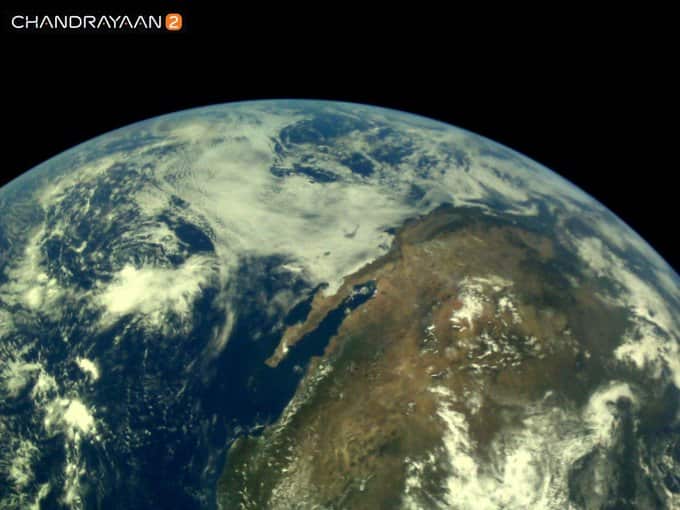
Since its launch, ISRO has regularly updated the mission’s progress with detailed images and information.
‘Since its launch on July 22, 2019, by GSLV MkIII-M1 vehicle, all systems onboard Chandrayaan-2 spacecraft are performing normal,’ ISRO said in August.
On Monday, ISRO said all the systems of Chandrayaan-2 Orbiter and Lander were healthy.
"The Vikram Lander successfully separated from Chandrayaan-2 Orbiter at 1315 Hrs IST today (September 02, 2019). The Vikram Lander is currently located in an orbit of 119 km x 127 km. The Chandrayaan-2 Orbiter continues to orbit the Moon in its existing orbit."
If all goes according to plan, India will be the world’s fourth country to land on the moon following the U.S., China, and the former Soviet Union.
Here’s how you can watch the landing live:
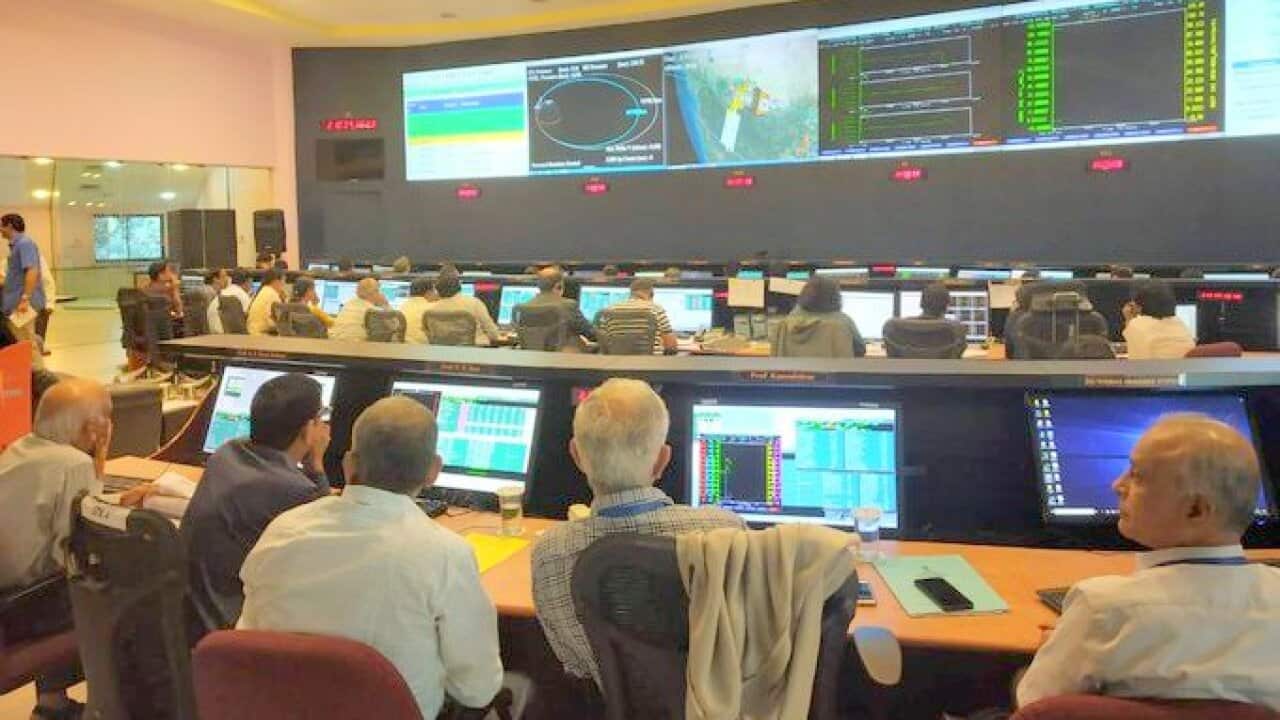
ISRO will telecast the updates on its website, isro.gov.in from its control room at the Satellite Control Centre (SCC) in Bengaluru. The same will be streamed live on India’s press information bureau’s YouTube channel.
Image
Why is India going to the moon?
The Moon is the closest cosmic body at which space discovery can be attempted and documented.
‘It is also a promising testbed to demonstrate technologies required for deep-space missions,’ ISRO says.
‘Chandrayaan 2 attempts to foster a new age of discovery, increase our understanding of space, stimulate the advancement of technology, promote global alliances, and inspire a future generation of explorers and scientists.’
What is the objective of Chandrayaan 2?
ISRO wants to conduct further studies on the extent of water molecule distribution on Moon’s surface after Chandrayaan-1 discovered the presence of water on the moon.
‘Extensive mapping of the lunar surface to study variations in lunar surface composition is essential to trace back the origin and evolution of the Moon.
‘Evidence for water molecules discovered by Chandrayaan-1, requires further studies on the extent of water molecule distribution on the surface, below the surface and in the tenuous lunar exosphere to address the origin of water on Moon.
The lunar South Pole is especially interesting because of the lunar surface area here that remains in shadow is much larger than that at the North Pole. There is a possibility of the presence of water in permanently shadowed areas around it. In addition, South Pole region has craters that are cold traps and contain a fossil record of the early Solar System,’ ISRO says.
Tune into SBS Hindi at 5 pm every day and follow us on Facebook and Twitter




