
There are calls for Australian health professionals to become more familiar with the cultural custom of bed rest after birth, which is commonly practiced in China and the Indian subcontinent. A first-of-its-kind study by Sydney's Westmead Institute for Maternal and Fetal Medicine reveals migrants in Australia are continuing the tradition, but some may not be aware of the potential risks involved.
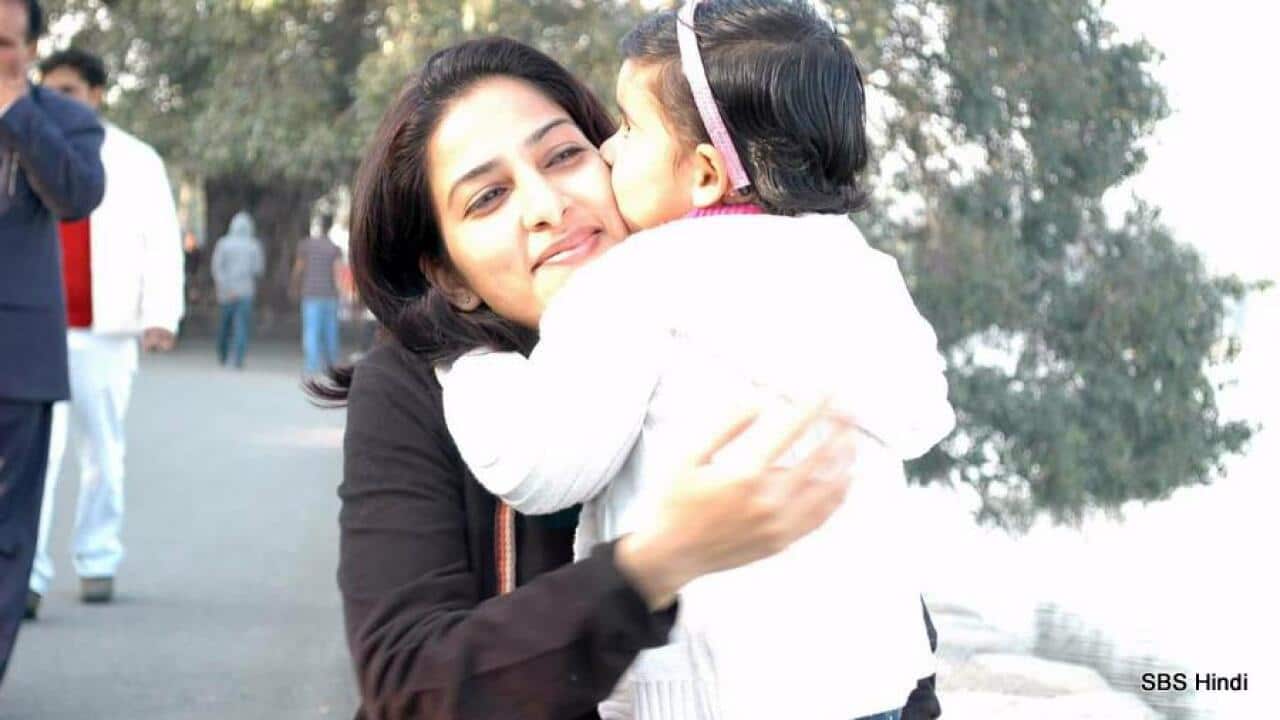
Mother of two, Shailja Panthri gave birth to her first son in India and her second in Australia.
For her firstborn child, Rudransh, now aged four, Ms Panthri says she engaged in a common cultural tradition that involves bed rest in the immediate period after giving birth and a carefully tailored diet.
"You have to stay at home for 40 days and around 11 days you have to have complete bed rest if possible," she said. "It's traditional belief that even after giving birth a woman is prone to getting an infection and many health problems can arise like spine and back pain, so there is a strict diet you need to follow and you need to keep yourself warm and follow a diet that is warm enough."
Ms Panthri migrated to Australia two years ago and gave birth to her second son Vian just two months ago.
This time, though, she says she abandoned the cultural practice after she became aware of the potential risks associated with immobility.
"The doctors ask you to move because I had a c-section, they advised me to move as much as possible to avoid blood clots so I've not been doing bed rest."
Venous thromboembolism, known as V-T-E, is a condition caused by blood clots and is one of the leading causes of preventable maternal deaths in Australia.
Though it's rare, there are warnings that immobility after giving birth increases the risk of V-T-E, particularly in cases where women have had caesareans.
Bed rest after birth is common among Chinese, Indian, Sri Lankan, Pakistani and Bangladeshi communities.
The first-of-its-kind study has looked at the extent in which migrants in Australia are observing the practice in order to determine how health professionals can understand and accommodate their needs.
The research was conducted by the Institute for Maternal and Fetal Medicine at Sydney's Westmead Hospital.
Midwife Sarah Melov was the lead author.
"We wanted to know if they did do it and what it meant when they said they were rested, how immobile were they? Did you change your baby's nappy? Did you do any housework, did you do any cooking, did you ever leave the house to really gauge how immobile people were and we found it was a highly practiced tradition."
Researchers interviewed 150 new mothers in Western Sydney, an area with a high proportion of migrant communities.
It found 85 per-cent of participants, mostly from Chinese and Indian backgrounds, had rested in the home in the 30 days after giving birth, while more than half had practiced complete bed rest.
Ms Melov stresses there are benefits to the practice.
"I think it would be very good for breastfeeding and for that bonding time, if these women have just their baby to look after, I think it's wonderful and not the pressure of trying to do a million things at once, which often women...there's a cultural expectation for women to be super-women and I think it's lovely for them to have just that time to concentrate on looking after their baby."
But she warns of the risks, particularly due to the increasing rates of c-sections in Western cultures.
"So for everybody who's had a caesarean section or had a very long labour, they're more at risk. So if you practice postpartum rest for cultural reasons then there is a risk of venous thromboembolism."
Mother Shailja Panthri says while she was made aware of the potential dangers, that's not the case for others in the community.
"I don't think most of the people are aware of the risk, so if you were doing a complete bed rest, there is a chance of blood clots. I don't think most people are aware this. Even in hospital, I was talking to some ladies, they were planning to have a complete bed rest for one or two weeks after a c-section, which is not advised."
Ms Melov says the study's findings have highlighted a need for more education around these cultural practices.
She emphasises that women shouldn't be discouraged from the tradition, but rather be informed of how it can be adapted to avoid health risks.
"Health professional should be aware of the different care or advice they need to give some cultural groups. So maintaining good hydration by drinking plenty of drinks, moving around it's generally preventable. We would advise health care professionals and women from these communities t to support these cultural practices, we want to support people maintaining their cultural links because this is really important particularly in families, to maintain that link to their cultural heritage."
Indian Australian Geetanjli gave birth to her second child in Melbourne, Australia. She says after a C-section birth of her son she was not happy with the midwife. She says she was encouraged by her midwife to do most daily routine chores by herself.
This was a very different experience for her compared to back home India.
However, she says when her doctor explained the necessity to move around after the birth she understood the concept.