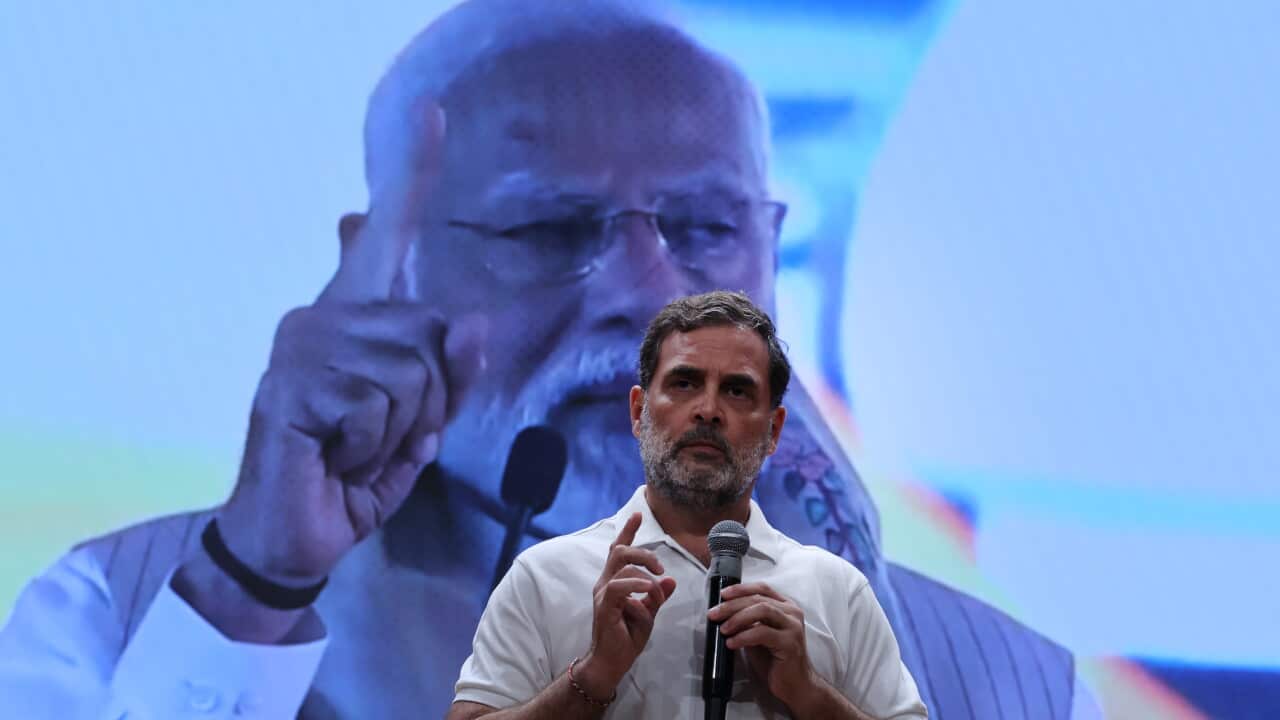


Narendra Modi was sworn in as India's prime minister for a second term on Thursday. While the Indian Prime Minister is yet to choose his foreign minister, SBS Hindi discusses what will be the key issues and challenges for the Modi government in regards to India's foreign policies with Gateway House's Fellow for International Security Studies Programme, Mr Sameer Patil.
Narendra Modi was sworn in as India's prime minister for a second term on Thursday. While the Indian Prime Minister is yet to choose his foreign minister, the Prime Minister himself has played an important role in shaping India's foreign policy and has greatly influenced India's status in the world.
Sameer Patil, a Fellow, International Security Studies Programme, Gateway House, who in his previous role, has served as Assistant Director at the National Security Council Secretariat in Prime Minister’s Office, New Delhi, points out how Narendra Modi’s qualities of thinking out of the box, his ability to develop personal relationships with world leaders and his vision of connecting with the Indian diaspora abroad has influenced India’s status in the world.
“Mr Modi thinks out of the box. His unplanned visit to Pakistan to meet former Prime Minister Nawaz Sharif or arranging to meet the Chinese President Xi Jinping in an informal meet indicate how he thinks completely out of the box to build these relationships.
“Also how he has been able to connect India’s foreign policy with economic trade and his ability to connect with the diaspora where Indians feel proud of India and want to contribute in some way back to the country.
“The third quality is how he is able to build personal relationships with world leaders. That is influencing India’s status in the world,” Mr Patil says.
In this podcast, we also discuss India’s relations with Pakistan and what will India’s focus be in regards to foreign policy, in coming days, with Mr Patil, who handled counter-terrorism and regional security desks and has written extensively on various aspects of national security including counter-terrorism, cybersecurity, Kashmir issue, India-Pakistan and India-China relations.