


Two weeks after major floods hit Aceh, North Sumatra, and West Sumatra in late November, life in the affected areas has not returned to normal. Aceh Tamiang District in Aceh Province is one of the areas with the most severe conditions.
According to Imran Sakwan Hutagaol, an Aceh Tamiang resident who actively helps, the weather has been quite supportive lately, with the last rain falling about three days ago. However, the main obstacle that residents now face is the complete shutdown of electricity over the past two weeks.
😞 Field Conditions and Logistics Constraints
Imran, who was moved to open donations for victims, witnessed first-hand the impact of the flash floods. He noted that at various points, puddles and thick mud were still abundant. On the other hand, the mud that begins to dry up actually creates thick dust on the streets, creating a new nuisance for road users.
Infrastructure and environmental recovery is slow. Videos on social media showed cars and carcasses of cattle (such as cows and buffaloes) still not evacuated as of this weekend. Vital public facilities, such as markets, are still submerged in mud and cannot yet be functional.
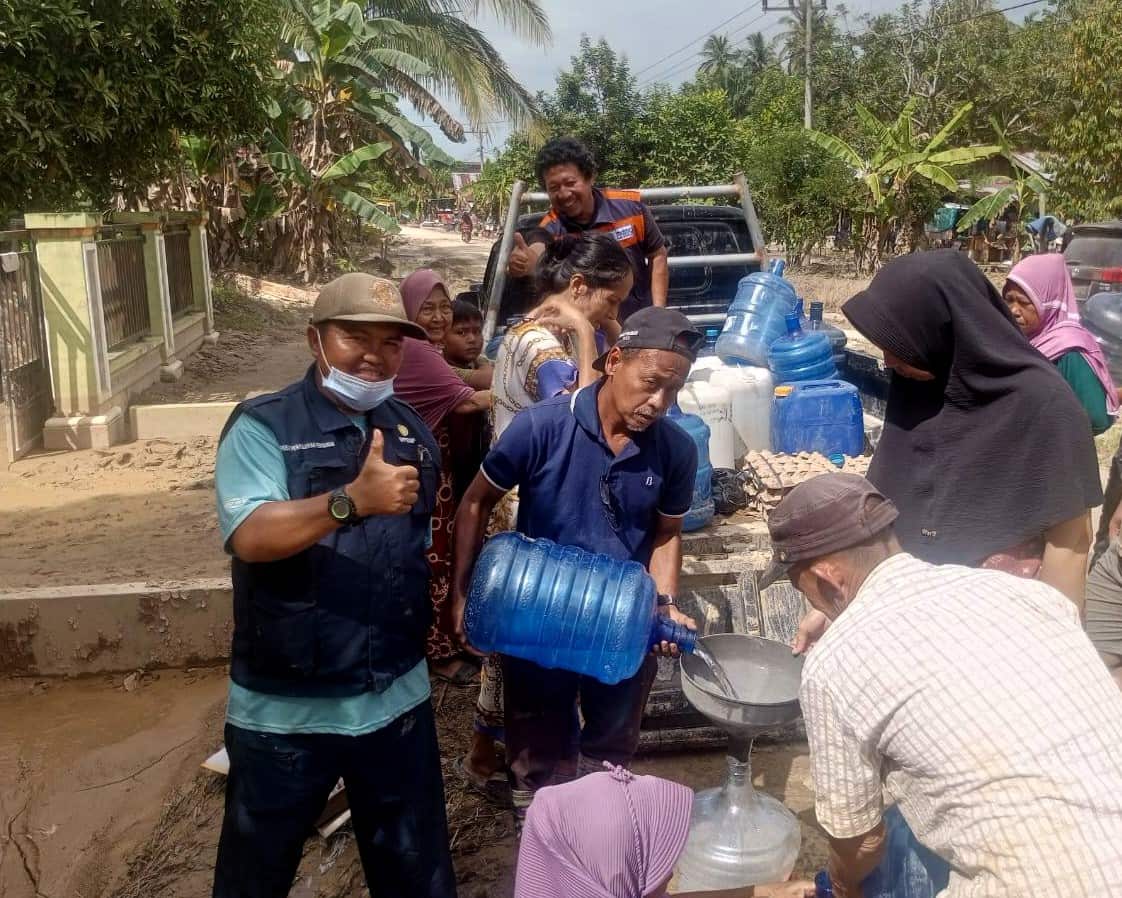
The biggest problem that victims now face is the scarcity and high prices of basic necessities:
- Clean water and staple foodstuffs are very difficult to obtain.
- If anything, the price is already unaffordable for most victims.
Imran explained that the current focus of aid is still focused on providing basic human needs. Evacuation of vehicles or handling of dead livestock may have to wait, as the owners themselves are still struggling to find decent shelter for themselves and their families.
💡 Economic Impact and Transaction Limitations
The flood disaster this time, as Imran recalled, had a greater impact than the great post-tsunami flood of 2004. The economic impact is particularly pronounced:
- The center of the economy is still paralyzed. Buying and selling activities can only be carried out at certain points.
- The shops have not been able to operate due to submerged mud and the absence of electricity.
The two-week blackout also crippled the modern payment system. Electronic transactions and transfers could not be carried out, and ATMs did not work. As a result, victims do not have access to cash to buy necessities. Imran himself had to rely on the trust of the seller to be allowed to delay payment while meeting the needs of the victims.
The situation is aggravated by the limitation of goods. Merchants are forced to limit purchases (e.g. rice or eggs) because they also have to consider meeting needs in other regions.

📢 Prioritization of Assistance and Access to Remote Areas
Based on his experience, Imran insists that parties who want to help victims in Aceh Tamiang and surrounding areas should bring their own basic necessities from outside Aceh. The most prioritized need is food or goods that can be directly consumed.
Imran also highlighted the problem of aid distribution:
“Aid delivery is more concentrated in easily reachable points. In fact, there are many areas in the interior, which are difficult to access, whose citizens also need help.” To address this access problem, Imran implemented a solution by asking representatives of residents from remote areas to come to relief posts.
Today, many victims whose homes were damaged or lost choose to evacuate to the homes of relatives, although conditions there are also less than ideal due to lack of clean water and dying electricity. Meanwhile other victims were forced to survive in their damaged, mud-filled homes because they had no other escape options.
Listen to SBS Indonesian every Monday, Wednesday, Friday and Sunday at 3pm.
Follow us on Facebook and Instagram, and don't miss our podcasts.