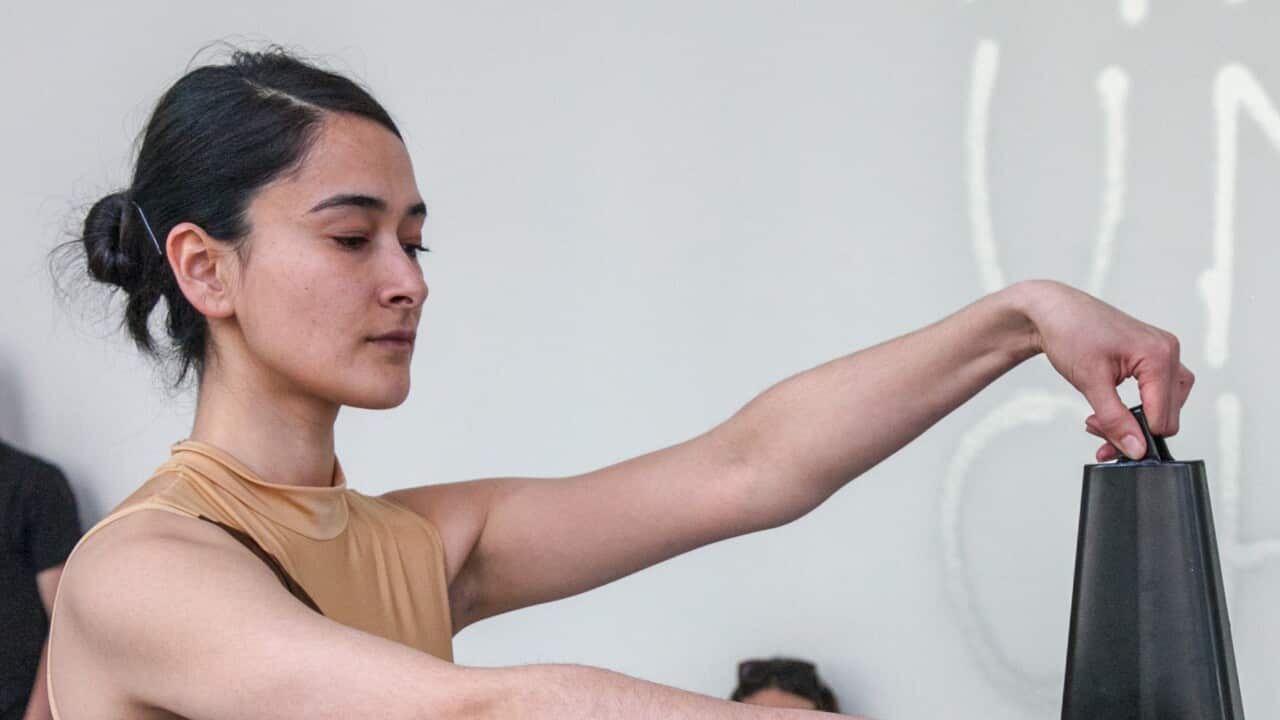
Sriwhana Spong adalah seniman berdarah
Bali dan Selandia Baru yang kini tinggal
di London. Ia bekerja di berbagai medium,
yaitu film, patung, tekstil, dan
pertunjukan dengan praktek yang
mengeksplorasi bagaimana pengetahuan
dibentuk, dibingkai, dan dirasakan. Kini,
eksibisinya yang berjudul "HA HA HA"
dipamerkan di Monash University Museum of
Art, MUMA, dari 24 April hingga
28 Juni 2026. Ini adalah pameran besar
pertamanya di Australia yang
menghadirkan karya-karyanya dari berbagai
periode bersama dua karya baru yang dibuat
khusus untuk pameran ini. Apa yang
membuat pameran ini begitu pribadi
baginya? Apa yang bisa dilihat pengunjung
di dalam pameran ini? Berikut Sriwhana
-menjelaskan.
-My name's Sriwhana Spong. I'm from
I am an artist currently based in London,
and I work across film,
and I'm just here at Monash University
opening an exhibition called "HA HA HA" at
-MUMA. My father is from Bali.
-Saya bertemu Sriwhana pada hari pembukaan
pameran Kamis, 23 April lalu. Ketika
ditanya tentang perasaannya, ia mengaku
masih mencerna semuanya. Sriwhana
mengatakan bahwa ia baru selesai memasang
karya pagi itu dan rasanya seperti mimpi
melihat hasil kerjanya selama lebih dari
setahun akhirnya menjadi milik publik. Di
malam pembukaan itu, ada penampilan dari
para musisi yang memainkan alat musik
buatan Sriwhana.
I'm still trying to work that out. I just
finished installing this morning. So it's
quite surreal when you see everything
you've been working on for over a year.
You've seen it, you know, you've been
producing everything, it's been in your
studio, and then you start kind of putting
it into the exhibition space and it
instantly becomes something else and it's
this very strange feeling where you're
looking at all these things you've made
and they're now kind of about to become
public and it's actually quite terrifying.
Uh, currently while we're talking, the
musicians are performing, practicing,
sorry. They're gonna be doing a
performance later at the opening and
they're practicing on some of the
instruments that I've made as part of a
project, and that actually made me feel
really comfortable hearing the sound being
produced and seeing all the activity, and
-yeah, that felt really, really good.
-Ketika ditanya apa saja yang dapat
disaksikan pengunjung di pameran ini,
Sriwhana menjelaskan bahwa karya pertamanya
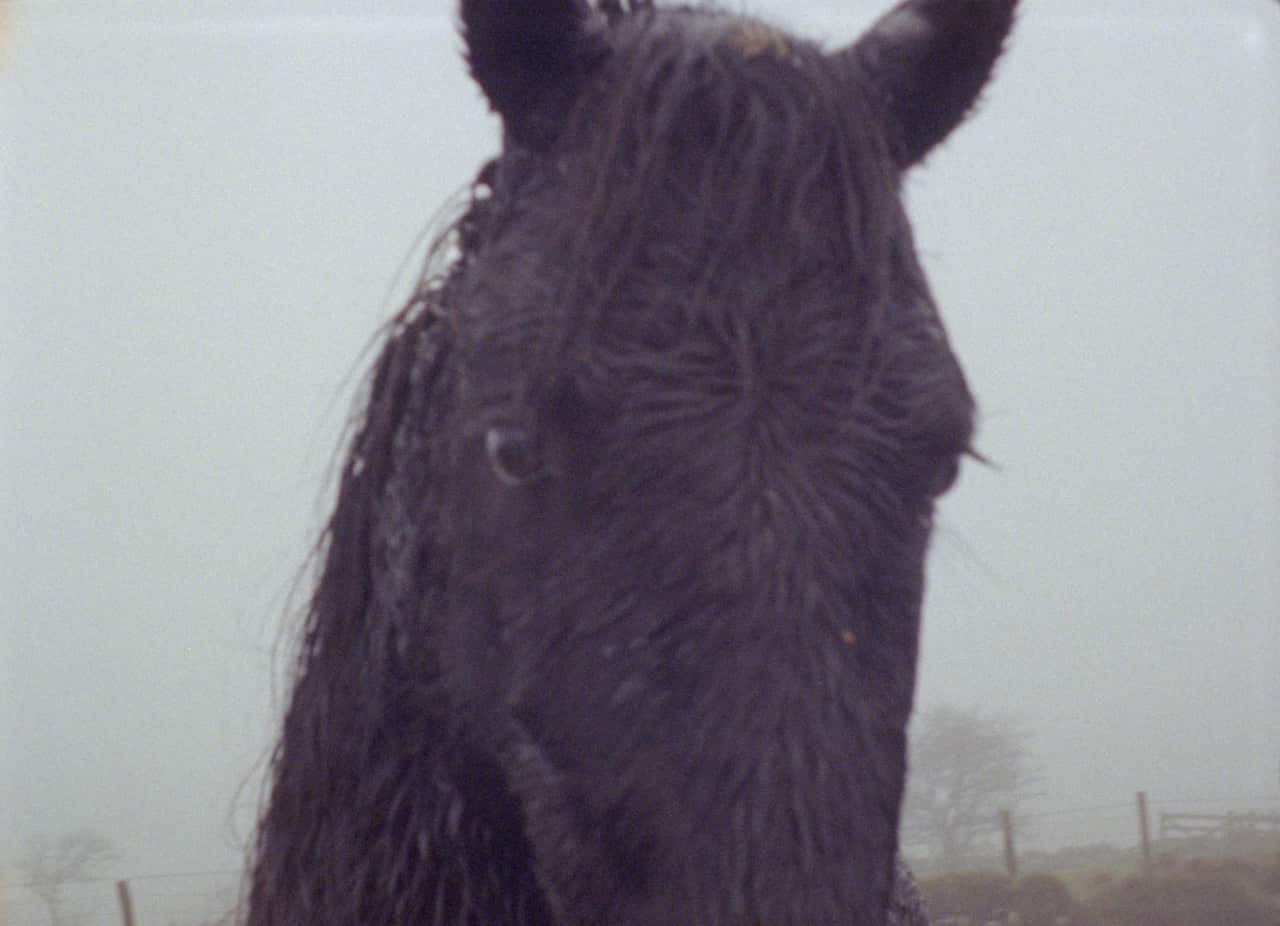
yang menyambut pengunjung adalah film
"The Painter Taylor" yang difilmkan di
Bali. Film ini mengeksplorasi sebuah
lukisan karya kakeknya, pelukis Bali dari
Ubud. Tumbuh di Selandia Baru, Sriwhana
bertemu keluarga ayahnya pada saat remaja,
dan saat itulah ia pertama kali tahu
bahwa ia memiliki kakek seorang seniman.
Film ini mendokumentasikan proses penemuan
kembali keluarga dan warisan seninya.
So the first work that you see is a film
called "The Painter Taylor," and it's a
work that I made in 2018. I filmed it in
Bali. It's a film that
explores a painting by my grandfather who
was a Balinese painter of the Sanur
I Gusti Made Rundu. Yeah, so the painting
has been sitting in my family home for a
long time, and I grew up in New Zealand,
so I didn't meet my father and my brothers
and sisters there until I was around
fifteen and eighteen. So for me, getting
to know my family, it's been this really
slow, wonderful process. But yeah, it's
like learning about a family in this very,
yeah, a different way to when you grow up
with a family. And I remember the first
time I met my dad and I visited the family
home in Sanur and he showed me this
painting and he said, "Oh, this is by your
grandfather." And at that time, I was
eighteen. I was just starting art school.
I didn't know that, you know, I had a
grandfather who was an artist and, and I
didn't really ask any more questions. So
when I went to make this film in Bali, I
wanted to find out more about this one
painting.
I found out he actually had paintings in
the Ubud Museum and yeah, all of these
things kind of began to be revealed, and
it was a really wonderful way of getting
to know more about my family, getting to
know about my grandfather, getting to know
about his style of painting. And the
film, yeah, documents this discovery.
Selain dari film tersebutPameran ini
memuat sebuah gambar yang dibuat Sriwhana
bersama seorang pelukis dari Bali saat ia
belajar motif tradisional Kamasan bernama
aun-aun, yaitu titik-titik kecil yang
mengisi ruang di antara figur dalam
lukisan. Pameran ini juga menampilkan film
baru, instrumen musik, gambar arang,
serta karya tekstil yang diwarnai dengan
minuman sehari-hari seperti Coca-Cola,
-Fanta anggur, dan teh.
-So there's also drawing that I did with a
painter in Bali called Ketut Murki, and
it's, it's more of an exercise. I went to
Bali last year to learn to paint this
traditional Kamasan painting motif called
the aun-aun, which is like these little
dots that are found between all of the
figures and paintings. And so I wanted to
learn more about this motif and I wanted
to learn how to paint it. So that's in the
exhibition. And then there's also a new
film that I made. There are musical
instruments, there's charcoal drawings,
there's fabric works that are dyed in
Coca-Cola, Fanta, grape Fanta, and
-tea, kind of everyday drink.
-Salah satu karya istimewa dalam pameran
ini adalah gamelan Digul yang berusia 100
tahun. Instrumen ini dibuat pada tahun
1926 oleh seorang musisi dari Surakarta,
Jawa, yaitu Bapak Ponco Pangrawit
yang menjadi tahanan politik Belanda di
sebuah penjara di Sungai Digul di Papua
Nugini. Ia merangkainya dari benda-benda
seadanya seperti panci timah dari dapur
dan logam dari rel kereta api. Bagi
Sriwhana, benda ini berbicara tentang
ketahanan dan seni yang lahir dari
keterbatasan.
But also the very, very special thing in
the exhibition that I'm just really, I
feel very honored that to have included in
the show is the Gamelan Digul. And that
was made, it's 100 years old, and it was
made by a Javanese
musician. He was a political prisoner
imprisoned by the Dutch for revolutionary
activities. And he was interned in a
prison camp. And it was there that he made
the Gamelan Digul. And it's this
incredible object that was made using
whatever was around. So there was like, it
has pans, tin pans from the kit, from
with. There's metal taken from railway
tracks. There's, it's just this very
incredible object that says so much about
resilience, art in the face of, you know,
restriction. And yeah, and we're very,
very lucky to be able to show it.
Keputusan menampilkan gamelan Digul dalam
pameran ini datang dari Sriwhana sendiri.
Saat kunjungan ke MUMA, ia melihat
instrumen itu dipajang dalam kotak kaca di
universitas dan langsung ingin agar
masyarakat dapat melihat bahkan
mendengarnya dimainkan. Karena sangat
rapuh, gamelan ini tidak bisa dimainkan
-terlalu sering.
-It's my choice.
came and did a site visit and I saw it and
I was just, yeah, really blown away by
it. And it hadn't been, it hasn't been
played in like a long time. Yeah, I
discovered it. I came and did a site visit
and I,
I was told about it and I went to look for
it and it was on display in the
university. And I, yeah, as soon as I saw
it, I kind of wanted to take it out of
this glass display case and have it where,
you know, public could see it, people
could possibly play it. I think it's like
such a shame to have instruments like, you
know, I understand they need to be
protected, but it's, it's a nice
opportunity to, to, for people to be able
to hear it. It's very fragile, so it can't
be played all the time. Yeah, she's
really amazing. Yeah.
Selanjutnya, Sriwhana menjelaskan bahwa
karya-karyanya berangkat dari pengalaman
pribadi dan perjumpaan dengan hal-hal yang
ingin ia pahami lebih dalam. Ia kemudian
melengkapinya dengan berbagai bentuk riset
seperti eksplorasi material bacaan atau
percakapan dengan orang lain. Baginya,
penting untuk menghadirkan beragam cara
-memahami dunia dalam karyanya.
-I draw from personal experience and I'm
interested in different types of
knowledge. So personal experience is one
I often start with that or I start with an
encounter with something that I want to
know more about. And I try and understand
what I felt at that time. And then I also
will do other kinds of different types of
research, like material research or
reading or talking to people. So I like to
bring in, yeah, the different ways that
we know what things are in the world or
what the world is.
Salah satu bagian dari pameran ini adalah
orkestra instrumen buatan Sriwhana sendiri
yang ia sebut sebagai gamelan pribadinya.
So yeah, there are some works that are, so
for example, the instruments that I make,
it's an ongoing project that I started in
2016, where for each body of work, I'll
make an instrument and sometimes, and
there's about, I think, 12 instruments so
far. And it's like an ongoing project and
each instrument is named after somebody.
Saat ditanya mengapa ia bekerja di medium
seperti film, patung, tekstil, dan
pertunjukan, Sriwhana mengatakan hal itu
berakar pada latar belakangnya sebagai
penari. Dalam dunia tari, seperti dalam
karya Martha Graham dan Merce Cunningham,
tidak ada pemisahan antara tubuh, objek,
kostum, panggung, musik, dan koreografi.
Semuanya saling beresonansi. Ia sering
memulai dari film, tetapi gegesan patung,
material baru, atau pertunjukan biasanya
muncul di sepanjang prosesnya.
I think it's because I come from a dance
background originally. And, you know, as a
dancer, when I was like looking at images
of dance, you know, Martha Graham, Merce
Cunningham, there's no separation between
body and object and costume and set and
music
and choreography and score. Like they all
interweave and they all resonate
between each other and one can't do
without the others. Although, you know,
when you have Merce Cunningham, you have
these amazing silent dancers that don't
have music, but then the sound is the
footfalls. So there's still, you know, I
really think that's my DNA. Like I, in
this very basic way, it's like my
ideas tend to resonate in this very, in a
similar way. Like I, so this project also
has, you know, it has a sound element. I
had, I commissioned an instrument to be
made based on the ideas that I was
thinking of for the exhibition. And
yeah, it's, you know, I often start with
film, but as I'm filming ideas, like
sculptural ideas will come, material
ideas, things I want to try out with
material. And then, you know, sometimes
the performance might emerge or it's, I
wish I could just do one medium. My life
would be so much easier.
Demikian tadi pendengar laporan saya, Anne
Parisianne untuk SBS Indonesian mengenai
pameran yang diadakan oleh seniman
Sriwhana Spong.
END OF TRANSCRIPT