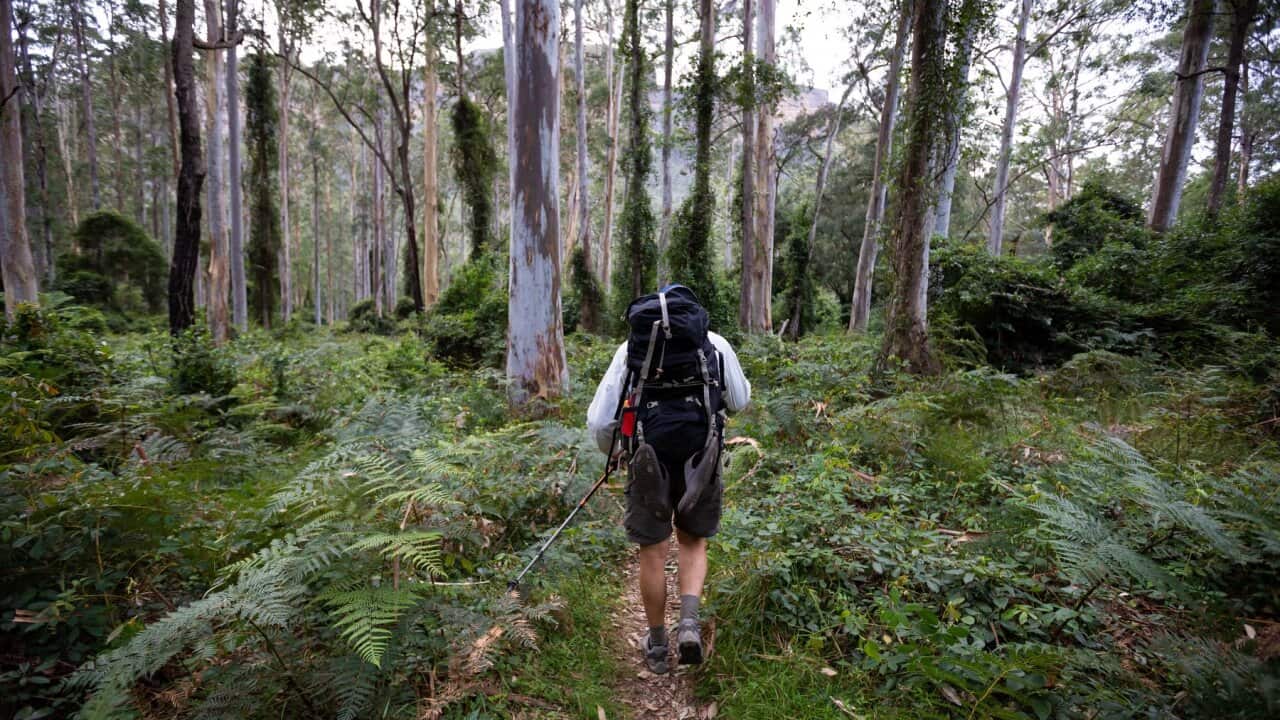
The death of a 27-year-old French hiker in Italy this month, who made an emergency call nine days prior, has raised questions about authorities' ability to locate emergency calls made by mobile phones.
In a call to emergency services on the morning of Friday August 9, Simon Gautier said he had broken his legs after falling into a ravine "in the middle of nowhere", adding that he was "dying of pain".
“I don't know where I am, can you locate me? I was walking and I fell. I am alone, I don't remember where I started," he said to the emergency operator as he lay at the base of a cliff near Naples.
Various techniques were used to find him: a search on foot, sniffer dogs, drones, helicopters and patrol boats. The identified area was 143 square kilometres wide.
His body was found after nine days, next to his hiking backpack, and the tragedy has sparked debate around Italian authorities' ability to locate emergency calls, and similar discussions have arisen in Australia when bushwalkers have gone missing here.
Several countries around the world have implemented Advanced Mobile Locator (AML) technology, a system that uses GPS technology to locate emergency callers within a five-metre radius in real-time.
However, this technology is not available in Australia yet and is available only in certain parts of Italy.
While work is being done to improve emergency geolocation technology in both countries, two apps could be used to save your life, reports SBS Italian. They are:
Image
How emergency operators can locate you in Australia
In Australia currently, when someone dials 000 from a mobile phone, the exact location is not automatically sent to the operator.
Instead, a system introduced in 2015 called Push Mobile Location Identification (Push MoLI) identifies broadly the caller’s location based on the proximity to telecommunications cellular towers and automatically sends it to the operator.
The Push MoLI only provides an area within which the caller is located and the accuracy of location largely depends on the proximity to, and the number of, nearby cell towers.
So while in urban areas this information can be very accurate, in remote regions such area can have a radius of up to 100 kilometres.
According to a review of the Emergency Call Service by the Australian Communications and Media Authority (ACMA) released in October 2018, Telstra is transitioning to an IP-based emergency call platform to introduce technology such as advanced mobile location (AML).
The report suggests also SMS or instant messaging 'will be introduced over time'.
Emergency Plus
In 2014, Australia’s Triple Zero Awareness Group launched Emergency Plus as a temporary fix.
The Emergency Plus app, which is available to download free of charge from emergencyapp.triplezero.gov.au, has already saved many lives in Australia.
Once downloaded, the app uses a mobile phone’s internal GPS to calculate latitude and longitude and show them on the screen.
When prompted, the emergency caller can read their coordinates to the operator, allowing them to pinpoint your location.
It is important to note that the app is only useful when it’s possible to call 000.
Nonetheless, some limitations have been pointed out. As of June 2017, only about 6.5 per cent of Australians had the app and the process of reading one’s latitude and longitude increases the chance of human error, either by the caller or the operator.
Are 000 calls possible anywhere in Australia?
Special roaming capabilities of mobile phones when calling 000 mean that when you are out of your provider's coverage area but are in another carrier's mobile phone network coverage area, your call will be carried on the other carrier’s network, explains the ACMA website.
However, it is important to know that if there is no mobile coverage, you will not be able to reach the Emergency Call Service via a mobile phone, and alternative devices, such as personal location beacons (PLBs) should be considered.
PLBs are equipped to send a distress signal with location details on a dedicated radio frequency that communicates with Search and Rescue operators.
Italy's '112 Where Are You?' app
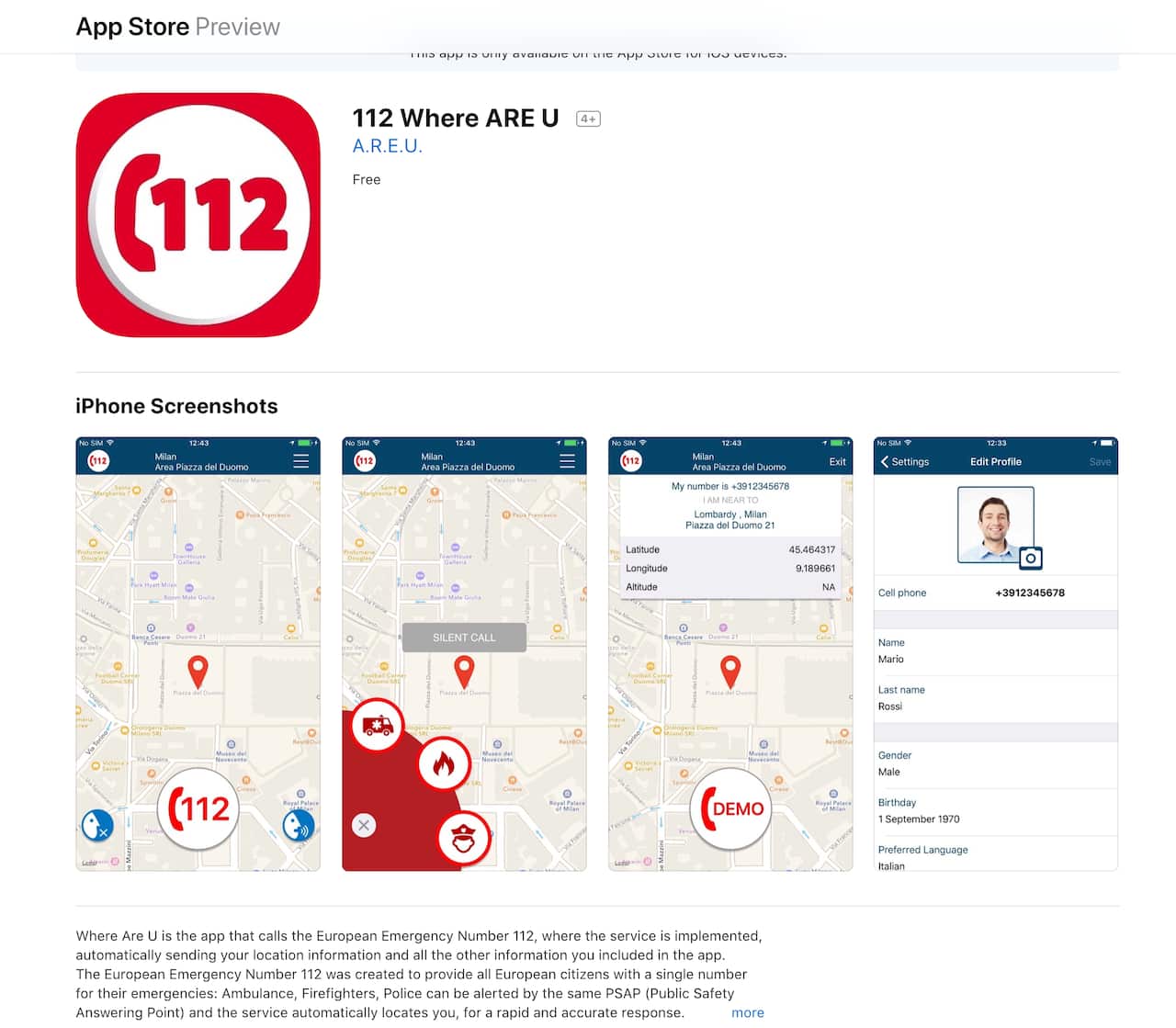
112 Where Are You? is an application developed to work alongside the single European emergency number 112, to increase the accuracy of emergency location services in Italy.
The app already uses the Advance Mobile Locator (AML) technology, so it works even if there is no data coverage and can make "mute calls", useful in cases of emergency in which the caller cannot speak.
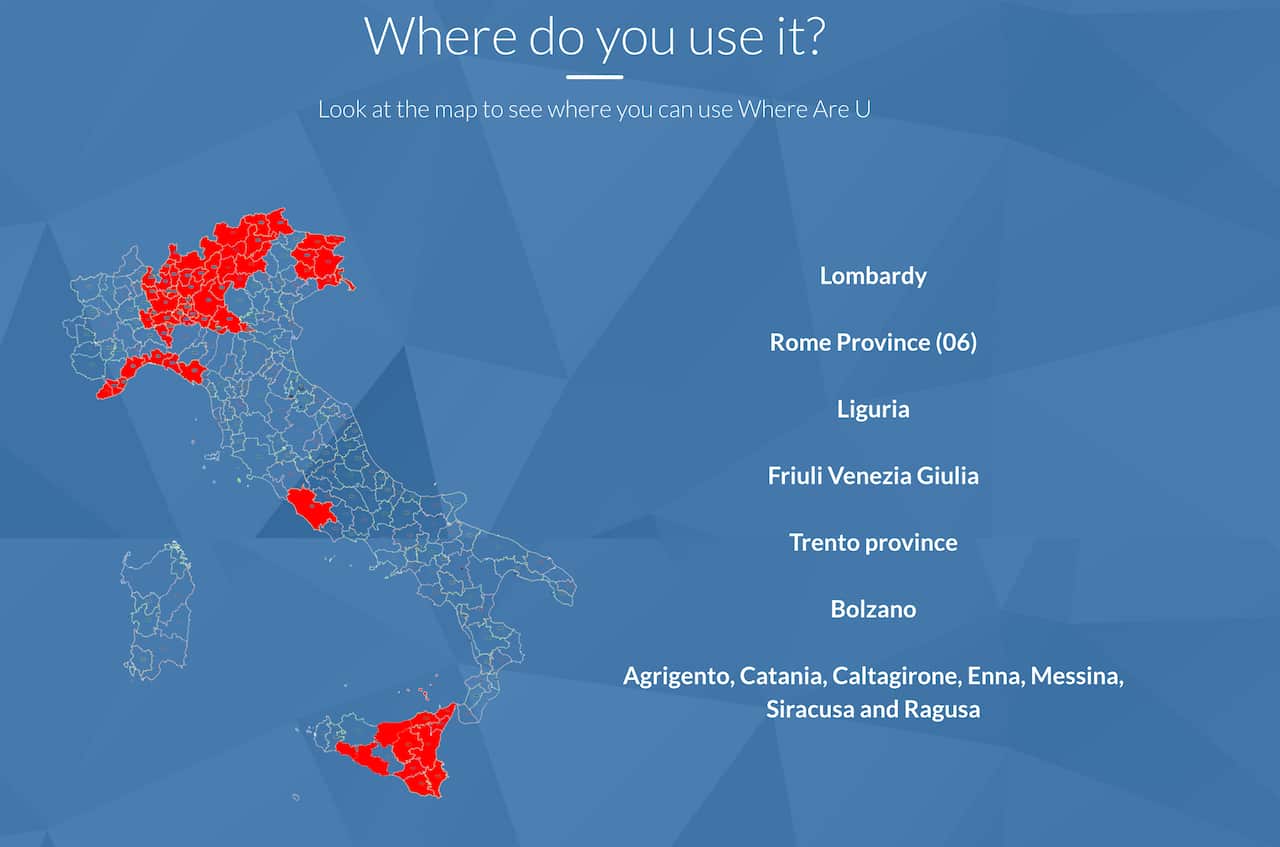
However the app is only available in some parts of Italy: Lombardy, in parts of Rome with area code 06, Liguria, Friuli Venezia Giulia, Province of Trento, Bolzano and in Sicily in some areas, as this map shows.
What is AML technology
With AML technology, when a person in distress calls emergency services with a smartphone where AML is enabled, the telephone automatically activates its location service to establish its position and sends that information to the emergency services via SMS.
The technology uses either a global navigation satellite system or WiFi depending on which one is better at the given moment.
AML is currently being used in 15 countries: Austria, Belgium, Estonia, Finland, Iceland, Ireland, Lithuania, Moldova, Netherlands, New Zealand, Norway, Slovenia, UAE, UK and USA.
Google announced in July 2016 that all Android phones with an operating system of version 2.3.7 Gingerbread (released in December 2010) or later would include AML potential.
Apple devices running iOS 11.3 (released in March 2018) or later also support AML.
However AML needs to be active in the country you are in for these mobile phone functions to work.



