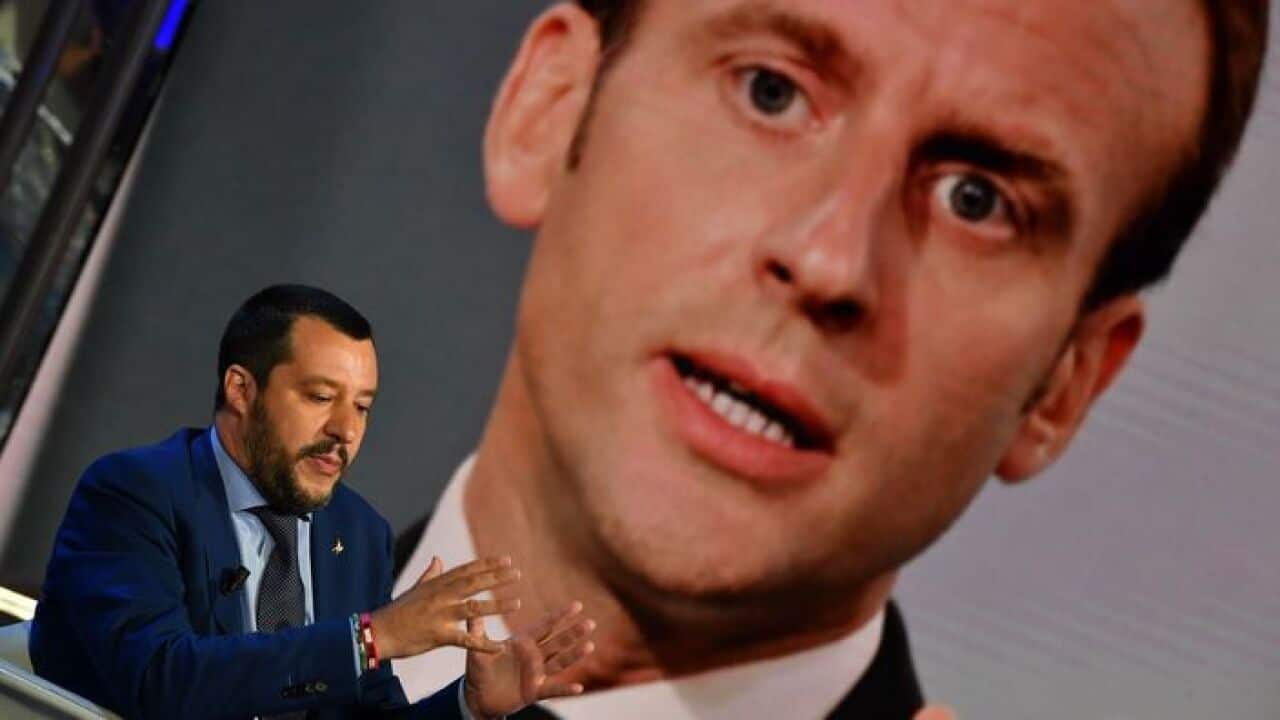
Relations between Italy and France have soured to their lowest point since World War II. Ever since Italy's latest government - a populist coalition of anti-immigration and anti-establishment parties - came to power, the two European giants have been at each other's political throats.
From French politicians likening Italy's politics to leprosy, to Italian politicians suggesting that France is profiteering from conflict and colonising in North Africa, to even a suggestion that France should return Leonardo Da Vinci's Mona Lisa to Italy, the rhetoric is distinctly inflammatory.
Paris even recalled its ambassador from Rome in protest of remarks from Italian deputy prime ministers Matteo Salvini, of the anti-immigration Lega party, and Luigi Di Maio from the Euro-sceptic Five Star Movement (M5S). The last time such a thing happened was in 1940 when Benito Mussolini ruled Italy.
"Italy and France are not just old friends, bound by cultural affinities, they share a common past and a common present too," says Gabriele Abbondanza, a researcher in international relations at The University of Sydney. "They’re both co-founders of the European Union, NATO, and the G7, they both promote anti-austerity policies within the EU, in stark contrast with northern countries, and let’s not forget that their bilateral trade is worth about 130 billion dollars per year."
So how is it possible that their relations soared to this point? Abbondanza says it has a lot to do with Italian domestic politics, and its competing populist movements.
"The current Italian position towards France, intuitively, is the result of issues arising from domestic politics, since the populist senior partner of the Italian government coalition, the Five Star Movement, is losing ground in the polls to the right-wing junior partner, Lega."
Here we explore all the various escalations of the 'war of words' between the two nations through the comments of their leaders.
June 22, 2018: Nationalist 'leprosy' spreading in Europe, says Macron
Relations between Italy and France soured after Italy’s populist government came to power last June.
Tensions escalated when rescue boat Aquarius, used by SOS Méditerranée to receive migrants in the Mediterranean, was prevented by the incoming populist Italian government from docking in the Sicilian ports that it had been using for years.
Italy had long argued that it alone was being made to pick up the tab for Europe's migrant crisis and Macron came under pressure at home for not accepting the Aquarius in a French port.
On a visit to Brittany three days before a meeting of European leaders to try to resolve the continent's migrant crisis, Macron urged the French not to give into anti-EU sentiment.
"I'm saying to you in the gravest terms: Many hate it [the EU] but they have hated it for a long time, and now you see them [nationalists] rise, like leprosy, all around Europe, in countries where we thought that they would never reappear."
These included "friends and neighbours" who "say the worst things and we become used to it." Macron did not name Italy but the leprosy comment was taken to be directly aimed at Rome.
Italy’s Deputy Prime Minister Matteo Salvini was quick to hit back.
"If Macron were to stop insulting and concretely practice the generosity that fills his mouth by welcoming the thousands of immigrants that Italy has taken in recent years, it would be better for everyone," Salvini said in the town of Terni according to Italian press agency AGI, when asked about tensions with France.
"We may be leper populists," he said, "but I take the lessons from those who open their own ports. Welcome thousands of migrants and then we can talk."
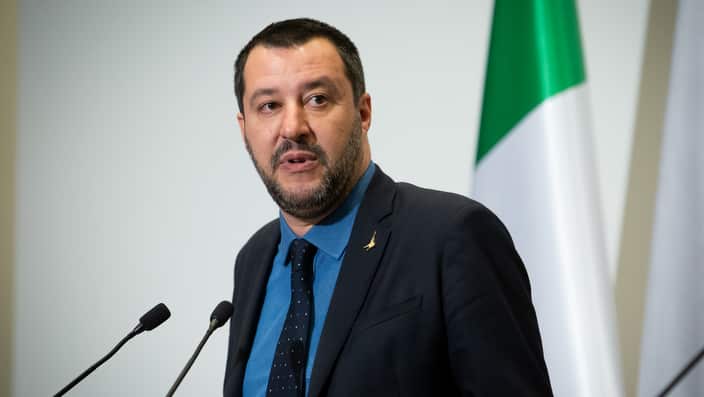
January 20, 2019: Di Maio blames migrant crisis on France’s ‘colonisation’ of Africa
M5S Leader Luigi Di Maio called on the EU to sanction France for “impoverishing Africa” and for migrants to be taken to the southern French port of Marseille instead of Italy.
“If today people are leaving Africa, it is because some European countries, with France taking the lead, have never stopped colonising tens of African states,” Di Maio told a rally in the central Abruzzo region.
"France prints the currency, the colonial franc, in dozens of African countries, and with this currency they finance the French debt… If France did not have the African colonies, she would be the world's 15th economic power, but she's among the first because of what she's doing in Africa".
In response, France’s foreign ministry summoned the Italian ambassador Teresa Castaldo.
January 23, 2019: Salvini calls Macron 'a terrible president'
Salvini added his own insults, calling on his Facebook page for the French to "liberate themselves from a very bad president in the next European elections."
“I hope the French will be able to free themselves of a terrible president,” Matteo Salvini said in a Facebook live video, urging French voters not to back Macron’s La République En Marche party in the European vote.
Salvini said his issue was not with the French people but with "with Macron, who talks a lot and achieves little, who gives lessons of generosity, and then rejects thousands of migrants at the Italian border."
"If Macron is so good, he can prove it with facts by letting in thousands of refugees who are in Italy and whom he promised hospitality, with other European countries," Salvini added in the video.
He said he hoped French voters would send Macron a message during the European elections in late May by showing their support for French far-right leader Marine Le Pen, with whom Salvini is allied in European politics.
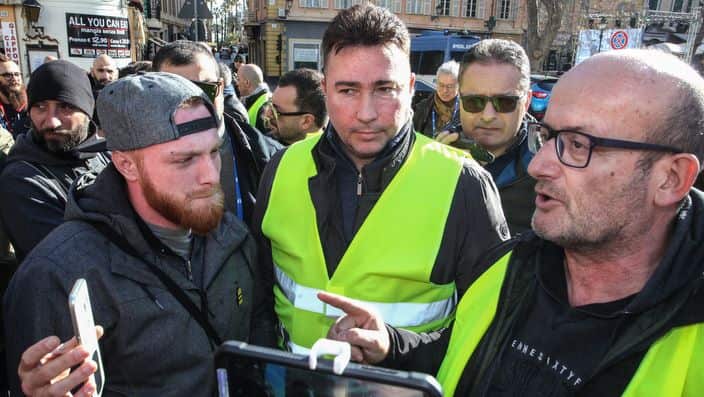
February 6, 2019: Di Maio and Di Battista meet with leaders of the yellow vests
Luigi Di Maio and Alessandro Di Battista, a prominent M5S member, met with leaders of the gilets jaunes (yellow vests) and shortly after declared the “wind of change has crossed the Alps” and that a “new Europe is being born of the yellow vests”.
The French government said the comments were an unacceptable “provocation”.
“This new provocation is not acceptable between neighbouring countries and partners in the European Union."
February 8, 2019: France recalls top envoy to Italy for the first time since World War II
On Friday, February 8 France recalled its ambassador from Rome for the first time since 1940.
“For several months, France has been the target of repeated, baseless attacks and outrageous statements," the French foreign office said in a statement. "Having disagreements is one thing but manipulating the relationship for electoral aims is another."
Shortly after the ambassadorial withdrawal, French government spokesman Benjamin Griveaux said: “It’s not a permanent recall, but it was important to make a statement because Italy is a historic ally and is also a founding member of the European Union."
"The most basic courtesy would have been to notify the government,” Griveaux added.
“We don't make snide remarks," said Griveaux, before he equated nationalism with 'leprosy', echoing the comparison Macron had already made in June, angering the Italian government.
"What is of interest to me is that people in Europe do better and if we can beat back nationalist leprosy, populism, mistrust of Europe."
Di Maio defends meeting with yellow vests
Following France's decision to recall its ambassador, Di Maio defended his decision to meet the yellow vests.
"I wanted to meet with representatives of the 'yellow vests' and the citizens' initiative referendum group, because I do not believe that the future of European politics lies in the parties of the right or the left," Di Maio wrote in a letter published in Le Monde.
February 11, 2019: Salvini ready to go to Paris, 'even by foot'.
Salvini tried to mitigate these tensions by saying he was ready to meet his French counterpart for talks.
“I am ready to welcome him in Rome or to go to Paris, even this week,” Salvini said. “I think that restoring good relations is fundamental, the earlier the better."
February 12, 2019: Macron speaks with Mattarella to defuse dispute
On Tuesday, French President Emmanuel Macron and Italian President Sergio Mattarella spoke by phone.
Macron and Mattarella "reaffirmed the importance of French-Italian relations for each country" and "recalled that France and Italy, who together built Europe, have a particular responsibility to work together to defend and relaunch the European Union," the French presidency said in a statement.
Political row over Louvre plans to show all of Da Vinci's paintings
Meanwhile, the diplomatic row threatens to spill into the world of art.
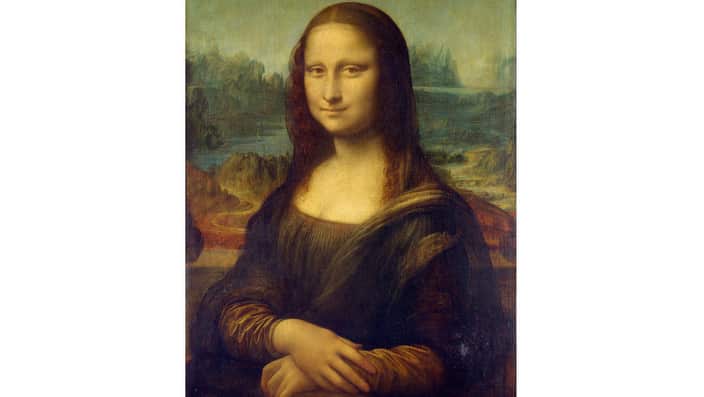
Italy and France have been at odds over a celebration of the Renaissance master Leonardo Da Vinci, with Italy raising doubts about loaning works for a major commemoration to be held from October 2019 at the Louvre in Paris.
The Louvre wants to show all of Da Vinci's paintings in one grand exhibit to commemorate 500 years since his death.
Rome was due to lend, among other artworks, da Vinci's famous Vitruvian Man, famous but not usually displayed.
Italy's Culture Minister, Lucia Borgonzoni, has threatened to cancel the loan, adding, "there are plenty of things in the Louvre that should be returned to us, even above and beyond the old controversy surrounding the Mona Lisa."
"Leonardo was Italian after all. Why don't they loan us the Mona Lisa?," the culture minister said last month.



