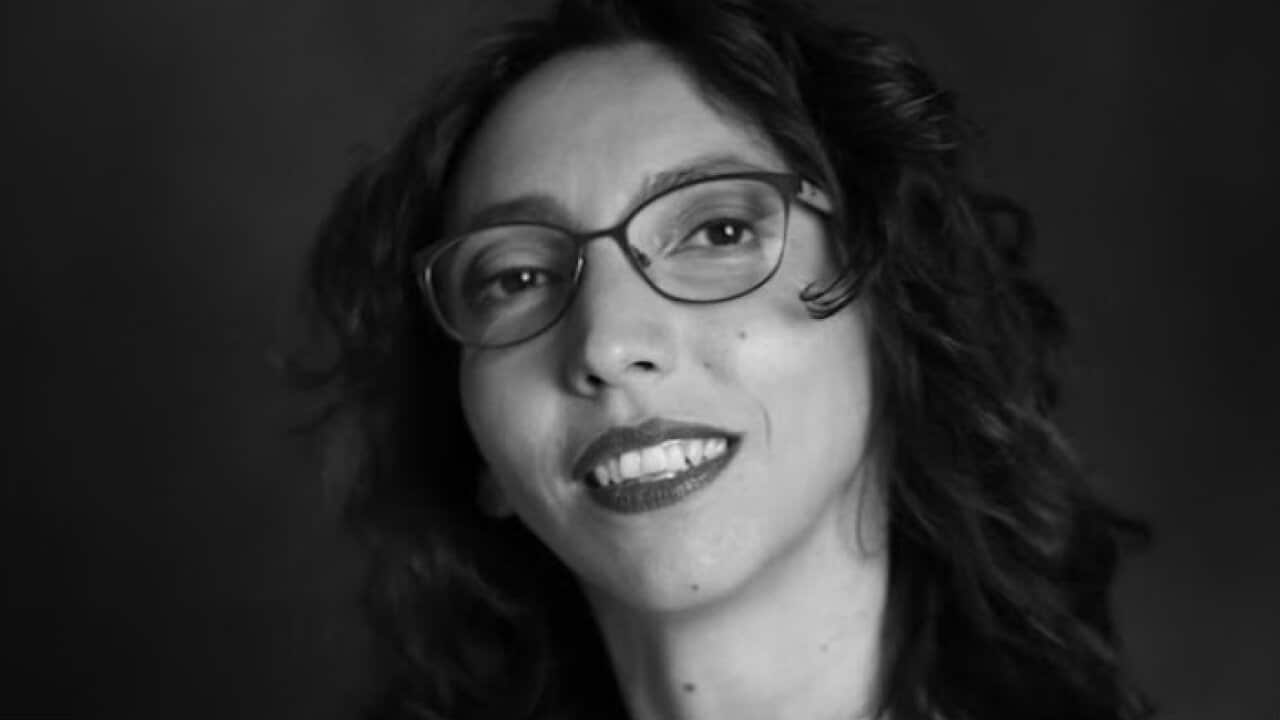

Multicultural societies must be managed in a more secular fashion, or they risk the rise of nationalist movements and human rights breaches - particularly for women, Italian philosopher Cinzia Sciuto tells SBS Italian.
Modern societies must safeguard the rights of all of their citizens with a secular approach to governance, says the Italian philosopher and editor Cinzia Sciuto in her new book ‘Non c'è fede che tenga. Manifesto laico contro il multiculturalismo’ (translation: ‘There is No Faith that Holds – Manifesto Against Multiculturalism’).
Speaking to SBS Italian, Sciuto says that for too long arguments over managing multicultural societies have tended towards polarised views of the left and right in the political spectrum. Sciuto classes these opposing approaches as the ‘identity approach’ and the ‘multicultural approach’, and proposes a ‘third way’ forward.
The ‘identity approach’, says Sciuto, is based on the protection of one's own culture and the symbols that characterize it (for example, the crucifix in the classroom in Italy) and the rejection of the "different", experienced as a threat to one's own values.
On the contrary, says Sciuto, is the ‘multicultural approach’. Adopted by most left-leaning governments, this approach is based on an “uncritical acceptance” of different cultures without examining into the merits of values and principles inherent within them.
“This vision is partly the result of a guilt complex felt by former white colonialists who for centuries have dominated other peoples, imposing their culture and their values, and who now feel it is their duty to give them respect and refrain from any interference,” says Sciuto. “This ‘non-interference’ attitude is particularly unfair to women belonging to certain markedly patriarchal cultures that violate their rights.”
“Both approaches are based on an essential vision that cultures are static, definable and protected objects,” Sciuto contends. “The truth is cultures are not static but in perpetual evolution, not only because they are affected by external influences but because they are constantly challenged internally.”
A third way?
Sciuto’s ‘third way’ is based on secularism, defined by the author as the “cornerstone of coexistence, which must be placed as a pre-political condition for a democratic cohabitation in the respects human rights”.
Sciuto says that in fact, due to a popular conception of multiculturalism, the left has failed to safeguard the fundamental principle of defending people's rights, which must prevail even in diverse societies.
“It is the individual who is the bearer of identity and belonging, it is not the belonging which defines the individual,” Sciuto says.
This ‘third way' focuses on the individual, particularly individual identity rather than a broader identity associated with cultural belonging. Sciuto believes that in focussing on recognition and respect for different ethnic, religious and cultural components of a larger group, there is a risk that the rights of individuals are overlooked in favour of the rights of the group.
A government that prioritises secular ideals is responsible for guaranteeing fundamental rights to every citizen, even against their communities of origin, says Sciuto. She says that identity must be understood as something that each of us constructs individually according to experiences and situations, not as a collective identity that attributes decision-making power to someone above us.
Women’s rights
A further belief of Sciuto’s is that women’s rights have mostly been ignored by the multicultural approach, which she says protects the different ethnic and religious values rather than the rights of individuals – and of women in particular.
“Feminism can only be secular, as it rejects the principle of authority to subjugate women's rights,” says Sciuto.
Sciuto believes that a single legal system is needed guarantee the protection of human rights and those of women in particular. For example, prohibiting polygamy, like many other rights won by women, is a legal obligation in Sciuto’s belief because these rights are the result of years of struggles and demands, which cannot be subservient to any religious or cultural authority.
“The task of a secular state is to provide all citizens, from all cultures, with the educational, cultural and legal tools to enable them to make truly free choices,” says Sciuto.
For example, in the case of women’s freedom to choose to wear the veil or burqa, Sciuto asks what this freedom is based on. If it is based on fear, shame, and on an education marked by submission, she says, then it is not true freedom.
“Freedom of choice cannot be based on an imposition, such as belonging to a faith which does not offer alternatives,” says Sciuto.
According to Sciuto’s manifesto, a secular state must offer the tools of emancipation to all citizens, including , for example, accessible public schools. If, once in possession of all these tools, a woman still decides to wear the veil or the burqa, then her choice must be respected.
But, the author underlines, in that case, it will be the responsibility of the woman herself not to impose it on her underage daughter, leaving her free to decide whether to do the same once she becomes an adult.