

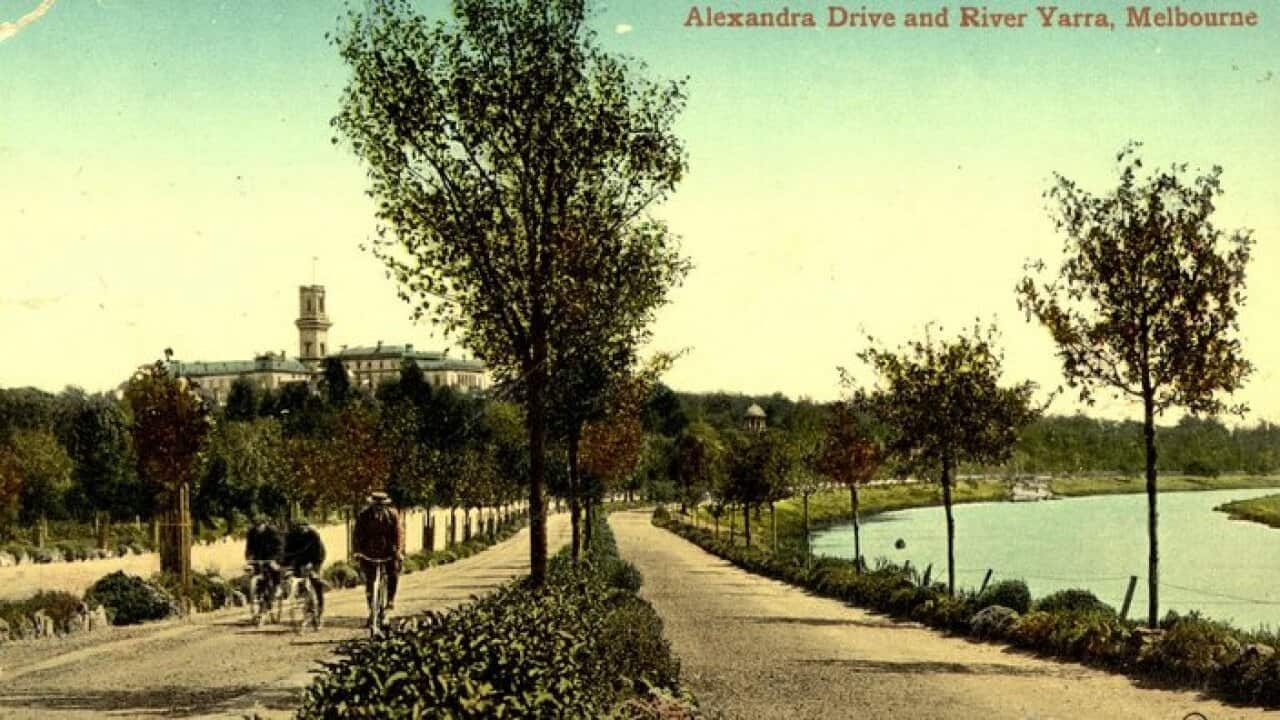

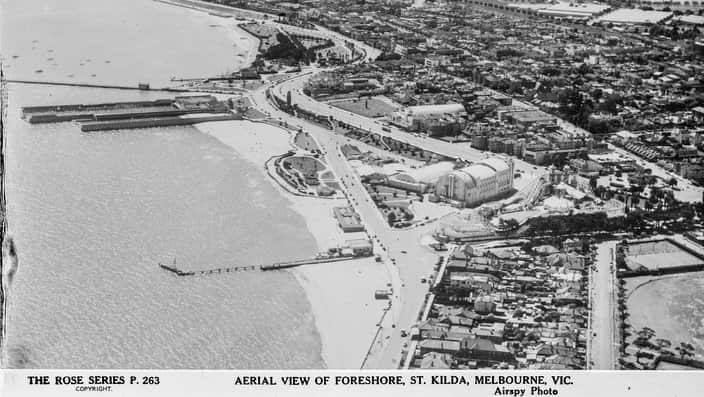
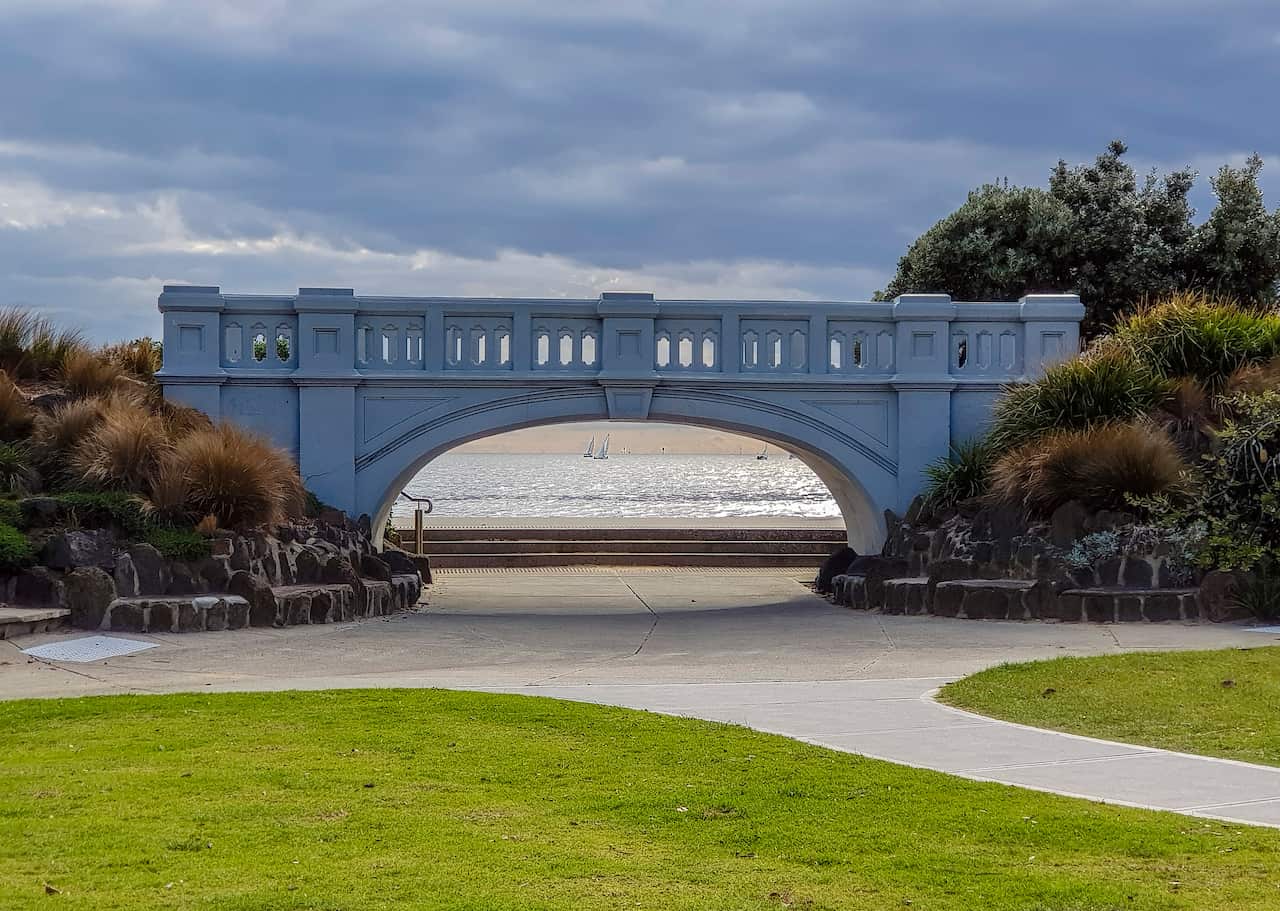
The St. Kilda foreshore, Alexandra Avenue, and Mount Buffalo scenic mountain road are only some of his projects.
Walking along St. Kilda's iconic foreshore in Melbourne, one might come across a commemorative bust - one of the very few erected in Australia - dedicated to Carlo Catani, a "great public servant of Victoria".
What is the story of the Italian who gave his name not only to the nearby gardens, but also to nine streets, a tower, a lake and small town in rural Victoria?
Carlo Catani was Victoria’s foremost Italian-born civil engineer and a key figure in the development of the State of Victoria from 1892 to 1917.
Carlo Catani: Visionary, Creator, Genius , an exhibition organised by CO.AS.IT, commemorates the 100 year anniversary of Catani’s passing with an exploration his wide-ranging accomplishments through unique images and objects which showcase his enduring legacy to the State of Victoria.
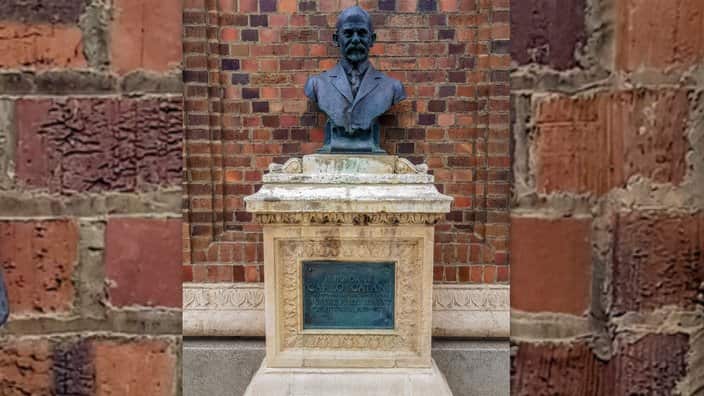
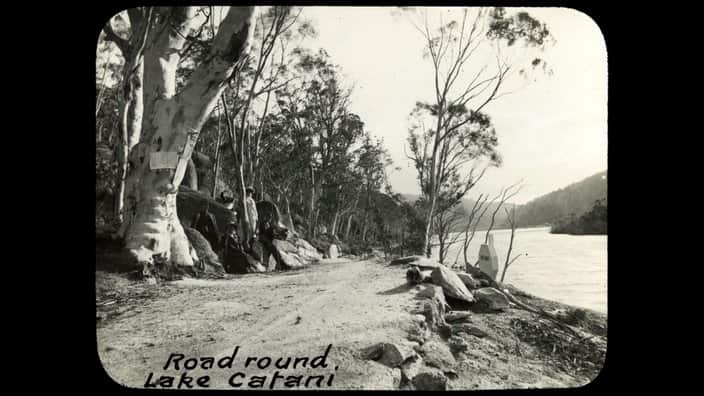
His most notable projects include the majestic Alexandra Avenue and Gardens in the heart of the City of Melbourne, the development of the European-style St Kilda foreshore and the creation of scenic mountain roads which enabled the establishment of popular Victorian alpine resorts such as that at Mount Buffalo.
The exhibition was launched by Sir James Gobbo, a former judge of the Supreme Court and 25th Governor of Victoria and Catani aficianado. Sir Gobbo told SBS Italian he started researching the prominent Italian engineer in 1983. He then wrote two articles on the historical context of Catani's work in Australia and described Catani as an "explorer" with a mysterious life.
Carlo Giorgio Domenico Enrico Catani (1852-1918) was born on April 22, 1852 at Florence, Italy. He was educated at the Technical Institute of Florence, where he received his civil engineering diploma. As a young man he was employed in railway construction in Italy.
Early in 1876 Catani and two of his colleagues, Pietro Baracchi and Ettore Checchi, decided to migrate from Italy. It is likely that they were recruited by the New Zealand immigration agency in Germany. They sailed as 'labourers' from Hamburg in the Fritz Reuter, reaching Wellington on August 7 of that year.
There was no professional work for the new arrivals, so Catani and his friends decided to go to Australia. Describing themselves then as miners, they took steerage passages in the Alhambra, arriving in Melbourne on September 27, where they settled and made lives for themselves.
Widely recognised for his visionary schemes of public works, Catani dedicated over 41 years of his life to public service. He held the prestigious position of Victorian Public Works Department Chief Engineer from 1892 to 1917.
During that time he helped to design and create many of Victoria’s most significant landscapes, waterways, bridges, piers, roads, levees, weirs, lakes and park lands. He managed the reclamation of swamplands in Koo-Wee-Rup and the establishment of new settlements which are still thriving today in Gippsland.
Elisabeth Triarico, manager of the Italian Historical Society and Museo Italiano in Melbourne, said during the exhibition set up she was very excited to discover new stories about Catani every day. The latest novel discovery came from the Koo-Wee-Rup Historical Society the day of the show opening. In fact, a variety of potato, farmed in the same area where the Italian engineer worked, is called Catani.
A book on this very subject titled The life and work of Pietro Baracchi, Carlo Catani and Ettore Checchi by Daniela Riachi is available in many libraries around Australia. The author collaborated in the exhibition as well and, as a second-generation Italian in Australia, she told SBS Italian to be happy to share and celebrate the legacy of Italians in Victoria in her research.
Carlo Catani: Visionary, Creator, Genius
CO.AS.IT. Museo Italiano, 199 Faraday Street, Carlton
Exhibition dates: November 20, 2018 until March 23, 2019
Enquiries: Exhibition coordinator, Elizabeth Triarico, CO.AS.IT. Manager Italian Historical Society & Museo Italiano e: ihs@coasit.com.au; t: (03) 9349 9000