

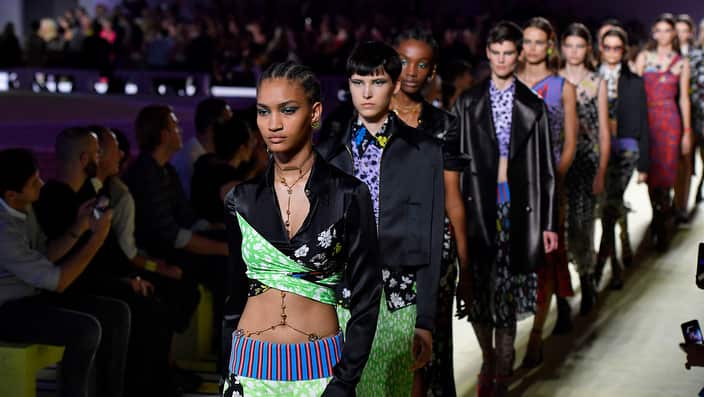
After the acquisition of Versace by Michael Kors, other Italian brands could be up for grabs, with rumors that even Dolce & Gabbana could become a target for international buyers.
Last week, American corporation Michael Kors announced the acquisition of one of Italy’s most iconic luxury brands, Versace, for a sum exceeding the $2.1 billion USD.
Donatella Versace and her brother Sante will stay in the company, retaining a minority interest.
Versace is just the latest Italian fashion and luxury brand to end up in foreign hands.
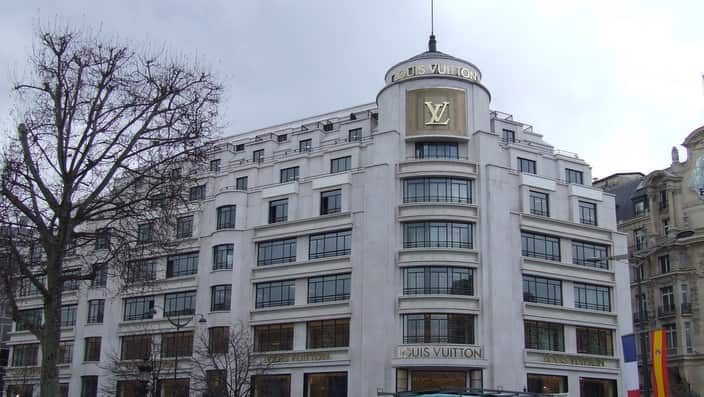
For example, Gucci is owned by French multinational Kering, which also owns other Italian brands such as Bottega Veneta. French giant Moët Hennessy Louis Vuitton (LVMH), meanwhile, acquired Fendi, Bulgari and Pucci.
And other Italian brands seem ready to become "prey" for non-Italian buyers.
Micaela Osella is the Milan correspondent of London-headquartered global financial information company, Acuris. She is an expert in finance relating to the luxury sector and has closely followed the sale of Versace.
The deal caused an uproar in Italy, with the public caught by surprise by the “loss” of a such a 'national treasure'. But for Ms Osella, the sale was no surprise and it was rather anticipated in the financial community.
Rather, she told SBS Italian, that there is a rationale beyond the sale and it should not be seen as a negative development for Italian fashion:
"Fashion must increasingly speak ‘universal codes’,' she said. "And given that Versace has a strong consumer base in the United States, it will certainly grow as part of Michael Kors, with new store openings across the US, and it will succeed in reaching a wider customer base".
While insiders were not surprised by the sale of the Milan-based brand, many expected a different buyer.
French giant Kering had been flagged as the most likely buyer since last April and discussions progressed between the parties until differences over Versace’s valuation put a halt to the deal. That paved the way for Versace to become an American asset.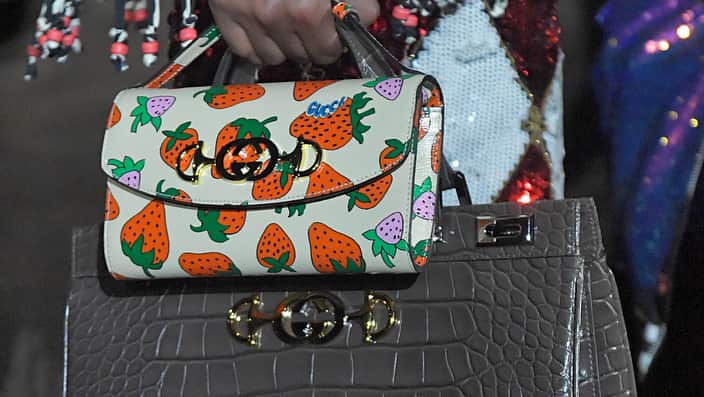
Necessary evil, or defeat for Italian fashion?
According to Micaela Osella it's a natural process that should not be feared, because of the nature of the Italian fashion sector.
"Big fashion houses need capital to open stores, face marketing expenses, advertise, maybe hire testimonials that appeal to an international clientele," she said.
"I do not say that it is a necessary step, but opening up to the world has its price which sometimes has to be paid in the form of founders taking a step back".
In the last ten years in particular, Italian companies, which are small in nature, have needed external capital to grow internationally and have opened up to foreign investors and buyers which could provide those capitals.
For example, high fashion house Valentino has become part of the portfolio of a Qatar-based fund, she said.
Dolce & Gabbana and others: who is next?
2018 began with the sale of a majority stake in iconic fashion brand Missoni to an Italian fund. The sale of Versace shows that this could just be the beginning, said Micaela Osella:
"This M&A (mergers and acquisitions) fever could become more contagious, affecting even larger companies. One could be Salvatore Ferragamo".
Ferragamo, with many family members involved in the company - and therefore many "heads" and many different visions for the brand - could be ripe for a sale - there are rumors of informal discussions with a private equity fund, said Ms Osella.
Another brand “up for grabs” could be Roberto Cavalli, which is in the hands of an Italian private equity fund, Clessidra.
Private equity funds have a limited horizon for their investments before they seek a profitable “exit” and there is talk of a possible sale of the company as soon as next year.
And according to other rumors collected by Micaela Osella, even Dolce & Gabbana could trigger the appetites of international buyers in the wake of Versace's sale. The company has recently hired a CEO to join the founders in preparation of a potential listing, but it is rumored that something different may happen, Ms Osella said.
Am I still Italian if I am not in Italy?
Is an Italian company owned by a foreign investor still Italian? This is a debate with global implications which can also apply to Australian companies and brands.
Caterina Bidini is a Sydney-based, Italian-born fashion designer. She arrived in Australia seven years ago with her husband and business partner Andrea Faleburle.
She is now the co-owner and head designer at Sydney fashion company Bidinis, which produces leather handbags – as well as other women's and men's accessories – all designed in Australia but manufactured in the area of Florence, Italy.

According to Ms Bidini, it is essential for Italian designers to maintain production in Italy regardless of their corporate ownership.
This because Italy is made of small enterprises, little jewels full of tradition and expertise that can allow to maintain excellence and high quality of the products. And it is this excellence that international investors want to acquire.
“I will keep producing in Italy because I was born in Florence and that is my heritage. But also because, as an Australian company, the fact that my products are made in Italy is a competitive advantage over other Australian competitors” - Caterina Bidini.
But there is also a personal reason:
“I am attached to my city of birth, Florence. I have great suppliers there that have been there for generations, I know the current owners and I knew their parents. It gives me pride do work with them,” she said.
Why doesn't Italy have fashion conglomerates like France and the US?
Italy has a rather “individualistic corporate culture" compared to the likes of France and the US, said journalist Micaela Osella.
"Italian fashion companies are all some sort of prima donnas"
For this reason, many Italian brands have a very strong and recognizable 'DNA' and unlike many French brands, which are able to coexist within the same corporation, they struggle to join forces and form some kind of mega-company like Kering.
Italian entrepreneur and former Ferrari CEO, Luca Cordero di Montezemolo, had tried in the past to form such a conglomerate but with no success.
Nevertheless, Italian companies occasionally manage to be on the buyers’ side.
Ermenegildo Zegna has recently managed to complete a foreign acquisition. However, according to Micaela Osella, Italian companies would only make purchases to diversify or to establish a footprint in some strategic foreign market.
The issue here is their limited availability of resources and capitals to make acquisitions. If they cannot proceed independently, they have to raise capitals externally, thus becoming targets for both domestic and international investors
Today, the only two Italian fashion companies large enough to make grow alone are Salvatore Ferragamo and Dolce & Gabbana.
And even a strong company like shoemaker Tod's may need fresh capital to grow.