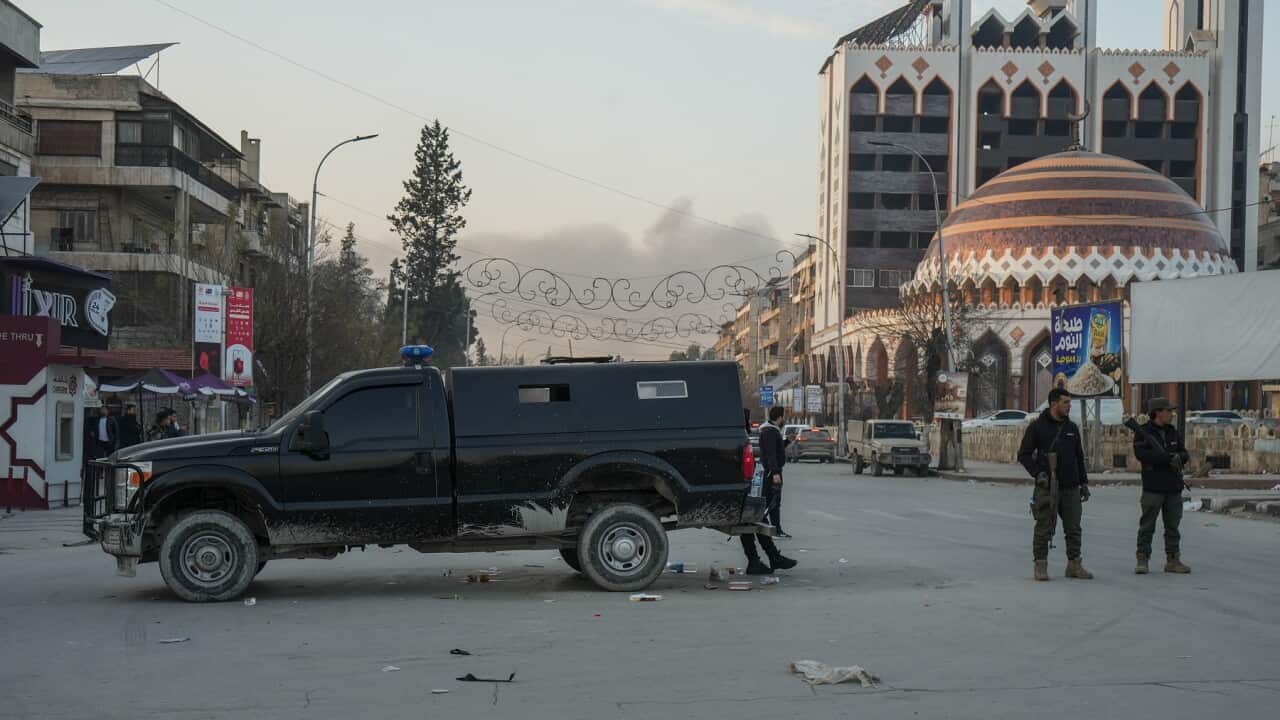
For more than 14 years, the Kurds in Northeast Syria, and the Syrian Democratic Forces (SDF)—served as America’s most reliable local partner in the fight against ISIS. Backed by U.S. air power, training, and intelligence, the SDF played a decisive role in dismantling the so-called caliphate and securing vast areas of northeastern Syria.
Today, that partnership appears to be unravelling.
Under President Donald Trump’s administration, the United States has dramatically shifted its Syria policy. Coordination against ISIS is now being routed exclusively through Damascus, and U.S. backing has moved away from the Kurdish-led SDF toward Syria’s interim president, Ahmad al-Sharaa. The transition has been overseen by U.S. envoy Tom Barrack, whose recent public statements signal a clear end to Washington’s direct political and military support for Kurdish authorities in northeastern Syria.
Myles Caggins III—senior fellow at the New Lions Institute and former spokesman for the U.S.-led coalition to defeat ISIS—warns that the consequences of this shift are already being felt on the ground.
“My heart and mind have been on my friends and former military partners in northeastern Syria, and all people of Syria,” Caggins said. “We have a situation now where the U.S. has made a very clear declaration that all of its coordination against ISIS will go through Damascus.”
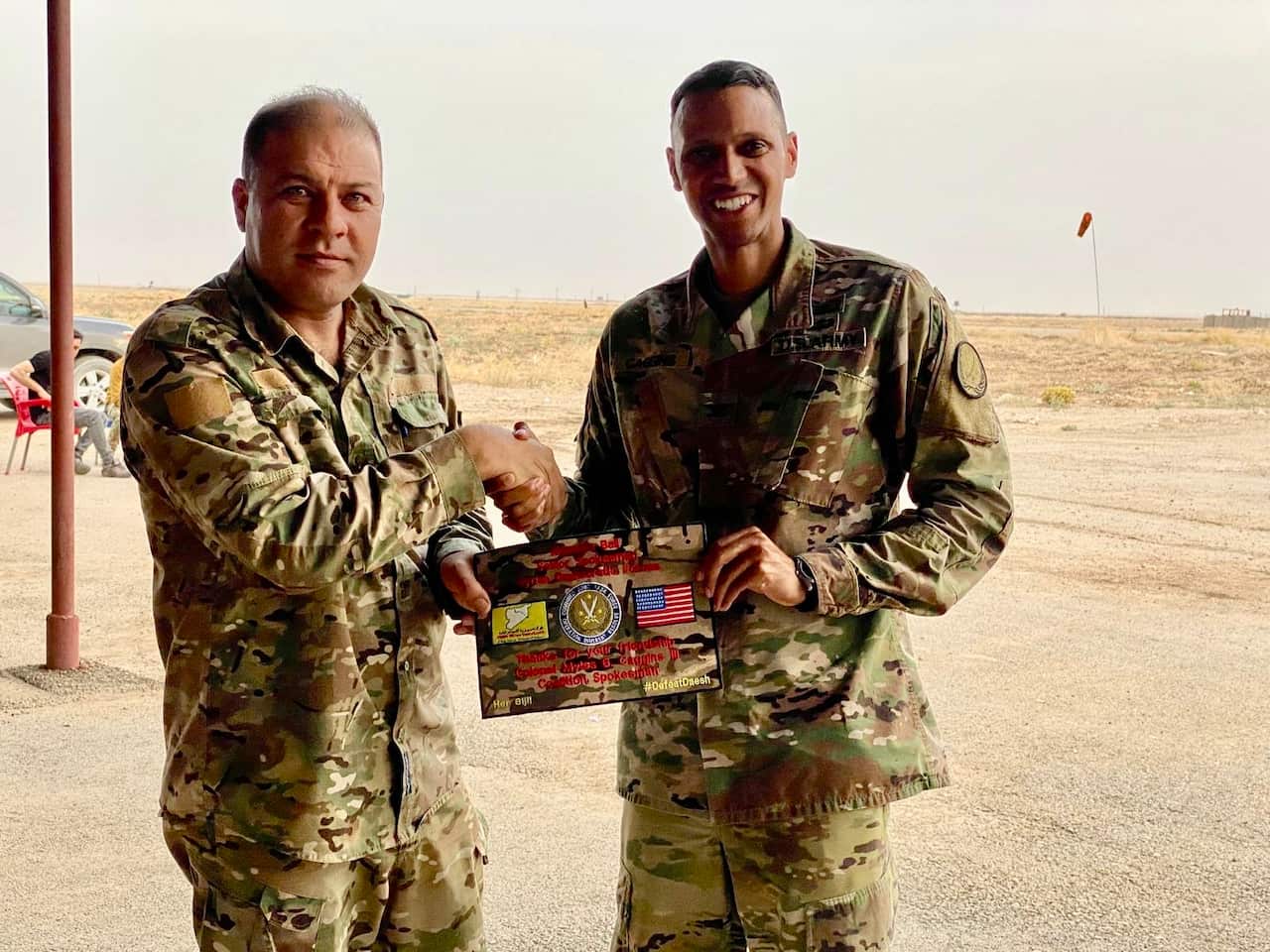
According to Caggins, the change is not merely bureaucratic—it is existential for Kurdish communities that relied on U.S. protection.
“The United States has dramatically shifted its language around support and protection of the Syrian Democratic Forces and the people of northeast Syria,” he said.
A Familiar Fear: Kobani Revisited
In recent days, reports from Kurdish areas such as Kobani indicate water, electricity and internet cutoffs, encirclement by hostile forces, and growing civilian panic. To many residents, the images are disturbingly familiar.
“This is more than just photos of private citizens taking up arms to defend themselves,” Caggins warned. “This is a replay of a reality that Kobani faced in 2014.”
That year, ISIS militants nearly overran the border town until U.S. airstrikes—coordinated with Kurdish fighters—turned the tide. Caggins fears that today, the U.S. is unwilling to draw similar lines.
“The United States chose to stay on the sidelines physically,” he said. “They have drawn no lines in the sand, and they are not even coordinating the handover of ISIS detention camps between the SDF and the Syrian central government forces.”
With only a fragile ceasefire in place, Caggins says Kurdish leaders face an impossible dilemma.
“Over the next four days during the ceasefire, it’s imperative that General Mazloum and leaders of the autonomous administration make a decision to comply,” he said. “If not, they will likely be attacked—and those attacks will probably go all the way through the border towns like Derbasi, Amuda, Qamishli, Derek, Hasaka, and of course Kobani.”

Why Damascus, Why Now?
Critics question why Washington would choose President al-Sharaa as a partner, given his past associations with extremist groups including ISIS, al-Qaeda and Jabhat al-Nusra. Caggins points to President Trump’s own words.
“We should look to the words of President Trump himself,” Caggins said. “He said President al-Sharaa is tough, has a difficult résumé, but he has chosen him as the partner and the rightful leader in Damascus.”
The rationale, Caggins explained, is rooted in longstanding U.S. policy.
“The U.S. always chooses to partner with a central government over regional security forces.”
From Washington’s perspective, backing al-Sharaa is seen as the most pragmatic option.
“President Sharaa is supported by the United States, Turkey, and Gulf states,” Caggins noted. “Turkey has a strong hand in the day-to-day decisions of President Sharaa, including issues involving Kurdish regions.”
No Safeguards for Civilians
Perhaps most alarming is the lack of concrete protections for Kurdish civilians following the U.S. withdrawal.
“There are no safeguards in place,” Caggins said bluntly, “other than the potential goodwill and mercy of the central government.”
He warned that extremist elements within the Syrian Arab Army could act independently.
“Some of these groups may be totally rogue,” he said. “They might attack civilians even after ceasefires—harass, loot, and cause harm to Kurdish cities.”
Caggins stressed that the crisis will not be resolved quickly.
“This is not likely to be settled in four days,” he said. “This could carry on for four weeks, four months, four years—40 years.”
He placed the current crisis within a broader historical context.
“The history of Kurds in Syria, Turkey, Iran, and Iraq includes decades—over 100 years—of repression, being treated as second-class citizens, or worse.”
Betrayal, Repeated?
Many Kurds now say the U.S. has betrayed them—echoing memories of past abandonments, including 1975 and the 2019 Turkish incursion.
Caggins does not dismiss those claims.
“There’s evidence at multiple points in history where there was an expectation of U.S. support toward Kurdish people, and that support was not there,” he said.
He contrasted Syria with Iraq’s Kurdistan Region, where formal constitutional arrangements have sustained U.S. engagement.
“In Syria, without that structure, and with the rapid decision to end the relationship with the SDF, some of the criticism toward America is proper,” Caggins said. “It’s actually based.”
A Narrow Window of Opportunity
Despite the grim outlook, Caggins believes President al-Sharaa still has a chance to chart a different course.
“He has an opportunity to follow through with his word,” Caggins said, “and ensure that Kurds are no longer treated as second-class citizens.”
That would mean full access to education, business, political participation, and genuine security guarantees.
Whether those promises will be honoured remains uncertain. For now, Caggins urges sustained international attention.
“The world needs to keep an eye on northeastern Syria,” he said, “and world leaders need to continue to advocate for peace and dignity for all people in Syria.”
As the U.S. steps back, the fate of its former Kurdish partners once again hangs in the balance—caught between diplomatic pragmatism and the harsh lessons of history.
Ji bo bihîstina babetên din serî li sbs.com.au/language/kurdish/ku/guhdar-bike