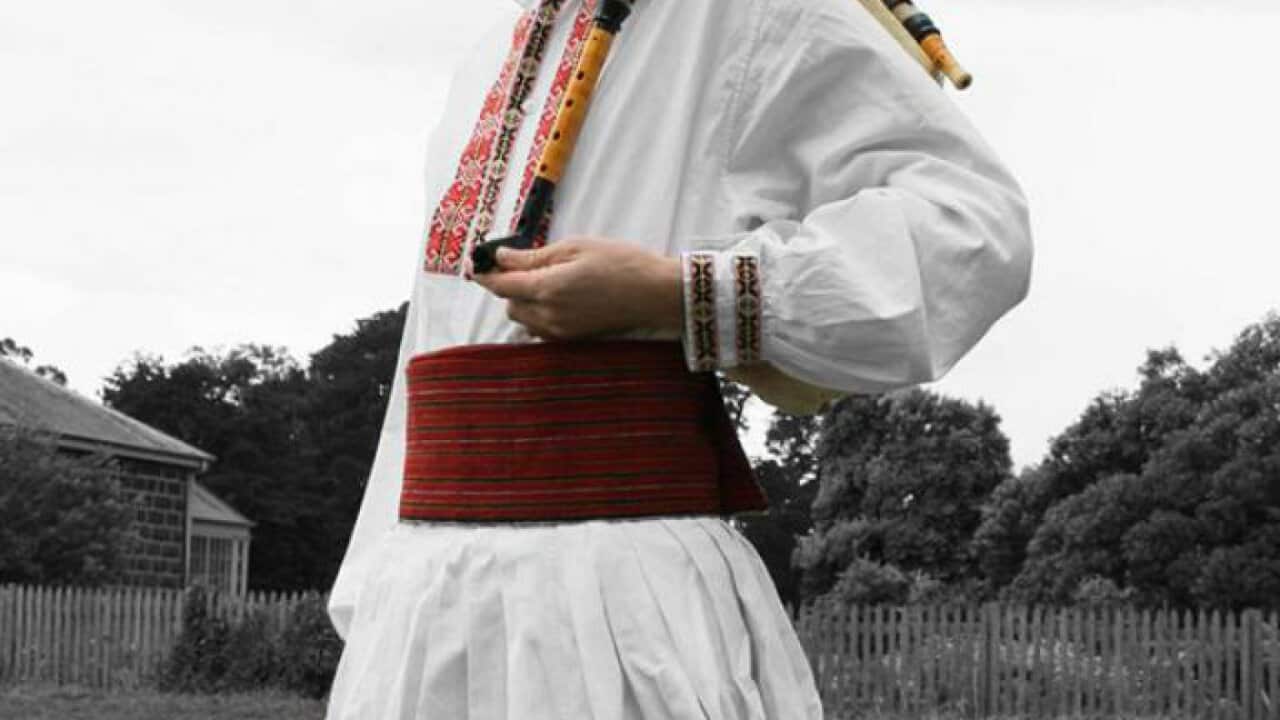
When discussion centres around the bagpipe, many immediately associate it with the Scottish bagpipe.
However, this age old instrument was, and still is, a common instrument played in the Balkans.
Especially in Macedonia.
The bagpipe has a special place at Macedonian celebrations and is usually accompanied by a drum.
And, throughout the ages, it has been noted to have been a faithful companion to many a shepherd.
But Macedonian pipers are gradually diminishing in Australia, which is perhaps why Julius Mackarovski is such a rare find.
Not your usual choice of instrument for a 22-year-old IT student, but for Melbourne-born Julius, the Macedonian bagpipe, known as the Gajda, is deeply entrenched in his heart and in his repertoire.
First introduced to him by his grandfather (dedo in Macedonian) who drew him into the magic of playing the pipes as a little boy, Julius says he couldn't imagine life without his gajda now.
"I’ve always had an interest since I was young because Dedo played it and he’s given me that inspiration to just pick it up and have a go," says Mackarovski.
"Dedo is from Macedonia, the village of Gradesnica, Mariovo."
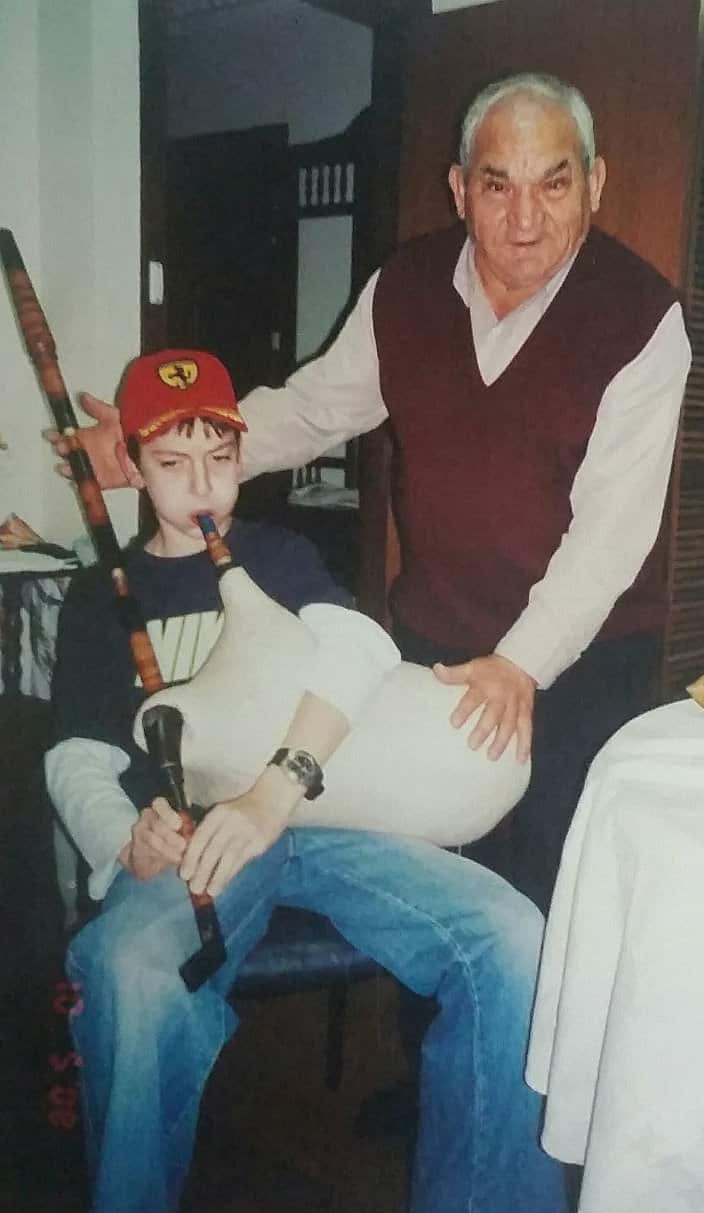
Traditionally made from goat skin the gajda varies slightly in size shape, and number of pipes from it's more famous Scottish cousin - but it does make a similarly distinctive noise.
"I absolutely love it," Mackarovski says. "The piercing sound - yes, for some people it might be annoying but I can just listen to that tone for days."
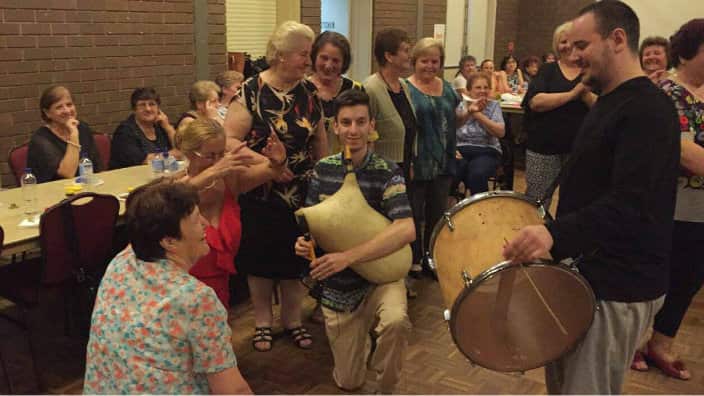
Of course, playing the gajda at traditional events means performing with all the traditional accessories and trimmings to go with it.
"I perform in the traditional Macedonian ‘nosija’ as we call it, traditional dress," Mackarovski says. "Yeah, I love dressing up, it’s colourful and heaps of fun."
"I perform both solo and with a group. I do a lot of freelance work, so, if I get called somewhere, I can adapt and work with all types of people."
"It’s in the blood, it’s attached to me like a drug and will never leave my system."
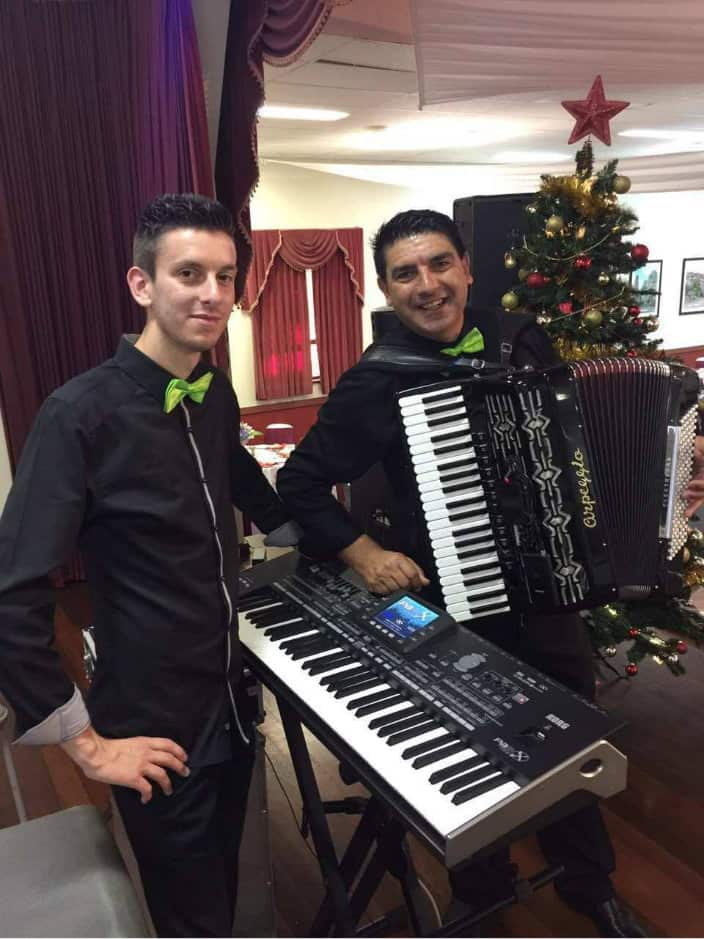
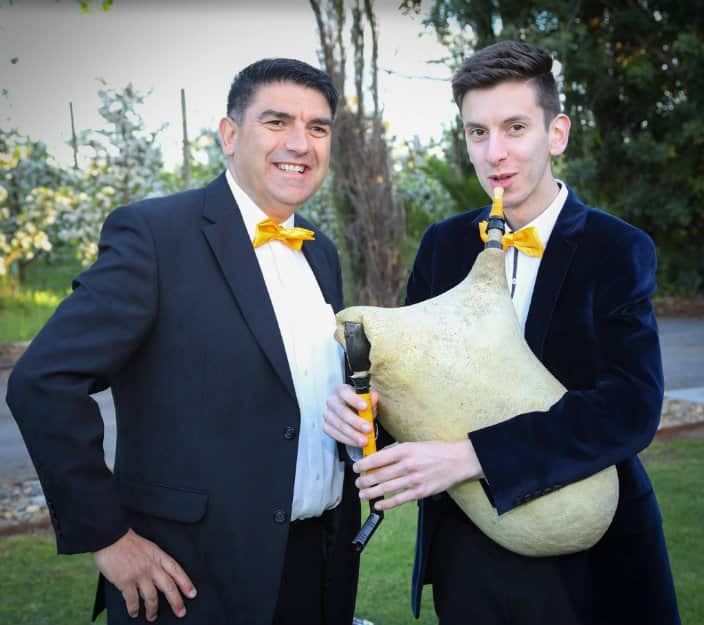
For Mackarovski, playing the Macedonian bagpipes is not a solo activity - in fact, it's a family business.
"I do mainly play with the band that I’m currently in which is ‘Grupa Rum, Dum, Dum’ which is with my father Stefo Mackarovski,' he says.
"He’s a singer and plays the accordion and keyboard.
"It’s in the blood, it’s attached to me like a drug and will never leave my system."
The events that Mackarovski plays at are many and varied.
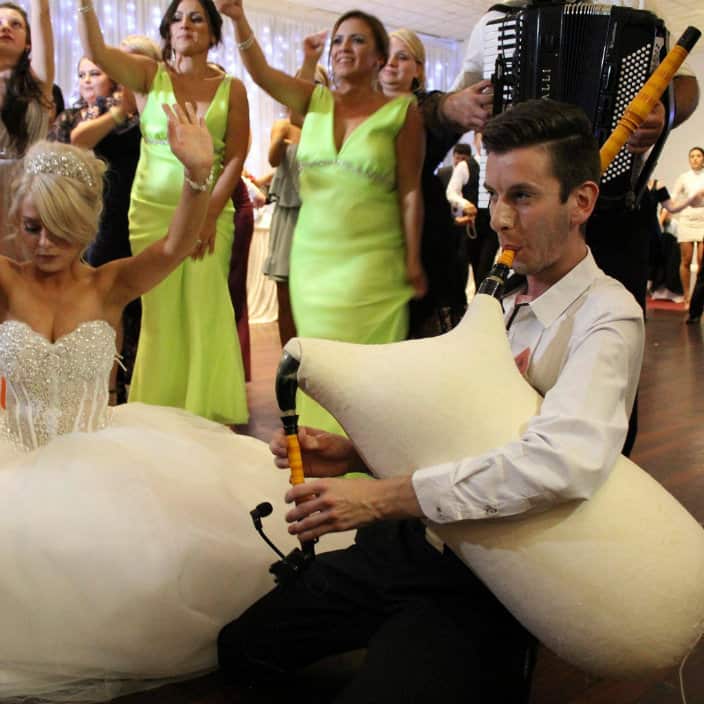
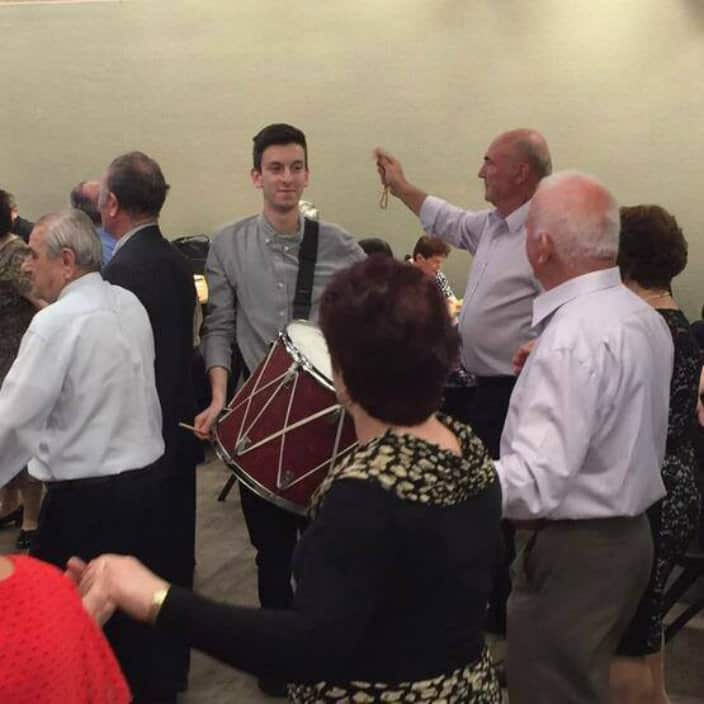
"In the years that I have been playing, I have performed at various occasions such as weddings, engagements, birthday parties, I’ve even played at pensioner groups, the seniors, and I’ve also performed at festivals such as the Williamstown Food Festival," says Mackarovski.
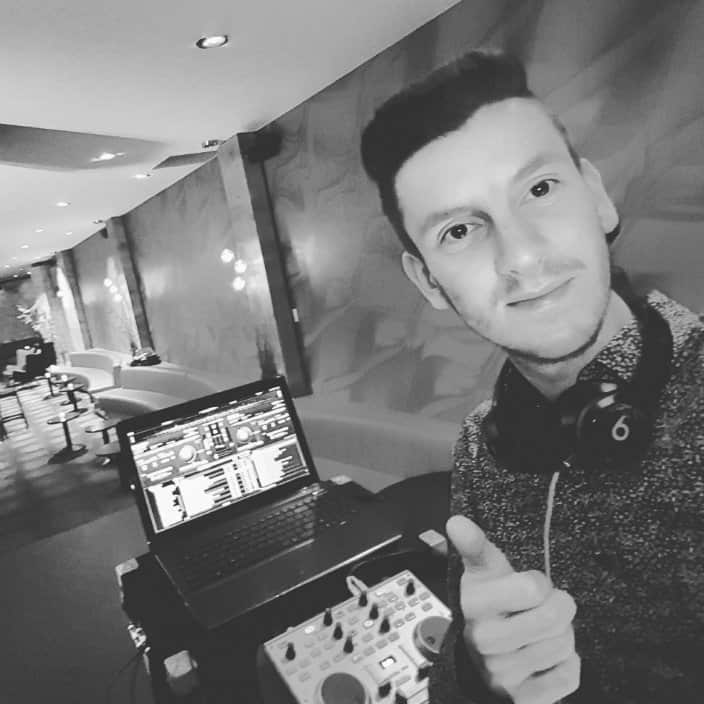
Bagpiping however is not Mackarovski's only musical talent, "I do a lot of DJ work on the weekends and during the week for lots of different events from school formals and primary school discos, to weddings, engagements, the lot!"
"I’ve worked out a way to be able to create my own beats and put them into my DJ software and be able to play along with the ‘gajda' of course, when I’m at a function."
Mackarovski knows he has to choose his audience carefully though when he's DJing gajda beats.
"I won’t take it to an Australian function because they might freak out a little bit," he says. "So I mainly take it to your traditional Macedonian functions, mainly upon request."
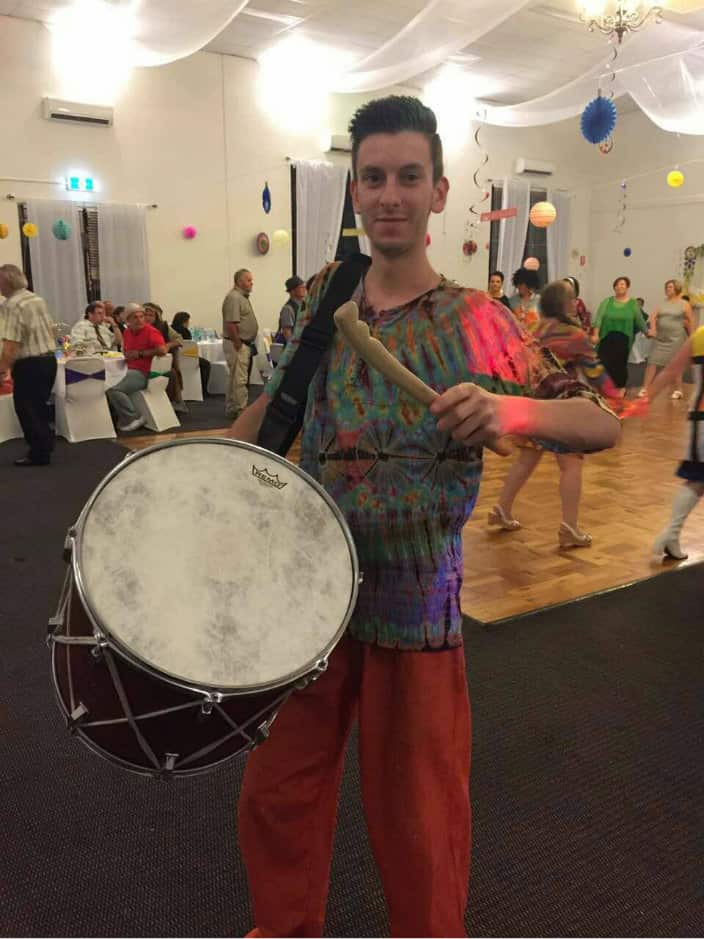
DJing sick beats and playing traditional gajda might seem like an incongruous mix, but Mackarovski has found a way to dance to the beat of his own drum, so to speak.
"I do compose my own music," he says. "I make music from scratch pretty much, put everything together from drums to base, guitar and strings and all types of sound effects which I arrange on the keyboard."
"I also play keyboard with the band that I’m in.
"There is a lot of computer software involved and you need to be pretty tech savvy, which I love, that’s not a problem, I just love learning about technology."
A love held so close to the heart requires care and protection and Mackarovski gives his bagpipe from Macedonia extra special attention.
"The bagpipe has a lot of maintenance behind it, it’s not really something you can pick up and play like a drum," he explains.
"There’s a lot of looking after to do from maintaining the skin to the reeds and keeping it nice and moist to play with."
Thankfully, a spot of traditional Macedonian booze comes in handy for this.
"I use ‘rakija’, it’s like whiskey, in a way. Yeah, there’s a lot of fiddling and mucking around, but once you get it to sound the way you like it, it’s great."
"I make sure that it’s always wrapped up and looked after, almost like a living animal.
"The current ‘gajda’ that I’m playing is from Prilep and I’ve had it for about a year.
"It’s new, but it’s great. It does what I want it to do and I’m going to keep it."
Below: Julius demonstrates how he packs away the windy instrument to transport it.
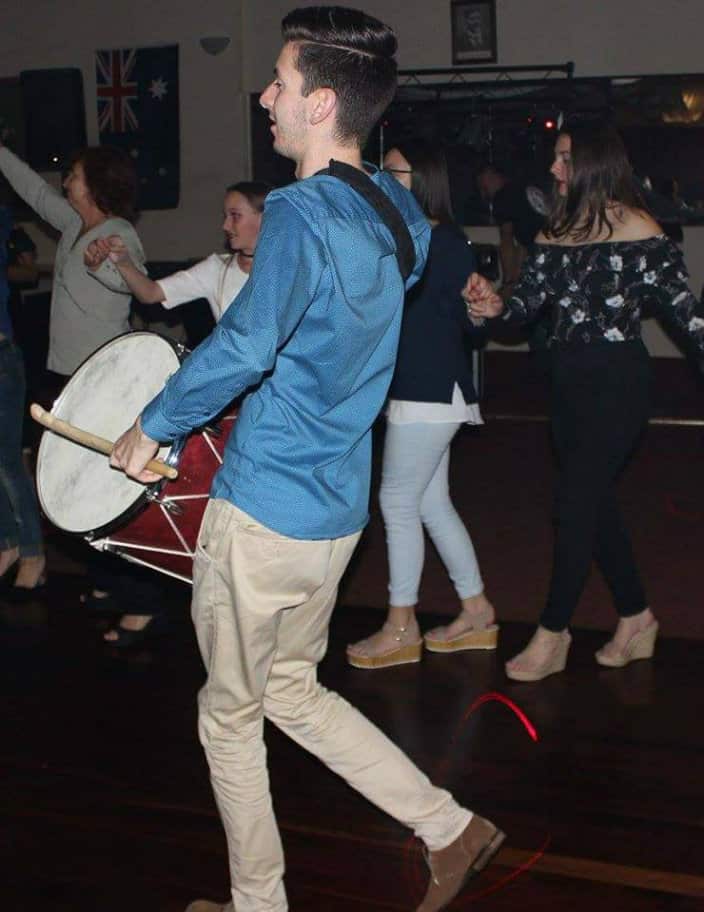
As if DJing and bagpiping wasn't enough, Julius Mackarovski has a knack with another traditional instrument up his sleeve: the selski.
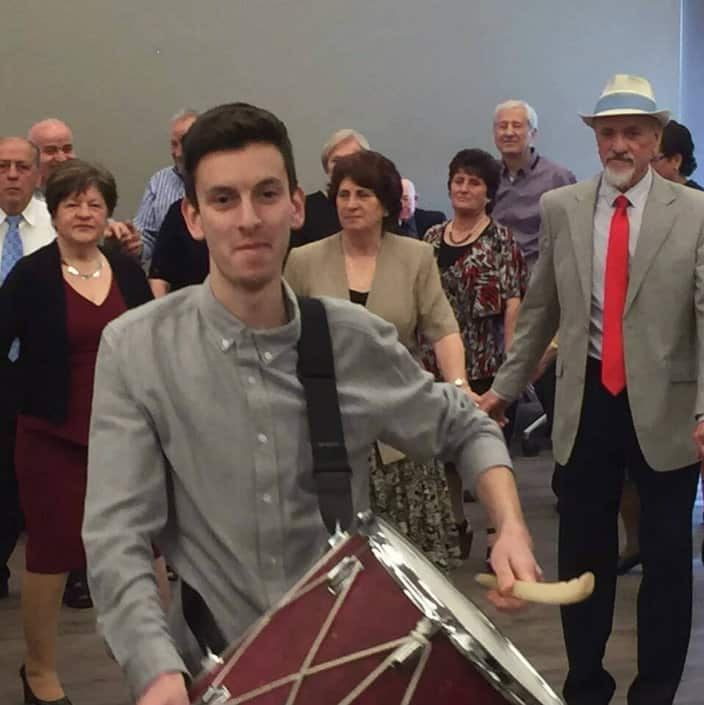
"The ‘selski tapan’ as we call it in Macedonian, is a large framed base drum," he says. "I’ve pretty much made drums from scratch from old jazz drums and drum kits, put them together and tied the ropes, put the rims around the outside with the drum heads.
"I prepare my own skins too, or you can prepurchase them. It’s heaps of fun, just takes a lot of time and patience".
Asked why he makes his own drums, Mackarovski says it gives him great personal satisfaction to be able to create his very own sound.
"You just get that sound," he says. "You know that you’ve made it and it’s your sound."
"It’s an experience and it’s a learning curve, you teach yourself new things and it’s heaps of fun".
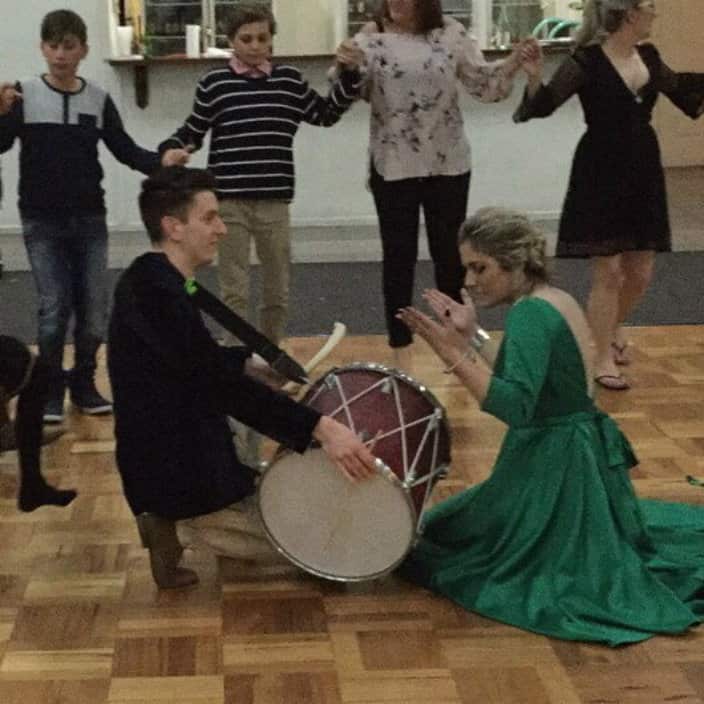
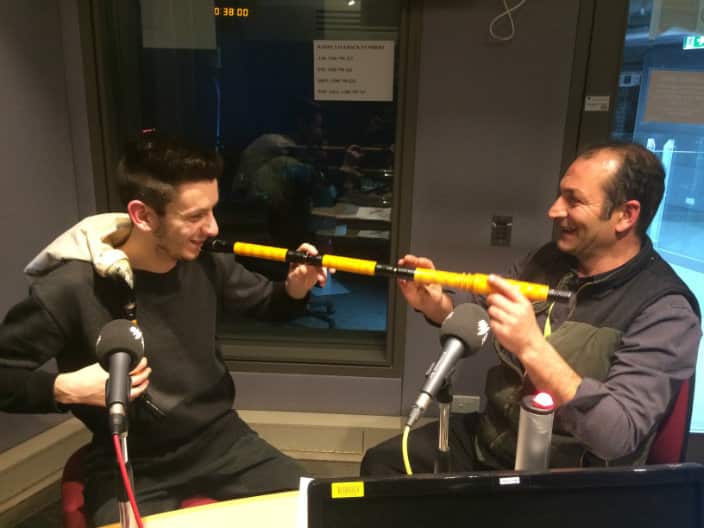
Playing traditional instruments like these might be a widely appreciated skill back in Macedonia but in Australia, where the instruments are much less well-known, Mackarovski is often pleasantly surprised by the reaction he gets.
"A lot of my friends and people I don’t know and meet at functions just have a ’wow’ factor," he says. "And they say to me, ‘good on you’…’keep it up’…’keep doing what you’re doing’…and they’re just wowed."
"They appear to enjoy it from what I’m getting told so it seems like a positive outcome".
"The main purpose for me is to just make people happy…to see a smile on someone’s face and to just show people what I’m capable of. I’m never going to get rid of the gajda, it’s in my blood and it’s something special that’s been passed down from my grandfather.
"It’s fantastic, I love it and I’m going to keep at it"!
Asked whether he would ever try to make a gajda himself, goat skin and all, Julius had this to say: "I can give it a go, but, I’ll stick to playing it for now, and see when I might get my hands on it in the future."