
A Western Australian truck driver claims to have unravelled a not so sweet fact about hot cross buns in the lead up to Easter.
In a video posted on Facebook, Heather Jones uses a breathalyser to demonstrate how relishing the humble buns can push your blood alcohol level well over the legal drinking-driving limit.
Ms Jones begins by blowing zero on a hand-held breath analyser test. Soon after, she takes a bite of the bun and measures her blood alcohol levels again.
And surprisingly, they’ve shot up to 0.018, meaning just two more buns would probably push the levels above the Australian legal limit of 0.05.
“So, be really careful this Easter,” Ms Jones warns towards the end of the video that has gone viral ever since it was posted on Pilbara Heavy Haulage Girls Inc.’s page on Sunday, garnering a volley of comments from social media users many of whom offered their own explanations.
While one user attributed the impact to the yeast content in the buns which is also found in alcohol, another pointed out that one must wait at least 15 minutes after having a meal and before blowing into the device to ensure that there is no residue of food left in the mouth.
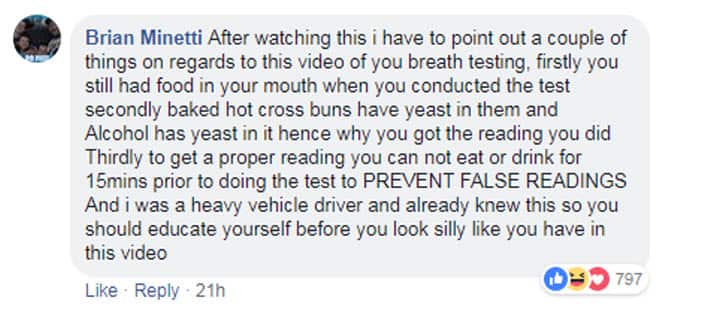
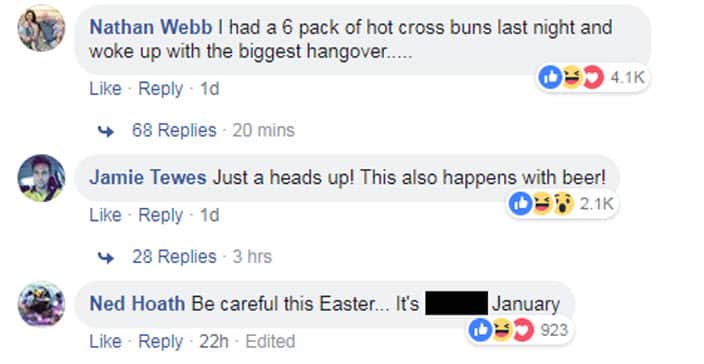
Others found Ms Jones observation quite funny and were quick to trash the theory with their witty commentary.
But is there more to hot cross buns?
“Perhaps not,” contends breath analyser manufacturer LifeSafer which claims that food products, particularly the ones that contain yeast, can make you fail a test.
Their reasoning-yeast inflates the dough by fermenting sugars into a number of substances- “one of which is alcohol”.
And if you’re unfortunate enough to be stopped by the cops right after eating a bun or two, you might end up failing the test, claims the manufacturer.
Other unsuspecting products that can apparently land you in trouble include energy or fruit-based drinks, vinegar, vanilla extract, warns LifeSafer.
Professional baker and chef Snigdha Goyal told SBS Punjabi that while she cannot confirm if a bun could impact your alcohol levels, but you can definitely toss out the theory that you can eat meals cooked in liquor believing that the alcohol has “burnt off”.
“Food cooked in liquor for instance pasta soaked in vodka or a full meal like vodka lemon chicken will retain some amount of alcohol that can possibly have an impact on the blood alcohol levels,” Ms Goyal said.
“But if it can render someone “drunk” and “unsafe” to drive is something that needs to be researched,” she added.
Listen to SBS Punjabi Monday to Friday at 9 pm. Follow us on Facebook and Twitter.



